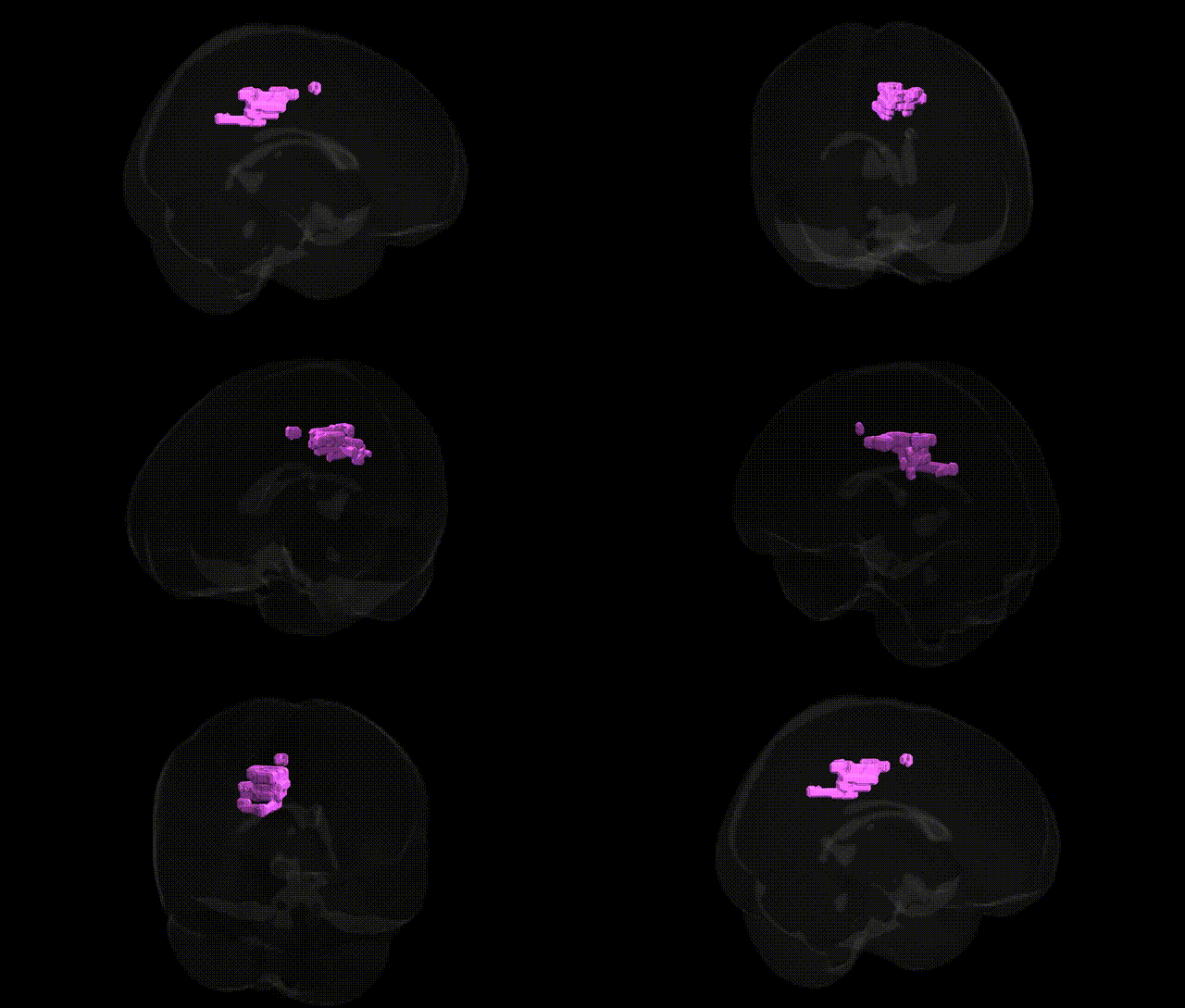
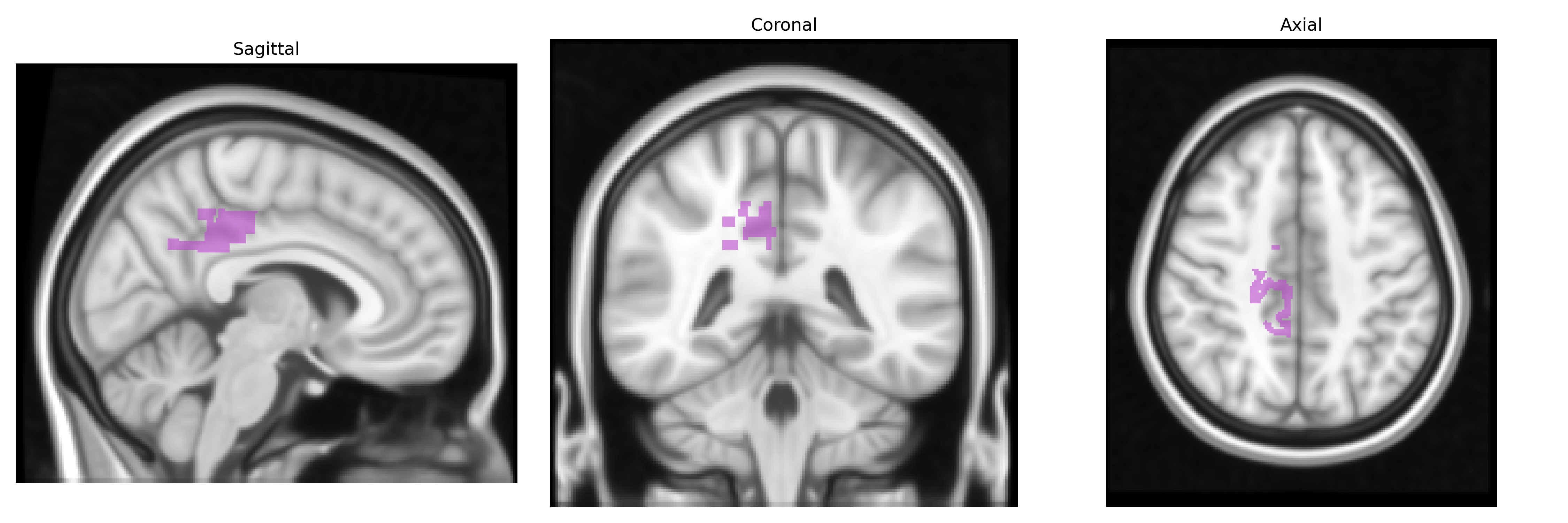
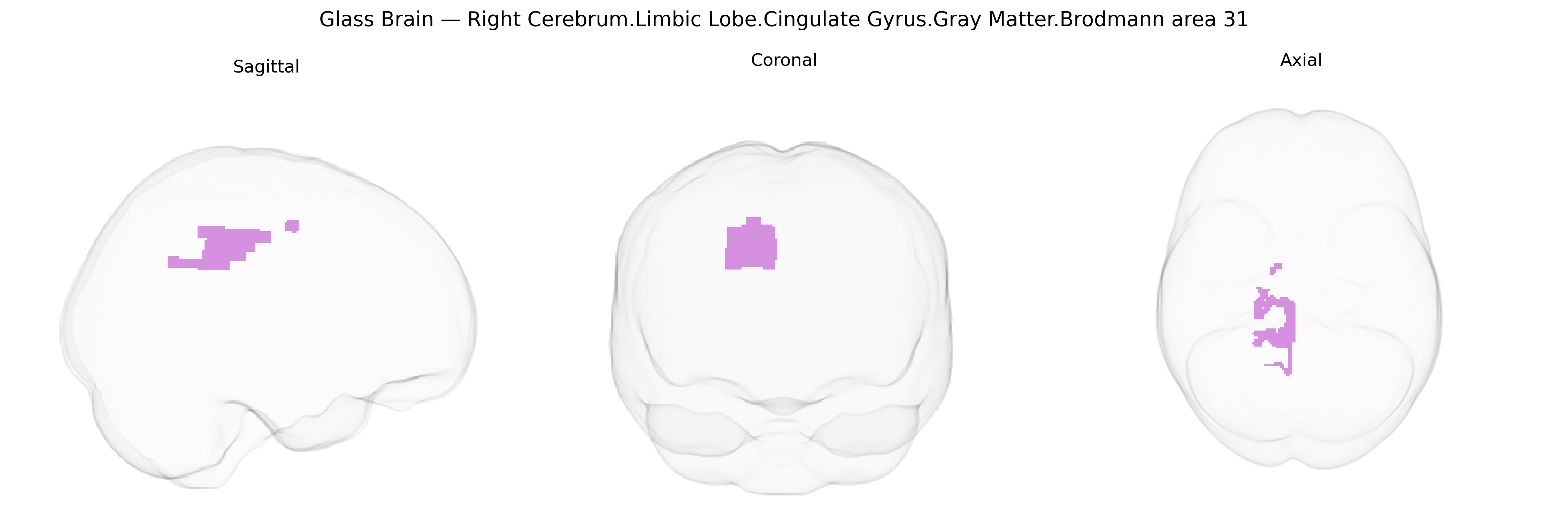
Brodmann area 31 (BA31) of the cingulate gyrus is a gray matter region of the limbic lobe located in the posterior cingulate cortex along the medial aspect of the right and left cerebral hemispheres. It lies dorsal to the corpus callosum and extends into the retrosplenial and precuneus regions, with cytoarchitectonic features characteristic of association cortex. Functionally, BA31 is implicated in episodic and autobiographical memory, visuospatial processing, and internally directed cognition, including aspects of default mode network activity such as self-referential thought and evaluation of emotionally salient information. It maintains extensive connectivity with hippocampal, parietal, and prefrontal regions, supporting integrative roles in attention, memory retrieval, and affective processing. There is no direct link for Brodmann area 31; a closely related structure is the Posterior cingulate cortex.
Brodmann area 31 in the posterior cingulate/retrosplenial sector of the limbic lobe has been repeatedly implicated in genetic studies of brain structure, connectivity, and neuropsychiatric risk. Imaging–genetics and GWAS of cortical thickness and surface area (e.g., ENIGMA, UK Biobank) have identified associations between BA31/posterior cingulate morphology and common variants in genes involved in synaptic function and neurodevelopment, including loci near or within APOE (notably ε4), CLU, PICALM, and other Alzheimer’s disease–risk genes, which relate to gray matter volume loss and hypometabolism in this region. Polygenic risk scores for Alzheimer’s disease, schizophrenia, major depressive disorder, and autism spectrum disorder show correlations with structural and functional measures of the posterior cingulate, consistent with its role in default mode network dysregulation. GWAS of resting-state functional connectivity and default mode network integrity have linked variants in genes such as GRIN2B, BDNF, and other glutamatergic and neurotrophic pathway genes to altered activity and connectivity involving BA31. Additional associations have been reported between posterior cingulate/BA31 metrics and genetic risk for traits such as cognitive performance, neuroticism, and stress reactivity, suggesting that common variants influencing limbic–default mode circuitry contribute to both brain structural variation and vulnerability to neurodegenerative and psychiatric disorders.
Overview generated by GPT-4o (2026).
Region ID: 916
Hemisphere: bilateral
Atlas: Talairach labels 1mm
Full Quality Version: Download MP4
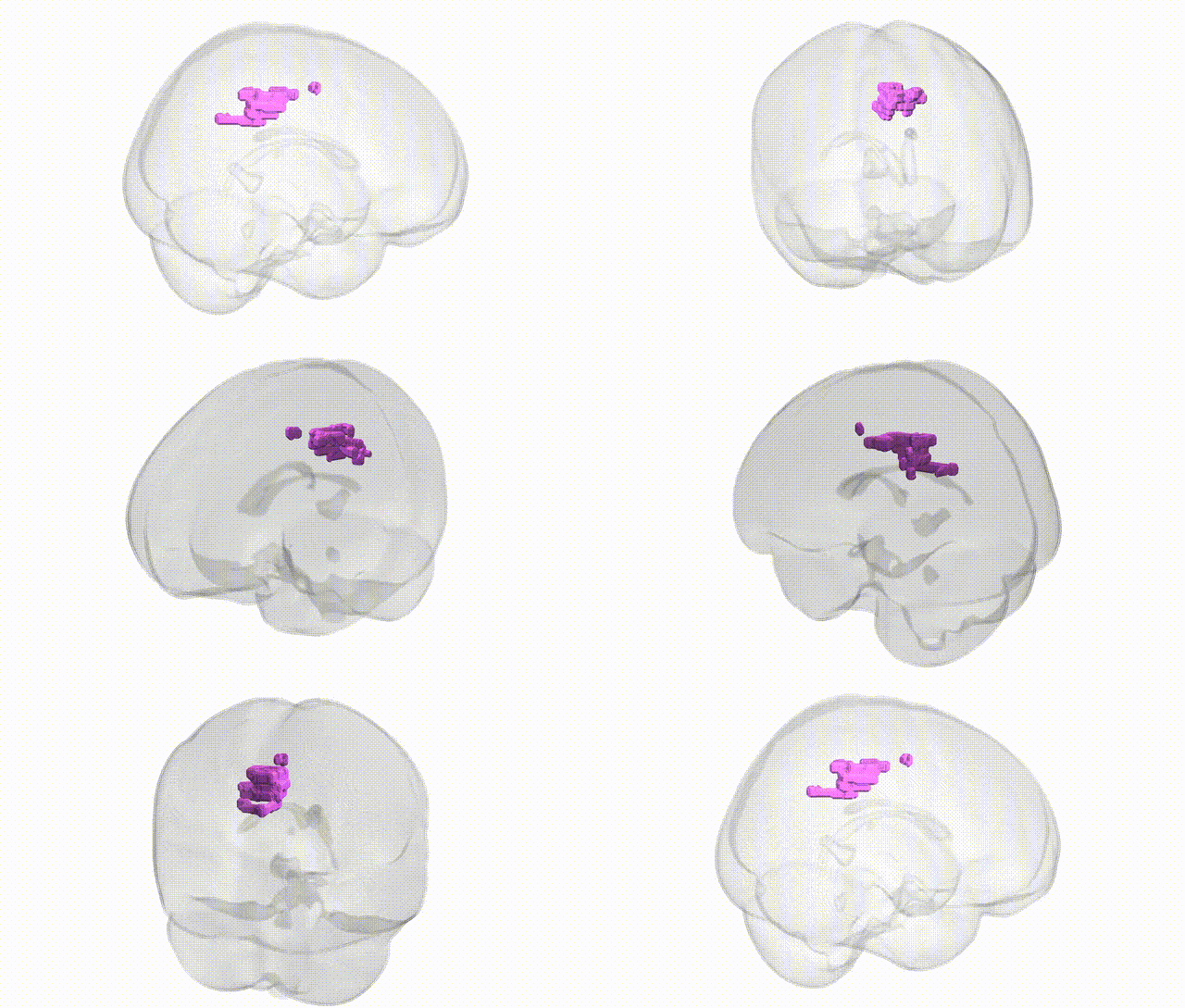
Full Quality Version: Download MP4
Wali Sidiqyar*, Gaurav Rudravaram*, Elyssa M. McMaster, Trent M. Schwartz, Adam M. Saunders, Kurt G. Schilling, Bennett A. Landman "Introducing SPINS: A Shared Public Visualization Library of Neuroanatomical Structures." Medical Imaging with Deep Learning- short paper
This resource is licensed under CC0 1.0 Universal (Public Domain).