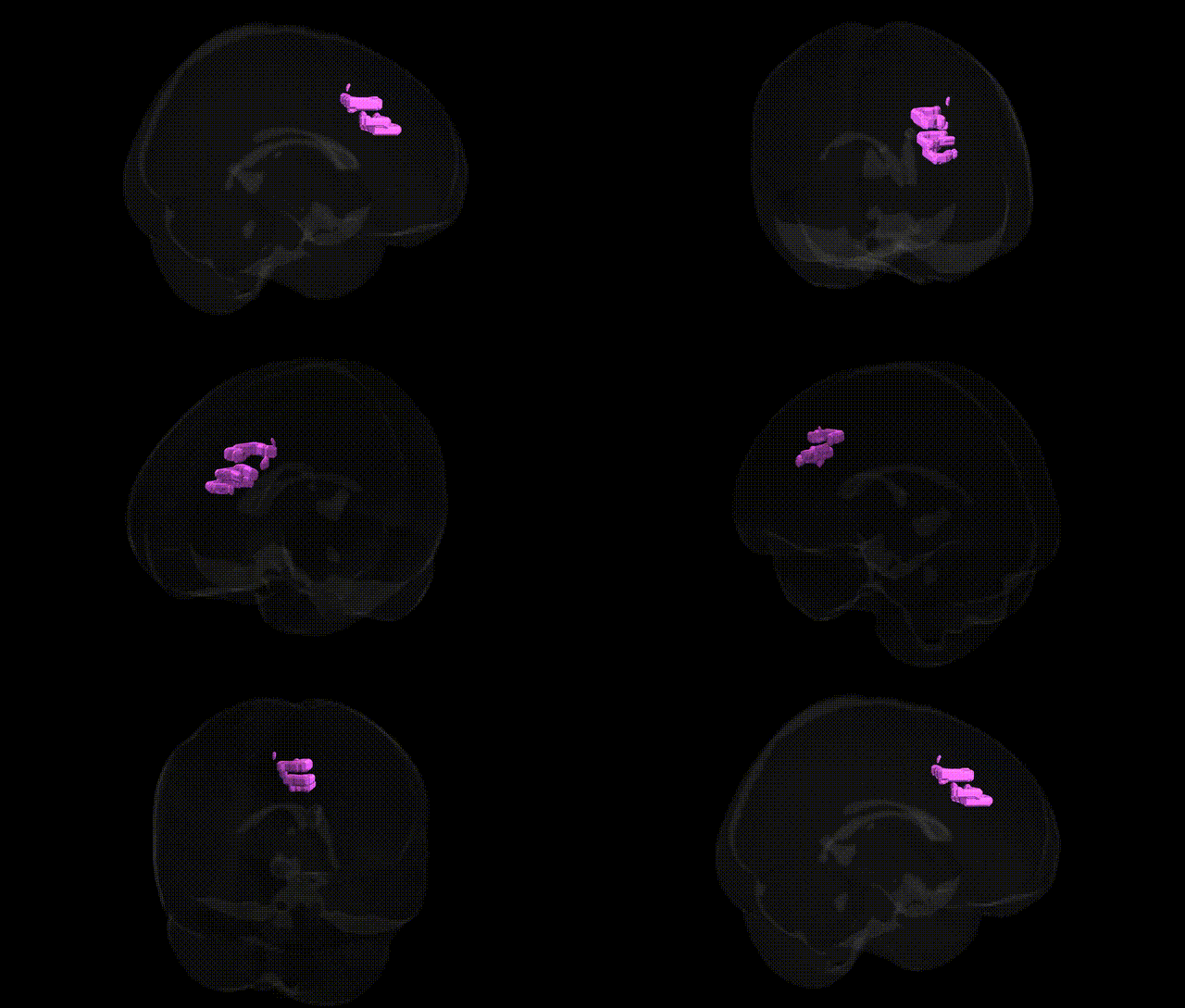
Bilateral Right Cerebrum Limbic Lobe Cingulate Gyrus Gray Matter Brodmann area 32 corresponds to a medial prefrontal–cingulate cortical region situated in the dorsal part of the anterior cingulate gyrus, just above the corpus callosum. Cytoarchitectonically, Brodmann area 32 is characterized by granular prefrontal cortex features and is commonly grouped within the anterior cingulate and medial prefrontal networks. Functionally, this region contributes to higher-order cognitive and affective processes, including emotion regulation, conflict monitoring, decision-making, and aspects of social cognition, integrating limbic inputs with executive control systems. Through its extensive connections with other prefrontal areas, limbic structures (such as the amygdala), and autonomic centers, Brodmann area 32 plays a role in motivational behavior and the modulation of autonomic responses to emotional and cognitive demands.
The bilateral right Brodmann area 32 (dorsal anterior cingulate/medial prefrontal cortex) has been repeatedly implicated in genetic studies of cognition, emotion, and psychiatric risk, although most findings are indirect through imaging genetics and GWAS of brain structure or function rather than the Talairach-labeled region specifically. GWAS of cortical thickness and surface area have identified common variants near genes such as MEF2C, CENPO, and others that modulate medial prefrontal and cingulate morphology, with downstream effects on executive control and affect regulation. Imaging–genetics studies link COMT Val158Met, 5-HTTLPR (SLC6A4), BDNF Val66Met, DRD2, and CACNA1C variants to altered activation and connectivity of BA32 during conflict monitoring, decision-making, and emotional processing, often in the context of schizophrenia, bipolar disorder, and major depression risk. Large psychiatric GWAS implicate polygenic risk for depression, anxiety, PTSD, ADHD, and schizophrenia in structural and functional changes in anterior cingulate/BA32 circuits, consistent with this region’s role in error monitoring, negative affect, and cognitive control. Moreover, genetic studies of neuroticism, harm avoidance, and stress reactivity highlight BA32 as a mediating node whereby variants in stress- and monoamine-related genes (e.g., FKBP5, CRHR1, SLC6A4) influence susceptibility to mood and anxiety disorders. While no single locus is uniquely specific to Talairach-defined BA32, convergent GWAS and imaging-genetic evidence supports a polygenic architecture in which common and risk variants affecting synaptic plasticity, neurotransmission, and neurodevelopment shape the structure and function of this cingulate region and thereby contribute to vulnerability for affective and psychotic disorders, as well as individual differences in executive control and personality traits.
Overview generated by GPT-4o (2026).
Region ID: 946
Hemisphere: bilateral
Atlas: Talairach labels 1mm
Full Quality Version: Download MP4
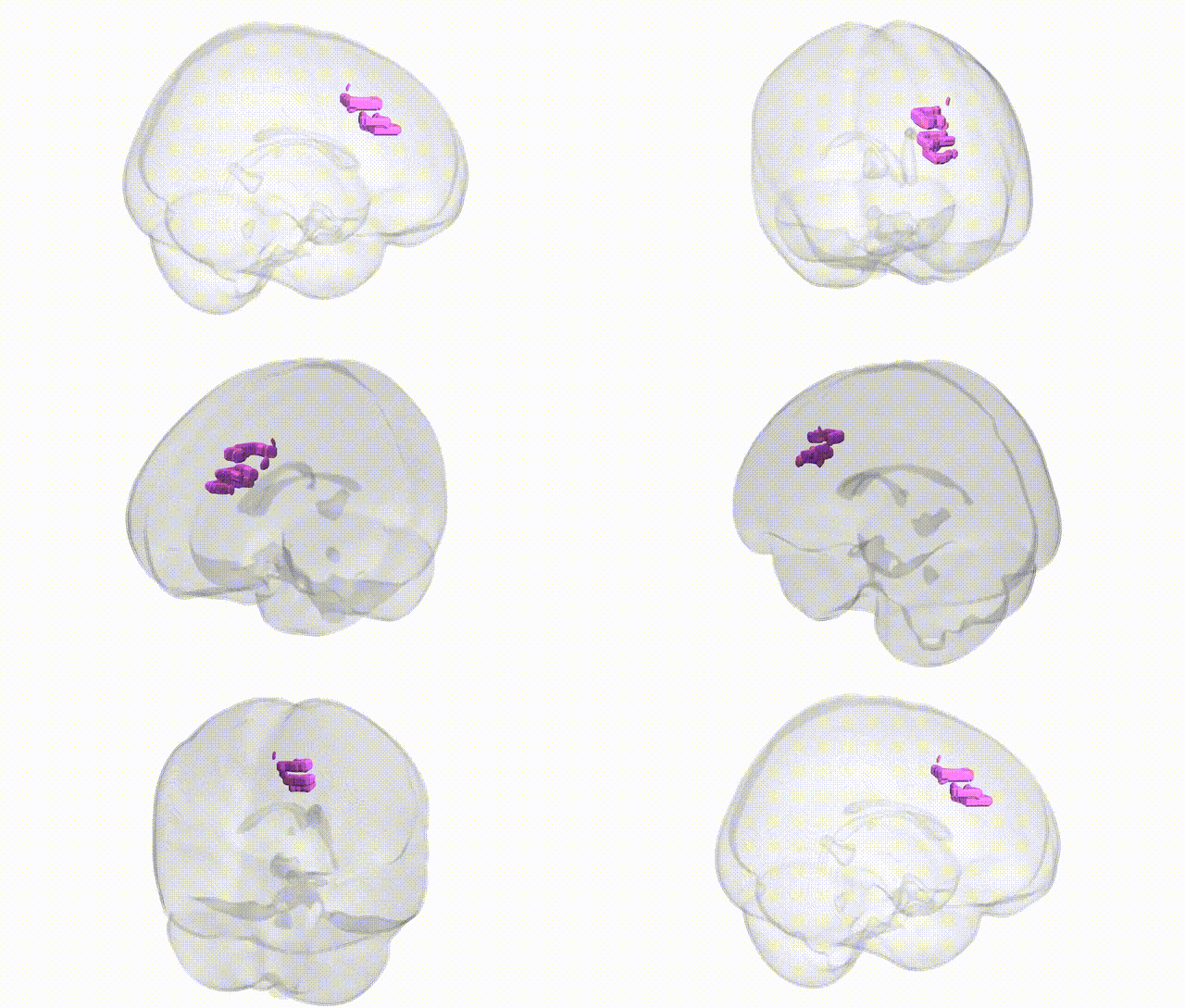
Full Quality Version: Download MP4
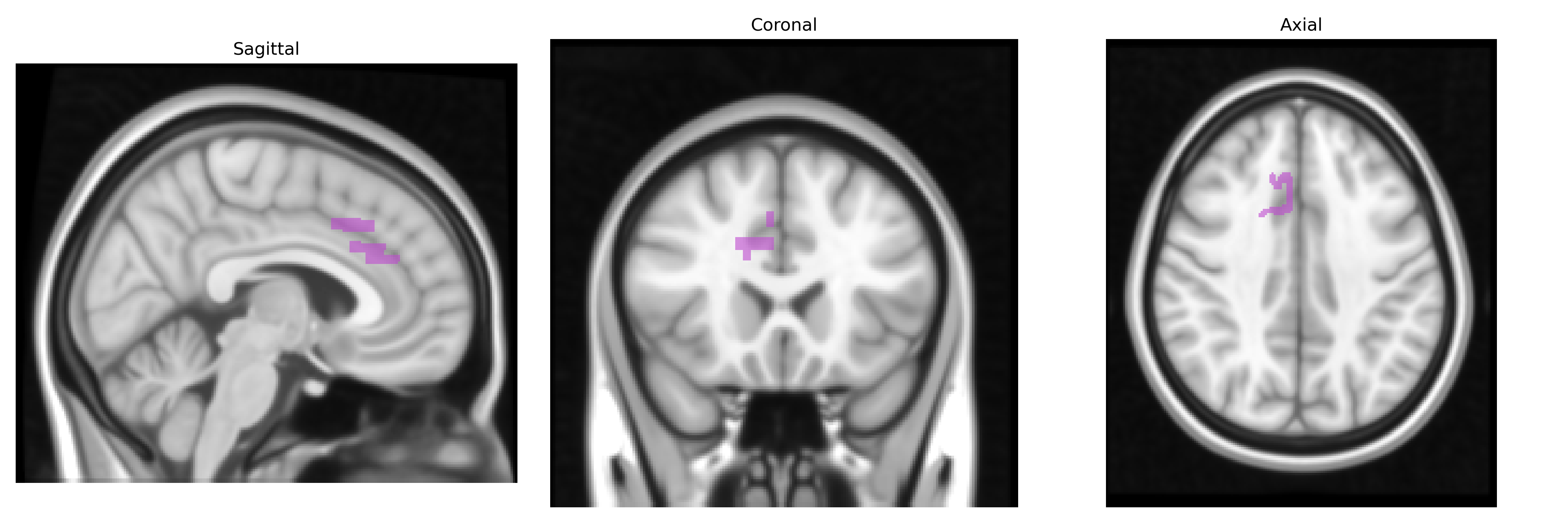
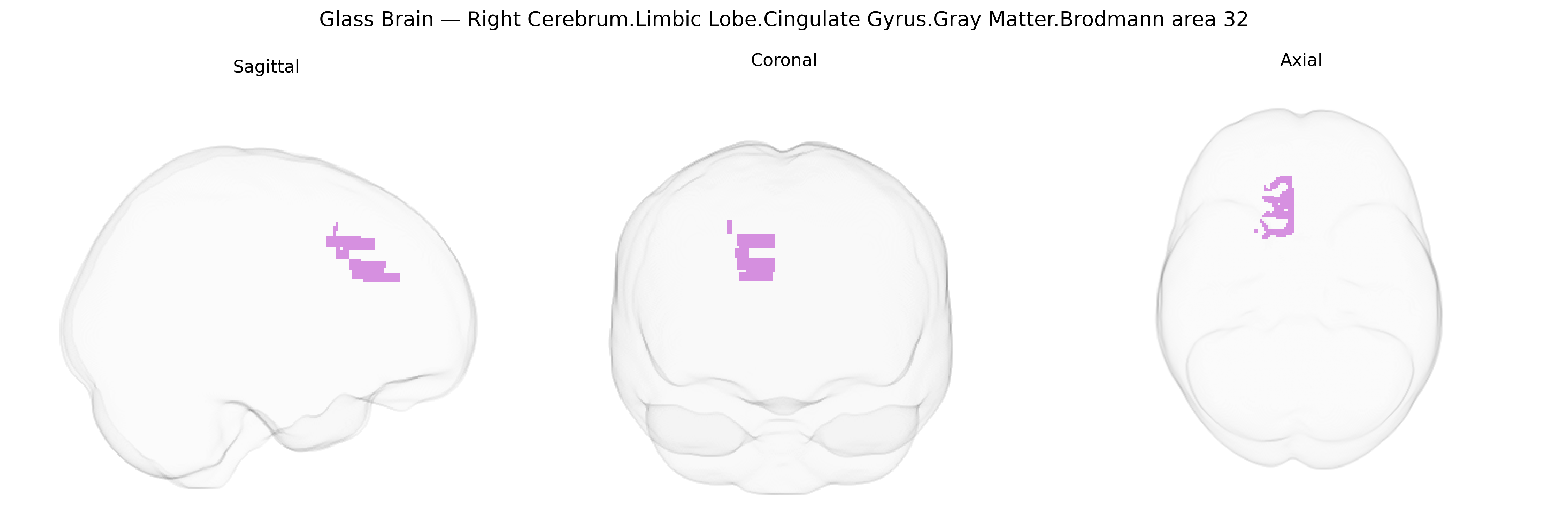
Wali Sidiqyar*, Gaurav Rudravaram*, Elyssa M. McMaster, Trent M. Schwartz, Adam M. Saunders, Kurt G. Schilling, Bennett A. Landman "Introducing SPINS: A Shared Public Visualization Library of Neuroanatomical Structures." Medical Imaging with Deep Learning- short paper
This resource is licensed under CC0 1.0 Universal (Public Domain).