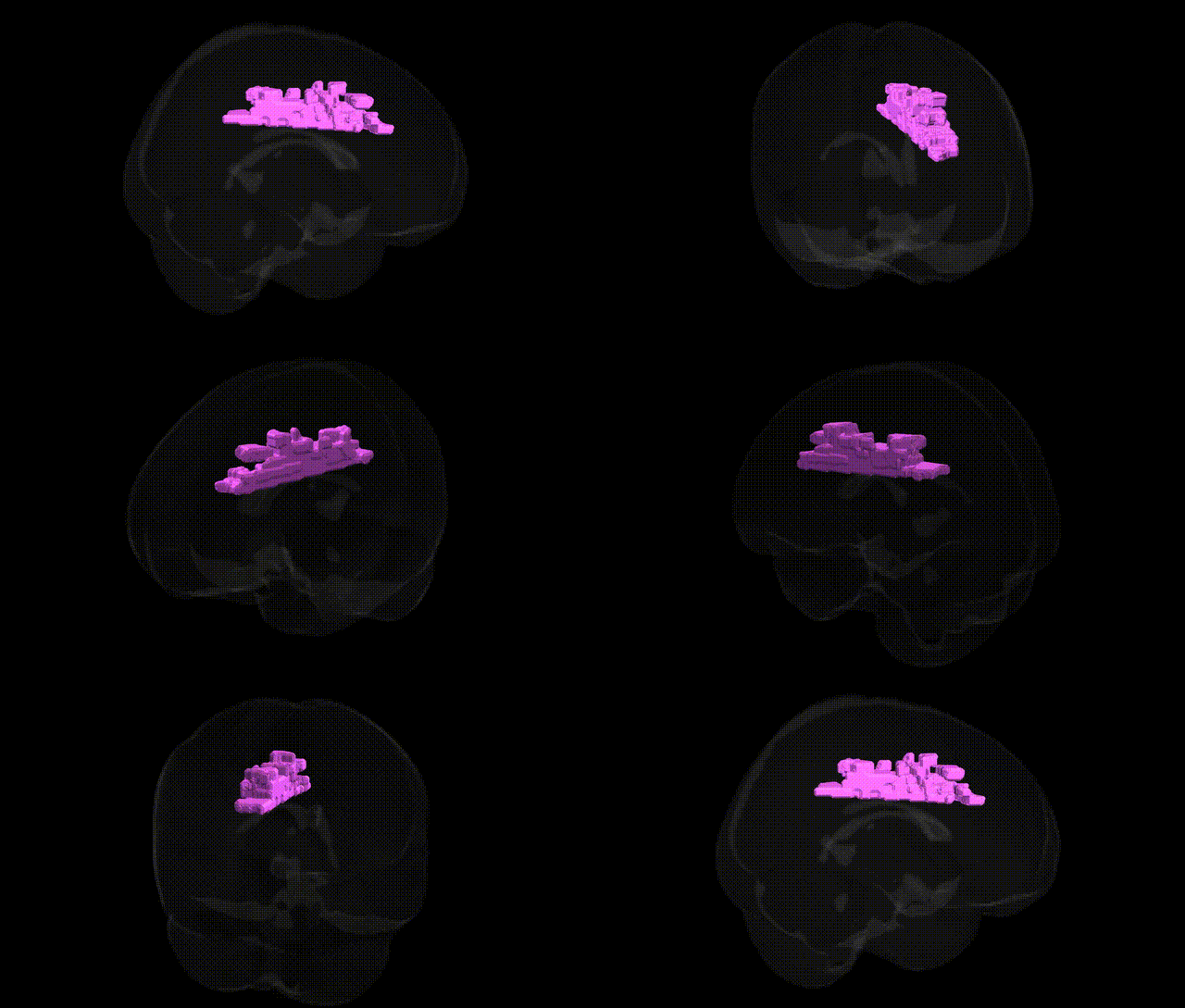
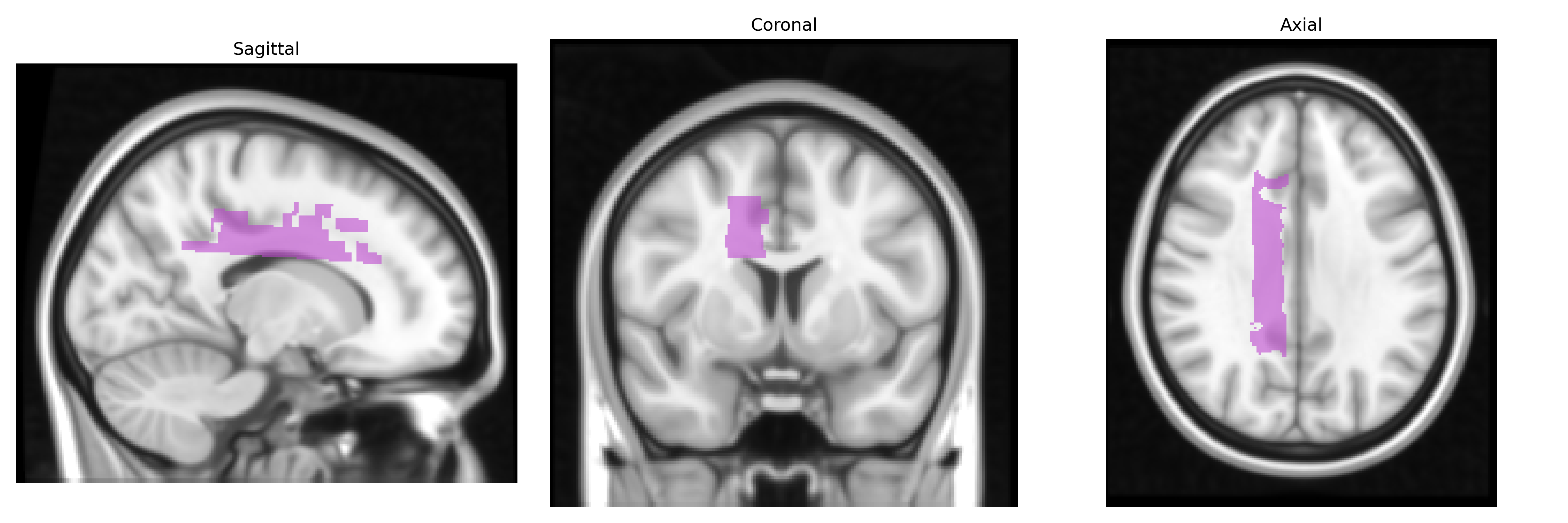
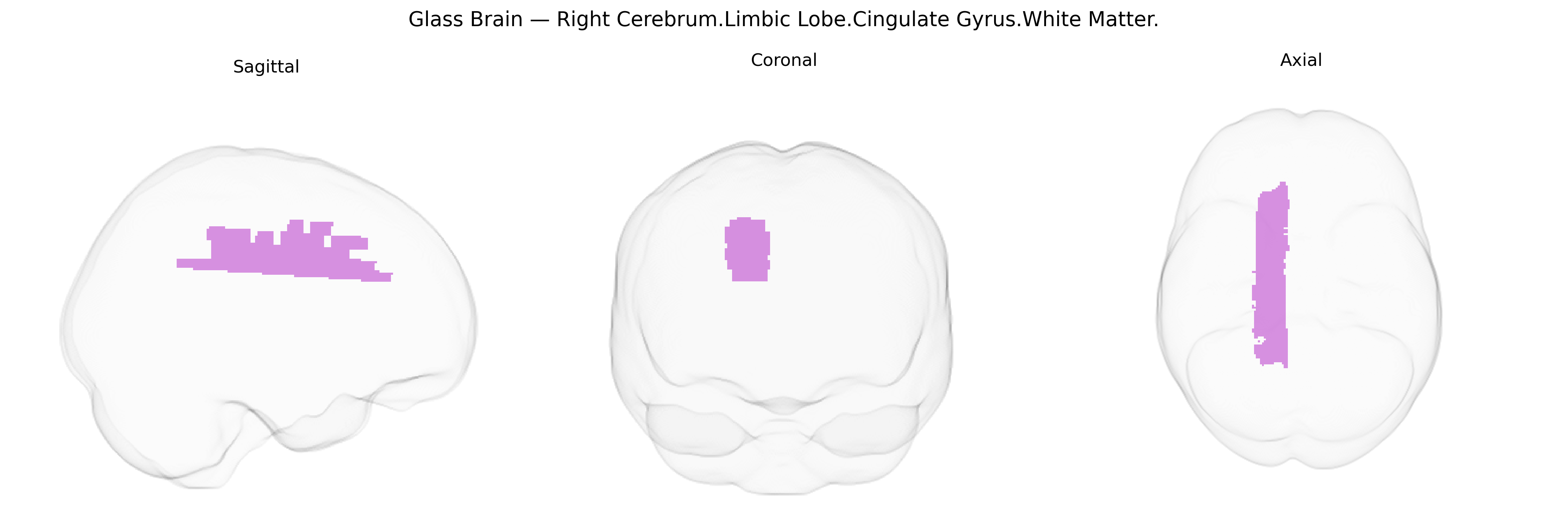
The bilateral Right Cerebrum.Limbic Lobe.Cingulate Gyrus.White Matter corresponds to the subcortical myelinated fiber pathways underlying the cingulate gyrus within the limbic lobe of the right cerebral hemisphere. These white matter tracts include association fibers that connect different portions of the cingulate cortex and link it with other limbic and prefrontal regions, facilitating integration of emotional, cognitive, and autonomic information. They form part of larger limbic connectivity networks (including pathways such as the cingulum bundle) that contribute to processes like attention, emotion regulation, pain perception, and memory. While there is no dedicated article for the white matter subdivision alone, it is structurally related to the Cingulate gyrus.
The bilateral right cingulate gyrus white matter, part of the limbic system in the Talairach 1 mm atlas, has been implicated in numerous genetic and GWAS studies through its structural and functional characteristics rather than direct locus-specific associations. Variants in genes influencing myelination and white matter integrity (e.g., NRG1, ERBB4, CNTN4, MAG, and oligodendrocyte-related genes) have been associated with microstructural measures (such as fractional anisotropy and mean diffusivity) in cingulate white matter tracts, often identified via diffusion tensor imaging. Polygenic risk scores for major psychiatric disorders—including schizophrenia, bipolar disorder, major depressive disorder, and attention-deficit/hyperactivity disorder—have been linked to altered cingulate white matter volume or connectivity, suggesting a genetic contribution to limbic white matter organization. Large-scale neuroimaging GWAS consortia (such as ENIGMA) have reported associations between common variants near genes like ZNF804A, CACNA1C, and others with cingulate-related white matter measures or connectivity patterns relevant to emotional regulation and cognitive control. Cingulate white matter abnormalities with genetic underpinnings have also been reported in autism spectrum disorder, obsessive–compulsive disorder, post-traumatic stress disorder, and chronic pain conditions, where heritable differences in limbic-cortical circuitry, including the cingulum bundle, correlate with symptom severity. Although there are no widely accepted, region-specific GWAS hits uniquely assigned to “Right Cerebrum.Limbic Lobe.Cingulate Gyrus.White Matter” as a Talairach label, convergent evidence from imaging-genetics studies supports a role of common and rare variants affecting neurodevelopment, synaptic signaling, and myelination in shaping the structure and connectivity of this white matter region, thereby contributing to the genetic architecture of affective, cognitive, and stress-related disorders.
Overview generated by GPT-4o (2026).
Region ID: 922
Hemisphere: bilateral
Atlas: Talairach labels 1mm
Full Quality Version: Download MP4
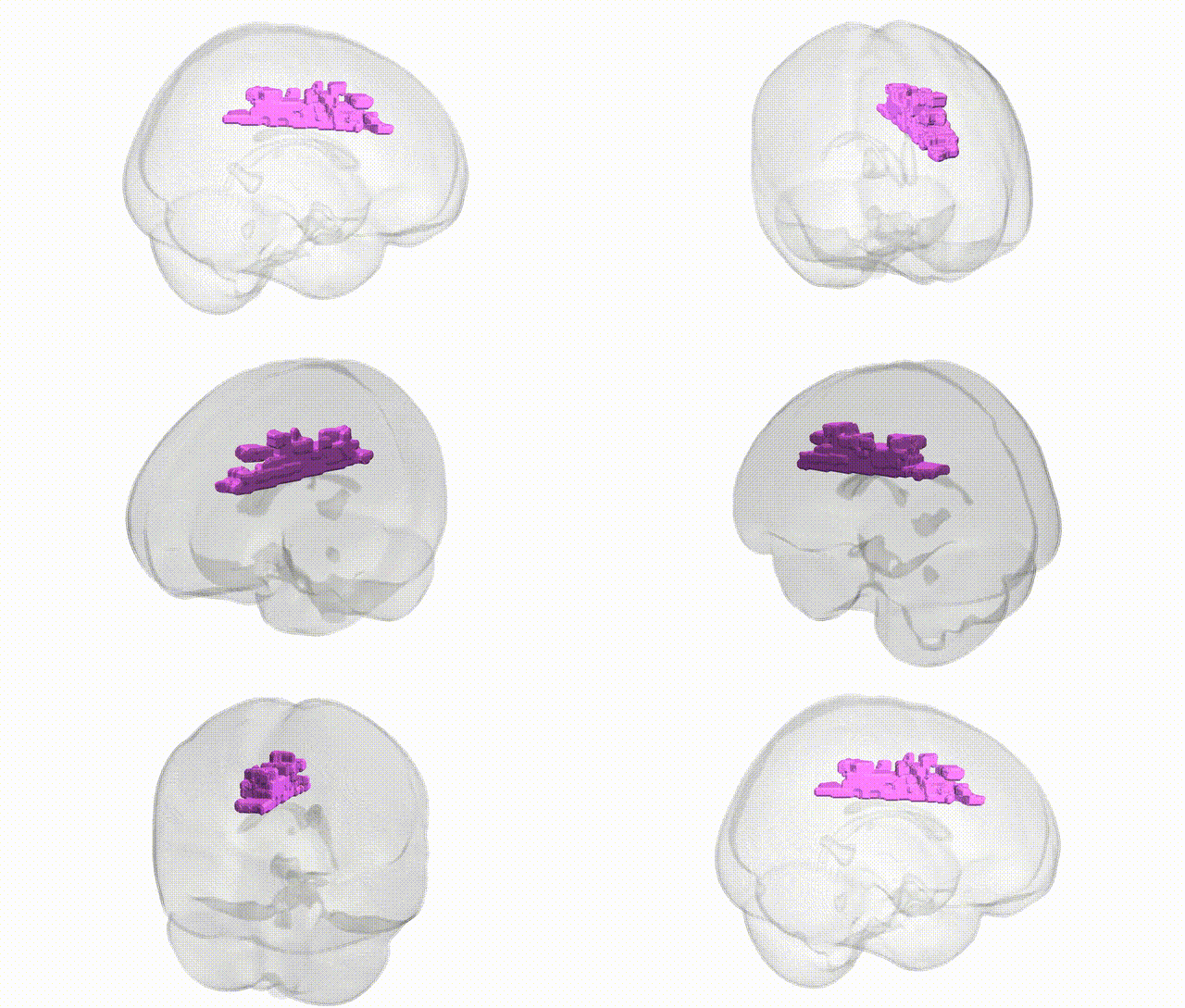
Full Quality Version: Download MP4
Wali Sidiqyar*, Gaurav Rudravaram*, Elyssa M. McMaster, Trent M. Schwartz, Adam M. Saunders, Kurt G. Schilling, Bennett A. Landman "Introducing SPINS: A Shared Public Visualization Library of Neuroanatomical Structures." Medical Imaging with Deep Learning- short paper
This resource is licensed under CC0 1.0 Universal (Public Domain).