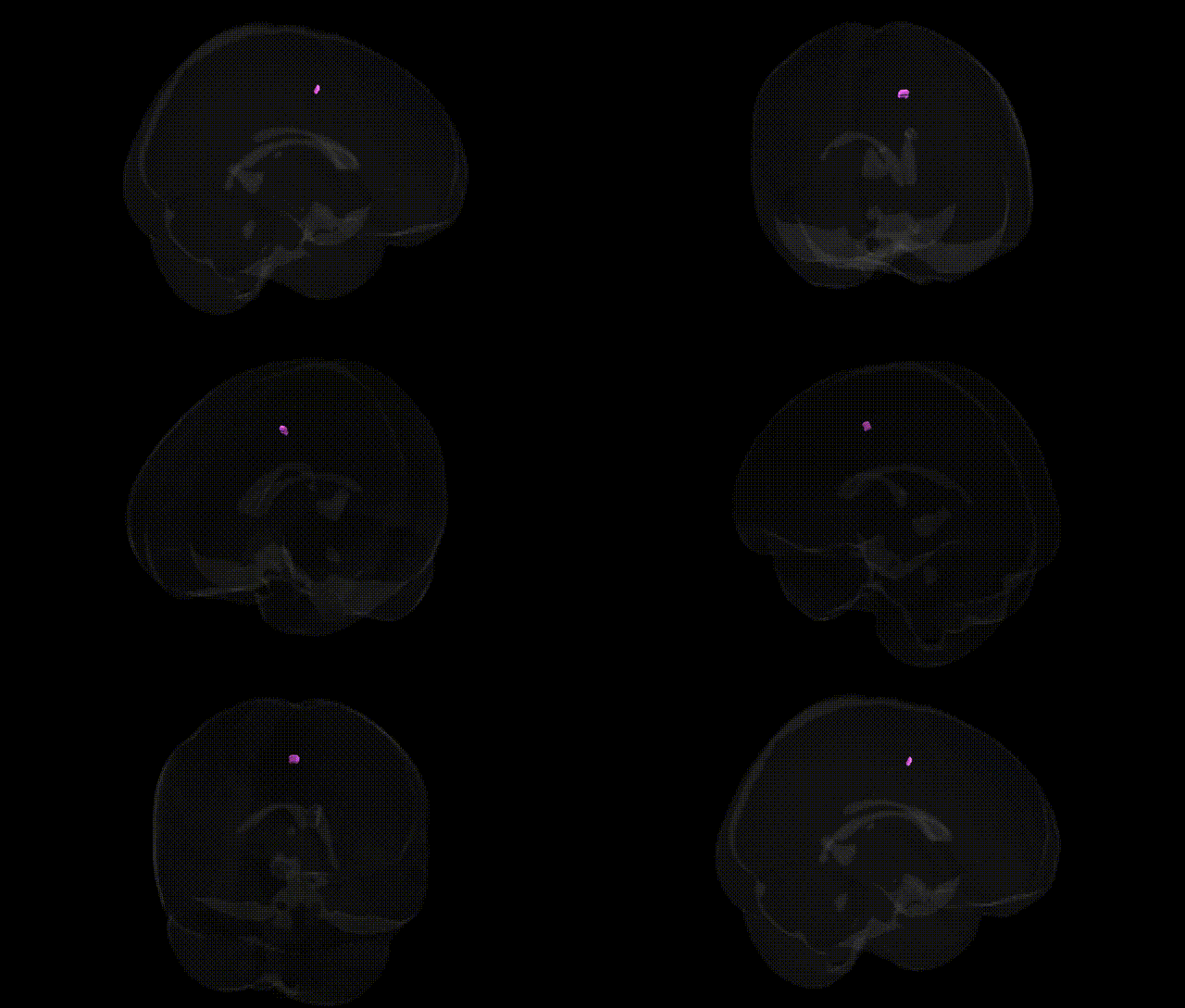
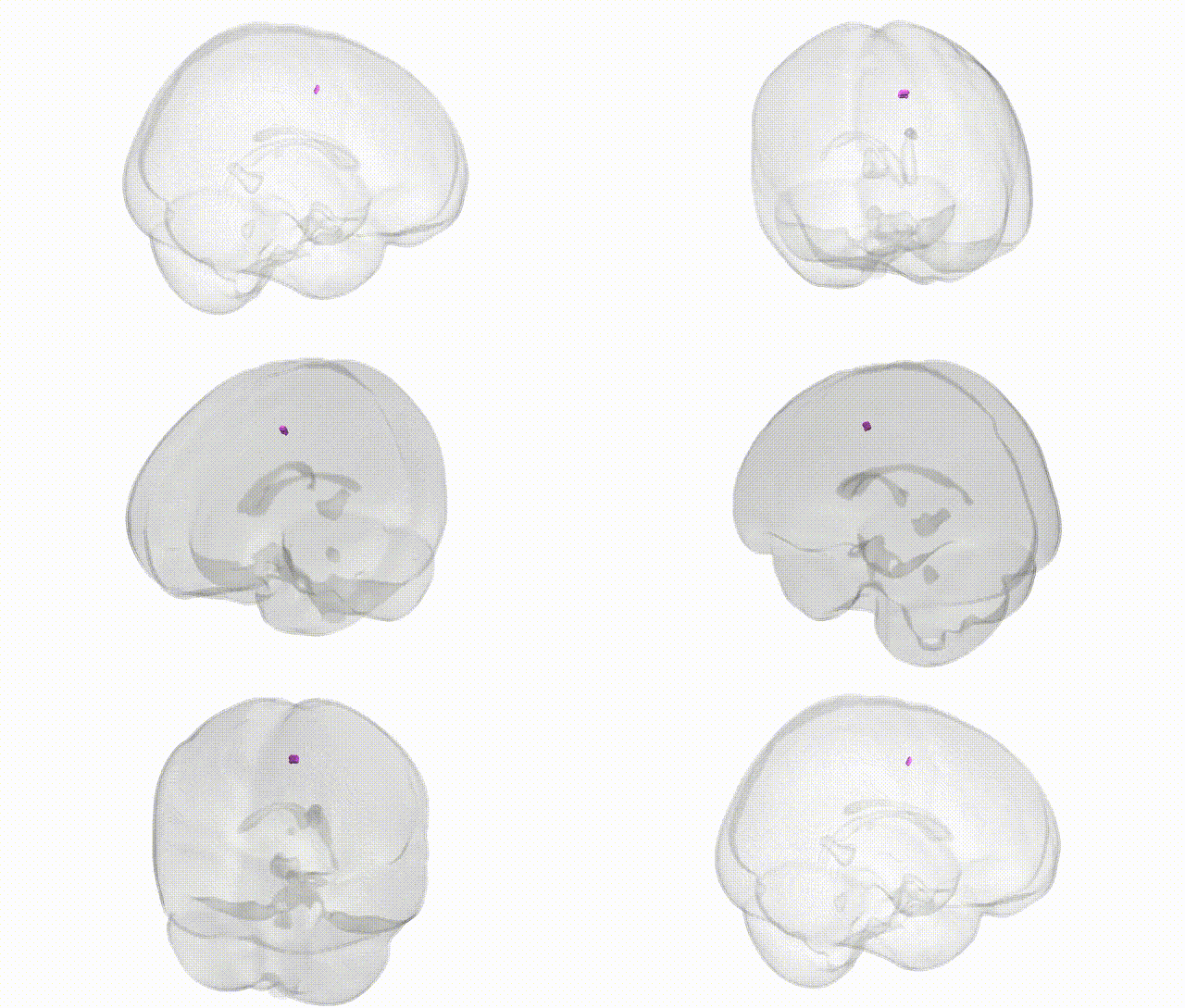
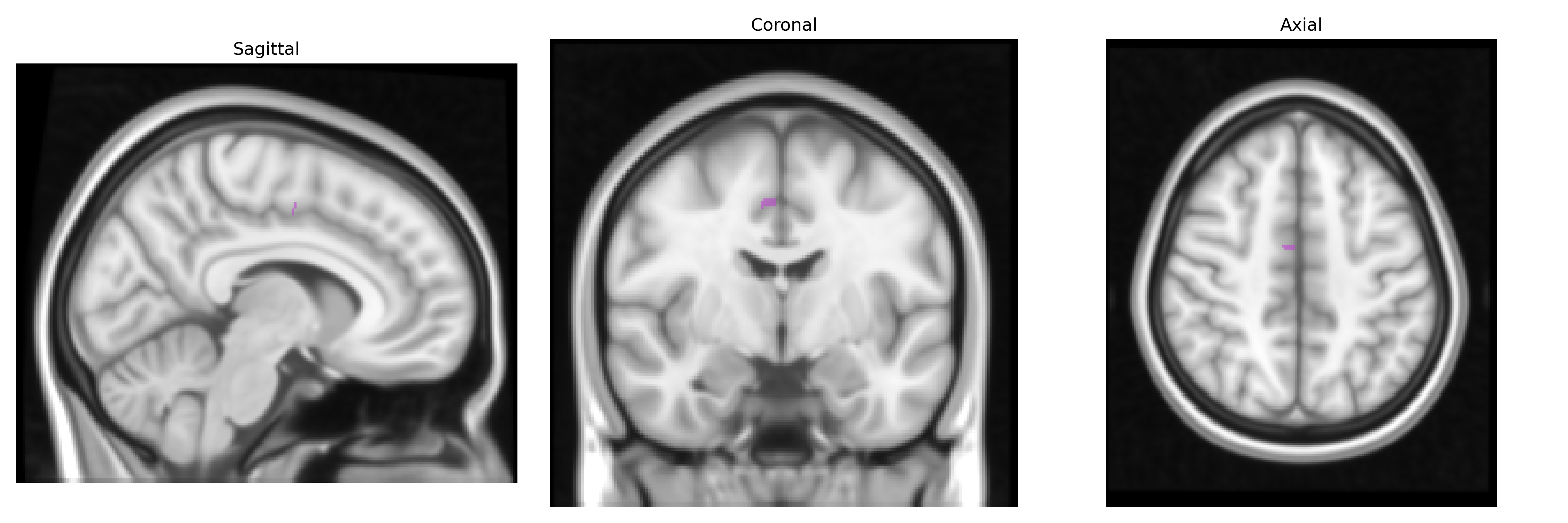
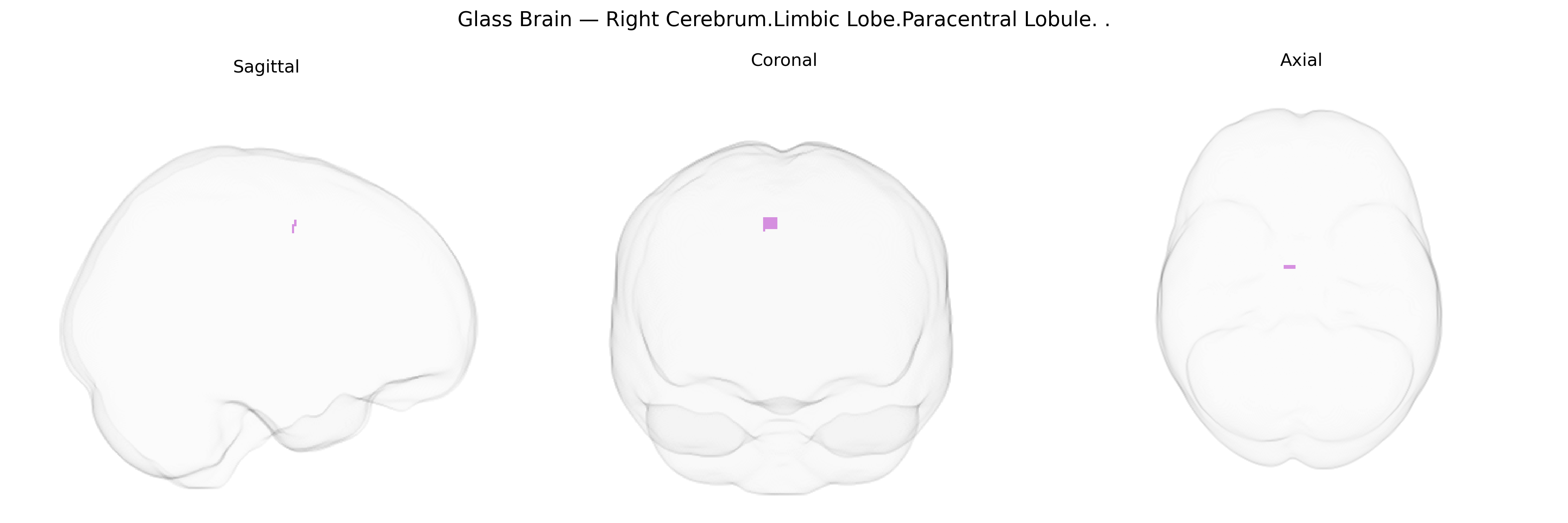
The bilateral Right Cerebrum.Limbic Lobe.Paracentral Lobule corresponds to the paracentral lobule portion of the medial cortex, spanning the frontal and parietal lobes around the medial continuation of the precentral and postcentral gyri, and in Talairach terminology is grouped functionally within the limbic lobe due to its medial position and connectivity. This region contains parts of the primary motor and primary somatosensory cortices responsible for the representation of the contralateral lower limb and pelvic floor, playing key roles in voluntary motor control, somatosensory processing, and aspects of sphincter regulation. It is heavily interconnected with supplementary motor and premotor areas as well as subcortical structures involved in movement and sensorimotor integration. There is no dedicated Wikipedia article for this exact Talairach label; a closely related and encompassing structure is the Paracentral lobule.
The paracentral lobule, a medial sensorimotor region encompassing leg and pelvic representations and overlapping limbic circuitry, has been implicated in several genetic and GWAS-based associations through its involvement in motor, pain, and affective processes. Large neuroimaging genetics consortia (e.g., ENIGMA, UK Biobank) have identified multiple common variants linked to cortical thickness and surface area in the medial sensorimotor cortex, including loci near genes involved in neurodevelopment and synaptic function (such as those in glutamatergic signaling and axon guidance), although these are typically reported for broader “precentral/postcentral or medial sensorimotor” parcels rather than the paracentral lobule label specifically. GWAS of multiple sclerosis and other demyelinating or neuroinflammatory diseases have shown that risk variants in immune-related genes (e.g., HLA region) are associated with regional lesion burden and atrophy in pericentral and paracentral areas, consistent with the region’s role in motor deficits affecting the lower limbs and sphincter control. In chronic pain and neuropathic pain GWAS, variants influencing pain sensitivity and central pain modulation (including genes in serotonergic, dopaminergic, and opioid pathways) have been linked to altered activation and structural variation in medial sensorimotor and limbic-related regions that encompass paracentral cortex. Additionally, polygenic risk scores for major depressive disorder, bipolar disorder, and schizophrenia have been associated in imaging-genetics studies with microstructural and functional changes in medial motor/limbic networks, including paracentral lobule involvement in psychomotor symptoms and affective regulation. While no single “paracentral lobule gene” is established, convergent evidence from structural and functional MRI GWAS, disease-risk variants, and polygenic imaging studies supports a role for common and rare neurodevelopmental and immune-related variants in shaping the morphology and functional engagement of this bilateral limbic-sensorimotor hub.
Overview generated by GPT-4o (2026).
Region ID: 1057
Hemisphere: bilateral
Atlas: Talairach labels 1mm
Full Quality Version: Download MP4
Full Quality Version: Download MP4
Wali Sidiqyar*, Gaurav Rudravaram*, Elyssa M. McMaster, Trent M. Schwartz, Adam M. Saunders, Kurt G. Schilling, Bennett A. Landman "Introducing SPINS: A Shared Public Visualization Library of Neuroanatomical Structures." Medical Imaging with Deep Learning- short paper
This resource is licensed under CC0 1.0 Universal (Public Domain).