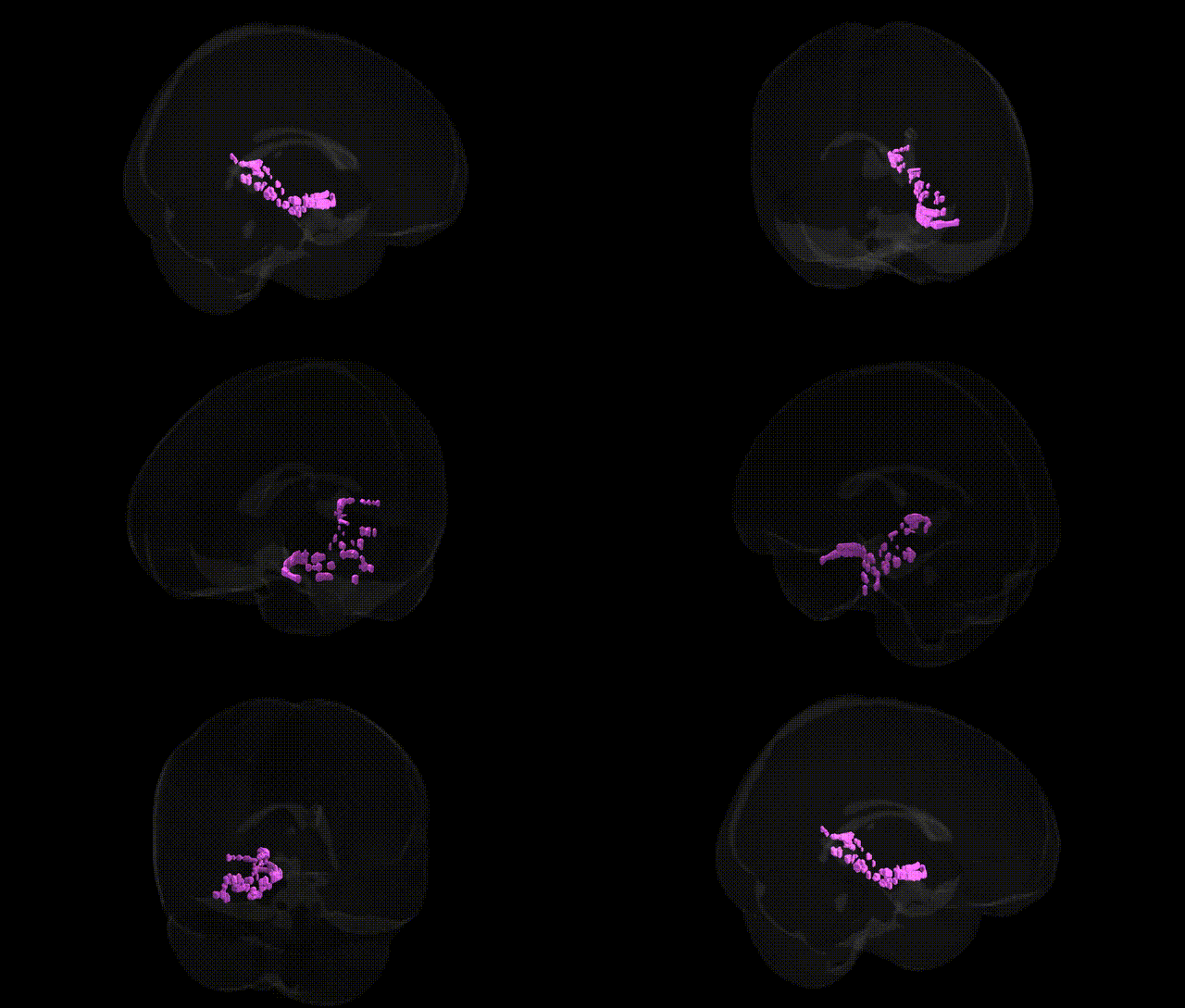
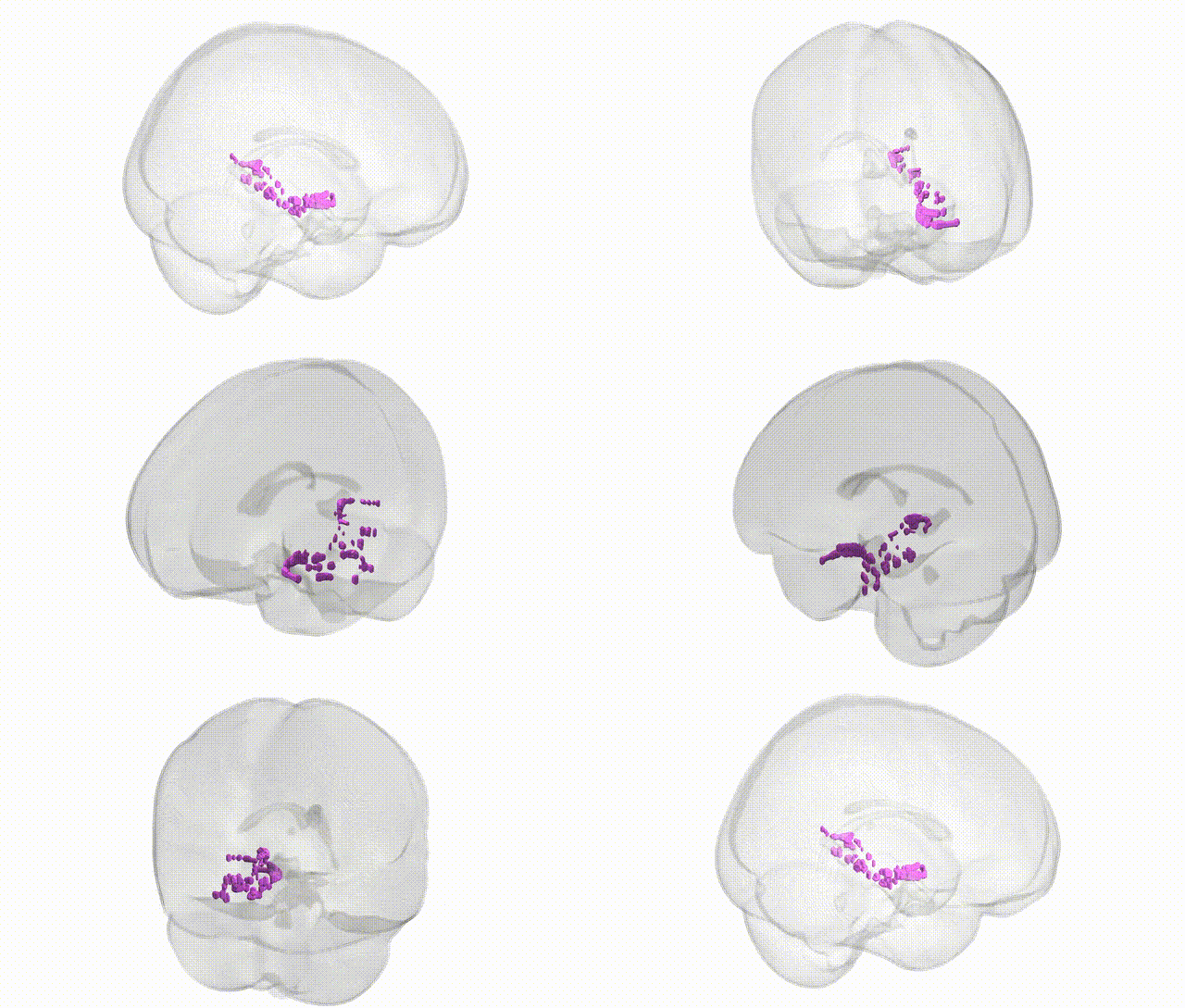
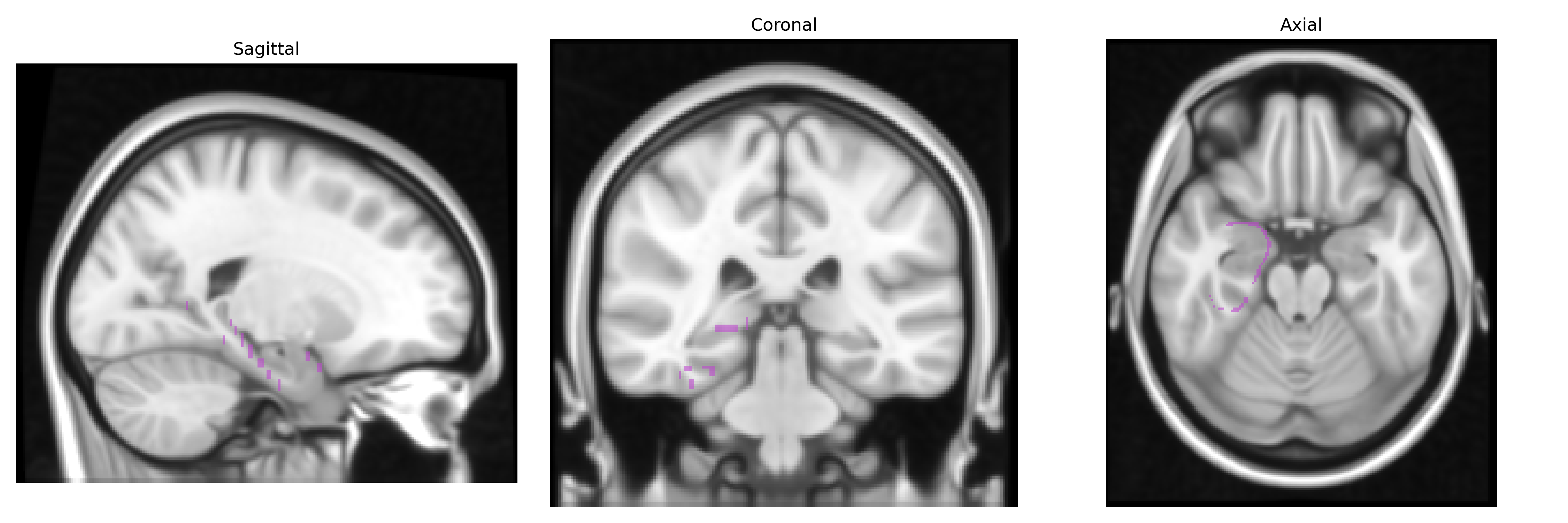
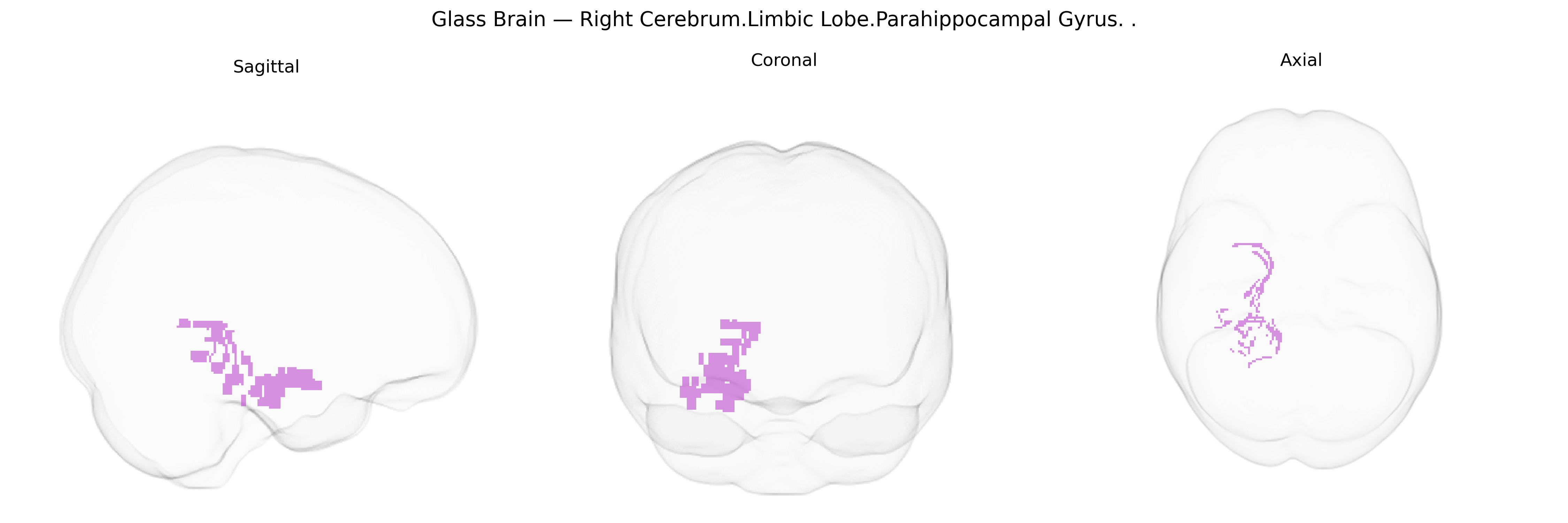
The bilateral Right Cerebrum.Limbic Lobe.Parahippocampal Gyrus corresponds to the parahippocampal gyrus in the medial temporal lobe, a cortical structure of the limbic system that borders the hippocampus and surrounds the hippocampal fissure. It participates in memory encoding and retrieval, contextual and spatial processing, and contributes to scene recognition and navigation, integrating multimodal sensory information with stored memories. Cytoarchitectonically, it includes regions such as the entorhinal cortex and perirhinal cortex, serving as a major interface between neocortex and hippocampal formation for declarative memory circuits and emotional-context processing. Parahippocampal gyrus
The bilateral right parahippocampal gyrus, a core limbic structure implicated in contextual memory, navigation, and emotional processing, shows robust genetic associations in imaging–genetics and GWAS studies, particularly for volume, cortical thickness, and functional connectivity phenotypes that frequently map to loci influencing neurodevelopment, synaptic plasticity, and myelination (for example, variants near or within genes such as BDNF, SORL1, APOE, and several polygenic loci identified in large ENIGMA and UK Biobank analyses). Polygenic scores for Alzheimer’s disease and other dementias show strong associations with parahippocampal atrophy, consistent with its early involvement in neurodegenerative pathology and with risk alleles like APOE ε4 influencing structural and metabolic measures in this region. GWAS of schizophrenia, major depressive disorder, and bipolar disorder indicate that common risk variants—often in genes related to glutamatergic signaling, synaptic organization, and neuronal migration—contribute to altered parahippocampal volume and activity, aligning with the region’s role in memory and affective circuitry. Additional genetic links have been reported to post-traumatic stress disorder, anxiety traits, and neuroticism, where variants in stress-response and HPA-axis–related genes are associated with parahippocampal structural and functional differences, as well as to individual differences in episodic memory, spatial navigation, and scene processing, highlighting this region as a convergent target of polygenic influences across cognition and psychopathology.
Overview generated by GPT-4o (2026).
Region ID: 127
Hemisphere: bilateral
Atlas: Talairach labels 1mm
Full Quality Version: Download MP4
Full Quality Version: Download MP4
Wali Sidiqyar*, Gaurav Rudravaram*, Elyssa M. McMaster, Trent M. Schwartz, Adam M. Saunders, Kurt G. Schilling, Bennett A. Landman "Introducing SPINS: A Shared Public Visualization Library of Neuroanatomical Structures." Medical Imaging with Deep Learning- short paper
This resource is licensed under CC0 1.0 Universal (Public Domain).