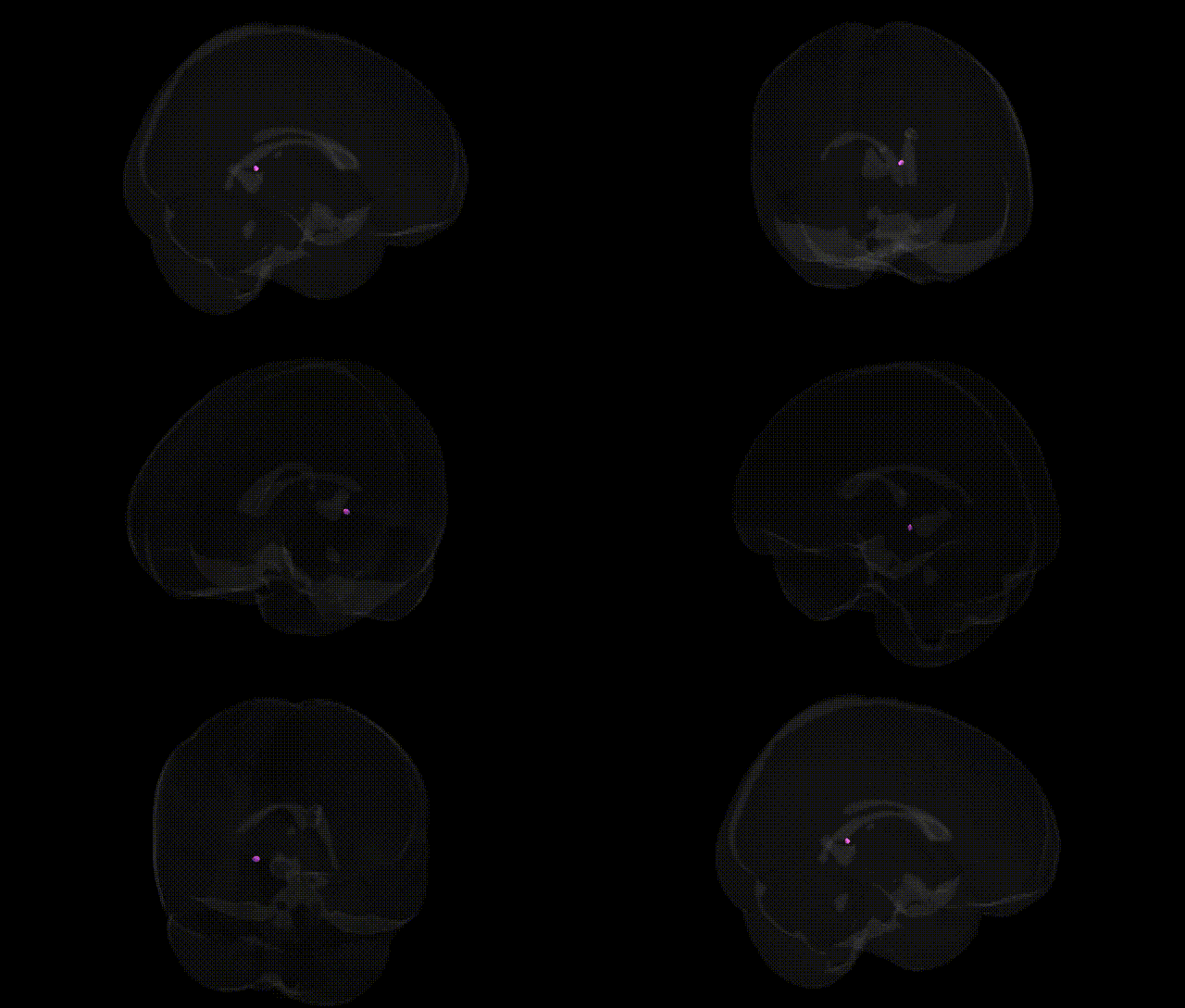
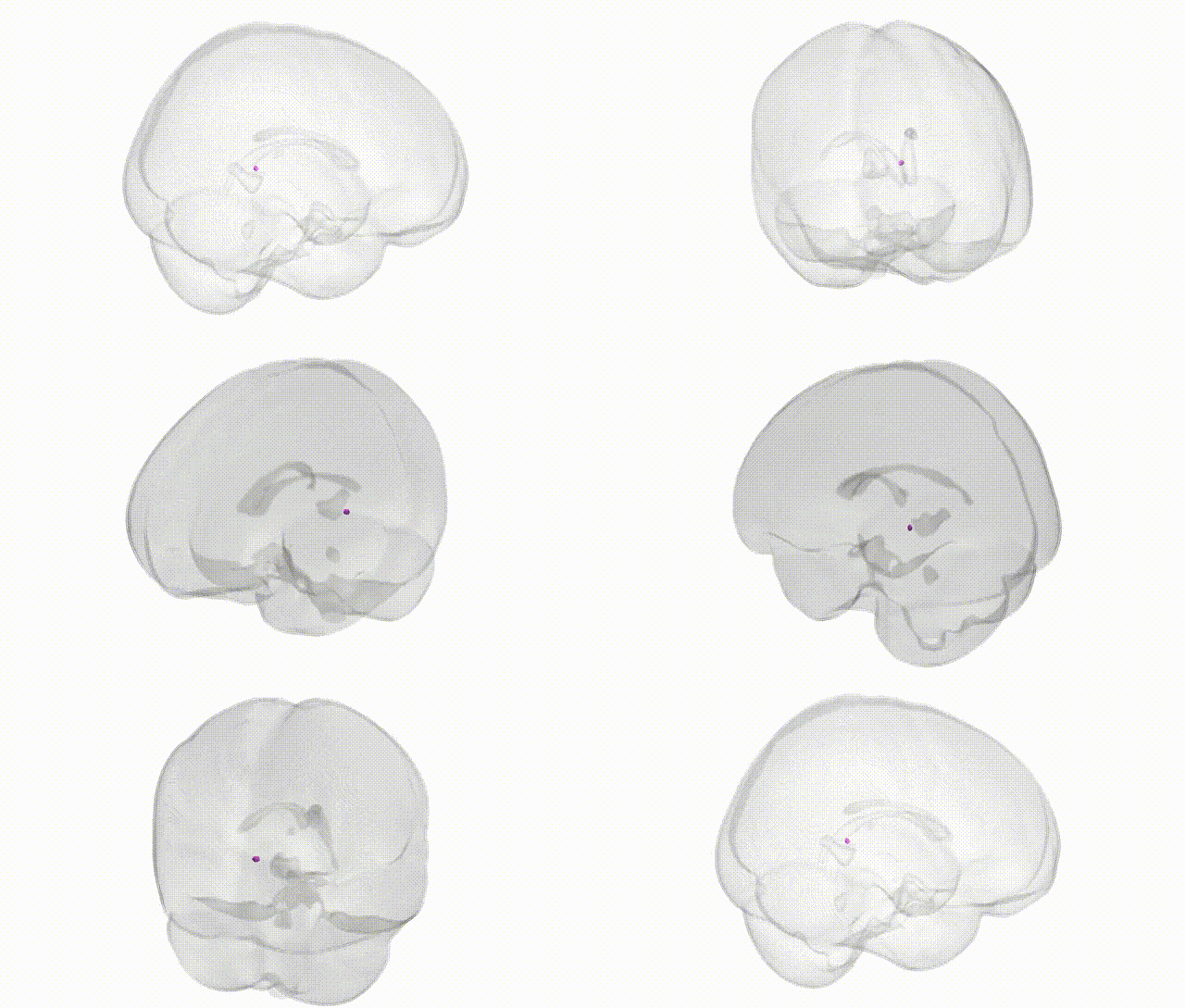
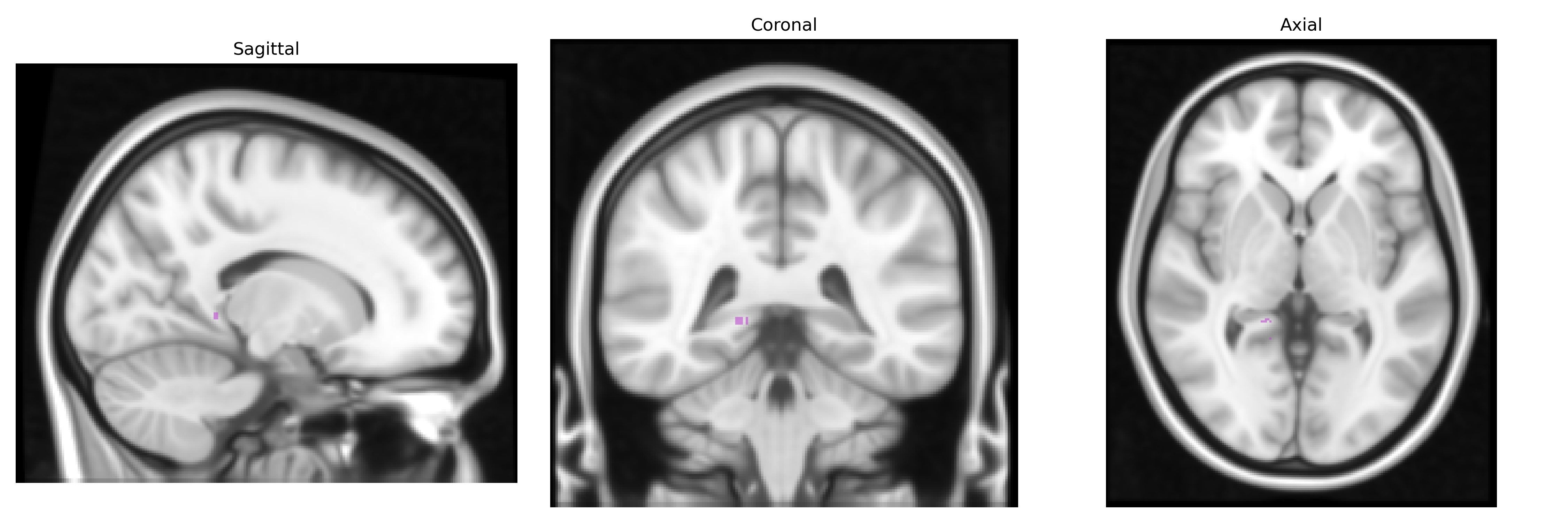
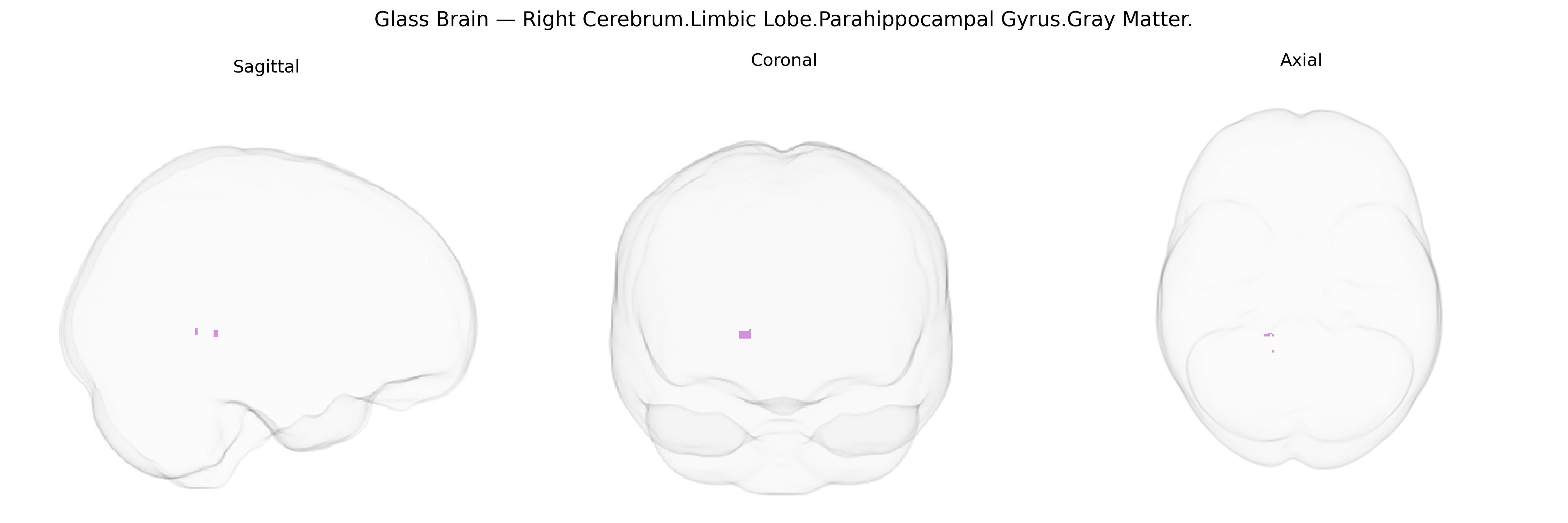
The bilateral Right Cerebrum.Limbic Lobe.Parahippocampal Gyrus.Gray Matter corresponds to cortical gray matter within the parahippocampal gyrus of the medial temporal lobe, a key component of the limbic system. This region lies adjacent to the hippocampus and entorhinal cortex and participates in memory encoding and retrieval, particularly contextual and episodic memory, as well as spatial navigation and scene processing. Its gray matter contains pyramidal neurons and interneurons that integrate multimodal sensory inputs and interface with hippocampal circuitry, contributing to the formation of long-term declarative memories and the association of environmental context with emotional and mnemonic content. There is no direct link for this exact composite label; a closely related structure is the Parahippocampal gyrus.
The parahippocampal gyrus gray matter, particularly in the right limbic lobe, has been repeatedly implicated in genetic studies of memory, spatial navigation, and neuropsychiatric risk, although findings are often reported for medial temporal lobe or hippocampal/parahippocampal complexes rather than this Talairach-defined region alone. GWAS of brain imaging phenotypes (e.g., ENIGMA, UK Biobank) have identified common variants near genes such as SLC39A8, KIAA0586, WNT3, DPP4, and others associated with medial temporal and parahippocampal cortical thickness or volume, indicating polygenic influences on its structure. Genetic risk for Alzheimer’s disease (e.g., APOE, CLU, PICALM, BIN1, CR1) and other dementias is associated with atrophy and altered connectivity in parahippocampal and adjacent medial temporal regions, consistent with this area’s role in episodic memory networks. Schizophrenia and major depressive disorder GWAS-based polygenic risk scores correlate with structural and functional changes in parahippocampal and hippocampal circuitry, and genes involved in synaptic plasticity and glutamatergic signaling (such as GRM3 and other synaptic genes) have been linked to medial temporal abnormalities. Variants near BDNF and genes regulating neurodevelopment and axon guidance have been associated with memory performance and parahippocampal/medial temporal activation in fMRI, while GWAS of anxiety traits and PTSD implicate limbic-medial temporal networks, including parahippocampal regions, in genetically influenced vulnerability to fear and contextual processing; however, associations are generally diffuse across limbic and temporal cortices rather than specific to bilateral right parahippocampal gray matter as defined in the Talairach 1 mm atlas.
Overview generated by GPT-4o (2026).
Region ID: 567
Hemisphere: bilateral
Atlas: Talairach labels 1mm
Full Quality Version: Download MP4
Full Quality Version: Download MP4
Wali Sidiqyar*, Gaurav Rudravaram*, Elyssa M. McMaster, Trent M. Schwartz, Adam M. Saunders, Kurt G. Schilling, Bennett A. Landman "Introducing SPINS: A Shared Public Visualization Library of Neuroanatomical Structures." Medical Imaging with Deep Learning- short paper
This resource is licensed under CC0 1.0 Universal (Public Domain).