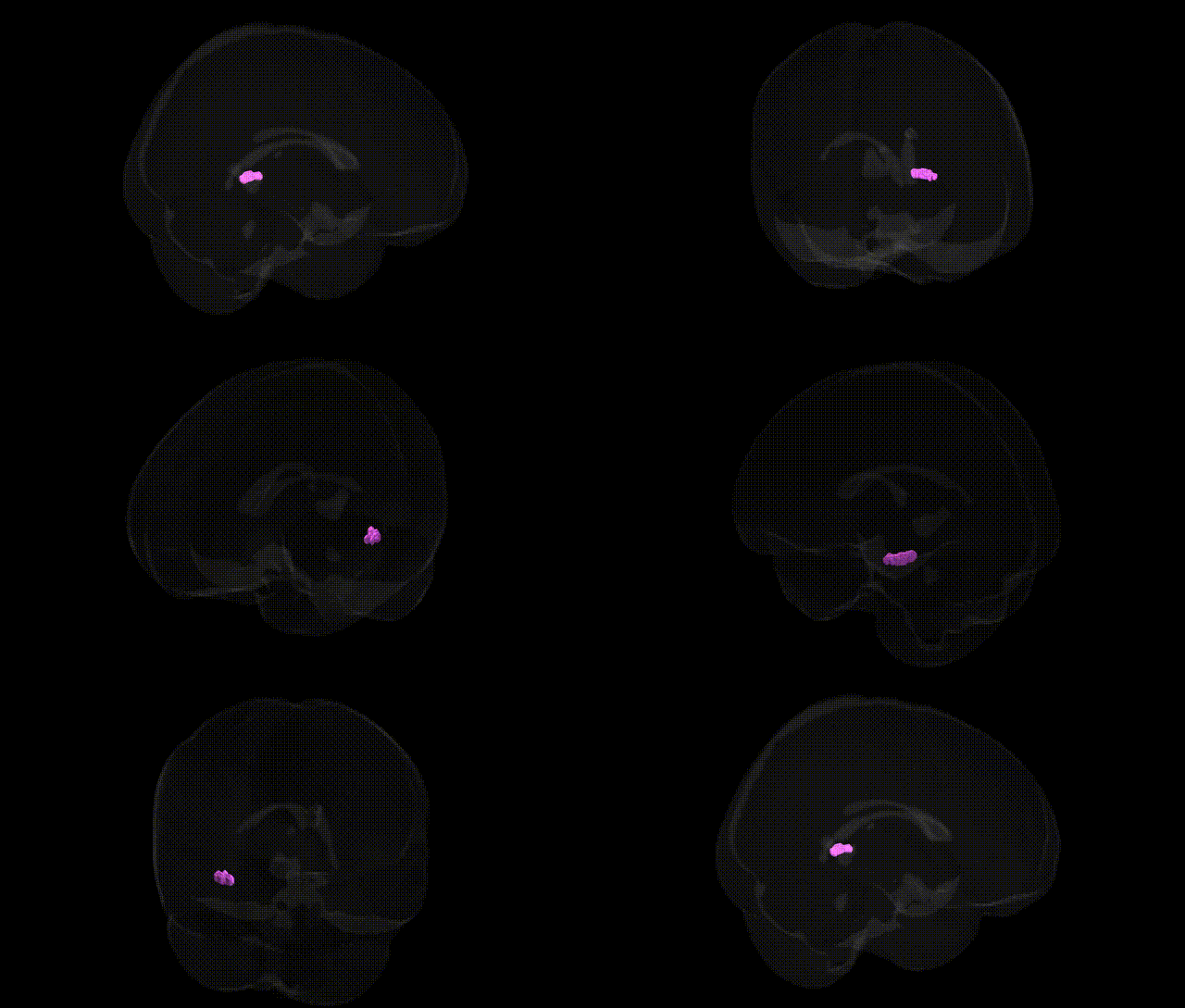
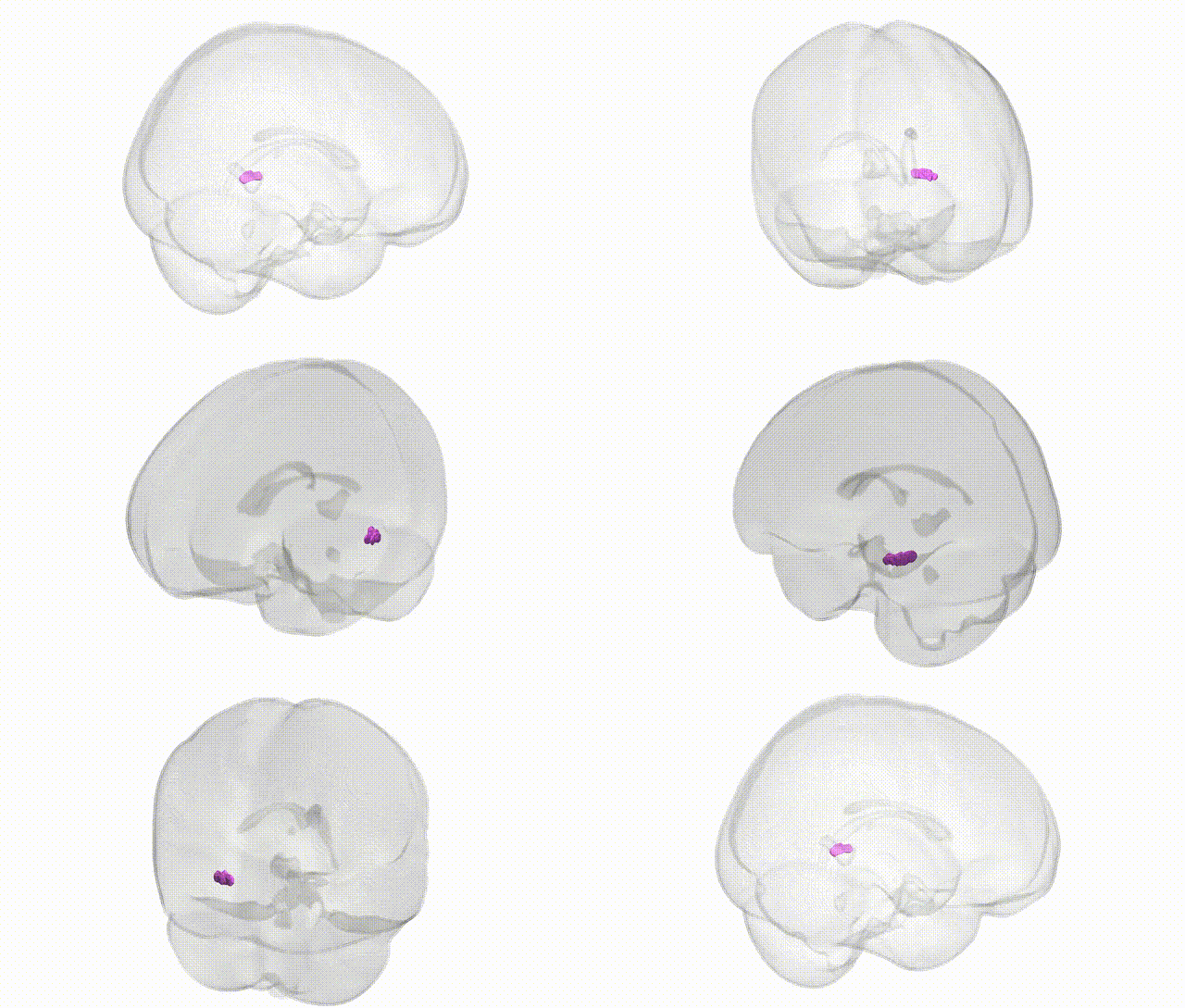
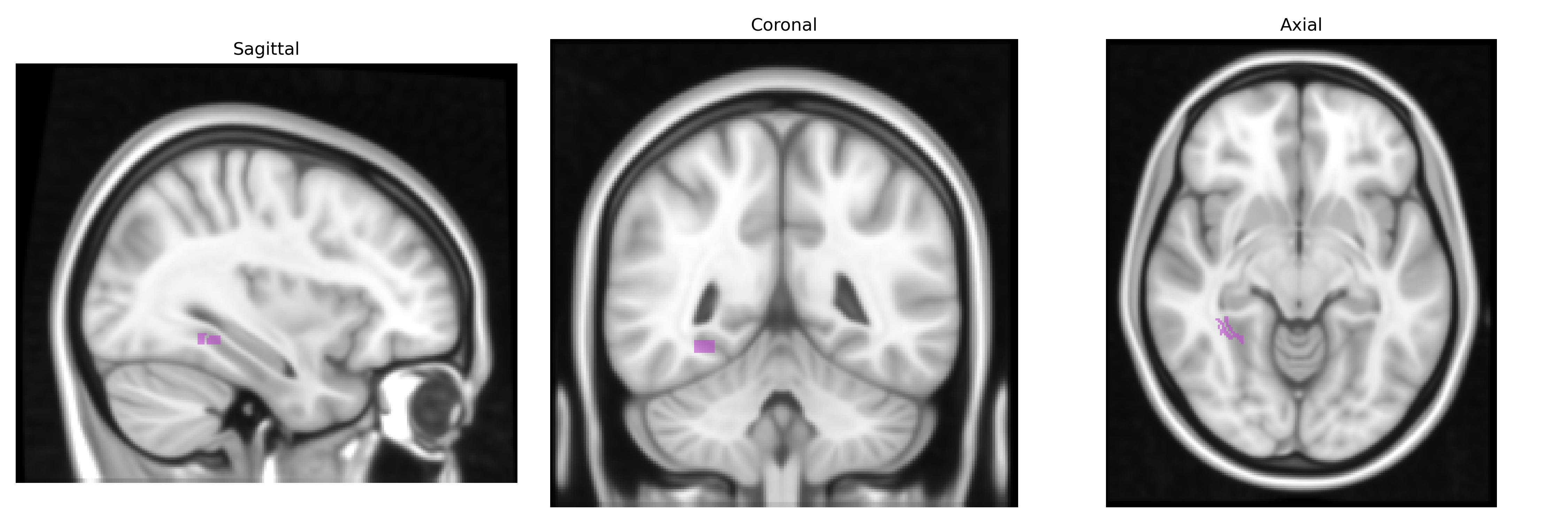
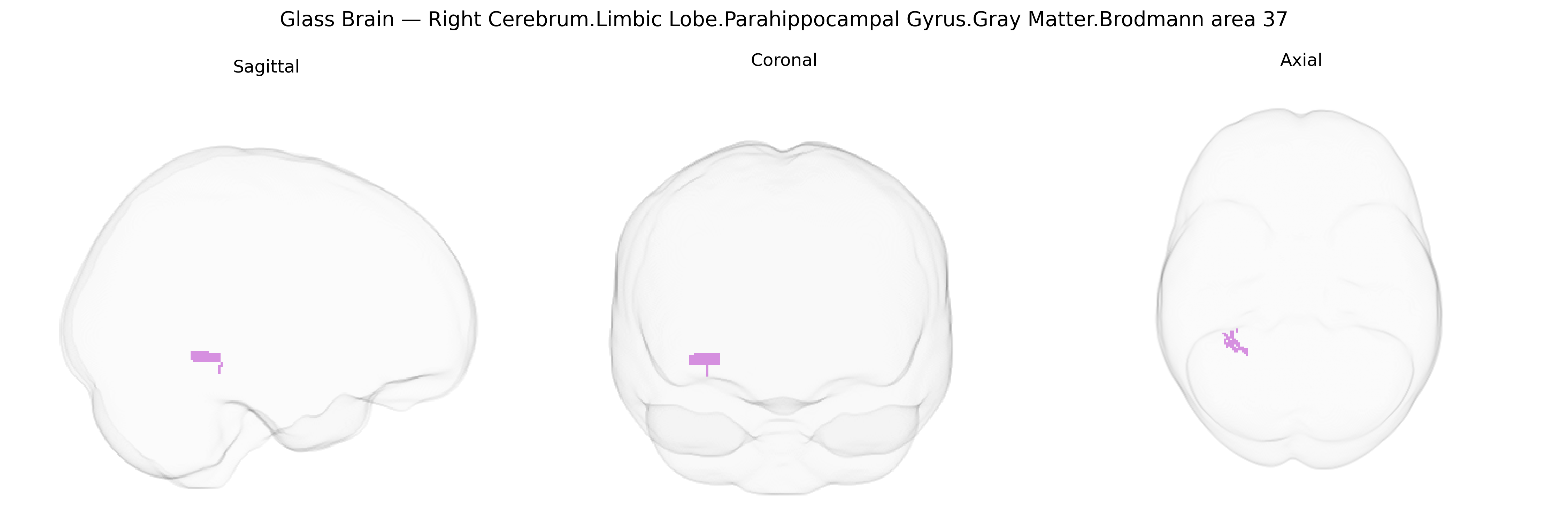
The bilateral Right Cerebrum.Limbic Lobe.Parahippocampal Gyrus.Gray Matter.Brodmann area 37 corresponds primarily to cortex in the posterior parahippocampal and adjacent fusiform regions, situated in the medial and ventral temporal lobe at the junction of limbic and association cortices. Brodmann area 37 is cytoarchitectonically characterized by well-developed granular layers and dense pyramidal cell populations, and functionally is associated with high-level visual processing, including object and face recognition, as well as aspects of semantic memory and contextual scene analysis that integrate visual input with stored memory representations. Its position within the parahippocampal gyrus links it to the hippocampal formation and medial temporal memory circuits, contributing to the encoding and retrieval of contextual and spatial information while interfacing with ventral visual stream pathways. There is no direct link for this exact composite region; a related structure is the Parahippocampal gyrus.
The bilateral parahippocampal gyrus gray matter in Brodmann area 37, a medial temporal and ventral visual-stream region implicated in memory encoding, scene processing, and semantic integration, shows polygenic influences that overlap with risk architectures for several neuropsychiatric and neurodegenerative disorders. GWAS of MRI-derived cortical thickness and surface area (e.g., ENIGMA, UK Biobank) report common variants in genes involved in synaptic plasticity, axon guidance, and neurodevelopment (such as BDNF, STH, and loci near MAPT and MSRA) associated with structural variability in the medial and inferior temporal cortex encompassing BA37 and adjacent parahippocampal areas. Large-scale imaging–genetics studies link reduced volume or altered microstructure in this region to genetic liability for Alzheimer’s disease (APOE ε4 and surrounding haplotypes), schizophrenia and bipolar disorder (including CACNA1C, MIR137, ZNF804A–tagged loci), and major depression, as well as to polygenic scores for educational attainment and general cognitive ability. Additional GWAS and candidate-gene work implicate this territory in genetic susceptibility to temporal lobe epilepsy and to anxiety- and trauma-related disorders, with risk alleles in HPA-axis and glutamatergic genes (for example FKBP5 and GRM3) associated with parahippocampal and BA37 volume or activation changes during memory and emotional-context tasks, collectively indicating that variation in this region reflects a convergent genetic substrate for memory, affective, and higher-order visual–semantic functions.
Overview generated by GPT-4o (2026).
Region ID: 271
Hemisphere: bilateral
Atlas: Talairach labels 1mm
Full Quality Version: Download MP4
Full Quality Version: Download MP4
Wali Sidiqyar*, Gaurav Rudravaram*, Elyssa M. McMaster, Trent M. Schwartz, Adam M. Saunders, Kurt G. Schilling, Bennett A. Landman "Introducing SPINS: A Shared Public Visualization Library of Neuroanatomical Structures." Medical Imaging with Deep Learning- short paper
This resource is licensed under CC0 1.0 Universal (Public Domain).