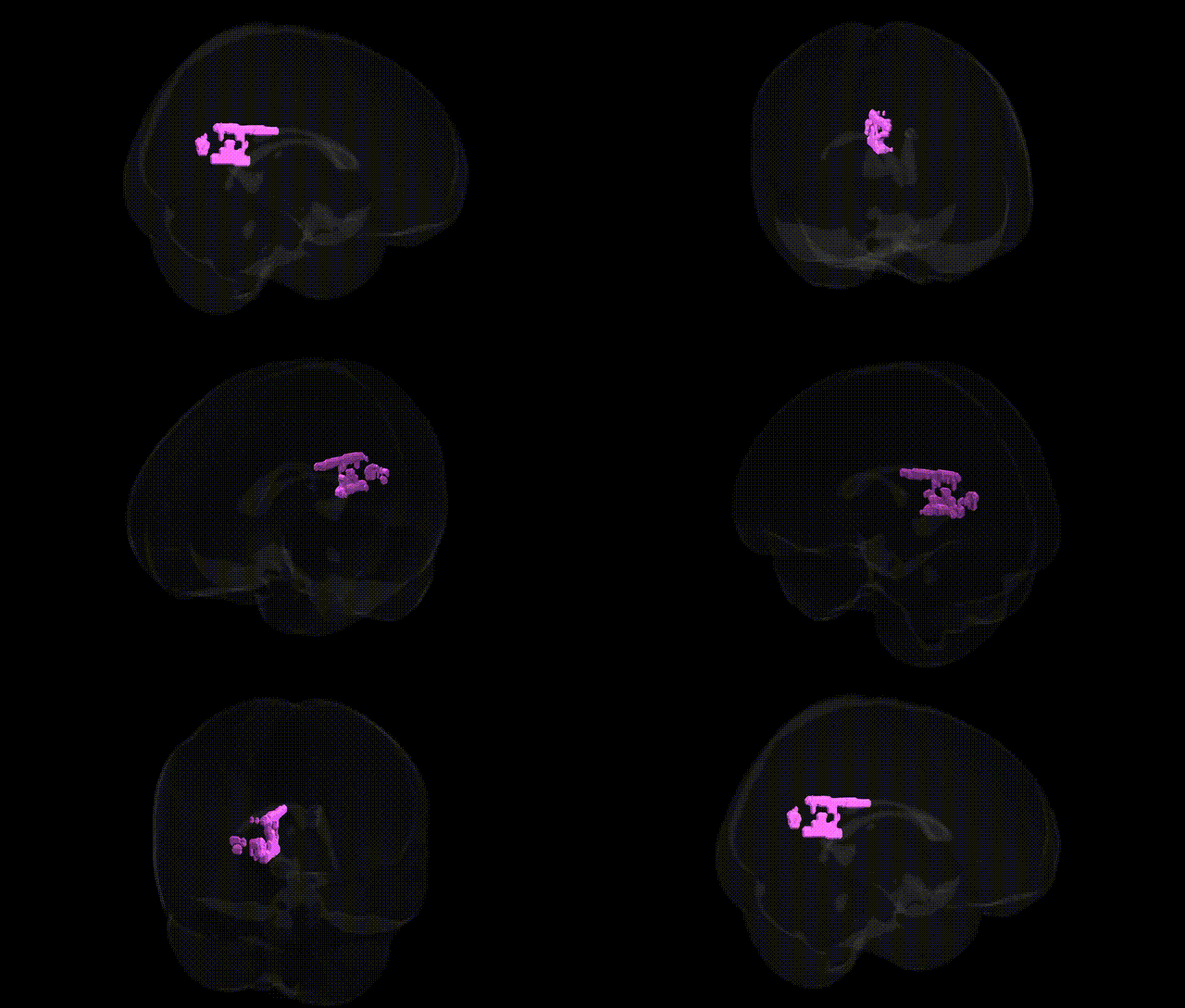
The bilateral Right Cerebrum.Limbic Lobe.Posterior Cingulate corresponds to the posterior segment of the cingulate gyrus within the limbic lobe, situated on the medial aspect of the cerebral hemispheres, just dorsal to the corpus callosum. This region is a key hub of the default mode network and is heavily involved in internally directed cognition, including autobiographical memory retrieval, evaluation of emotional and motivational significance, and aspects of spatial orientation and attention. It integrates multimodal information from cortical and subcortical structures and participates in regulating arousal and awareness of self-related stimuli. Structural and functional alterations in the posterior cingulate have been implicated in neurodegenerative disorders, notably Alzheimer’s disease, as well as in mood and anxiety disorders. Posterior cingulate cortex
The bilateral posterior cingulate cortex (Right Cerebrum.Limbic Lobe.Posterior Cingulate in the Talairach 1 mm atlas) is a core hub of the default mode network and features in numerous imaging–genetics and GWAS-based association studies, though few variants are uniquely specific to this subregion. Large neuroimaging GWAS consortia (e.g., ENIGMA, UK Biobank) have identified common variants in genes related to synaptic function, neurodevelopment, and myelination (such as those in or near APOE, CLU, PICALM, BIN1, and other Alzheimer’s disease risk loci) that associate with posterior cingulate cortical thickness, surface area, metabolic activity, or connectivity, consistent with this region’s early involvement in amyloid and tau pathology. Polygenic risk scores for Alzheimer’s disease, major depressive disorder, and schizophrenia are repeatedly associated with altered posterior cingulate structure and default mode connectivity, implicating shared genetic architecture across these disorders. Imaging–genetic analyses of resting-state functional connectivity and task-based activation have linked posterior cingulate variability to genes involved in glutamatergic signaling, calcium channels, and immune/inflammatory pathways, although specific single-gene effects are generally small and distributed. GWAS of cognitive traits (e.g., general intelligence, episodic memory, mind-wandering propensity) and personality dimensions (e.g., neuroticism, openness) also show that polygenic influences on these traits partially converge on posterior cingulate structure and function, suggesting that this region acts as a genetically modulated hub that integrates risk for neurodegeneration, psychiatric disorders, and cognition rather than being defined by a single, strongly penetrant genetic association.
Overview generated by GPT-4o (2026).
Region ID: 668
Hemisphere: bilateral
Atlas: Talairach labels 1mm
Full Quality Version: Download MP4
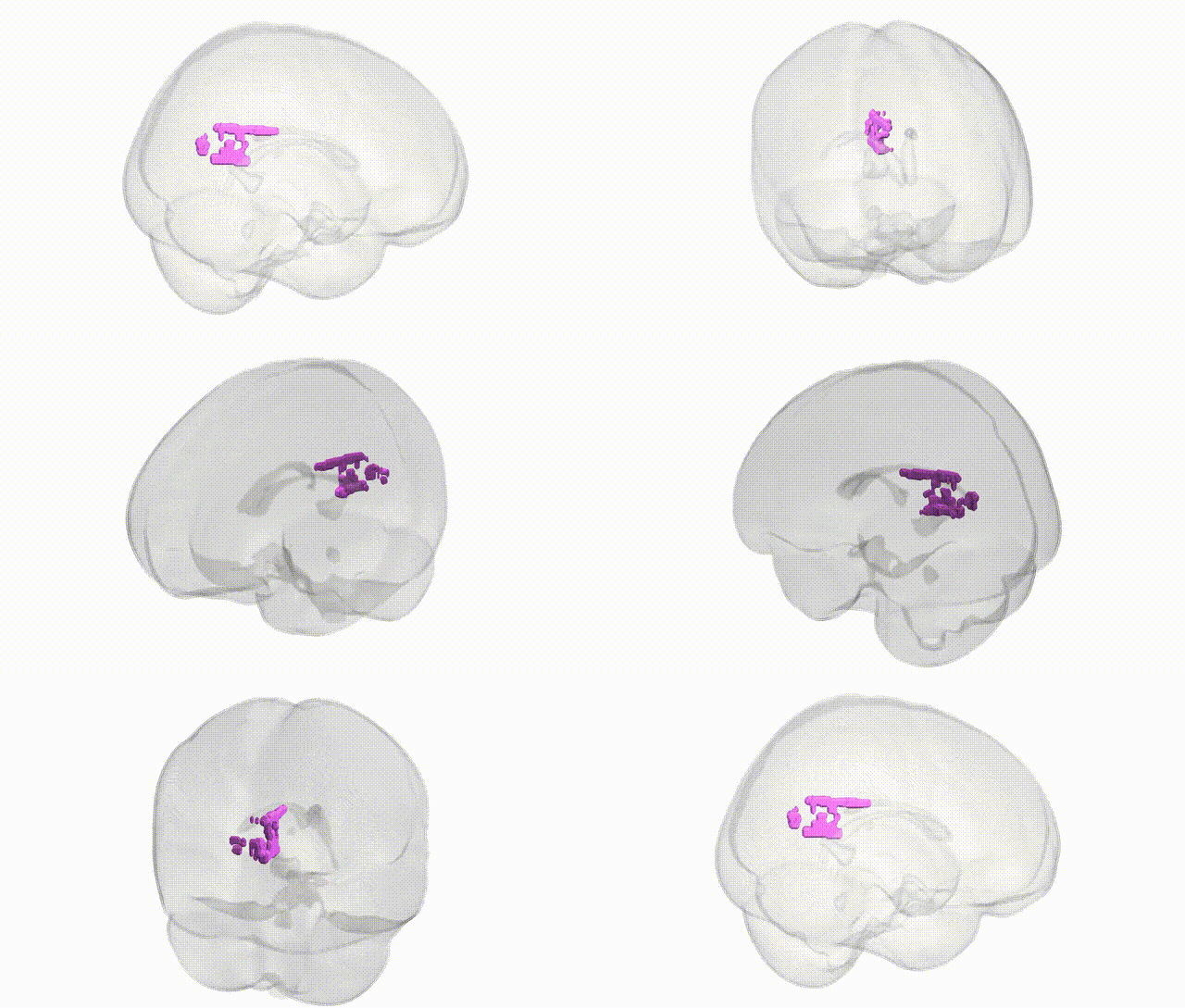
Full Quality Version: Download MP4
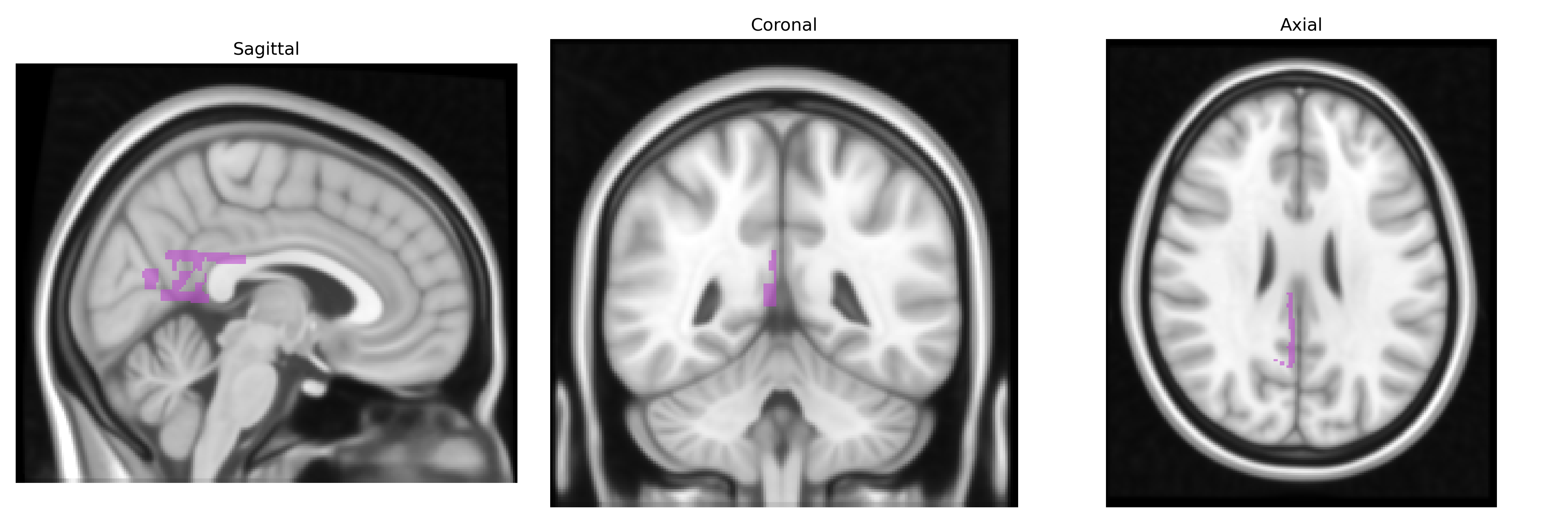
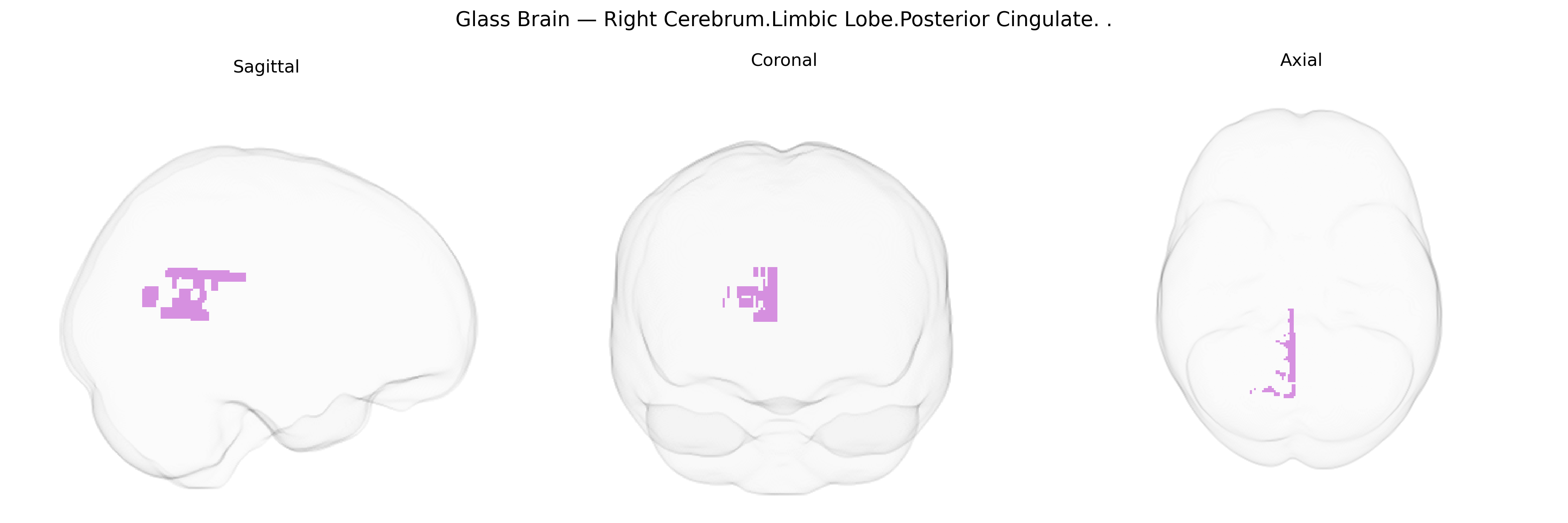
Wali Sidiqyar*, Gaurav Rudravaram*, Elyssa M. McMaster, Trent M. Schwartz, Adam M. Saunders, Kurt G. Schilling, Bennett A. Landman "Introducing SPINS: A Shared Public Visualization Library of Neuroanatomical Structures." Medical Imaging with Deep Learning- short paper
This resource is licensed under CC0 1.0 Universal (Public Domain).