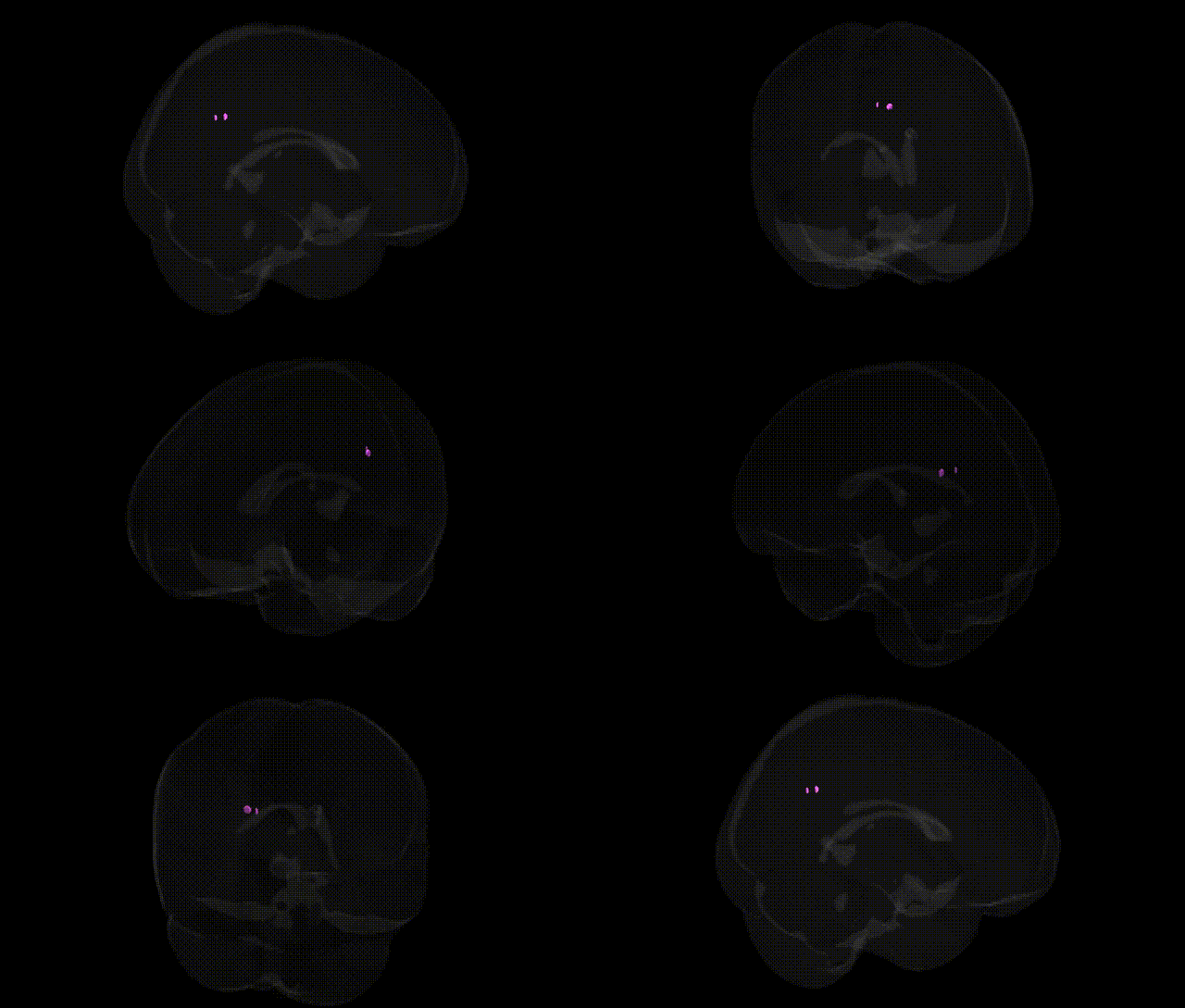
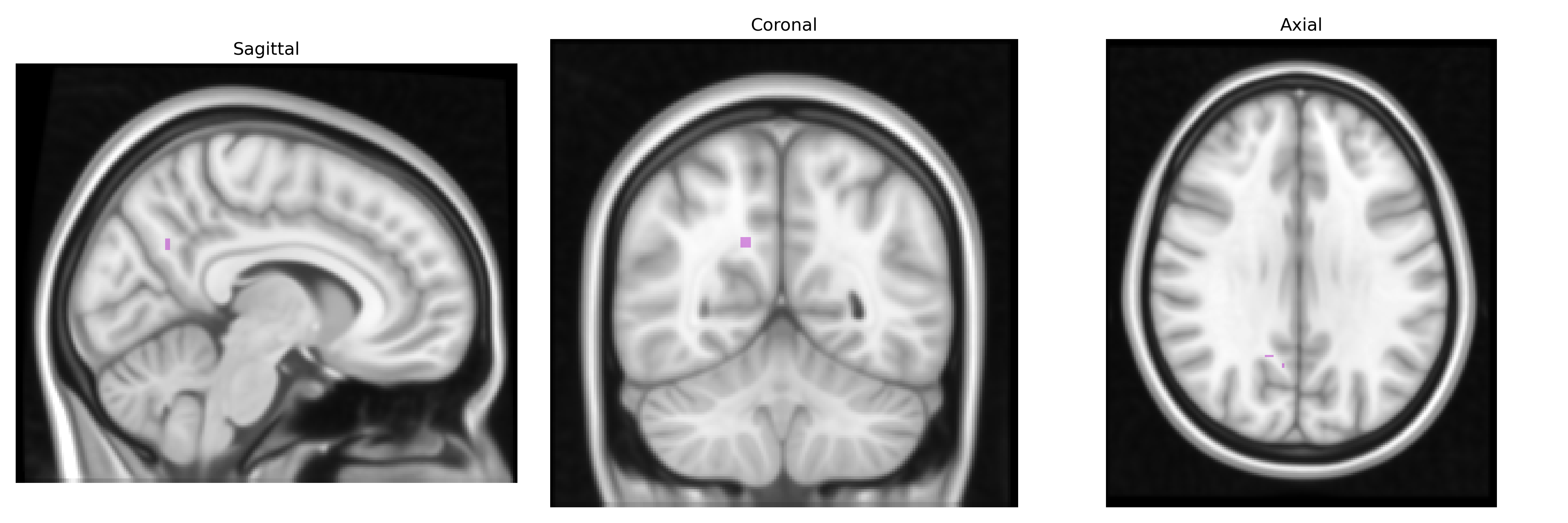
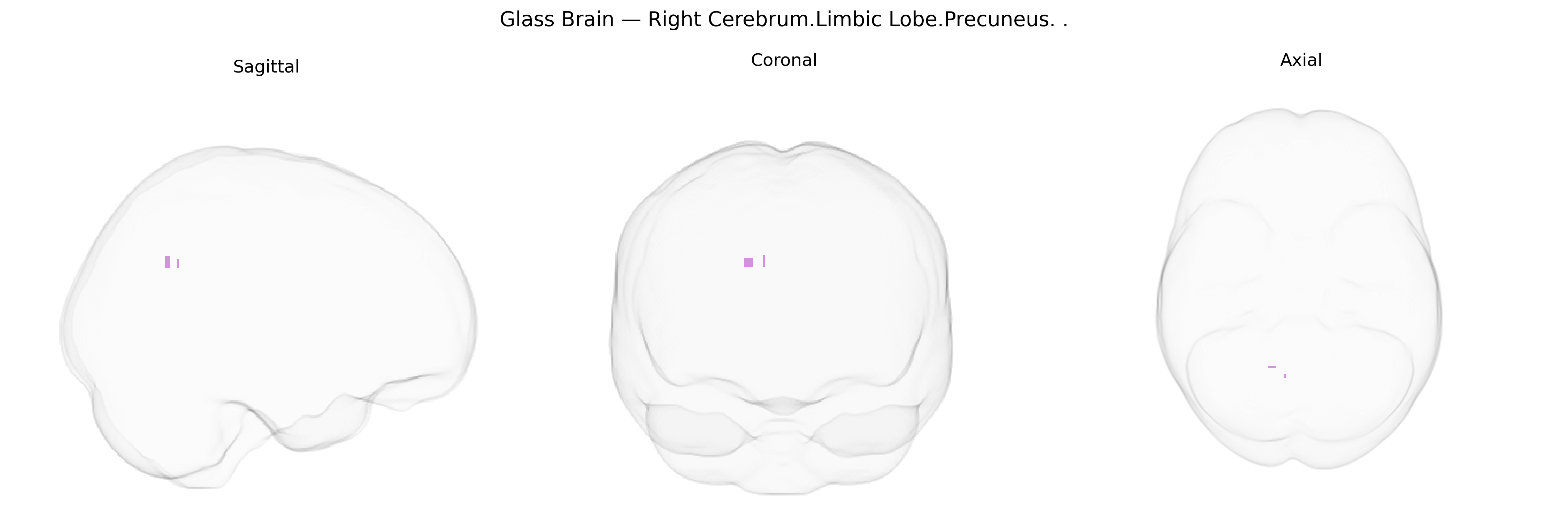
The bilateral Right Cerebrum.Limbic Lobe.Precuneus, as defined in the Talairach 1 mm Atlas, corresponds to the right precuneus region of the medial parietal cortex, a structurally and functionally heterogeneous area situated on the medial surface of the parietal lobe between the cingulate gyrus and the parieto-occipital sulcus. Although traditionally classified as part of the parietal lobe, it has strong reciprocal connections with limbic, prefrontal, and sensory association areas, supporting its inclusion within a “limbic lobe” functional grouping in some atlases. This region is implicated in visuospatial imagery, self-related processing, episodic memory retrieval, and acts as a core hub of the default mode network involved in internally directed cognition. It shows high metabolic and connectivity profiles at rest and participates in integrative functions linking sensory information with memory and introspective processes.
The bilateral right precuneus, a core hub of the limbic/default mode network, shows convergent genetic associations from imaging–genetics and GWAS studies implicating both general neurodevelopmental pathways and disorder-specific risk loci; SNP-based heritability estimates indicate that precuneus volume, cortical thickness, and functional connectivity are moderately heritable, with contributions from common variants in genes involved in synaptic plasticity (e.g., BDNF), glutamatergic signaling, and axon guidance (e.g., NRGN, GRIN2B). Large brain-wide association studies (e.g., ENIGMA, UK Biobank) report that polygenic risk scores for schizophrenia, major depressive disorder, autism spectrum disorder, and Alzheimer’s disease correlate with structural or functional alterations in precuneus regions, and APOE ε4 has been linked to reduced precuneus metabolism and early amyloid deposition in Alzheimer’s. GWAS of default mode network connectivity and intrinsic brain activity identify loci near genes such as MAPT, PACSIN1, and others involved in microtubule stability and synaptic vesicle cycling, which modulate precuneus connectivity within the DMN. Additionally, genetic variants associated with traits such as conscientiousness, neuroticism, intelligence, and educational attainment show correlated effects on precuneus morphology and connectivity, consistent with its role in self-referential processing, episodic memory, and internal mentation. While the Talairach “Right Cerebrum.Limbic Lobe.Precuneus” label is anatomically specific, most genetic findings come from broader parietal or medial parietal ROIs, so current evidence supports a polygenic, network-level genetic architecture rather than unique single-gene associations confined to this exact subregion.
Overview generated by GPT-4o (2026).
Region ID: 914
Hemisphere: bilateral
Atlas: Talairach labels 1mm
Full Quality Version: Download MP4
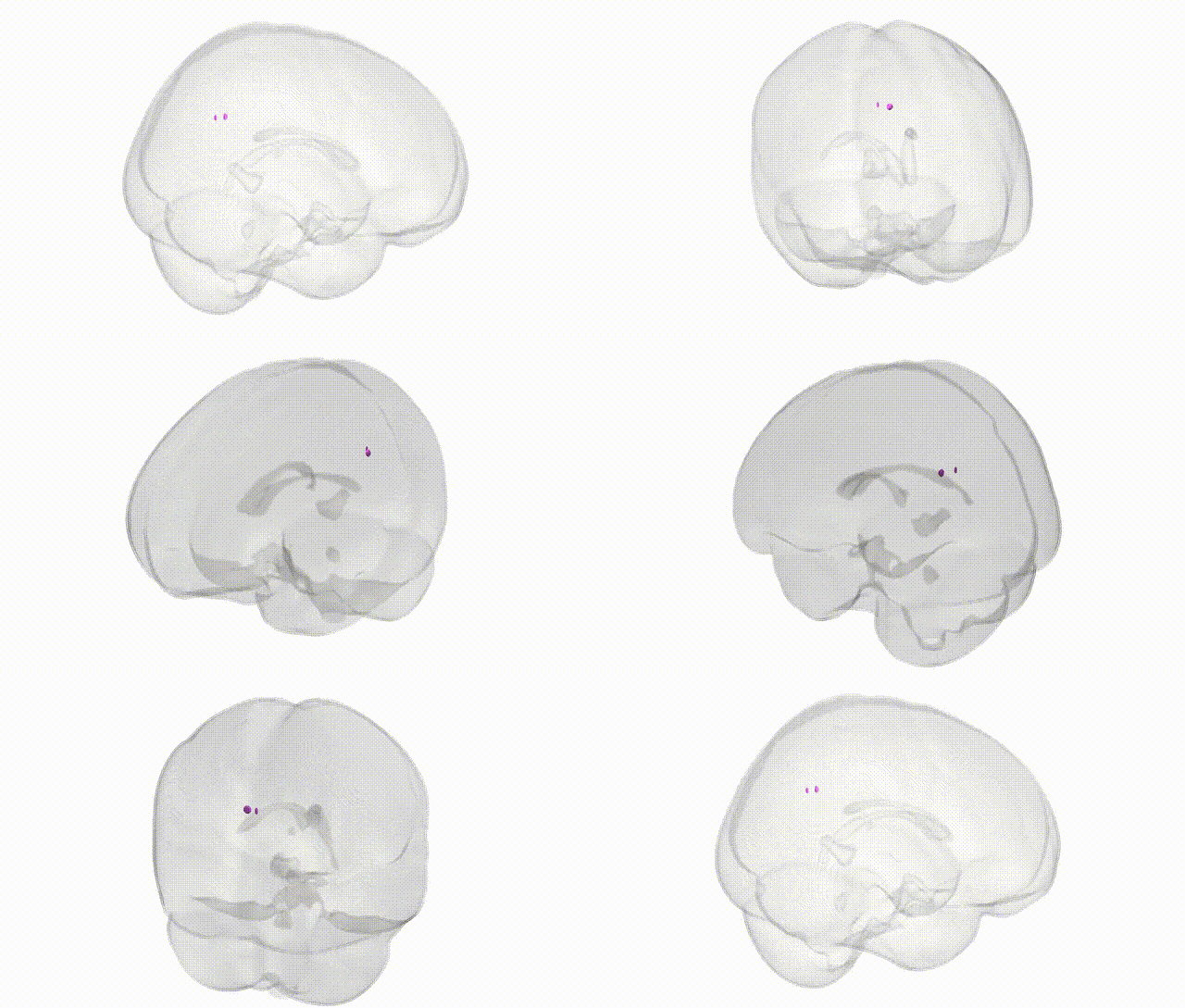
Full Quality Version: Download MP4
Wali Sidiqyar*, Gaurav Rudravaram*, Elyssa M. McMaster, Trent M. Schwartz, Adam M. Saunders, Kurt G. Schilling, Bennett A. Landman "Introducing SPINS: A Shared Public Visualization Library of Neuroanatomical Structures." Medical Imaging with Deep Learning- short paper
This resource is licensed under CC0 1.0 Universal (Public Domain).