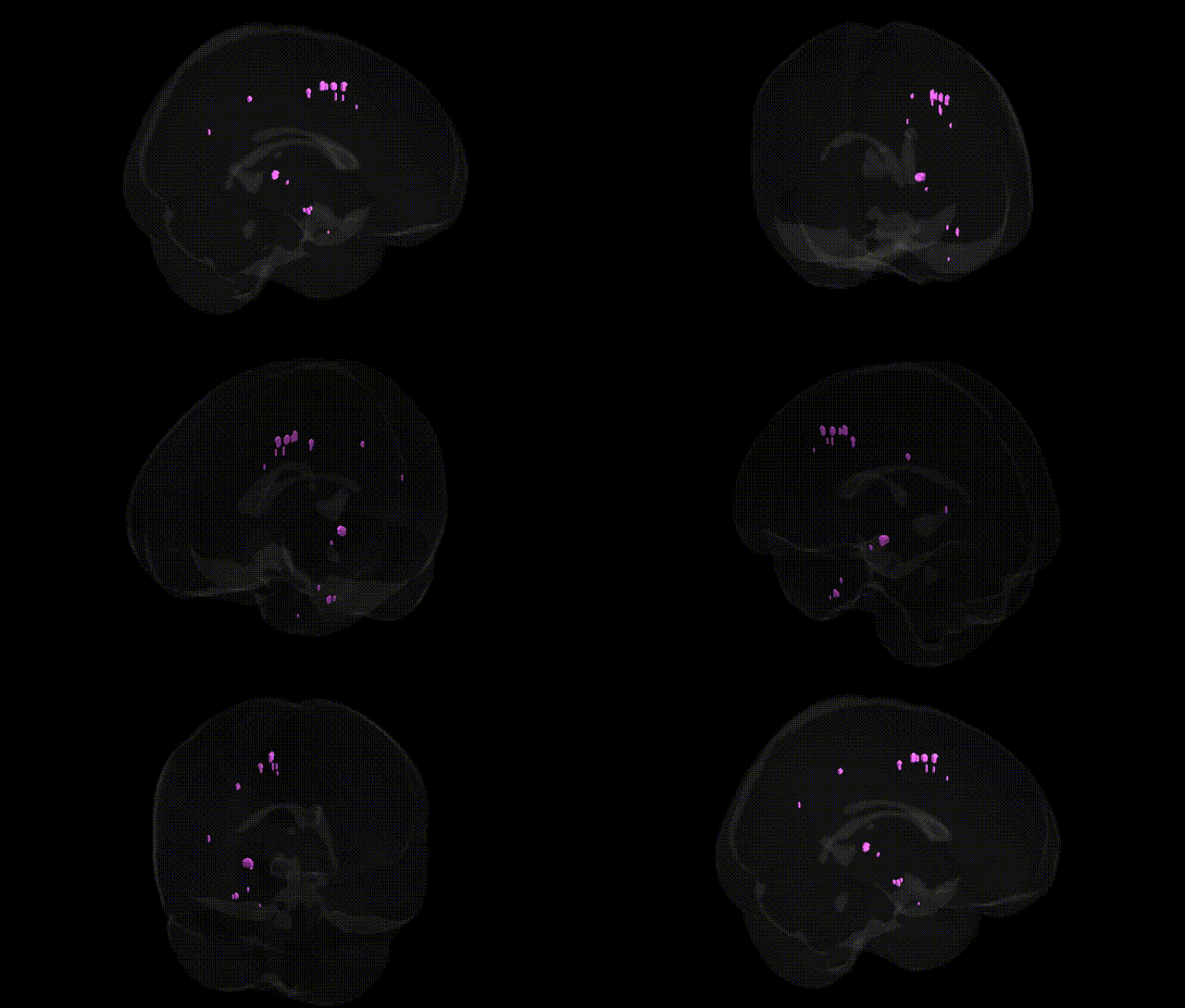
The bilateral Right Cerebrum.Limbic Lobe.Sub-Gyral.White Matter corresponds to deep white matter tracts located beneath the cortical gyri of the limbic lobe in the right cerebral hemisphere. This region comprises myelinated association and projection fibers interconnecting key limbic structures such as the cingulate gyrus, parahippocampal gyrus, hippocampus, and related medial temporal and frontal areas, thereby supporting integration of emotional processing, memory formation and retrieval, and autonomic-visceral regulation. As part of the broader limbic circuitry, these subgyral white matter pathways facilitate communication between cortical and subcortical nodes (including the thalamus and hypothalamus), contributing to affective behavior, motivation, and aspects of cognitive control. There is no direct link for this exact Talairach-defined label; a closely related structure is the Limbic system.
The bilateral right cerebrum limbic lobe sub-gyral white matter, as defined in the Talairach 1 mm atlas, overlaps primarily with deep limbic and paralimbic pathways (including fibers coursing to and from structures such as the cingulate gyrus, parahippocampal regions, and amygdalar–hippocampal circuitry), and genetic associations identified in GWAS typically implicate this territory indirectly via imaging-derived white-matter measures and limbic-related clinical phenotypes. Large imaging genetics consortia (e.g., ENIGMA, UK Biobank analyses) have reported SNP heritability and specific loci for diffusion MRI metrics (fractional anisotropy, mean diffusivity) and regional white-matter volumes in limbic and cingulum-related tracts, with implicated genes including those involved in axonal guidance, myelination, and synaptic plasticity (such as variants in or near genes like NRG1/3, MAG, and other oligodendrocyte- and myelin-related loci), although these findings are generally reported at tract or lobe level rather than specifically labeled “sub-gyral” in Talairach space. Limbic white matter has been repeatedly associated with polygenic risk for major depressive disorder, schizophrenia, bipolar disorder, and autism spectrum disorder, with genetic risk scores for these conditions correlating with microstructural changes in fronto-limbic and cingulum bundles that traverse sub-gyral white matter. Additional GWAS have linked limbic white-matter properties to neuroticism, anxiety-related traits, cognitive performance, and risk for Alzheimer’s disease and other dementias, consistent with the role of limbic circuits in emotional regulation, memory, and default-mode network connectivity. Overall, current genetic evidence supports a polygenic architecture influencing the integrity and volume of limbic sub-gyral white matter, with shared variants contributing to vulnerability for mood and psychotic disorders, neurodevelopmental conditions, and age-related neurodegeneration, though highly specific Talairach-defined “Right Cerebrum.Limbic Lobe.Sub-Gyral.White Matter” loci have not been isolated independently from broader limbic and cingulate white-matter phenotypes in the GWAS literature.
Overview generated by GPT-4o (2026).
Region ID: 55
Hemisphere: bilateral
Atlas: Talairach labels 1mm
Full Quality Version: Download MP4
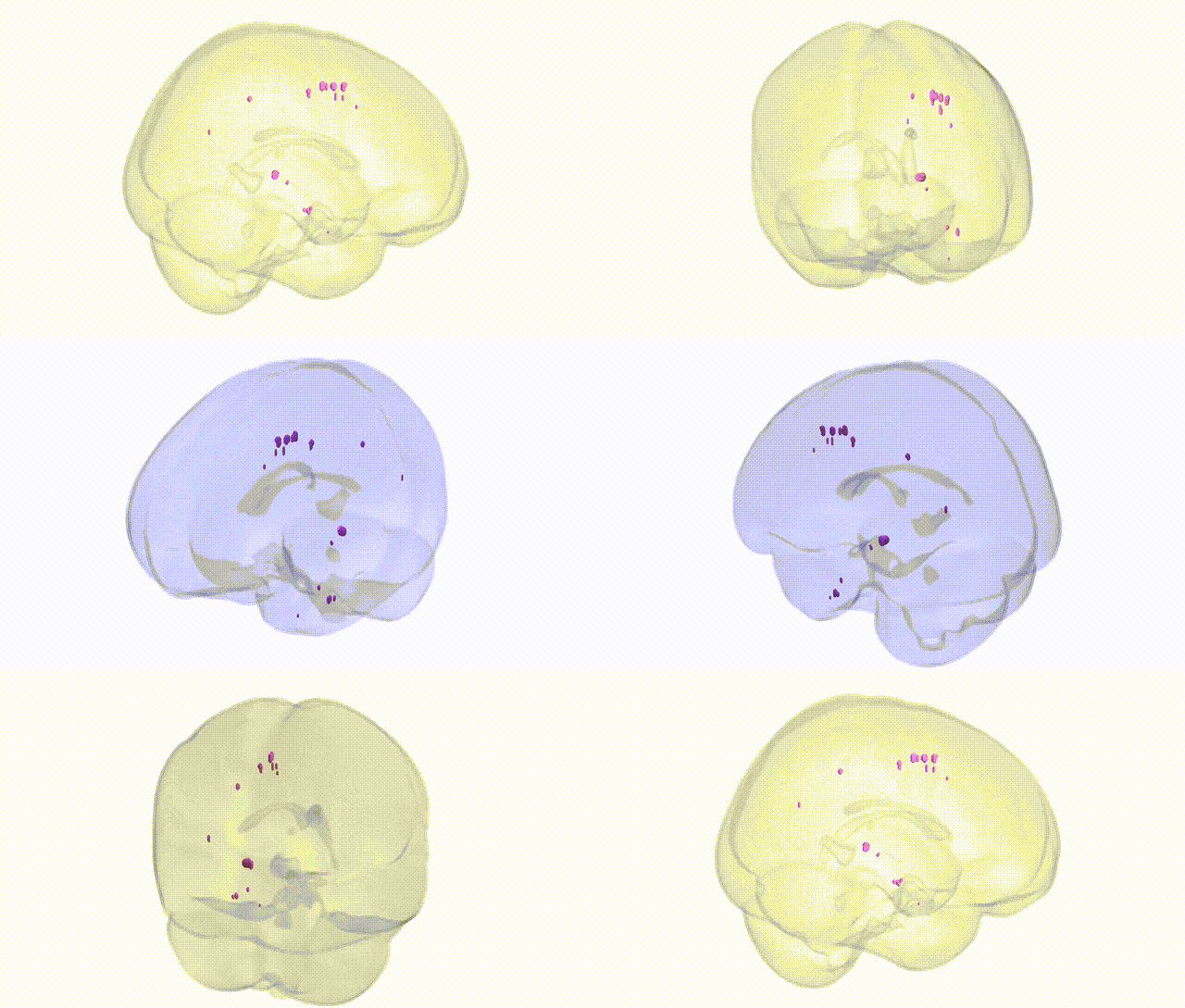
Full Quality Version: Download MP4
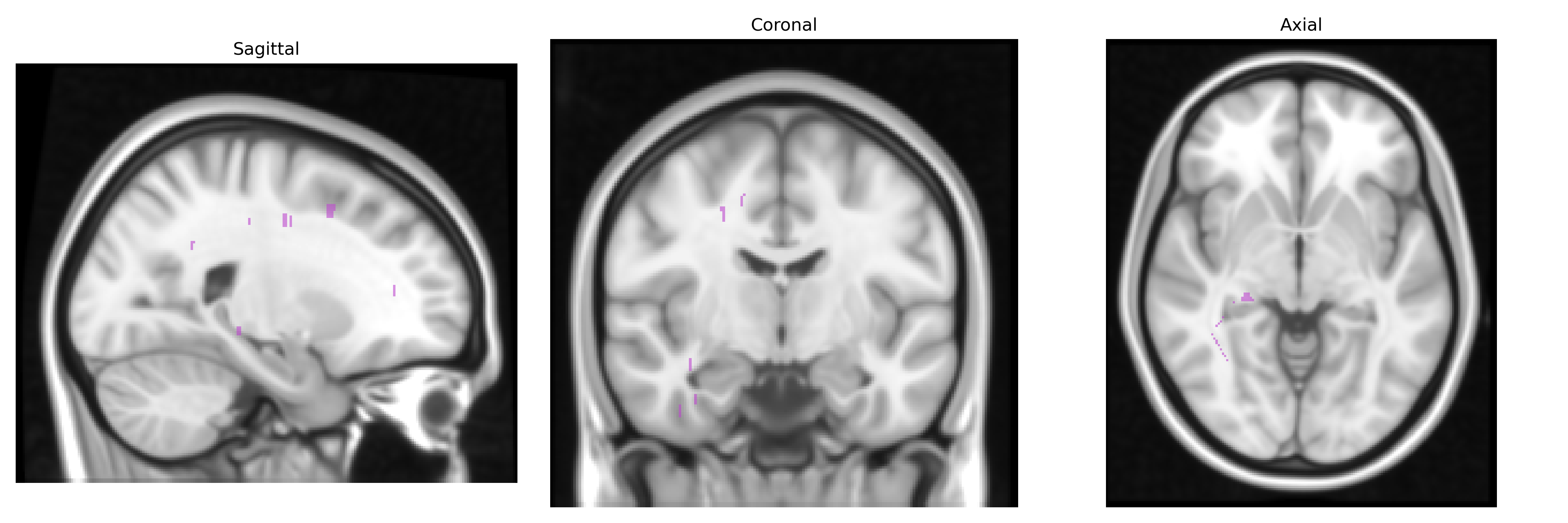
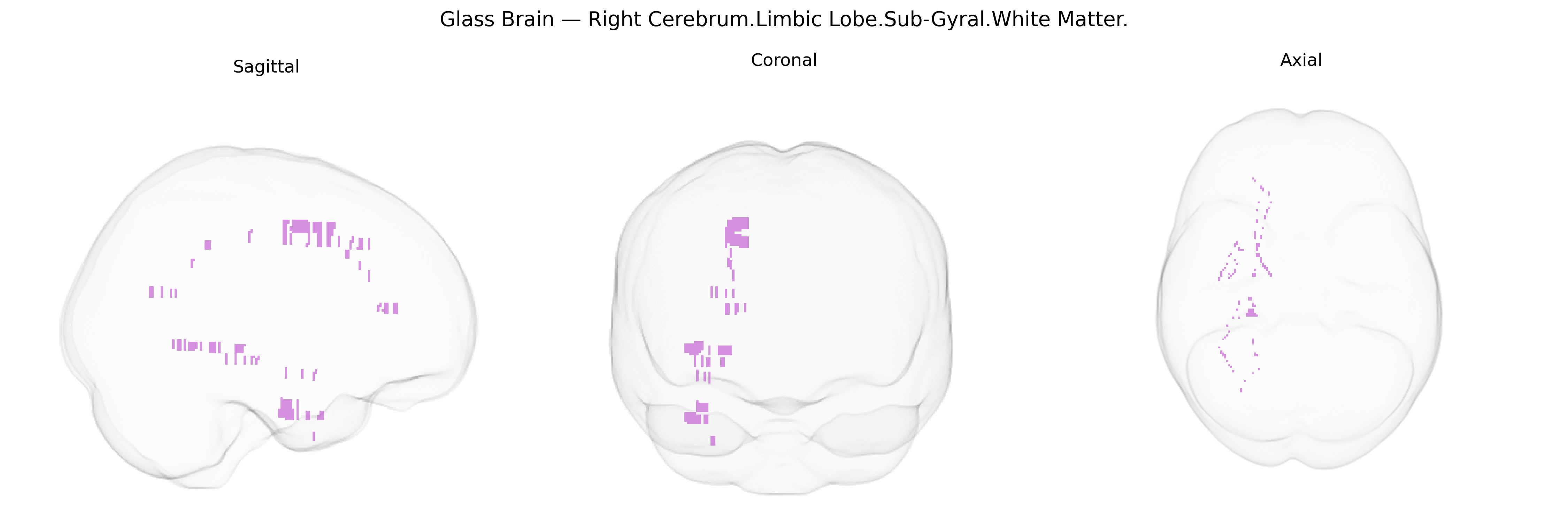
Wali Sidiqyar*, Gaurav Rudravaram*, Elyssa M. McMaster, Trent M. Schwartz, Adam M. Saunders, Kurt G. Schilling, Bennett A. Landman "Introducing SPINS: A Shared Public Visualization Library of Neuroanatomical Structures." Medical Imaging with Deep Learning- short paper
This resource is licensed under CC0 1.0 Universal (Public Domain).