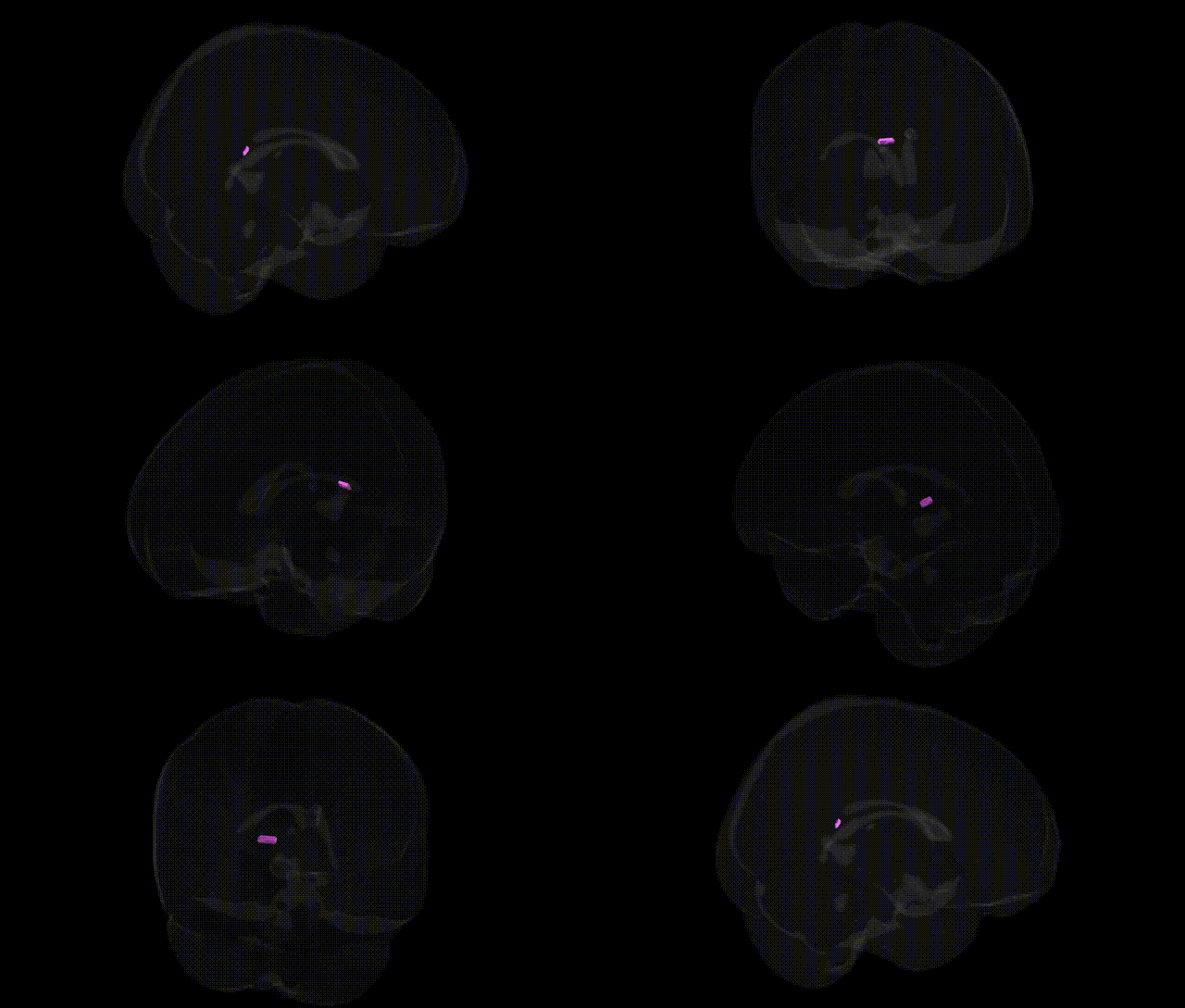
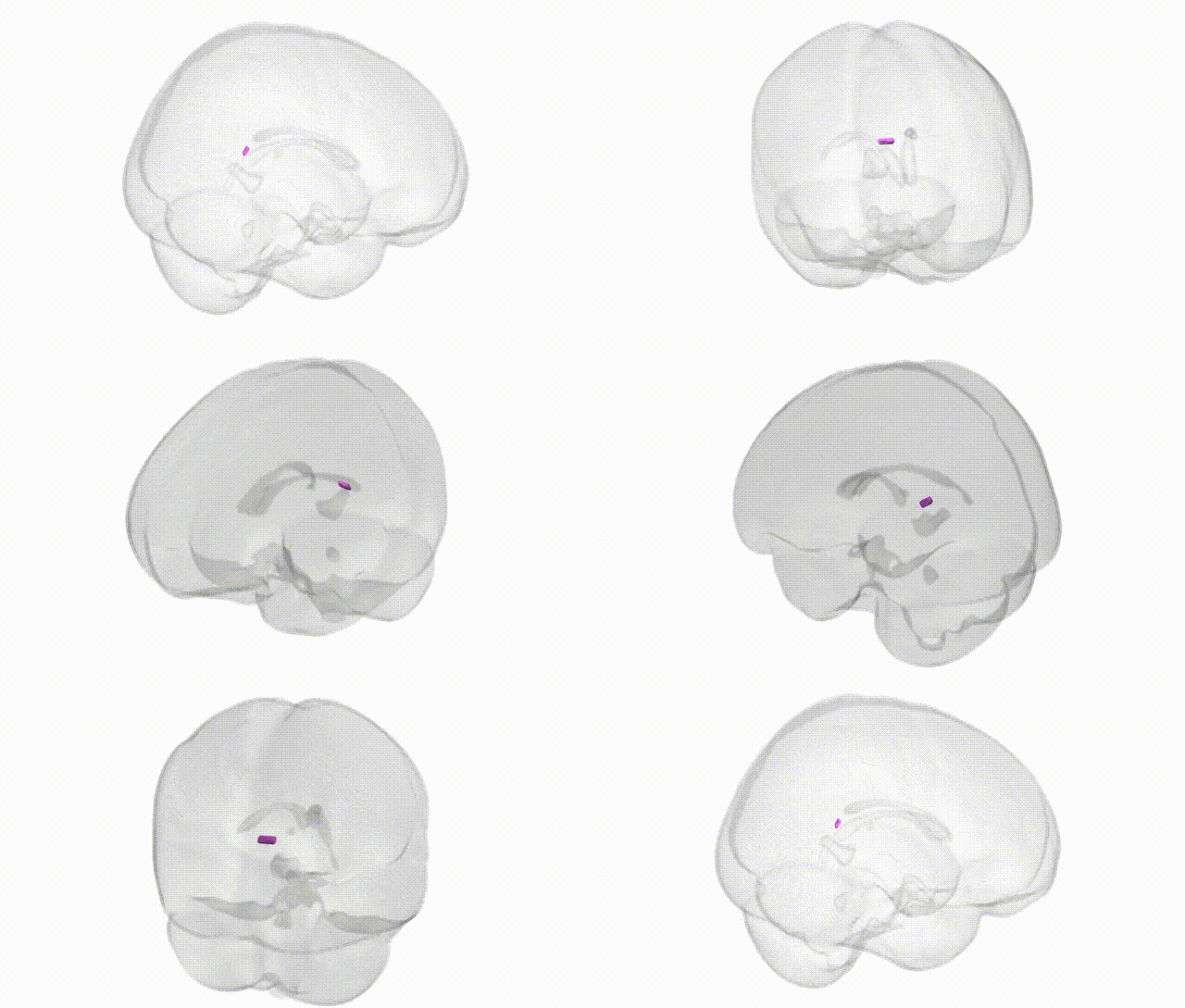
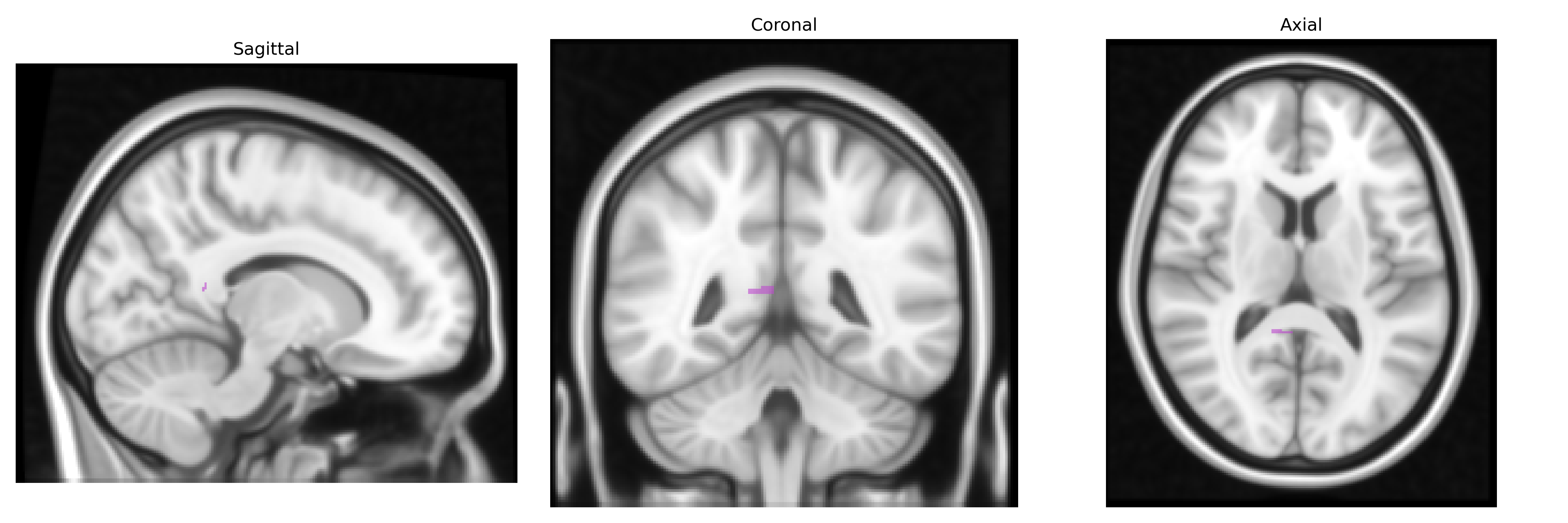
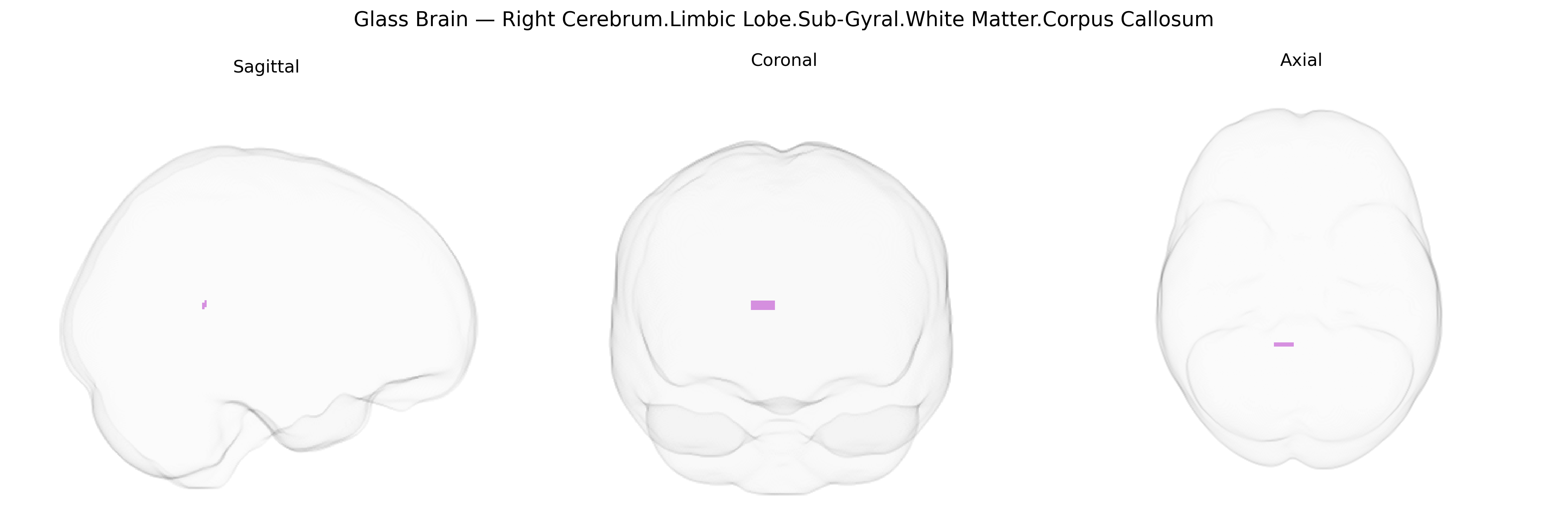
The bilateral Right Cerebrum.Limbic Lobe.Sub-Gyral.White Matter.Corpus Callosum region, as defined in the Talairach 1 mm Atlas, corresponds to portions of the corpus callosum and its surrounding subcortical white matter within the right limbic lobe, including fibers that interconnect homologous and associated cortical areas across the two cerebral hemispheres. This major commissural fiber bundle supports interhemispheric transfer of sensory, motor, and higher-order associative information, thereby contributing to integrated cognitive, emotional, and limbic functions. The sub-gyral designation indicates deep white matter situated beneath limbic cortical gyri (such as the cingulate gyrus), encompassing callosal radiations that project to these regions. Microstructurally, this area consists largely of heavily myelinated axons, oligodendrocytes, and glial support cells, and is critically involved in large-scale brain network coordination and hemispheric specialization. Corpus callosum
Genetic associations involving the bilateral right cerebrum limbic sub-gyral white matter and corpus callosum—often studied collectively as midline callosal and limbic white matter—largely emerge from imaging–genetics and GWAS of callosal microstructure and volume rather than from Talairach-based labels per se. Variants in genes involved in axon guidance, myelination, and neurodevelopment (for example, L1CAM, ROBO1/2, NRG1, CNTN4, and oligodendrocyte-related genes) have been linked to corpus callosum morphology and integrity, with rare high-impact mutations causing agenesis or hypoplasia of the corpus callosum in syndromic neurodevelopmental disorders. Large-scale GWAS of diffusion tensor imaging metrics (fractional anisotropy, mean diffusivity) and callosal area have identified multiple loci with small effects distributed across the genome, including genes implicated in neurodevelopment (e.g., DCC pathway components), lipid metabolism, and oligodendrocyte function, though individual variants show modest effect sizes and require replication. These callosal and limbic white matter variants have been associated with risk or endophenotypes for neuropsychiatric and neurodevelopmental conditions such as schizophrenia, bipolar disorder, autism spectrum disorder, ADHD, and major depressive disorder, as well as with cognitive traits (processing speed, intelligence, and reading ability) and, in some studies, with liability to neurodegenerative disorders and multiple sclerosis through effects on white matter integrity. Overall, genetic influences on this region reflect polygenic contributions affecting axonal development and myelin biology, with many loci shared across broader white matter networks rather than being specific to the right limbic sub-gyral callosal sector defined in the Talairach 1 mm atlas.
Overview generated by GPT-4o (2026).
Region ID: 715
Hemisphere: bilateral
Atlas: Talairach labels 1mm
Full Quality Version: Download MP4
Full Quality Version: Download MP4
Wali Sidiqyar*, Gaurav Rudravaram*, Elyssa M. McMaster, Trent M. Schwartz, Adam M. Saunders, Kurt G. Schilling, Bennett A. Landman "Introducing SPINS: A Shared Public Visualization Library of Neuroanatomical Structures." Medical Imaging with Deep Learning- short paper
This resource is licensed under CC0 1.0 Universal (Public Domain).