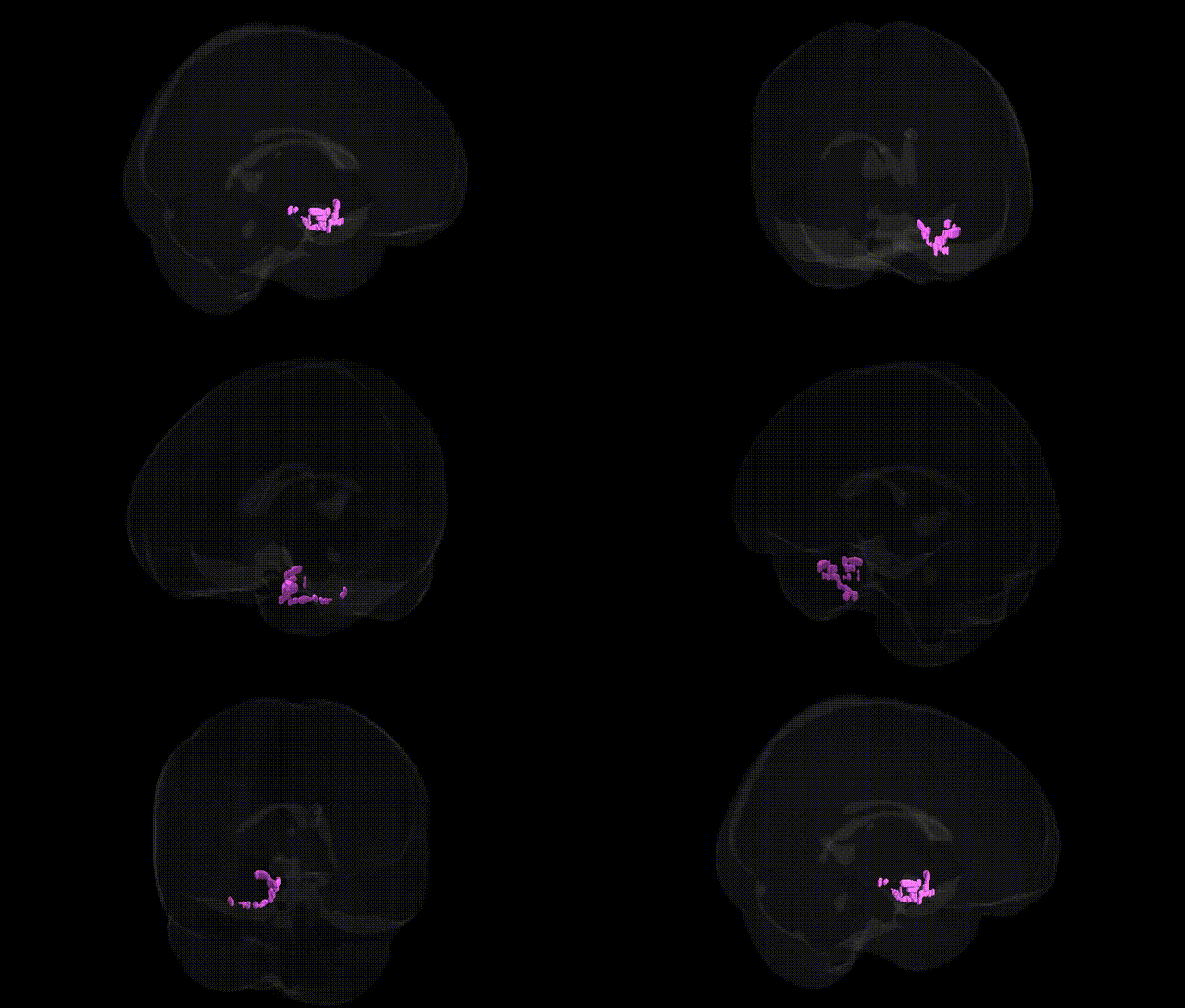
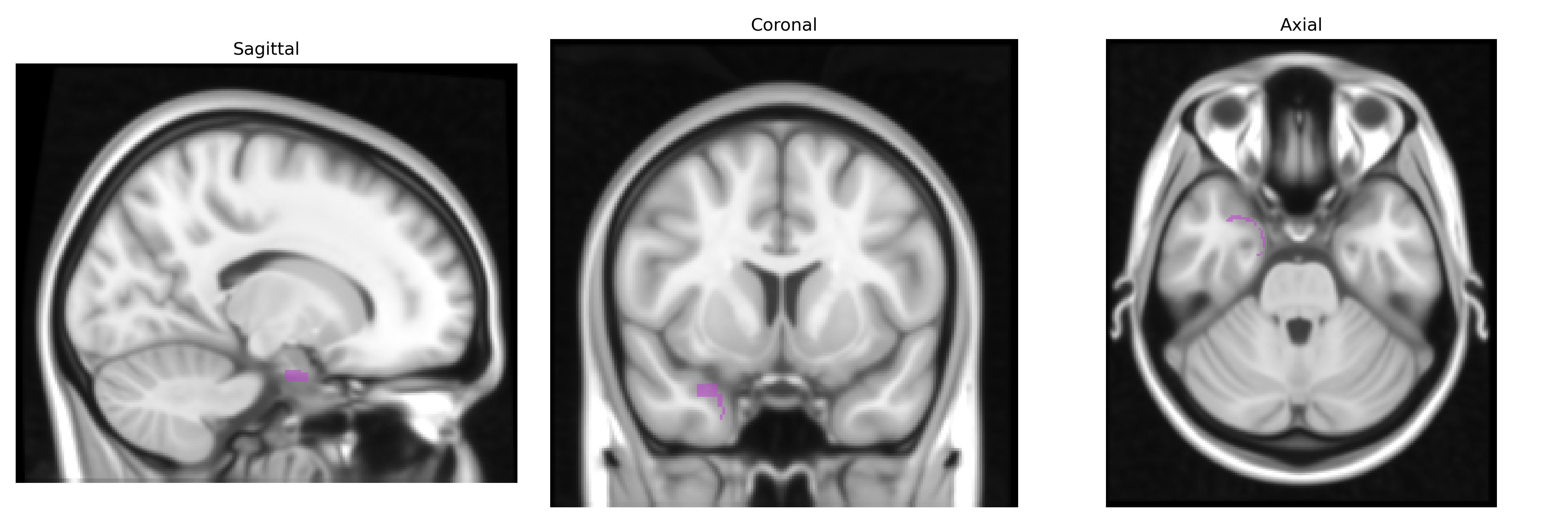
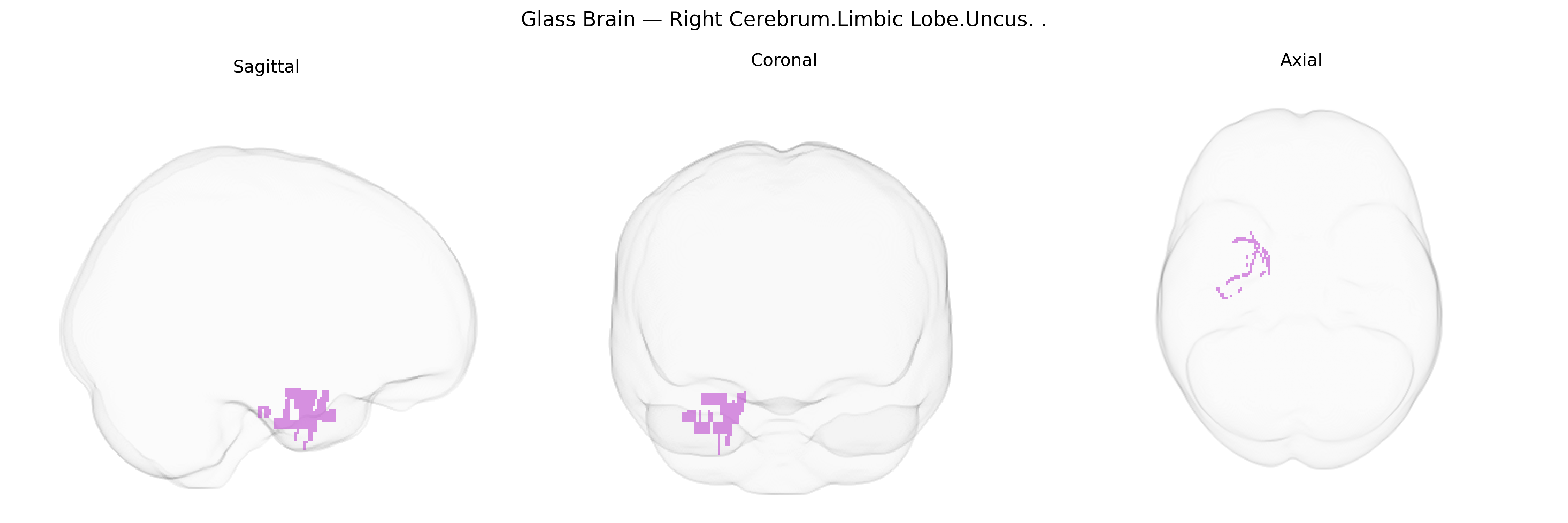
The bilateral Right Cerebrum.Limbic Lobe.Uncus refers to the medial, hook-shaped portion of the anterior parahippocampal gyrus that curves over the hippocampal head and forms part of the medial temporal lobe within the limbic system. It lies in close relation to the amygdala and hippocampus, participates in olfactory and emotional processing, and is supplied primarily by branches of the anterior choroidal and posterior cerebral arteries. The uncus is clinically significant because mesial temporal lobe masses or swelling can lead to uncal herniation, compressing the ipsilateral oculomotor nerve and midbrain structures, producing characteristic neurological signs. There is no direct link for the Talairach “uncus” label; a related structure and context is the Parahippocampal gyrus.
The bilateral right cerebrum limbic lobe uncus, encompassing anterior parahippocampal and amygdaloid structures, has been implicated in multiple genetic and GWAS-based associations through its roles in emotion, memory, and olfaction rather than via uncus-specific studies per se. Common variants in genes involved in synaptic plasticity and glutamatergic/GABAergic signaling (e.g., BDNF, GRIN2B, GAD1) and large-effect variants in CNVs (e.g., 22q11.2, 16p11.2) have been linked to structural and functional alterations in adjacent medial temporal regions that include uncinate/uncal territory in disorders such as schizophrenia, temporal lobe epilepsy, major depressive disorder, bipolar disorder, and autism spectrum disorder. GWAS of limbic and medial temporal lobe volumes, amygdala/hippocampal morphology, and functional connectivity (often covering parahippocampal/uncinate cortex) have identified associations with genes related to neurodevelopment and axon guidance (e.g., SEMA3D, DCC, NCAM1) and with polygenic risk scores for psychiatric traits, including anxiety, neuroticism, and PTSD-like phenotypes. In temporal lobe epilepsy, which frequently involves the uncus, genetic factors such as DEPDC5 and other mTOR-pathway genes, as well as familial mesial temporal lobe epilepsy loci, contribute to vulnerability, with imaging-genetic work showing concordant mesial temporal/uncal atrophy. Olfactory processing, to which the uncus contributes, has been linked in GWAS to loci affecting olfactory receptor gene clusters and neurodegenerative disease risk (e.g., APOE, MAPT), and these in turn correlate with medial temporal/uncal involvement in Alzheimer’s and related dementias, although direct uncus-specific genetic GWAS signals remain limited and are generally inferred from broader medial temporal or limbic lobe imaging-genetic associations.
Overview generated by GPT-4o (2026).
Region ID: 31
Hemisphere: bilateral
Atlas: Talairach labels 1mm
Full Quality Version: Download MP4
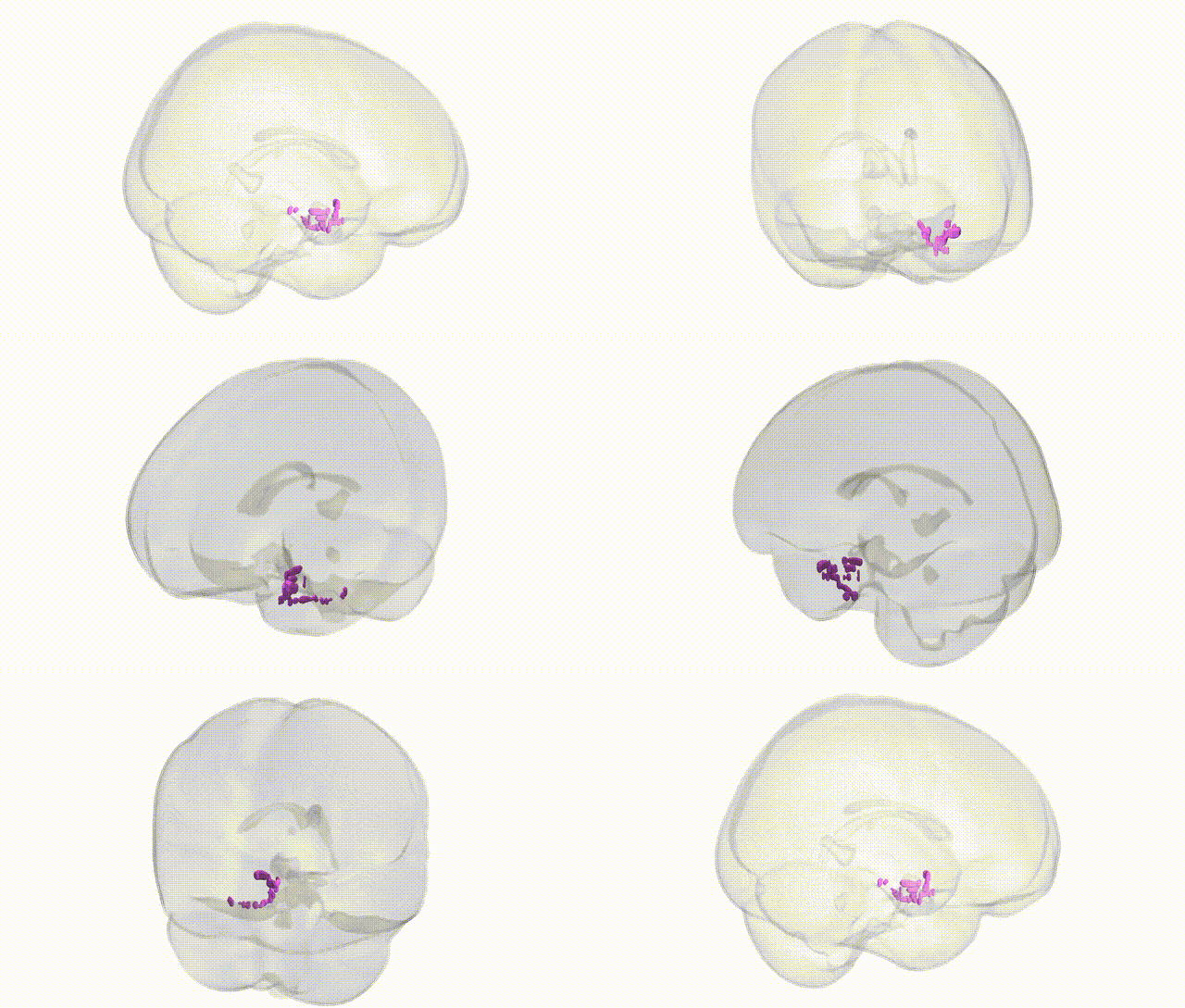
Full Quality Version: Download MP4
Wali Sidiqyar*, Gaurav Rudravaram*, Elyssa M. McMaster, Trent M. Schwartz, Adam M. Saunders, Kurt G. Schilling, Bennett A. Landman "Introducing SPINS: A Shared Public Visualization Library of Neuroanatomical Structures." Medical Imaging with Deep Learning- short paper
This resource is licensed under CC0 1.0 Universal (Public Domain).