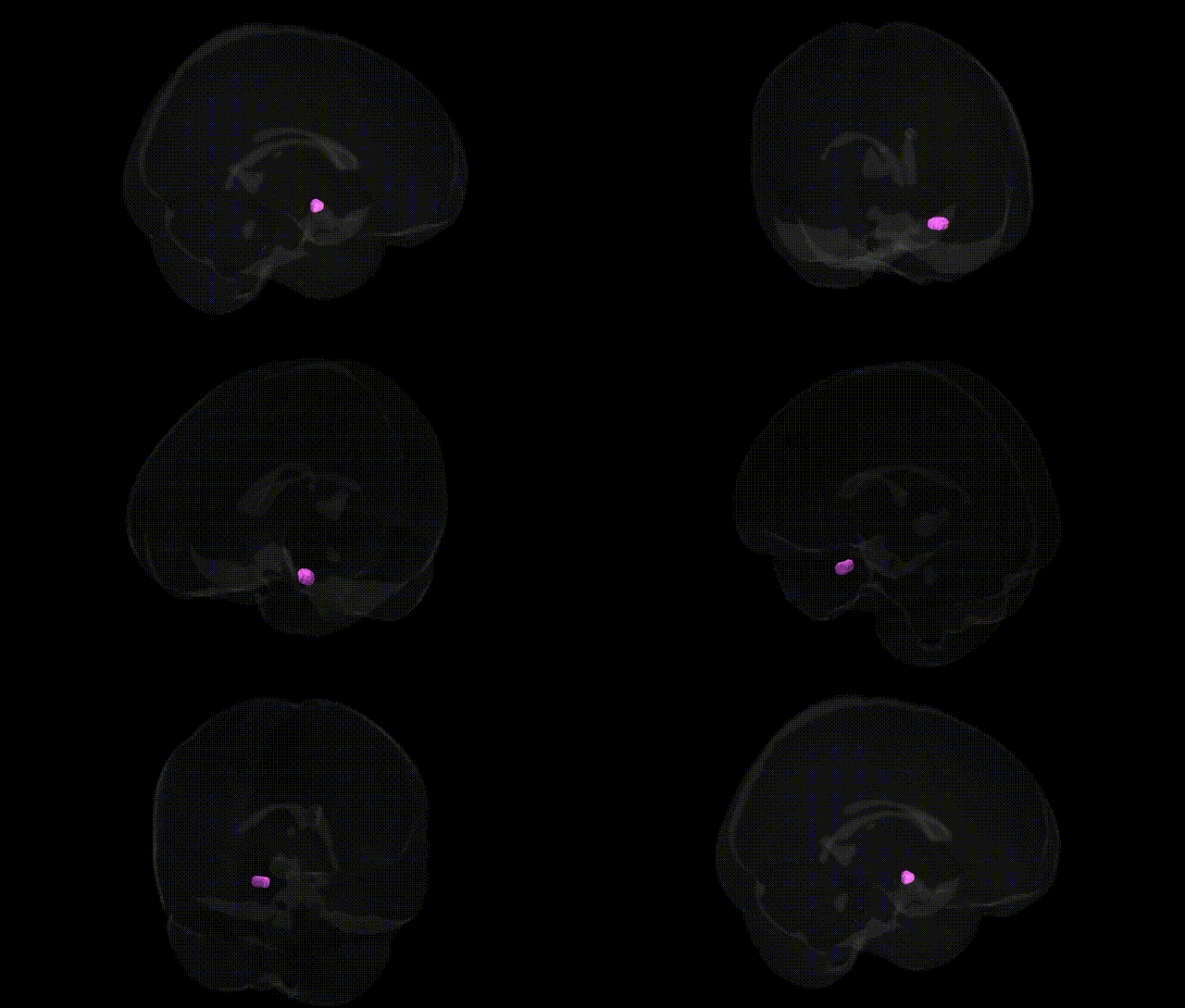
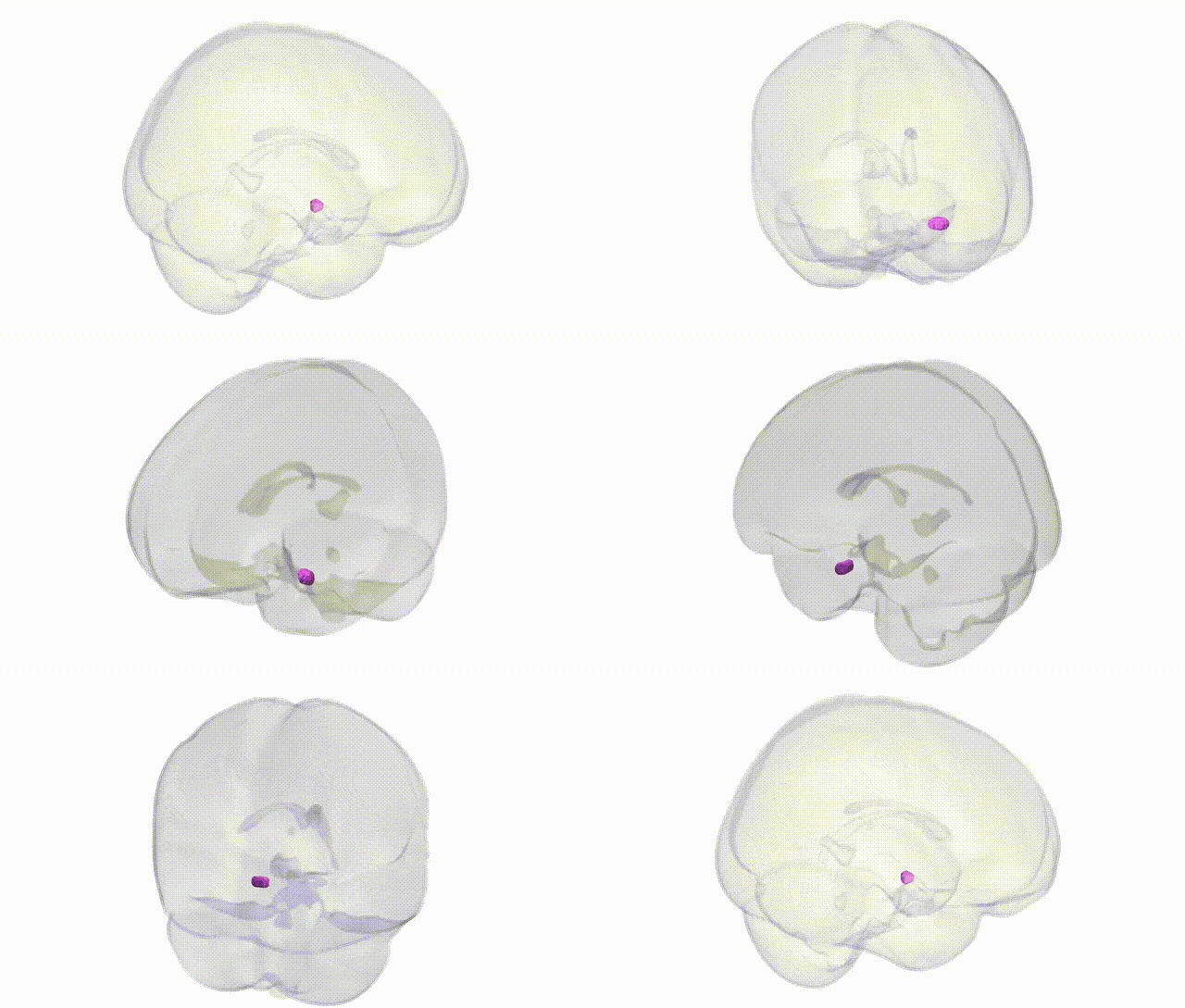
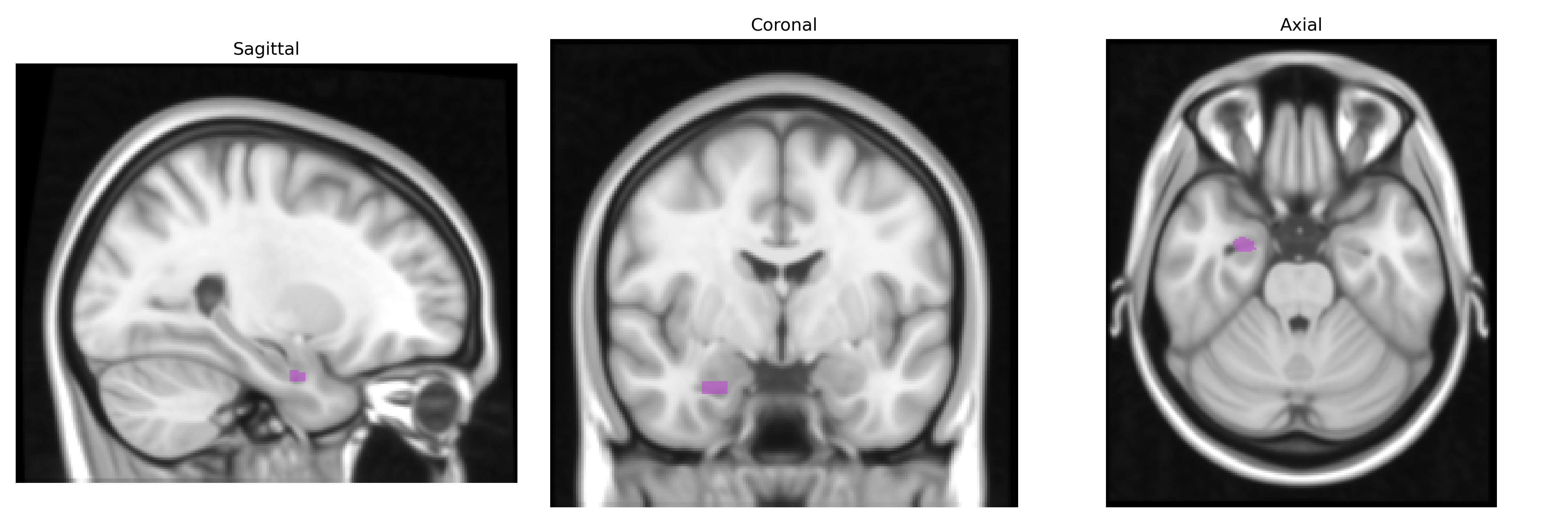
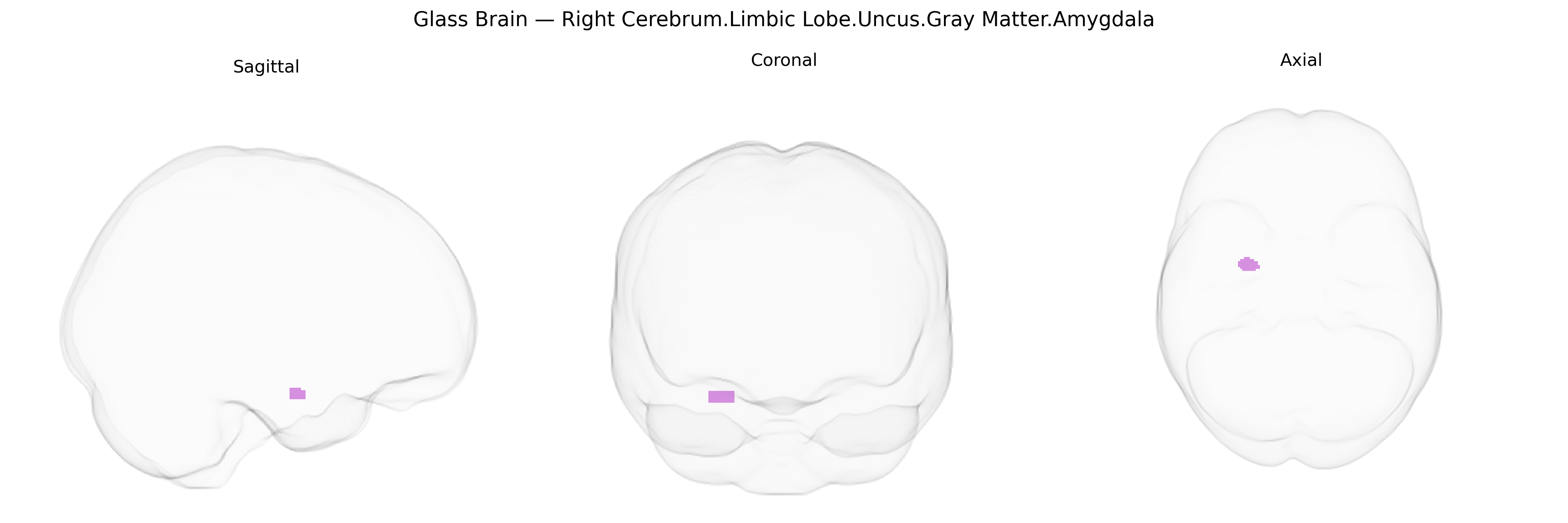
The bilateral Right Cerebrum.Limbic Lobe.Uncus.Gray Matter.Amygdala corresponds to the amygdaloid complex located within the medial temporal lobe, deep to the uncus of the parahippocampal gyrus, and is a key component of the limbic system. Composed of several nuclei (including basolateral, centromedial, and cortical groups), this gray matter structure receives multimodal sensory input from cortical and subcortical regions and projects to the hypothalamus, brainstem, and prefrontal cortex. Functionally, the amygdala is crucial for emotional processing, particularly fear and threat detection, formation and retrieval of emotional memories, and modulation of autonomic and endocrine responses. It also contributes to social behavior, affective decision-making, and the assignment of salience and valence to stimuli, with bilateral integrity important for normal emotional regulation and conditioned responses. Amygdala
The amygdala, corresponding to the bilateral Right Cerebrum.Limbic Lobe.Uncus.Gray Matter.Amygdala in the Talairach 1 mm atlas, shows robust genetic influences on its volume, connectivity, and function, with SNP-based heritability often exceeding 40–60% in large imaging-genetics cohorts such as ENIGMA and UK Biobank. Genome-wide association studies have identified multiple loci associated with amygdala structure and reactivity, including variants near or within genes involved in neurodevelopment, synaptic plasticity, and stress signaling (e.g., SLC6A4/5-HTTLPR region, BDNF Val66Met, CACNA1C, and genes in glutamatergic and GABAergic pathways), though specific signals differ across studies. Polygenic risk scores for major depression, anxiety disorders, bipolar disorder, schizophrenia, post-traumatic stress disorder, and autism spectrum disorder frequently correlate with altered amygdala volume or activation, supporting a shared genetic architecture between this region and a broad spectrum of internalizing and psychotic disorders. GWAS and candidate-gene studies link amygdala-related genetic variation to traits such as neuroticism, harm avoidance, negative emotionality, and heightened threat responsivity, as well as to stress reactivity and fear conditioning, indicating that genetic influences on this limbic structure contribute to individual differences in emotional processing and vulnerability to affective and stress-related psychopathology.
Overview generated by GPT-4o (2026).
Region ID: 182
Hemisphere: bilateral
Atlas: Talairach labels 1mm
Full Quality Version: Download MP4
Full Quality Version: Download MP4
Wali Sidiqyar*, Gaurav Rudravaram*, Elyssa M. McMaster, Trent M. Schwartz, Adam M. Saunders, Kurt G. Schilling, Bennett A. Landman "Introducing SPINS: A Shared Public Visualization Library of Neuroanatomical Structures." Medical Imaging with Deep Learning- short paper
This resource is licensed under CC0 1.0 Universal (Public Domain).