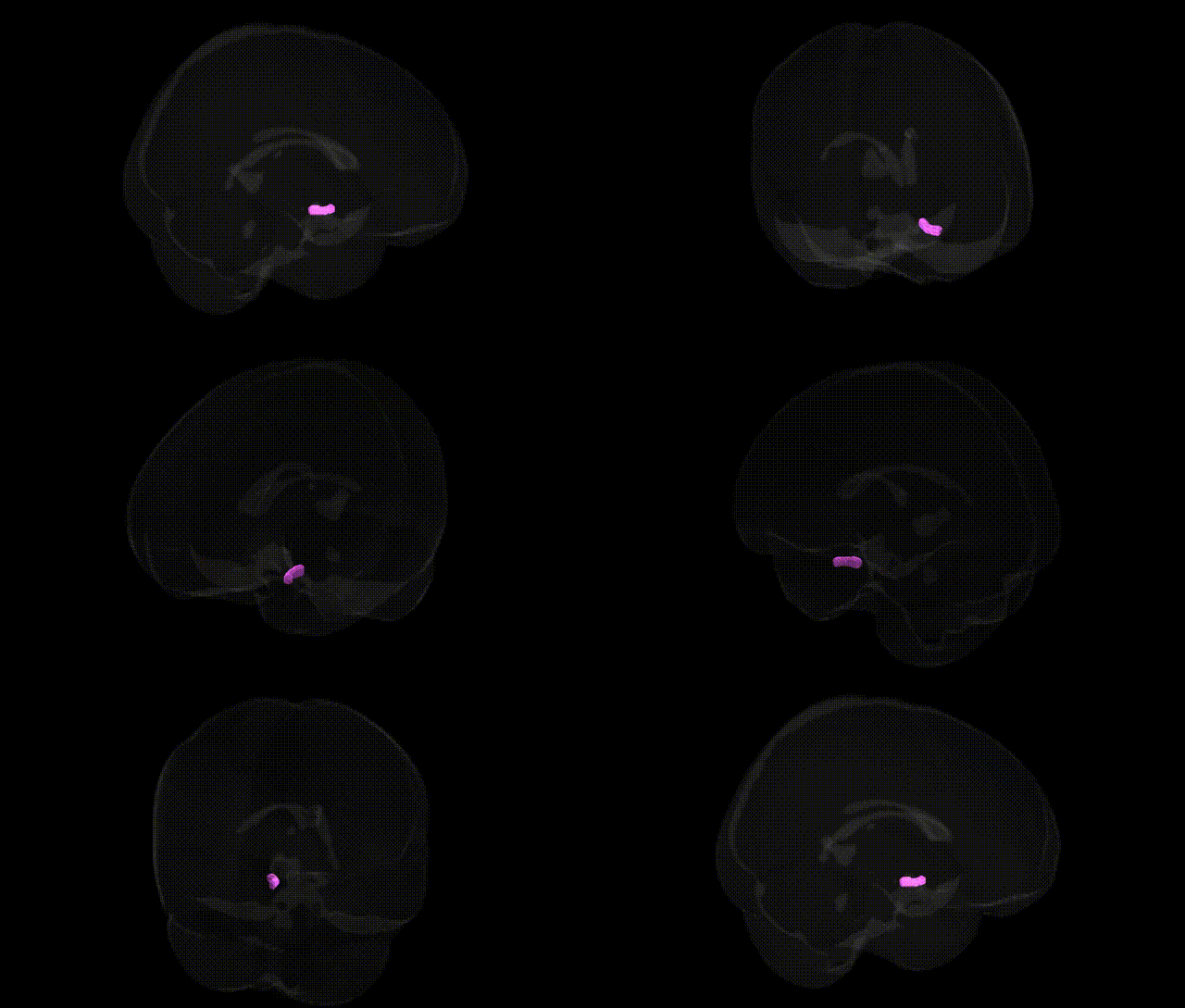
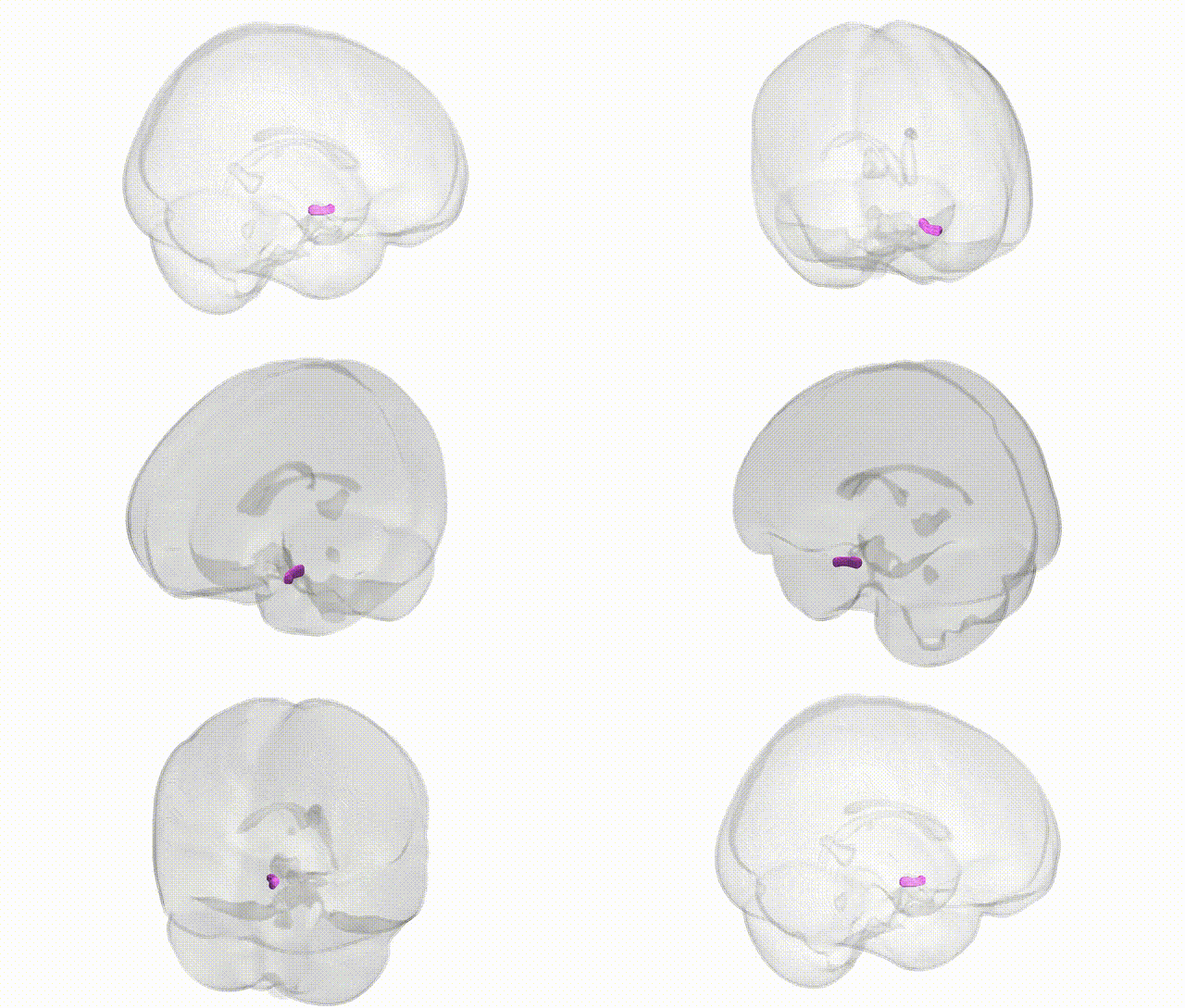
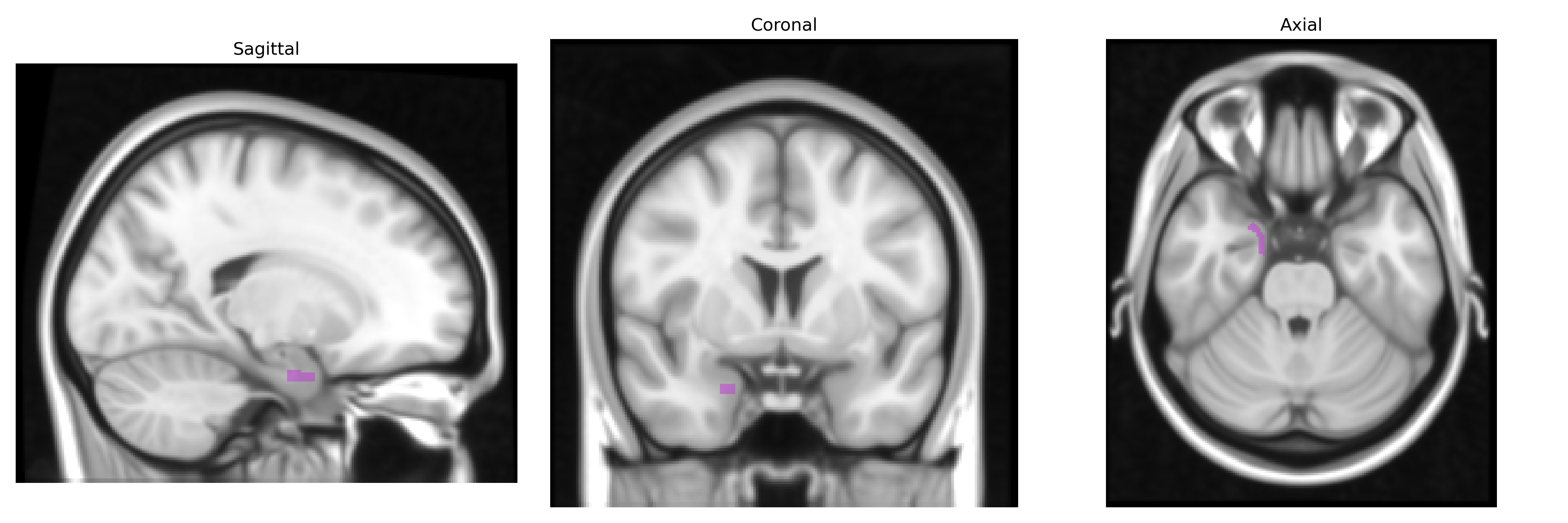
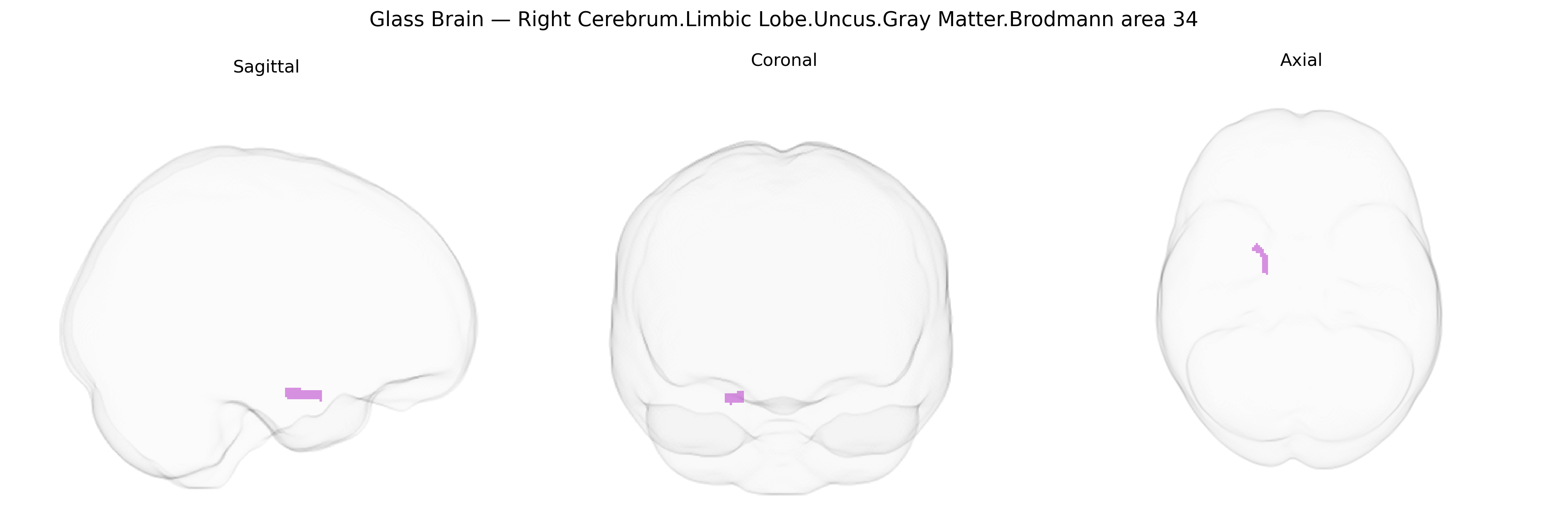
The bilateral Right Cerebrum.Limbic Lobe.Uncus.Gray Matter.Brodmann area 34 corresponds to a portion of the anterior medial temporal cortex located within the uncus of the parahippocampal gyrus, forming part of the primary olfactory (piriform) cortex and closely associated with limbic structures involved in olfaction, memory, and emotional processing. Brodmann area 34 receives direct projections from the olfactory bulb and is implicated in odor discrimination and the integration of olfactory information with contextual and emotional cues, while also interfacing with the hippocampal formation and amygdala for associative memory and affective responses. Cytoarchitectonically, this region is characterized by allocortical features, including a relatively simple laminar organization compared with neocortex, reflecting its phylogenetically older cortical architecture and its role in fundamental sensory–limbic functions. There is no direct link for Brodmann area 34; a closely related structure is the Piriform cortex.
The bilateral right uncus (limbic lobe, Brodmann area 34) is a key component of the medial temporal lobe and anterior parahippocampal/entorhinal region, and genetic associations with this area largely overlap those reported for hippocampal–parahippocampal structures. Large neuroimaging GWAS, including ENIGMA and UK Biobank–based studies, have identified common variants in genes involved in synaptic plasticity, neurodevelopment, and neurodegeneration (for example, loci near or within APOE, MAPT, SLC4A10, and DPP4) that associate with medial temporal and entorhinal cortical thickness, volume, and surface area, which encompass BA34/uncus in typical parcellations. These structural measures show genetic correlations with Alzheimer’s disease and related dementias, temporal lobe epilepsy, major depressive disorder, schizophrenia, and general cognitive performance, consistent with the uncus’s role in olfactory processing, emotional memory, and seizure generation; in particular, genetic liability for temporal lobe epilepsy and hippocampal sclerosis overlaps with variants influencing medial temporal/uncal morphology, while polygenic risk for Alzheimer’s disease and schizophrenia correlates with reduced medial temporal gray matter volume, including the entorhinal/uncal region.
Overview generated by GPT-4o (2026).
Region ID: 180
Hemisphere: bilateral
Atlas: Talairach labels 1mm
Full Quality Version: Download MP4
Full Quality Version: Download MP4
Wali Sidiqyar*, Gaurav Rudravaram*, Elyssa M. McMaster, Trent M. Schwartz, Adam M. Saunders, Kurt G. Schilling, Bennett A. Landman "Introducing SPINS: A Shared Public Visualization Library of Neuroanatomical Structures." Medical Imaging with Deep Learning- short paper
This resource is licensed under CC0 1.0 Universal (Public Domain).