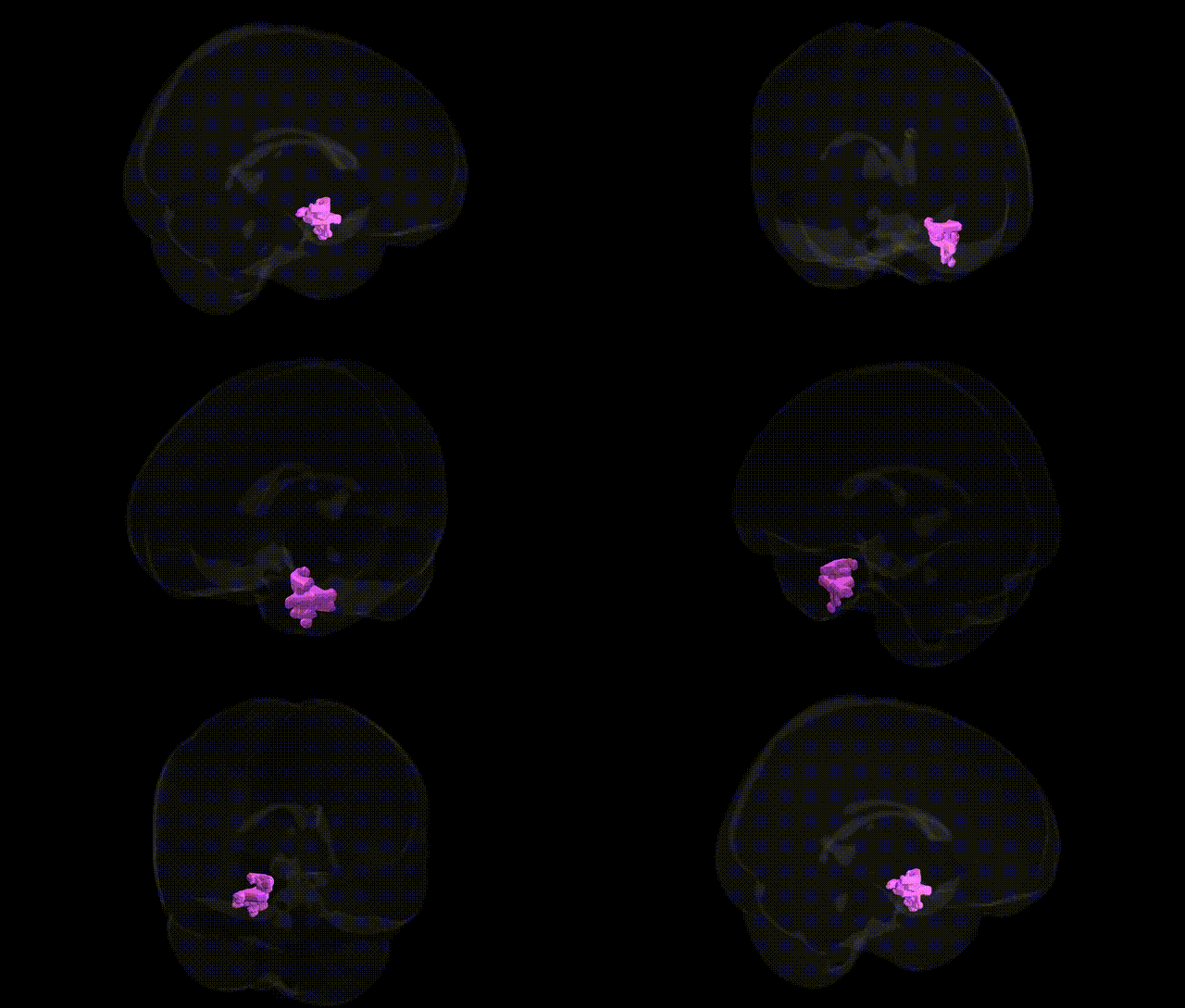
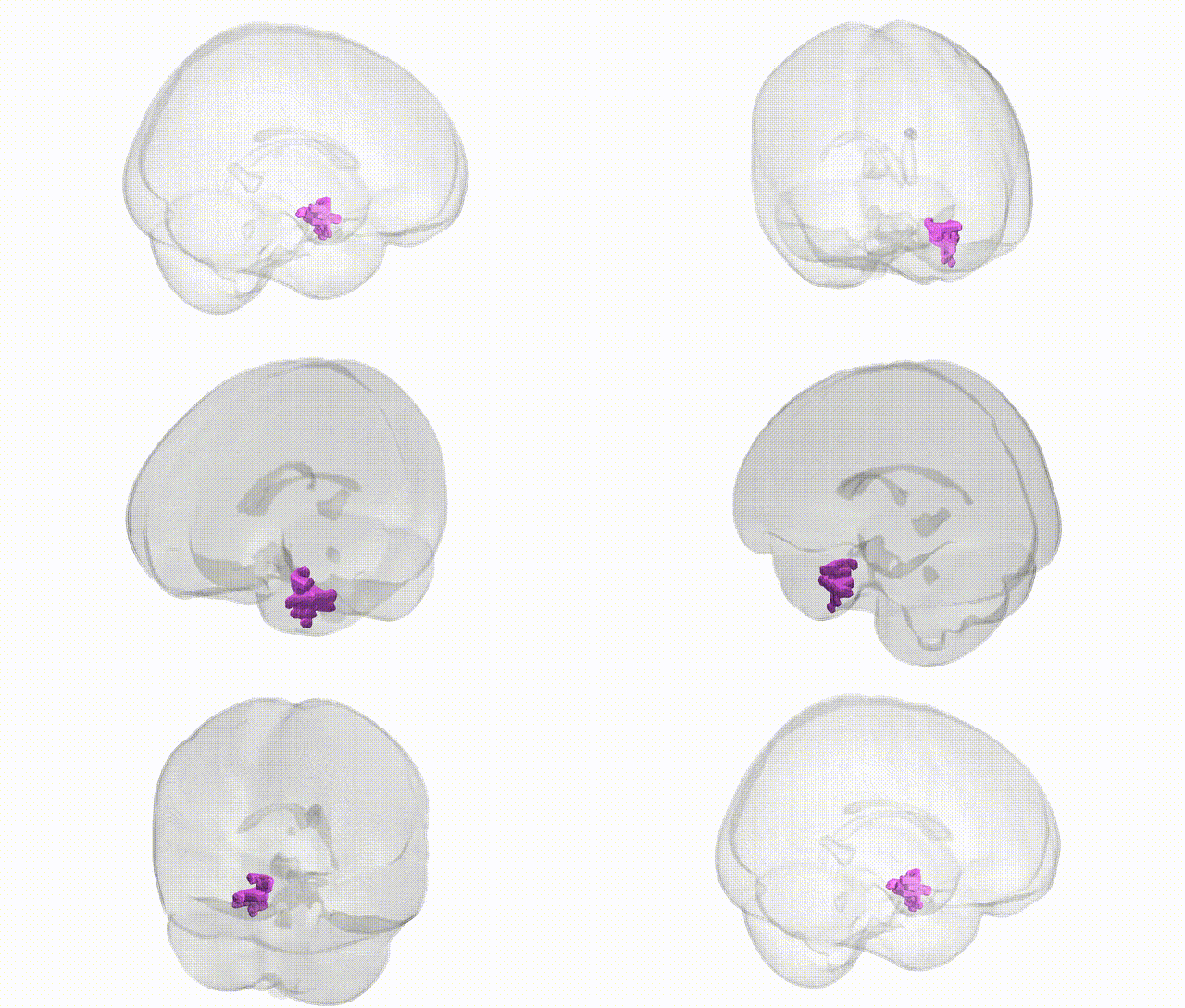
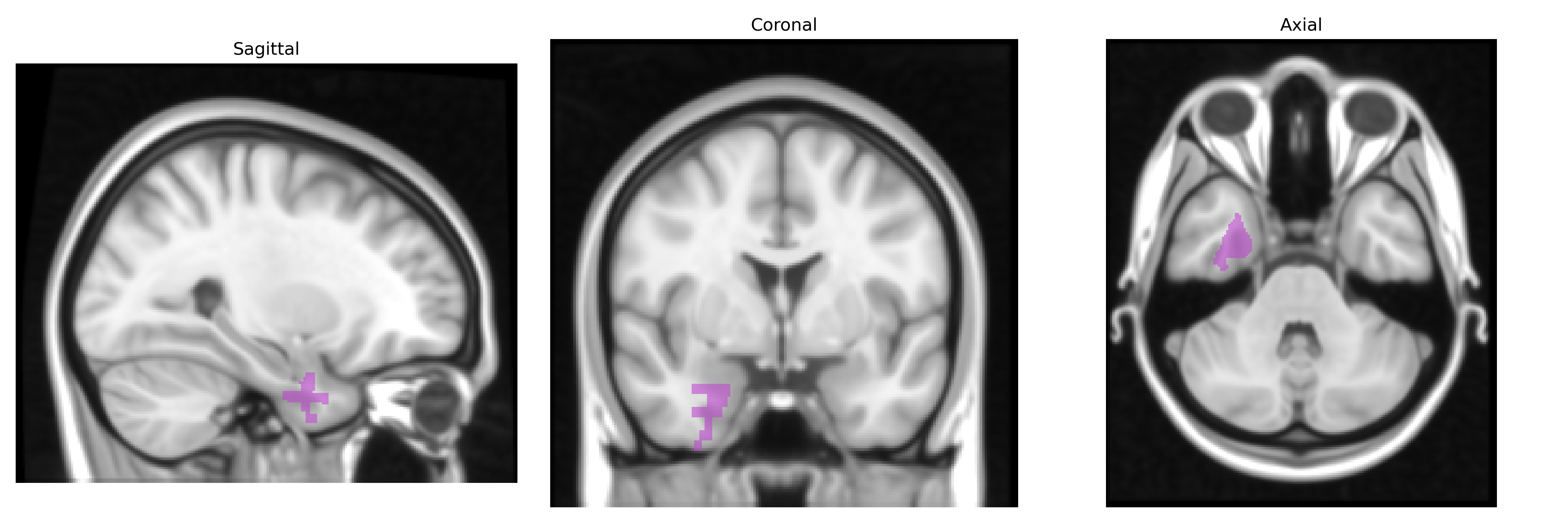
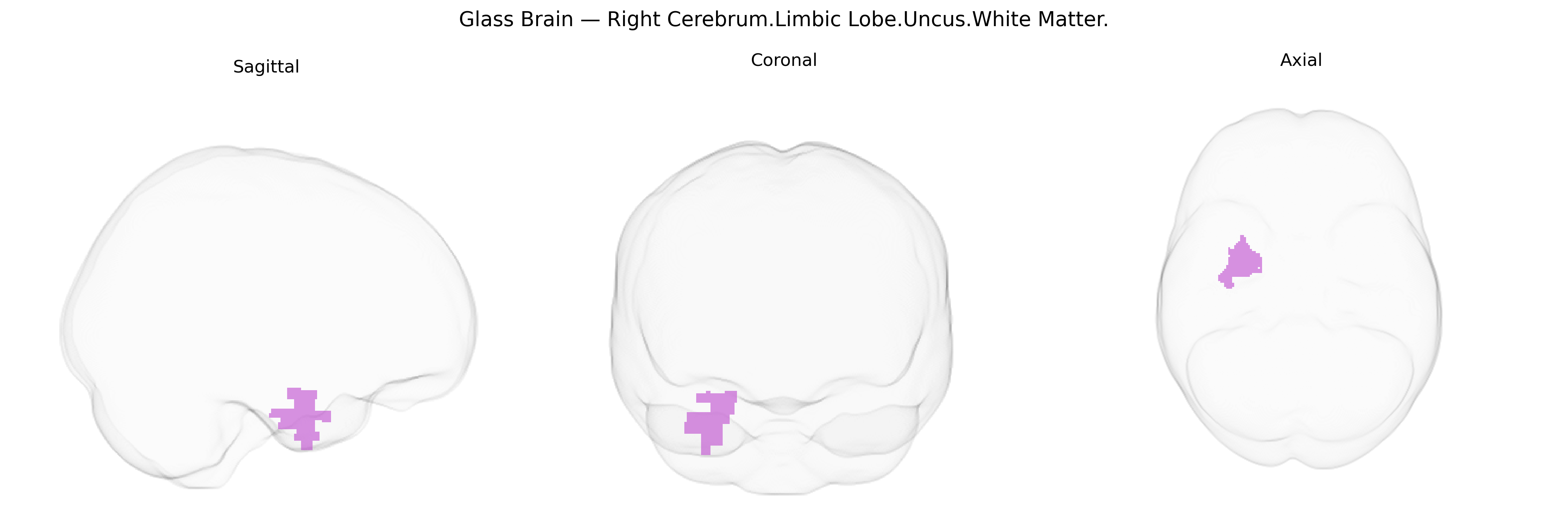
The bilateral Right Cerebrum.Limbic Lobe.Uncus.White Matter corresponds to the deep myelinated fiber pathways coursing beneath the cortical gray matter of the uncus, a hook-shaped portion of the medial anterior temporal lobe that forms part of the limbic lobe. This region lies at the anteromedial aspect of the parahippocampal gyrus, overlying key limbic structures including the amygdala and anterior hippocampal formation, and participates in circuits involved in olfaction, emotion, and memory. Its white matter contains association and projection fibers interconnecting the uncus and adjacent temporal, limbic, and subcortical structures, supporting integration of sensory, affective, and mnemonic information. There is no direct link for this exact white-matter subdivision; a related structure is the Uncus.
The bilateral right cerebrum limbic lobe uncus white matter, encompassing fibers adjacent to the parahippocampal gyrus and amygdala, has been implicated indirectly through imaging–genetics and GWAS-based MRI studies that examine temporal lobe or limbic white matter networks rather than this Talairach-defined parcel specifically. Large cohorts (e.g., ENIGMA, UK Biobank) have identified common variants in genes involved in axonal guidance, myelination, and synaptic function—such as those in NCAM1, NTRK2, BDNF, and various cell-adhesion and oligodendrocyte-related loci—as associated with temporal lobe white matter microstructure (often measured by diffusion metrics) and medial temporal volumes, which include fibers coursing through or near the uncus. Polygenic risk for schizophrenia, bipolar disorder, major depression, and Alzheimer’s disease has been associated with altered integrity of limbic and temporal white matter tracts, including those linking the hippocampus, amygdala, and orbitofrontal cortex that pass close to the uncal region, although these studies typically report tract- or lobe-level effects (e.g., temporal or limbic white matter) rather than the uncus white matter per se. Overall, genetic associations related to this region predominantly reflect broader limbic/medial temporal circuitry, implicating neurodevelopmental, myelination, and synaptic plasticity pathways in susceptibility to psychiatric disorders, neurodegenerative diseases, and inter-individual differences in memory and emotional processing.
Overview generated by GPT-4o (2026).
Region ID: 27
Hemisphere: bilateral
Atlas: Talairach labels 1mm
Full Quality Version: Download MP4
Full Quality Version: Download MP4
Wali Sidiqyar*, Gaurav Rudravaram*, Elyssa M. McMaster, Trent M. Schwartz, Adam M. Saunders, Kurt G. Schilling, Bennett A. Landman "Introducing SPINS: A Shared Public Visualization Library of Neuroanatomical Structures." Medical Imaging with Deep Learning- short paper
This resource is licensed under CC0 1.0 Universal (Public Domain).