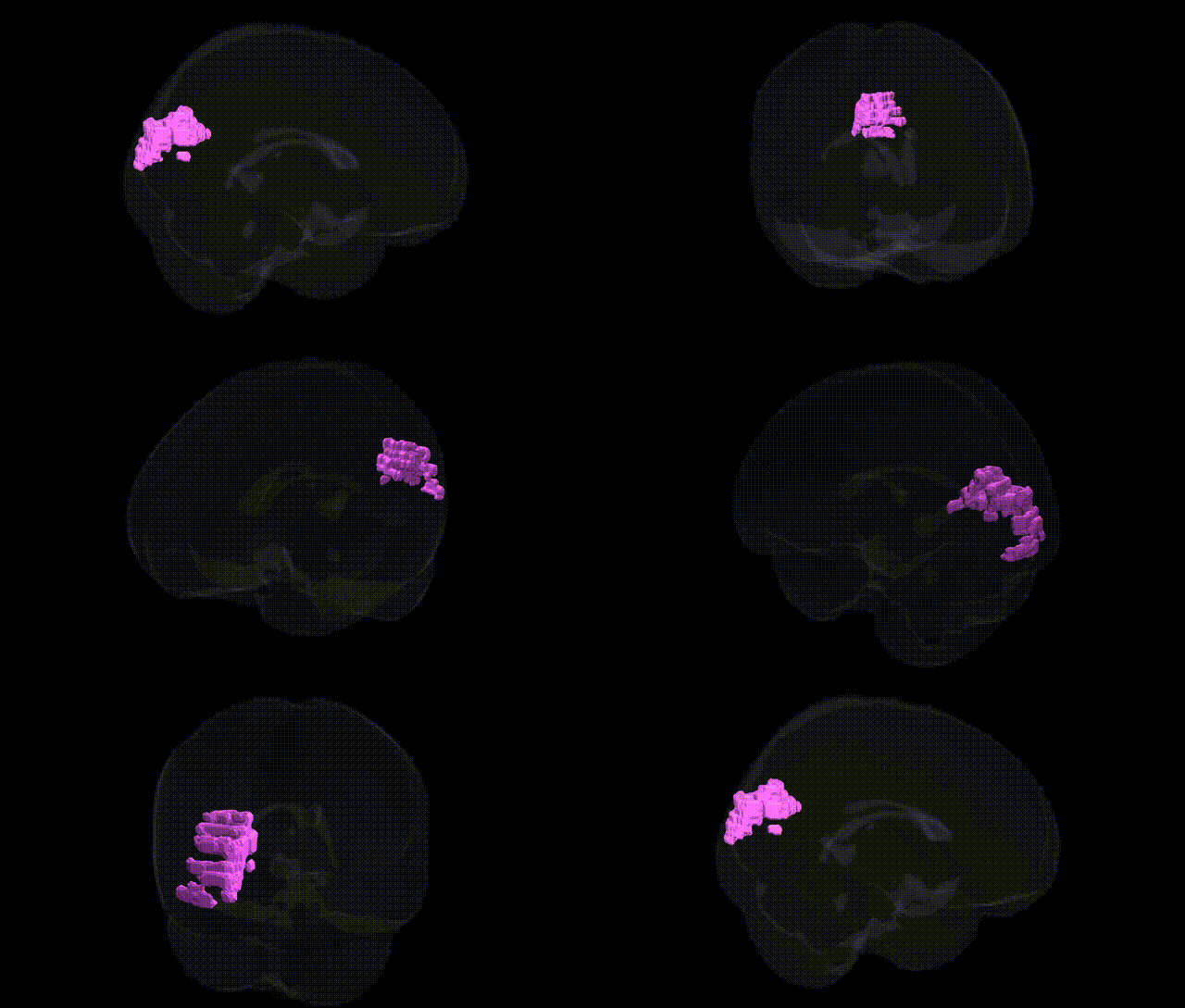
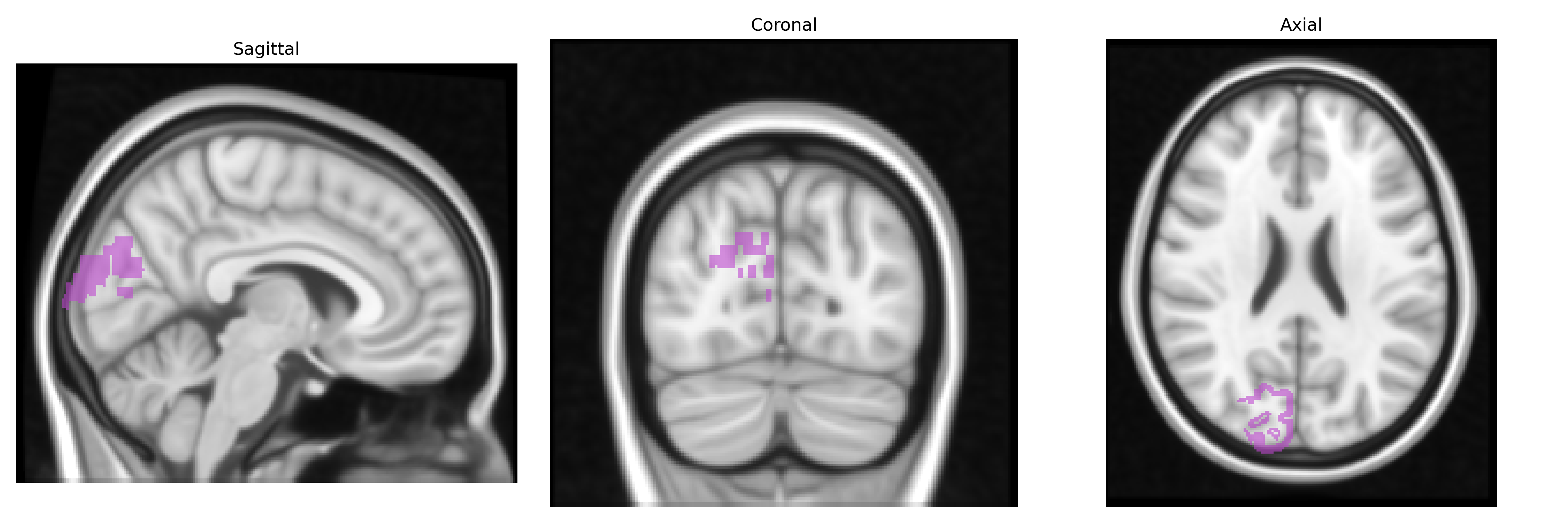
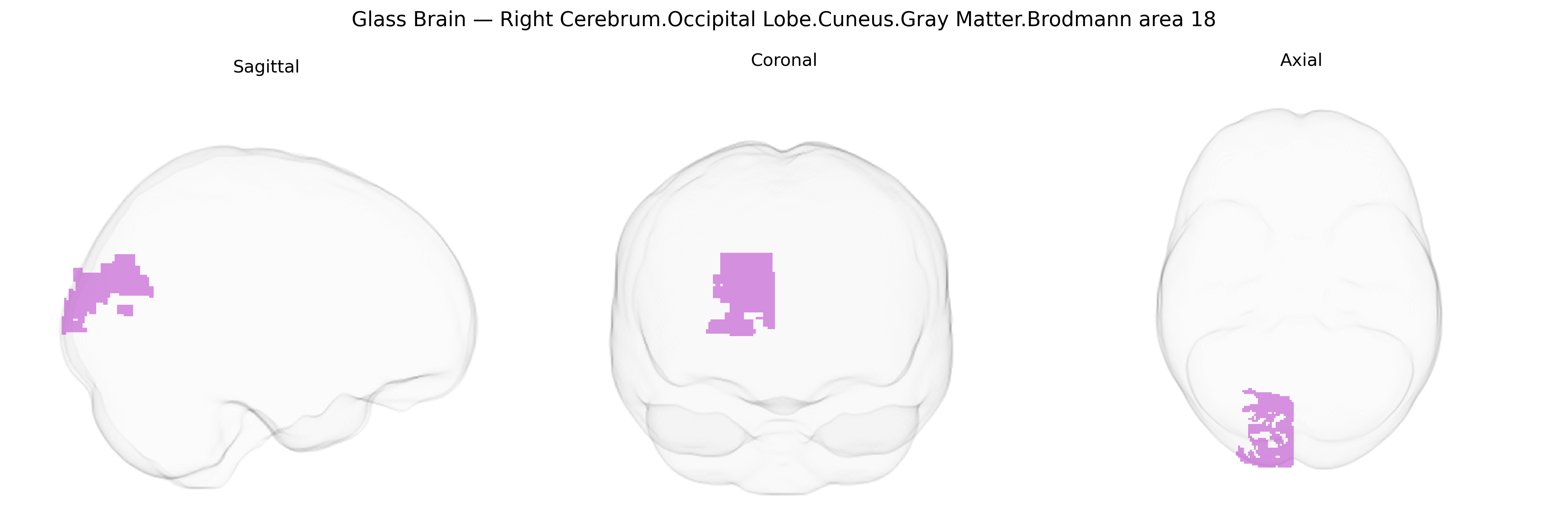
The bilateral Right Cerebrum.Occipital Lobe.Cuneus.Gray Matter.Brodmann area 18 corresponds to the secondary visual cortex (V2) located in the cuneus of the occipital lobe, adjacent to the primary visual cortex (Brodmann area 17) along the calcarine fissure. This region receives highly organized input from V1 and participates in early-stage processing of visual features such as orientation, spatial frequency, contours, and binocular disparity, contributing to form, depth, and motion perception. Neuronal populations within BA18 exhibit columnar organization and retinotopic mapping, supporting parallel processing streams that project to higher-order visual association areas in both dorsal and ventral pathways. There is no direct link for this exact composite label; a closely related structure is Brodmann area 18.
The bilateral right occipital cuneus gray matter in Brodmann area 18 (secondary visual cortex) has been implicated in diverse genetic associations primarily through neuroimaging GWAS and imaging–genetics studies. Large-scale consortia such as ENIGMA and UK Biobank have identified common variants influencing occipital and cuneus cortical thickness, surface area, and volume, with notable signals in genes involved in neurodevelopment, synaptic function, and axonal guidance (e.g., variants near MEF2C, MAPT, and genes in Wnt and TGF-β pathways), though effects are typically small and polygenic. BA18 activation and structure have been associated with genetic risk for psychiatric and neurodevelopmental disorders, including schizophrenia, bipolar disorder, major depression, and autism spectrum disorder, where risk variants often correlate with altered visual and associative processing, abnormal visual network connectivity, and cortical thinning in occipital regions. Imaging–genetics work in ADHD and dyslexia has linked risk alleles to differences in visual attention and reading-related activation patterns in extrastriate cortex, including BA18. In cognitive GWAS, polygenic scores for intelligence, educational attainment, and visuospatial skills show correlations with cuneus and BA18 morphology and functional response during visual tasks, suggesting that part of the genetic architecture for cognitive traits acts through secondary visual cortex. Additionally, genetic variants associated with migraine and visual aura, photosensitivity in epilepsy, and post-traumatic stress disorder have been connected to altered structure or function of occipital visual areas, including BA18, underscoring a broader role for this region as a genetically modulated hub in visual perception and its interaction with higher-order cognitive and affective systems.
Overview generated by GPT-4o (2026).
Region ID: 478
Hemisphere: bilateral
Atlas: Talairach labels 1mm
Full Quality Version: Download MP4
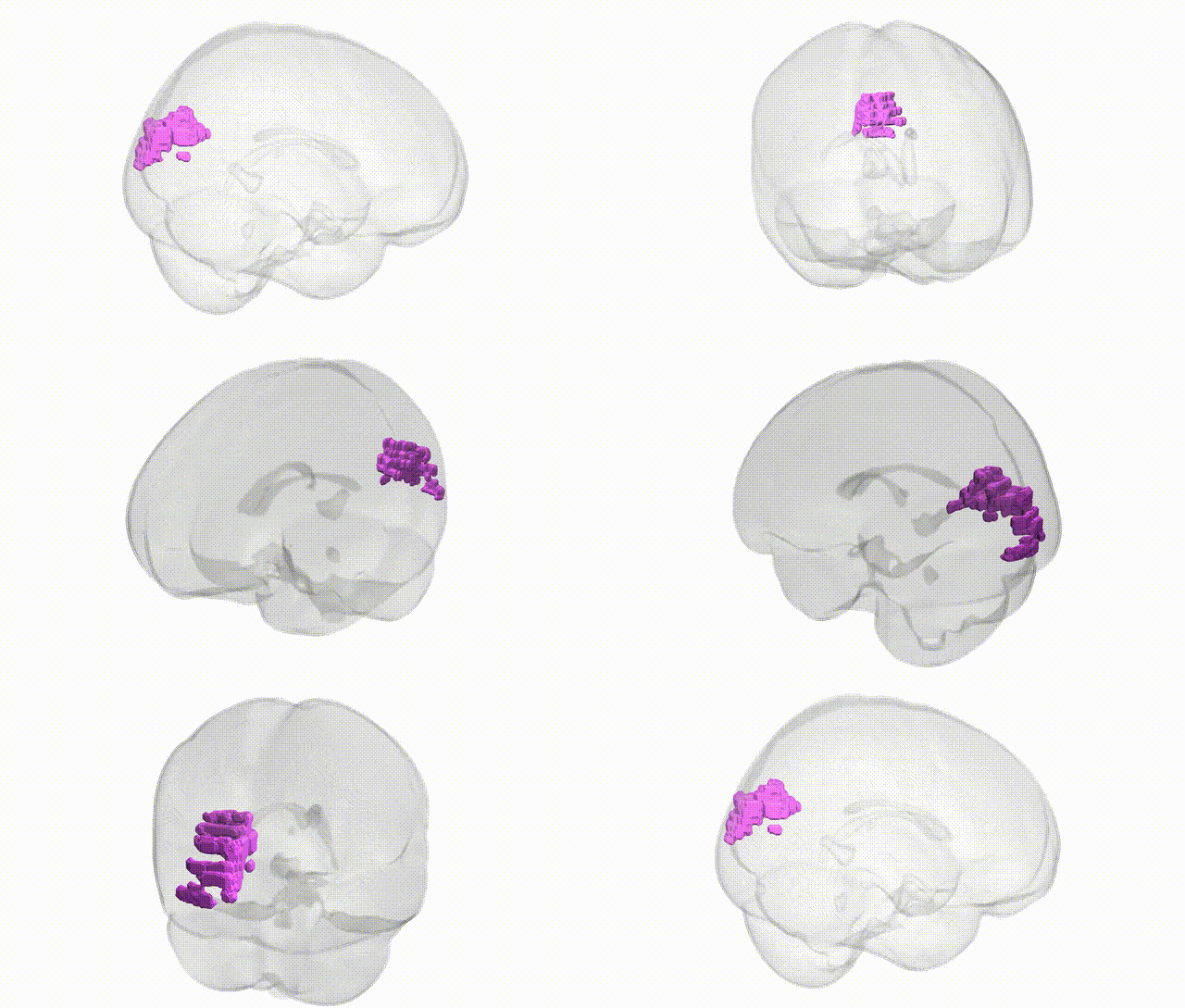
Full Quality Version: Download MP4
Wali Sidiqyar*, Gaurav Rudravaram*, Elyssa M. McMaster, Trent M. Schwartz, Adam M. Saunders, Kurt G. Schilling, Bennett A. Landman "Introducing SPINS: A Shared Public Visualization Library of Neuroanatomical Structures." Medical Imaging with Deep Learning- short paper
This resource is licensed under CC0 1.0 Universal (Public Domain).