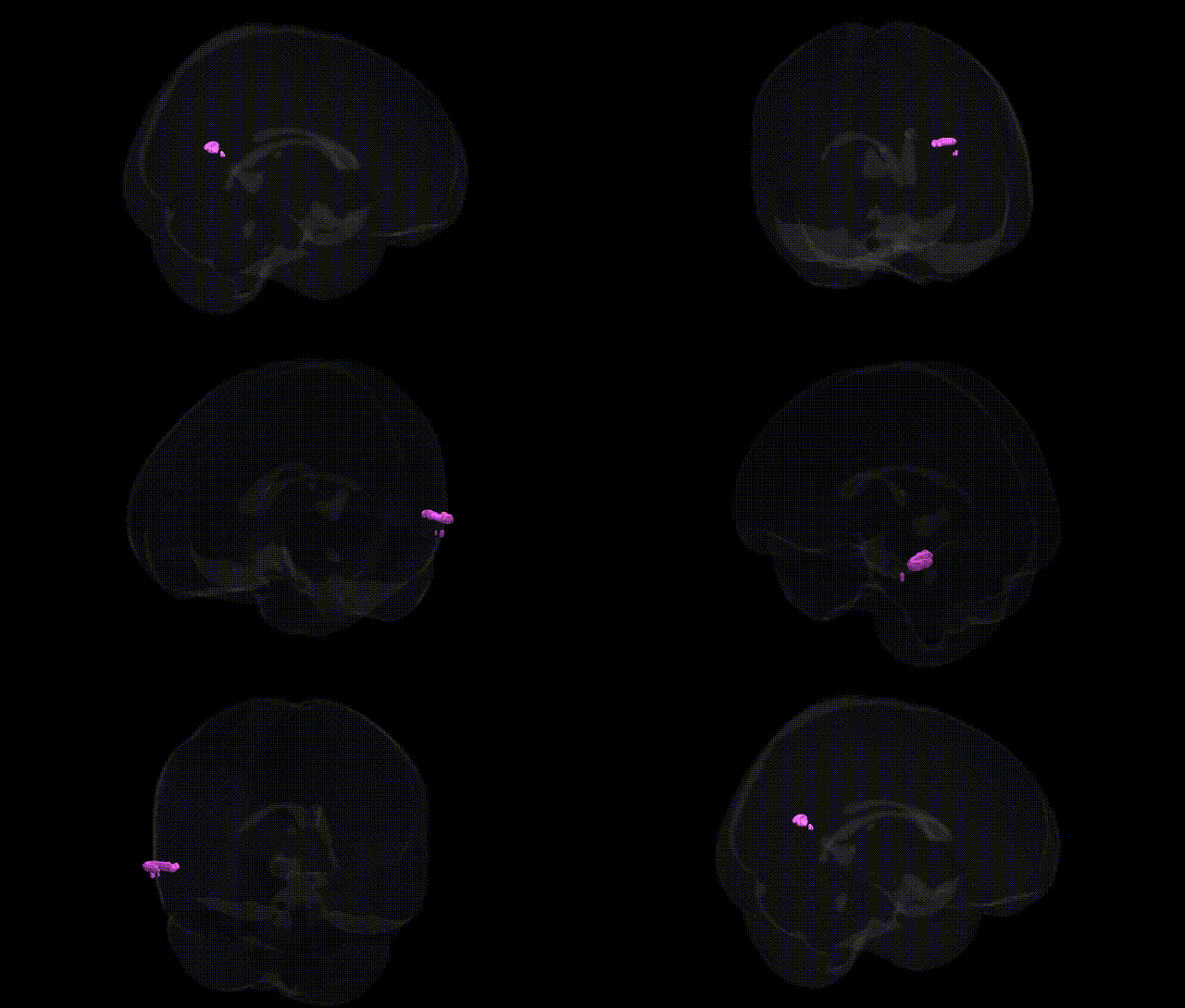
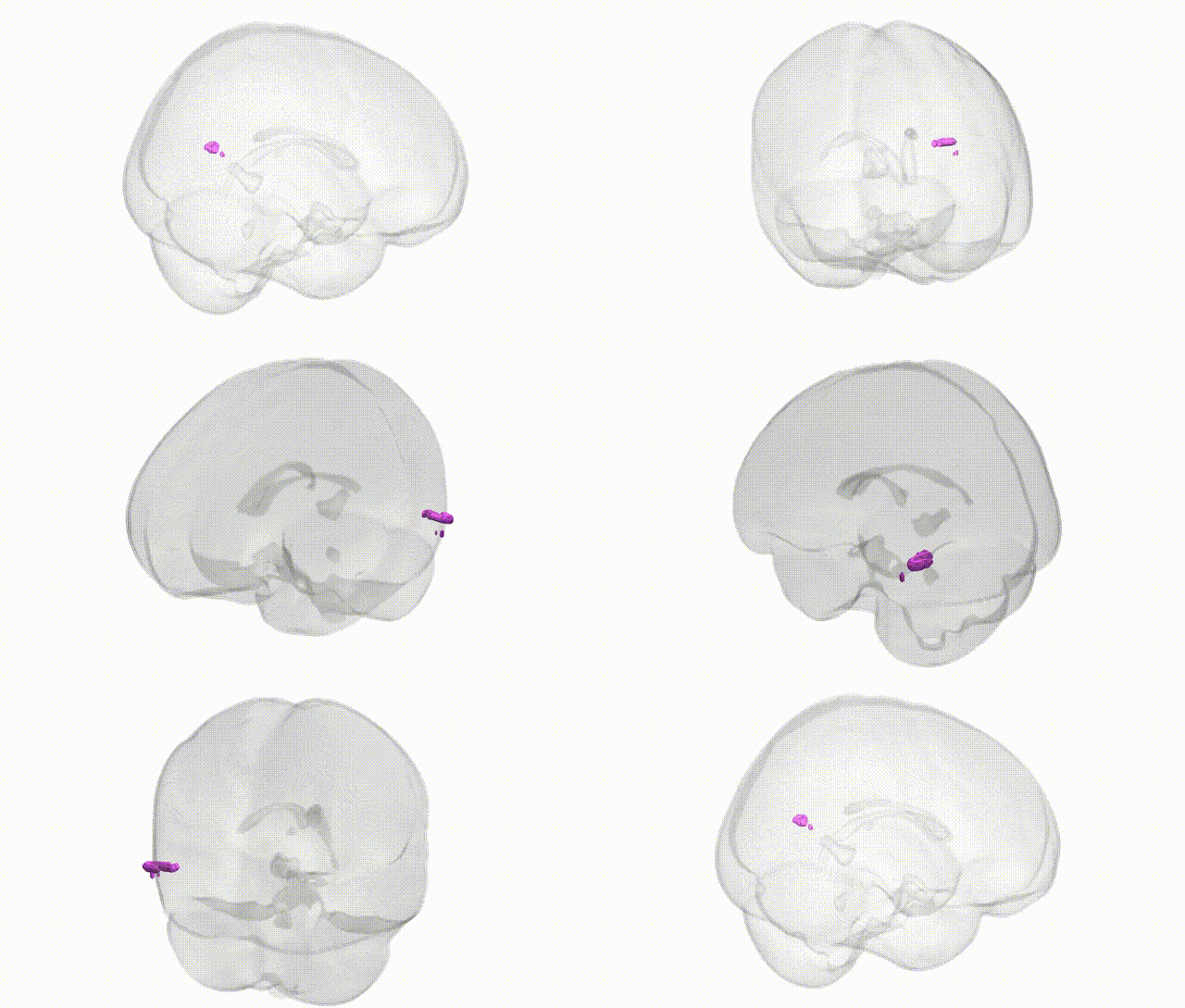
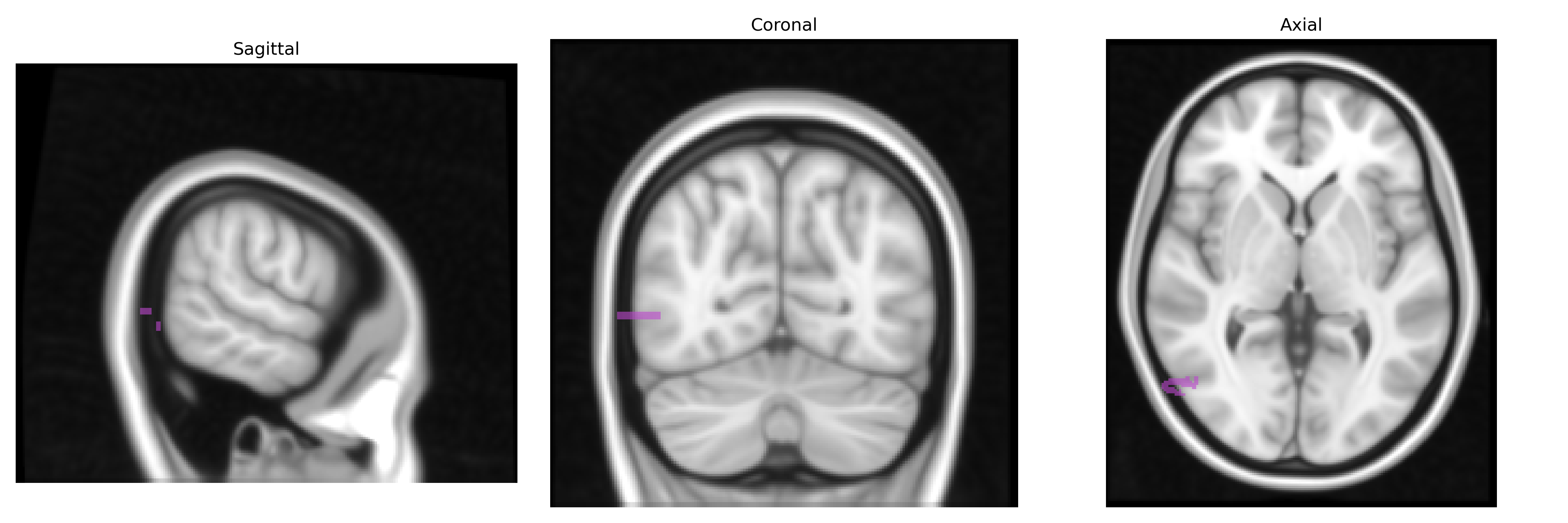
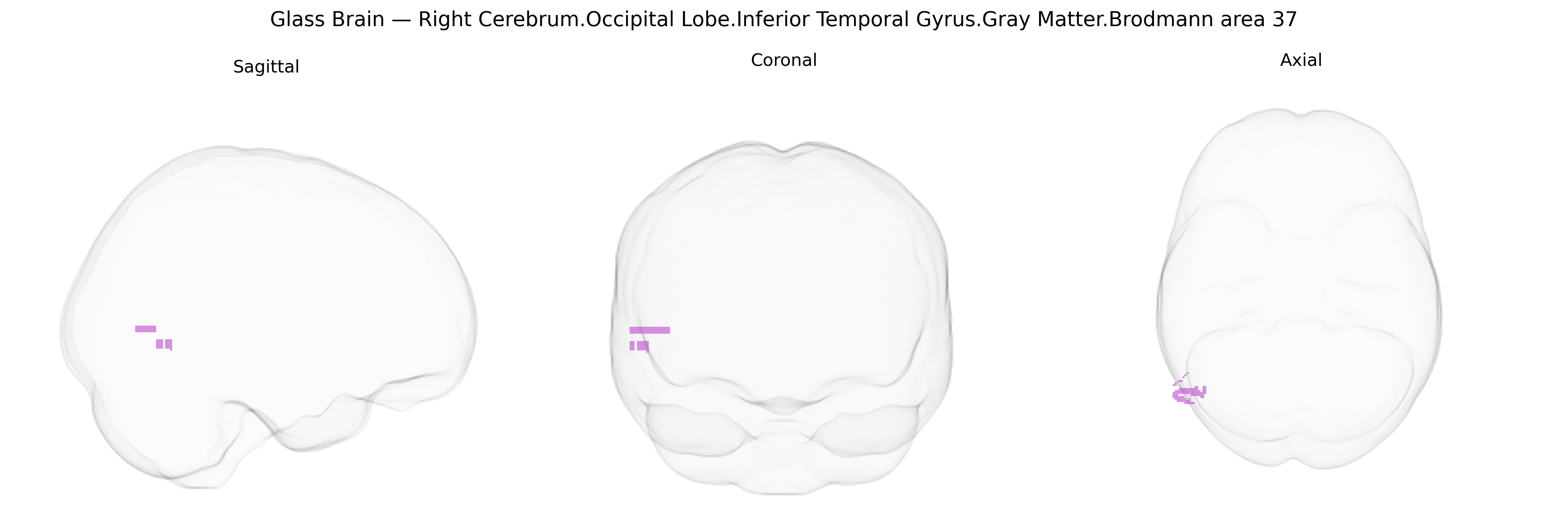
The bilateral Right Cerebrum.Occipital Lobe.Inferior Temporal Gyrus.Gray Matter.Brodmann area 37 corresponds to a ventral occipitotemporal cortical territory involved in high-level visual processing, particularly object, face, and word-form recognition, as well as semantic integration of visual stimuli. Situated at the junction of the occipital and temporal lobes along the inferior temporal gyrus, this region receives convergent input from earlier visual areas and participates in transforming complex visual patterns into meaningful categories, contributing to functions such as visual memory and lexical access. Lesions affecting Brodmann area 37 can result in category-specific agnosias, impairments in reading or word recognition, and deficits in recognizing familiar faces and objects, reflecting its role in the ventral “what” visual processing pathway. There is no direct link for this exact composite Talairach label; a closely related structure is the Fusiform gyrus.
Brodmann area 37 in the right inferior temporal/occipital region—overlapping the fusiform and adjacent inferior temporal gyrus—has been implicated in genetic studies of high-level visual processing, language, and neuropsychiatric risk, although most GWAS map to broader temporal–occipital regions rather than this precise Talairach-defined parcel. Common variants in genes involved in neurodevelopment and synaptic function (for example, CNTNAP2, FOXP2, and DCDC2) have been associated with structural and functional differences in posterior inferior temporal/fusiform cortex in disorders such as developmental dyslexia, specific language impairment, and autism spectrum conditions, often affecting word-form and face-selective regions that lie within or near BA37. Large-scale imaging–genetics consortia (e.g., ENIGMA, UK Biobank studies) have identified genome-wide significant loci influencing temporal and occipital cortical thickness, surface area, or gray-matter volume, including variants near genes such as HMGA2, MIR148A, TBR1, and others, which show effects in inferior temporal and fusiform areas encompassing BA37 and have been linked to general cognitive ability, educational attainment, and schizophrenia or major depression risk. Additional GWAS of face recognition ability, reading skill, and autism-related social perception have reported associations in genes modulating synaptic plasticity and axon guidance (e.g., NRGN, NEGR1, and contactin-family genes) that correspond to functional changes in right fusiform/inferior temporal cortex, reinforcing a role for BA37-related territories in visually driven language processing, object/face recognition, and vulnerability to neurodevelopmental and psychiatric phenotypes, though fine-grained, region-specific genetic maps for “Right Cerebrum.Occipital Lobe.Inferior Temporal Gyrus.Gray Matter.Brodmann area 37” remain incomplete.
Overview generated by GPT-4o (2026).
Region ID: 422
Hemisphere: bilateral
Atlas: Talairach labels 1mm
Full Quality Version: Download MP4
Full Quality Version: Download MP4
Wali Sidiqyar*, Gaurav Rudravaram*, Elyssa M. McMaster, Trent M. Schwartz, Adam M. Saunders, Kurt G. Schilling, Bennett A. Landman "Introducing SPINS: A Shared Public Visualization Library of Neuroanatomical Structures." Medical Imaging with Deep Learning- short paper
This resource is licensed under CC0 1.0 Universal (Public Domain).