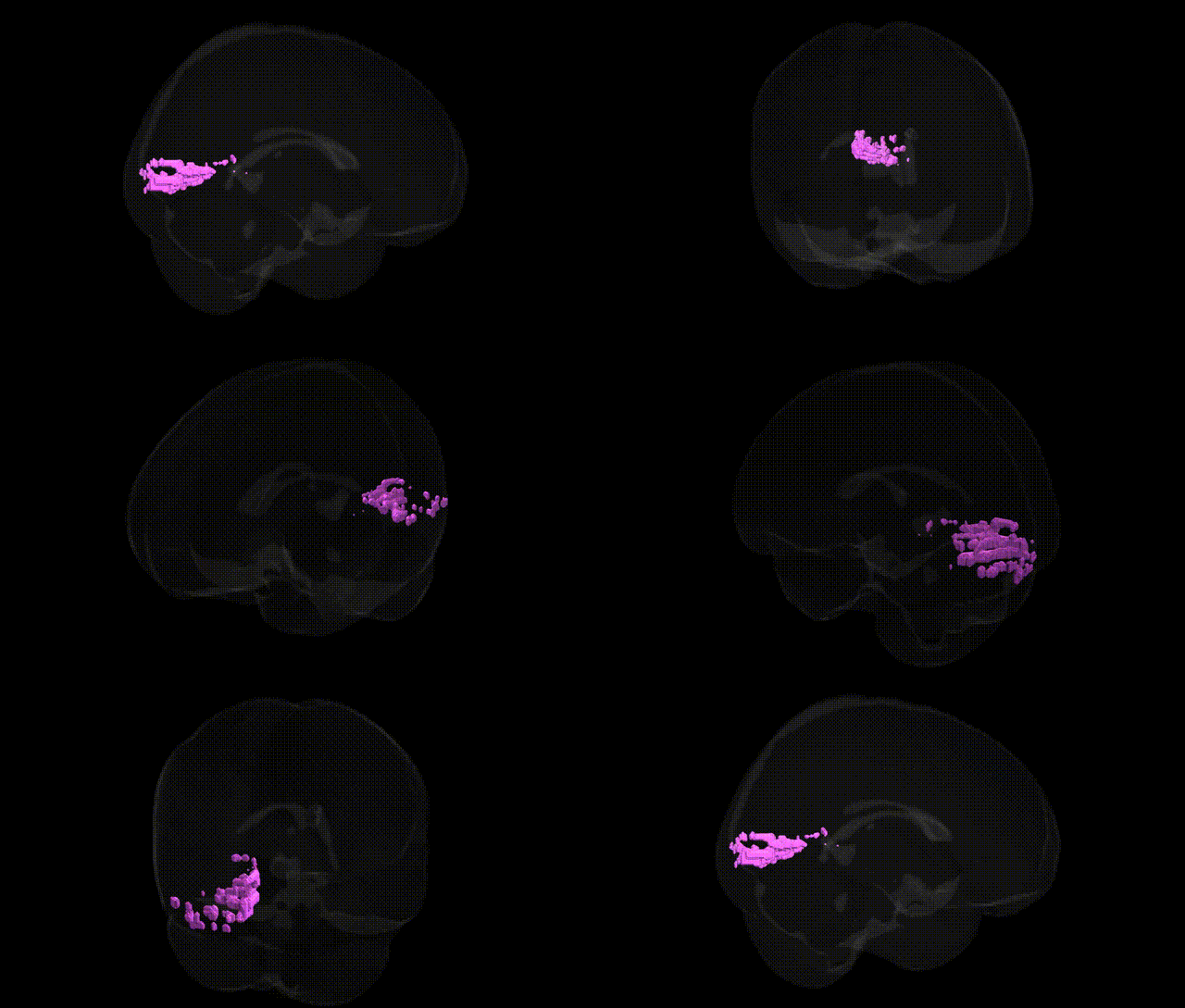
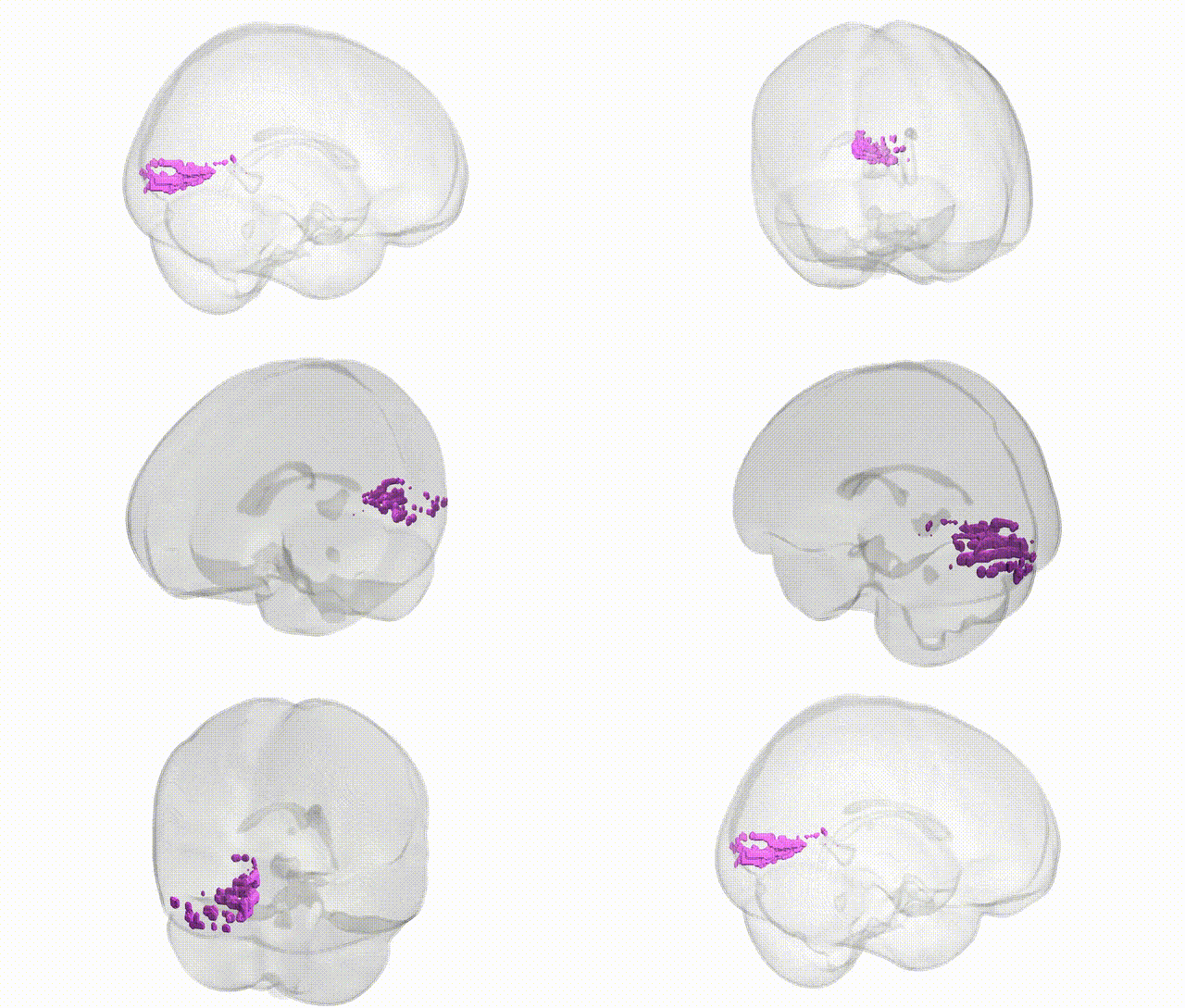
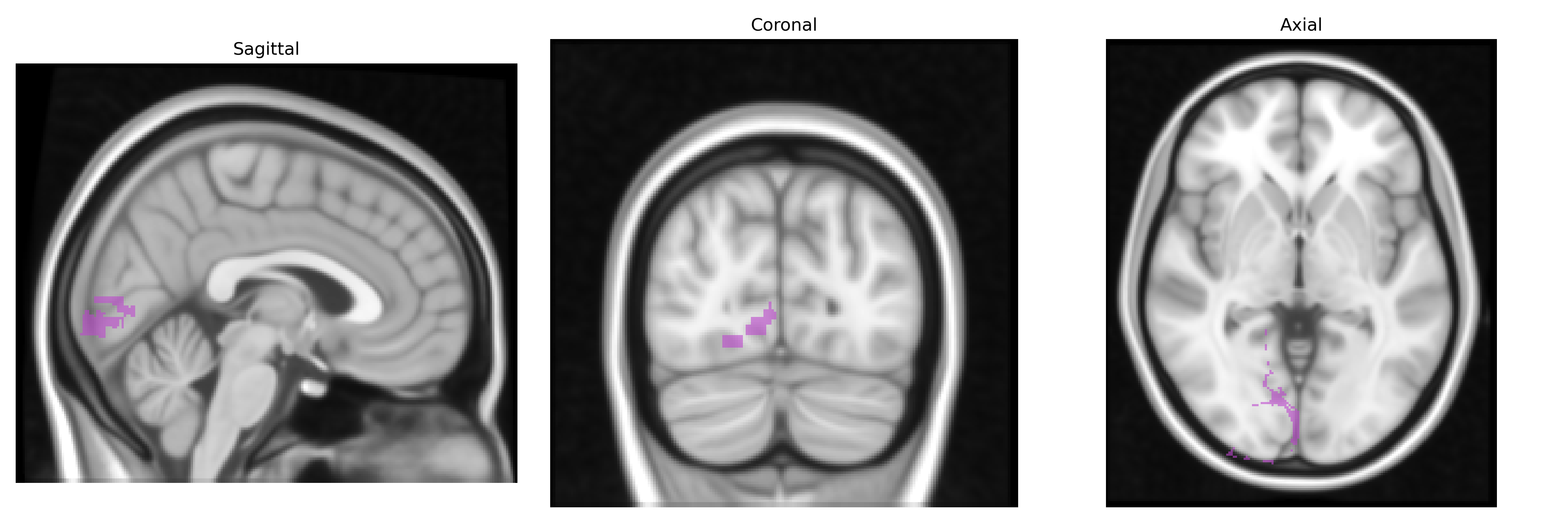
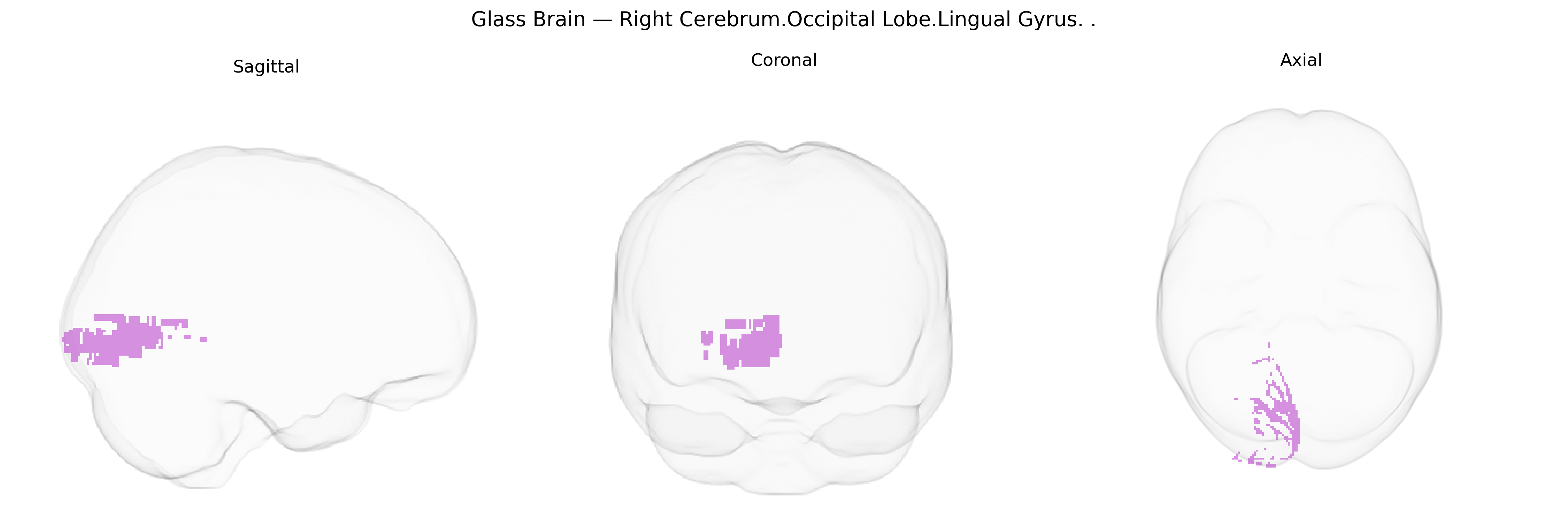
The bilateral Right Cerebrum.Occipital Lobe.Lingual Gyrus is a medial occipital cortical region that extends along the ventral surface of the occipital lobe, bordering the calcarine sulcus and often continuing into the ventral temporal cortex. It is primarily involved in early and intermediate stages of visual processing, including analysis of complex visual patterns, color, and higher-order features important for object and word form recognition, and contributes to visuospatial and visuoperceptual functions. The lingual gyrus participates in pathways linking primary visual cortex with downstream ventral visual stream areas and is interconnected with limbic and associative regions that support visual memory and imagery. Lingual gyrus
The bilateral right lingual gyrus in the occipital lobe—often functionally grouped with neighboring occipital and ventral visual regions—has been implicated in several genetic and genome-wide association studies, largely through imaging genetics and GWAS of brain structure, function, and neuropsychiatric or cognitive traits. Multiple large-scale MRI–GWAS consortia (e.g., ENIGMA, UK Biobank–based studies) report common variants in genes involved in neurodevelopment, synaptic plasticity, and myelination (such as those near genes including BDNF, HMGA2, and microtubule- or axon-guidance–related loci) associated with occipital and ventral visual cortical thickness, surface area, or volume that encompass or closely overlap the lingual gyrus. Genetic risk scores for major depressive disorder, schizophrenia, autism spectrum disorder, and Alzheimer’s disease have been associated with altered occipital/lingual gyrus structure or activation patterns, particularly in tasks involving visual processing, memory, or emotional stimuli, although such effects are typically small and polygenic. Variants in genes influencing visual system development, such as those affecting axonal connectivity or cortical patterning, have been linked to structural differences in occipital visual areas including the lingual gyrus, while GWAS of visual traits (e.g., visual acuity and related endophenotypes) and reading or dyslexia-related traits sometimes implicate occipital–ventral stream networks that include this region. Overall, genetic associations with the bilateral right lingual gyrus are diffuse, polygenic, and context-dependent, reflecting general neurodevelopmental and neuropsychiatric risk architectures rather than region-specific “lingual gyrus genes,” and are often reported at the level of broader occipital or ventral visual cortex rather than Talairach-defined subregions.
Overview generated by GPT-4o (2026).
Region ID: 244
Hemisphere: bilateral
Atlas: Talairach labels 1mm
Full Quality Version: Download MP4
Full Quality Version: Download MP4
Wali Sidiqyar*, Gaurav Rudravaram*, Elyssa M. McMaster, Trent M. Schwartz, Adam M. Saunders, Kurt G. Schilling, Bennett A. Landman "Introducing SPINS: A Shared Public Visualization Library of Neuroanatomical Structures." Medical Imaging with Deep Learning- short paper
This resource is licensed under CC0 1.0 Universal (Public Domain).