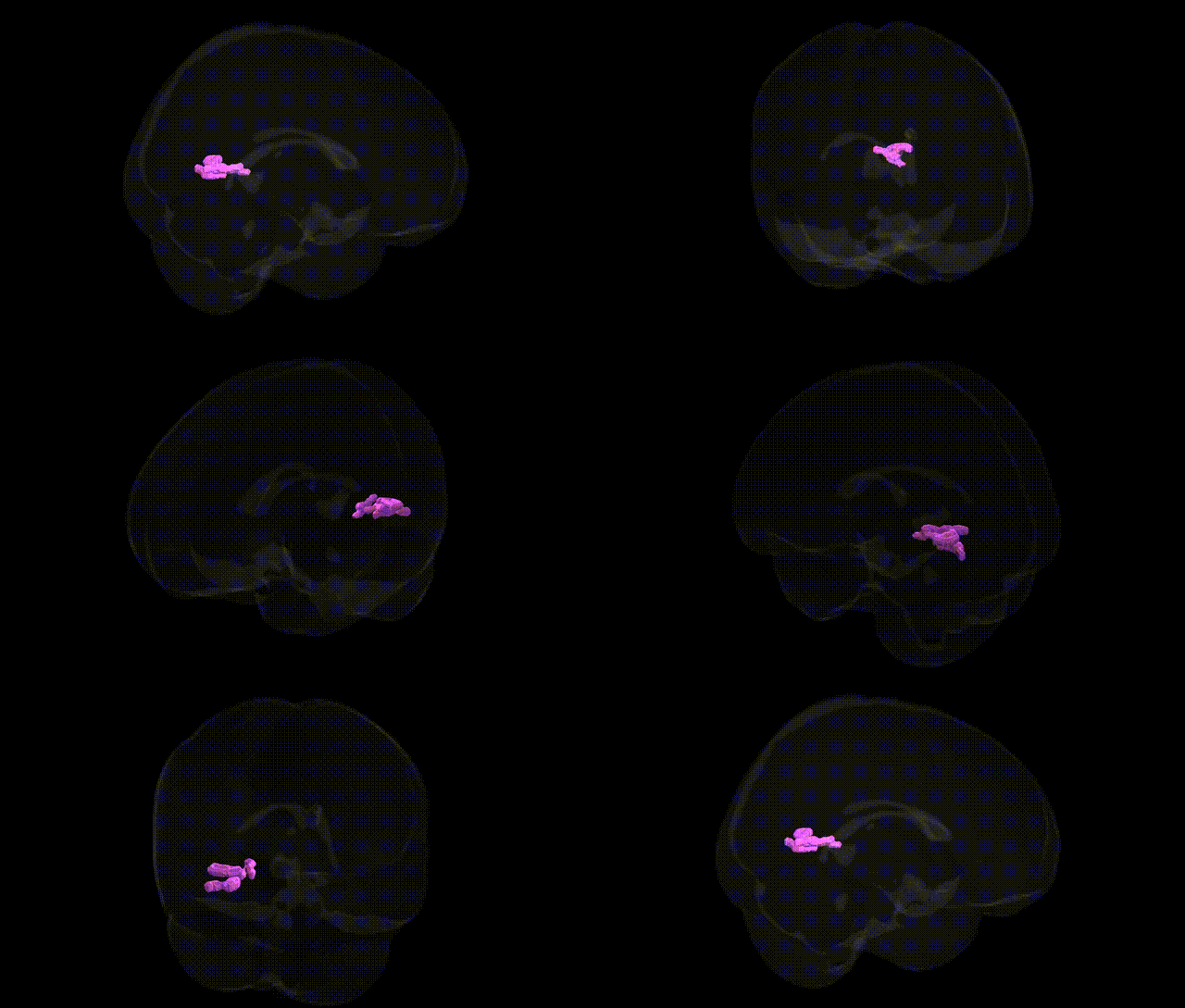
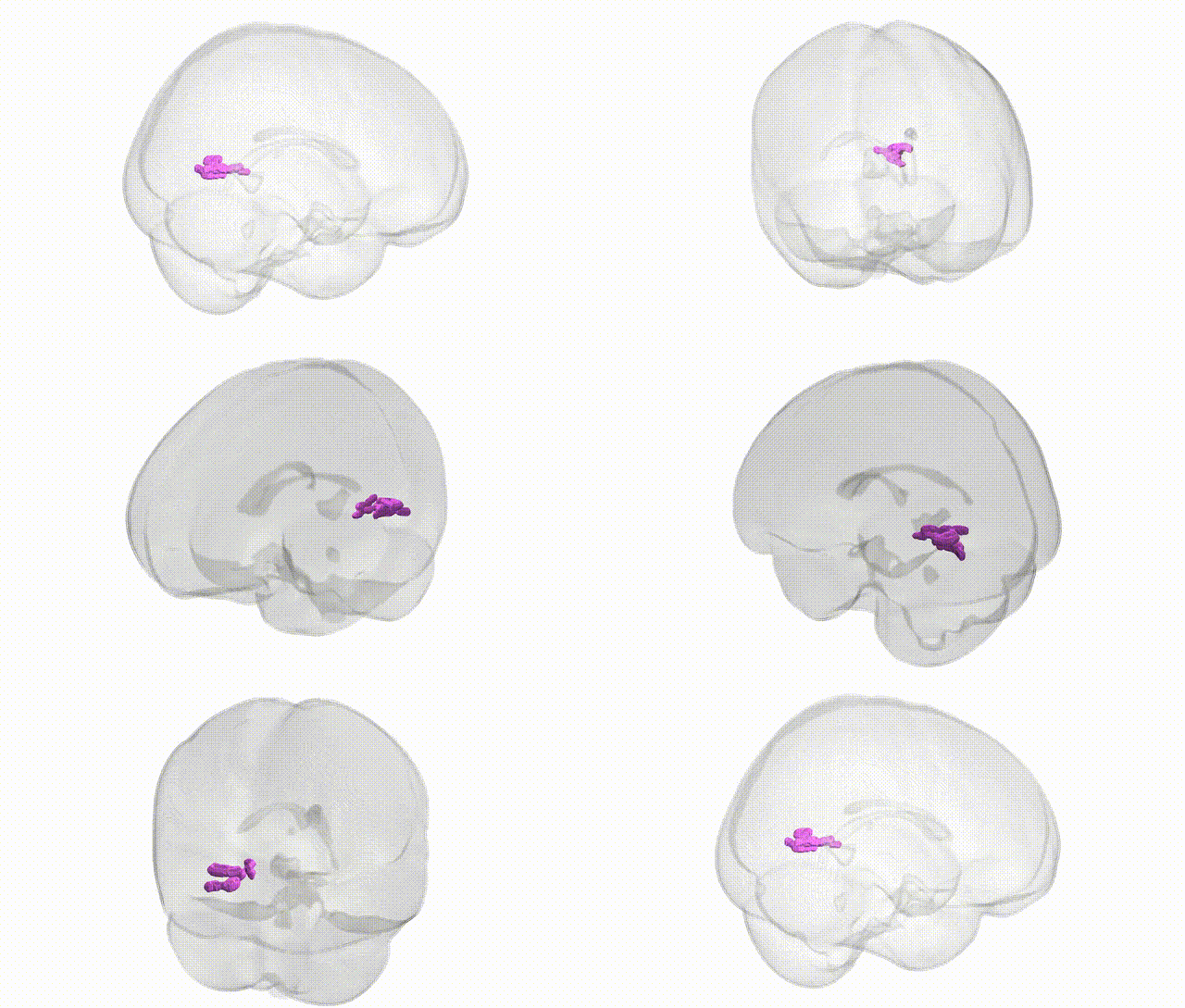
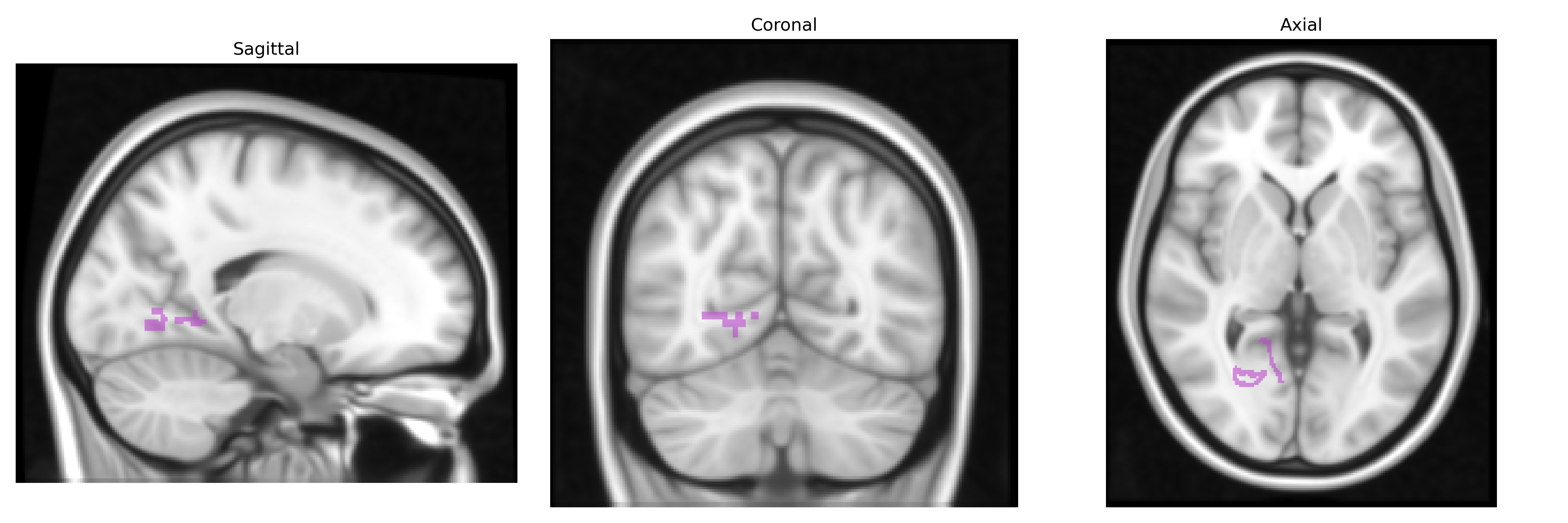
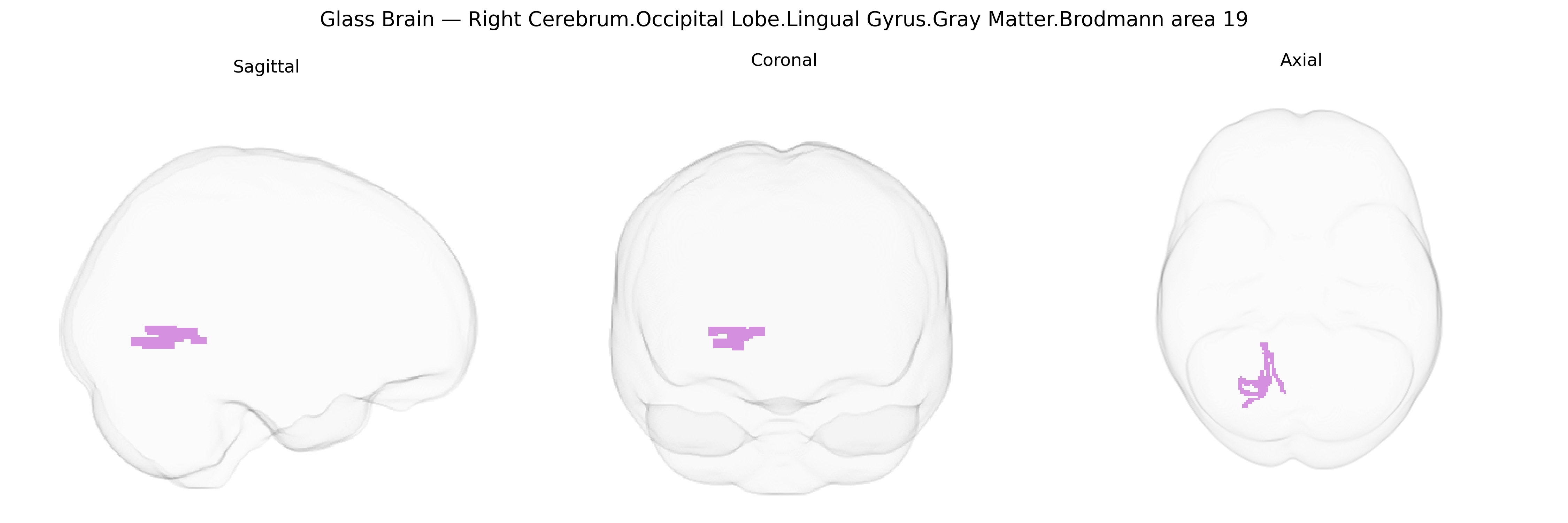
The bilateral Right Cerebrum.Occipital Lobe.Lingual Gyrus.Gray Matter.Brodmann area 19 corresponds to association visual cortex in the ventromedial occipital lobe, localized to the lingual gyrus and belonging to the higher-order visual processing region of Brodmann area 19. This cortex receives input from primary and secondary visual areas and participates in complex visual integration, including form, pattern, and possibly aspects of visual memory and object recognition, with contributions to processing of foveal and peripheral visual information within the ventral visual stream. Cytoarchitectonically, Brodmann area 19 exhibits a highly laminated neocortical structure with prominent granular layers, characteristic of visual association areas, and functionally it is interconnected with neighboring occipital and temporal visual regions, supporting multimodal integration and higher-order visual perception. There is no direct link for this exact composite region; a related structure is Brodmann area 19.
The bilateral right lingual gyrus (occipital lobe, Brodmann area 19) is consistently implicated in imaging–genetics and GWAS studies of occipital and visual-association cortex structure and function, with several common variants influencing its gray-matter volume, cortical thickness, and activation patterns. Large-scale brain MRI GWAS (e.g., ENIGMA, UK Biobank) have reported associations between variants near or within genes involved in neurodevelopment, axon guidance, synaptic function, and myelination—such as HMGA2, MAPT, genes in Wnt and neurotrophin pathways, and multiple loci on chromosomes 3, 6, 12, and 17—and occipital/lingual gyrus morphometry, though effects are small and regionally distributed rather than specific to BA19 alone. The lingual gyrus has shown heritable variation in surface area and thickness, and polygenic scores for educational attainment, intelligence, and cognitive performance correlate with structural differences in this region. Genetic risk for neuropsychiatric conditions, including schizophrenia, bipolar disorder, major depression, and autism spectrum disorder, has been associated in imaging–genetic studies with altered lingual gyrus volume or activation (for example, carriers of schizophrenia and MDD polygenic risk showing occipital/lingual cortical thinning or hypoactivation), although no single disorder-specific “lingual gene” has been identified. In neurological disease, variants in complement, immune, and lipid-metabolism genes that increase risk for multiple sclerosis and related demyelinating disorders have been linked indirectly to atrophy patterns involving occipital/lingual regions, and GWAS of migraine and visual aura implicate loci affecting visual-network structures, including the lingual gyrus. Overall, genetic influences on this BA19 region reflect broad polygenic effects on visual cortical development, cognitive ability, psychiatric liability, and demyelinating or vascular risk, with widespread overlap across traits rather than a unique, region-exclusive genetic signature.
Overview generated by GPT-4o (2026).
Region ID: 418
Hemisphere: bilateral
Atlas: Talairach labels 1mm
Full Quality Version: Download MP4
Full Quality Version: Download MP4
Wali Sidiqyar*, Gaurav Rudravaram*, Elyssa M. McMaster, Trent M. Schwartz, Adam M. Saunders, Kurt G. Schilling, Bennett A. Landman "Introducing SPINS: A Shared Public Visualization Library of Neuroanatomical Structures." Medical Imaging with Deep Learning- short paper
This resource is licensed under CC0 1.0 Universal (Public Domain).