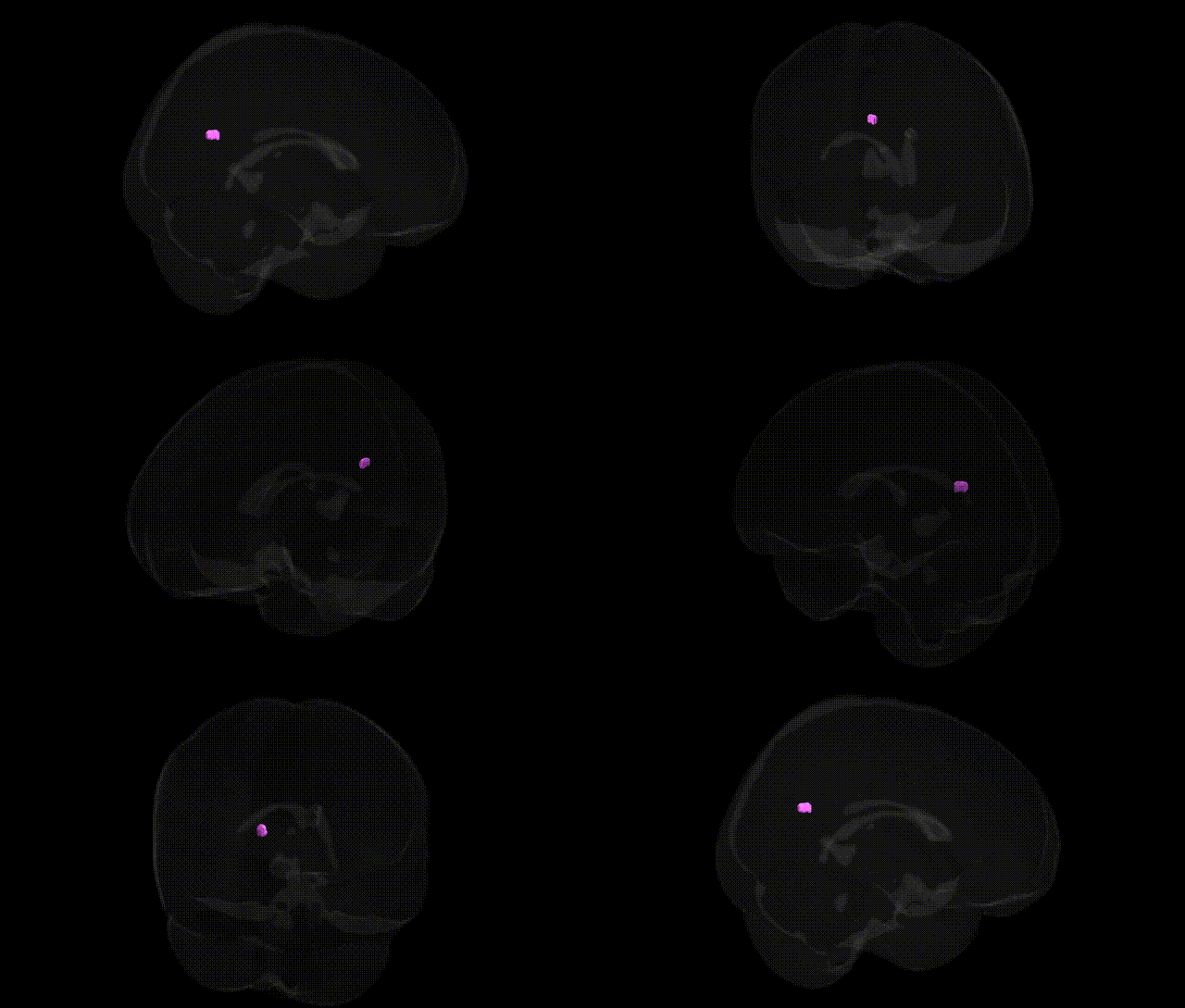
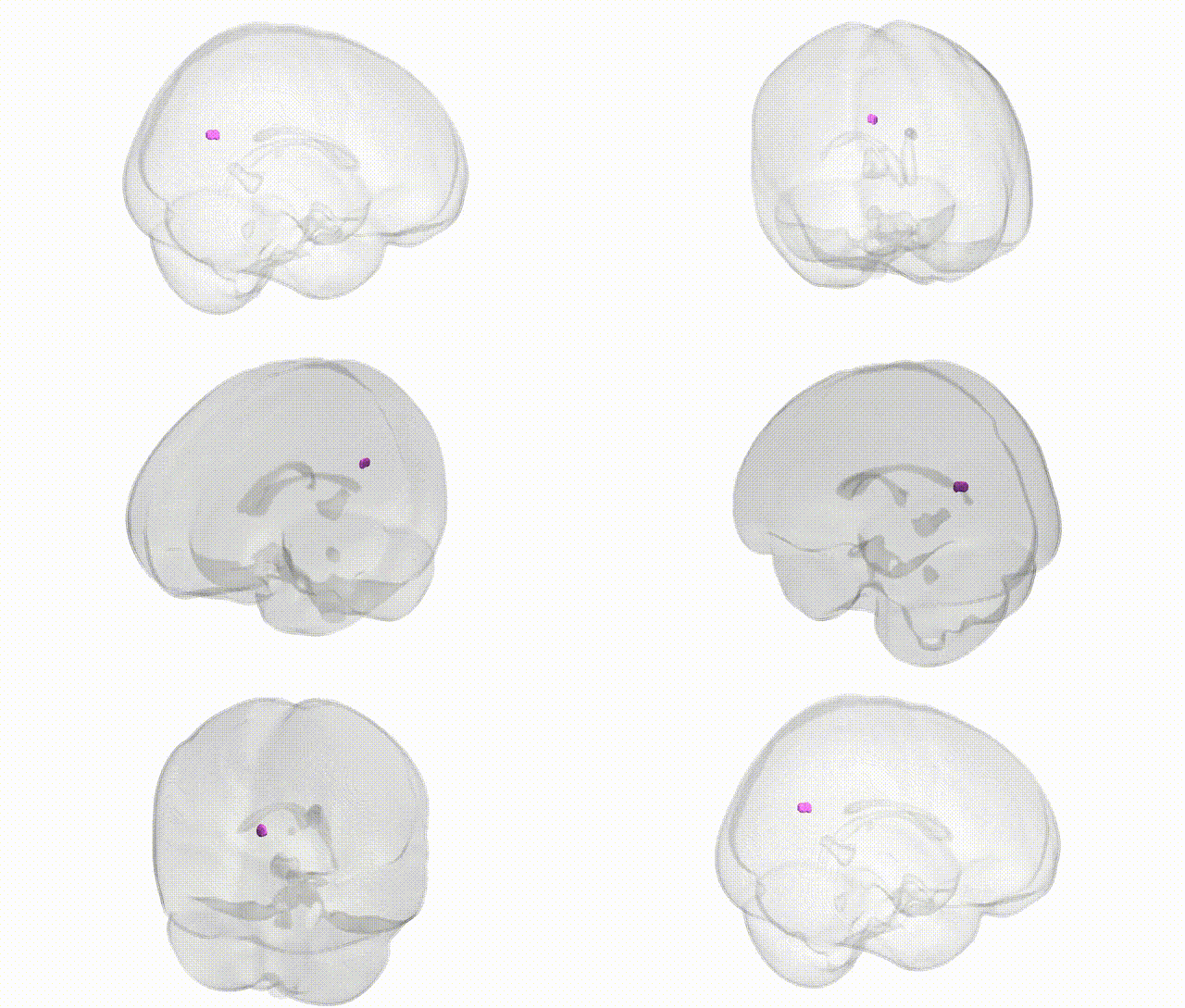
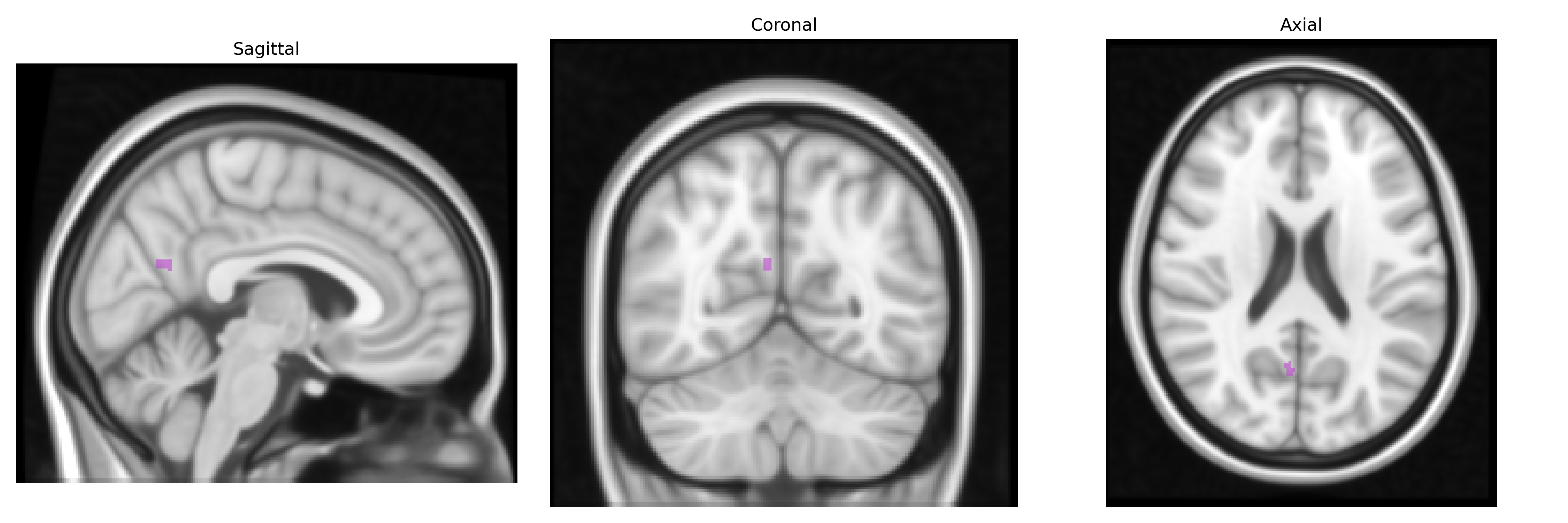
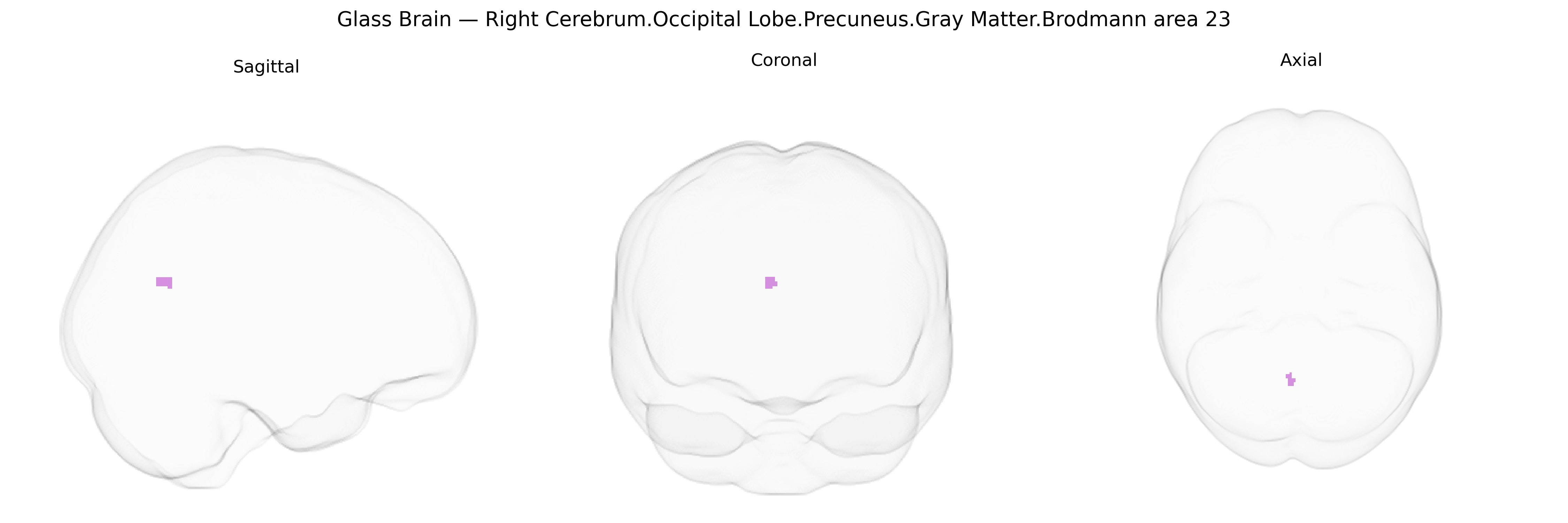
The bilateral Right Cerebrum.Occipital Lobe.Precuneus.Gray Matter.Brodmann area 23, as labeled in the Talairach 1 mm Atlas, corresponds primarily to the posterior portion of the cingulate cortex (Brodmann area 23) situated medially and extending toward the precuneus region at the parietal–occipital junction. This gray matter region is part of the limbic and default mode networks and is implicated in internally directed cognition, including autobiographical memory, self-referential processing, and aspects of visuospatial imagery and attention. Functionally, BA23 contributes to integrating multimodal sensory and contextual information, supporting the evaluation of emotional and motivational significance of stimuli and aiding in transitions between internally focused thought and externally directed behavior. No direct link exists specifically for “Right Cerebrum.Occipital Lobe.Precuneus.Gray Matter.Brodmann area 23,” but it is encompassed within Brodmann area 23.
The bilateral right precuneus gray matter in Brodmann area 23 (posterior cingulate/medial parietal sector of the occipital–parietal transition) has been implicated in multiple genetic and GWAS-based associations, largely through imaging-genetics and neuropsychiatric studies rather than a single region-specific gene. Common variants in APOE (especially ε4) and CLU, PICALM, CR1, and BIN1 have been repeatedly linked to structural and functional alterations in the precuneus/posterior cingulate network in Alzheimer’s disease and age-related neurodegeneration, often showing reduced gray matter volume or hypometabolism in carriers. Polygenic risk scores for Alzheimer’s disease, schizophrenia, and major depressive disorder show associations with morphometric and connectivity measures in this region, consistent with its role in default mode network integrity. Large-scale GWAS of cortical thickness and surface area (e.g., ENIGMA and UK Biobank–based studies) identify multiple loci across the genome—such as variants near WNT, FGF, and BDNF pathway genes—associated with parietal and medial posterior cortical morphology that include the precuneus, while neurodevelopmental and autism-related genes (e.g., CNTNAP2, NRXN family members) have been linked to altered functional connectivity within default mode regions encompassing BA23. In addition, GWAS of traits such as general cognitive ability, mind-wandering, and self-referential processing show that polygenic influences on these traits often map onto structural and functional variation in the precuneus/posterior cingulate area, underscoring this region as a key convergence point for genetic risk affecting memory, internal mentation, and neurodegenerative and psychiatric vulnerability.
Overview generated by GPT-4o (2026).
Region ID: 830
Hemisphere: bilateral
Atlas: Talairach labels 1mm
Full Quality Version: Download MP4
Full Quality Version: Download MP4
Wali Sidiqyar*, Gaurav Rudravaram*, Elyssa M. McMaster, Trent M. Schwartz, Adam M. Saunders, Kurt G. Schilling, Bennett A. Landman "Introducing SPINS: A Shared Public Visualization Library of Neuroanatomical Structures." Medical Imaging with Deep Learning- short paper
This resource is licensed under CC0 1.0 Universal (Public Domain).