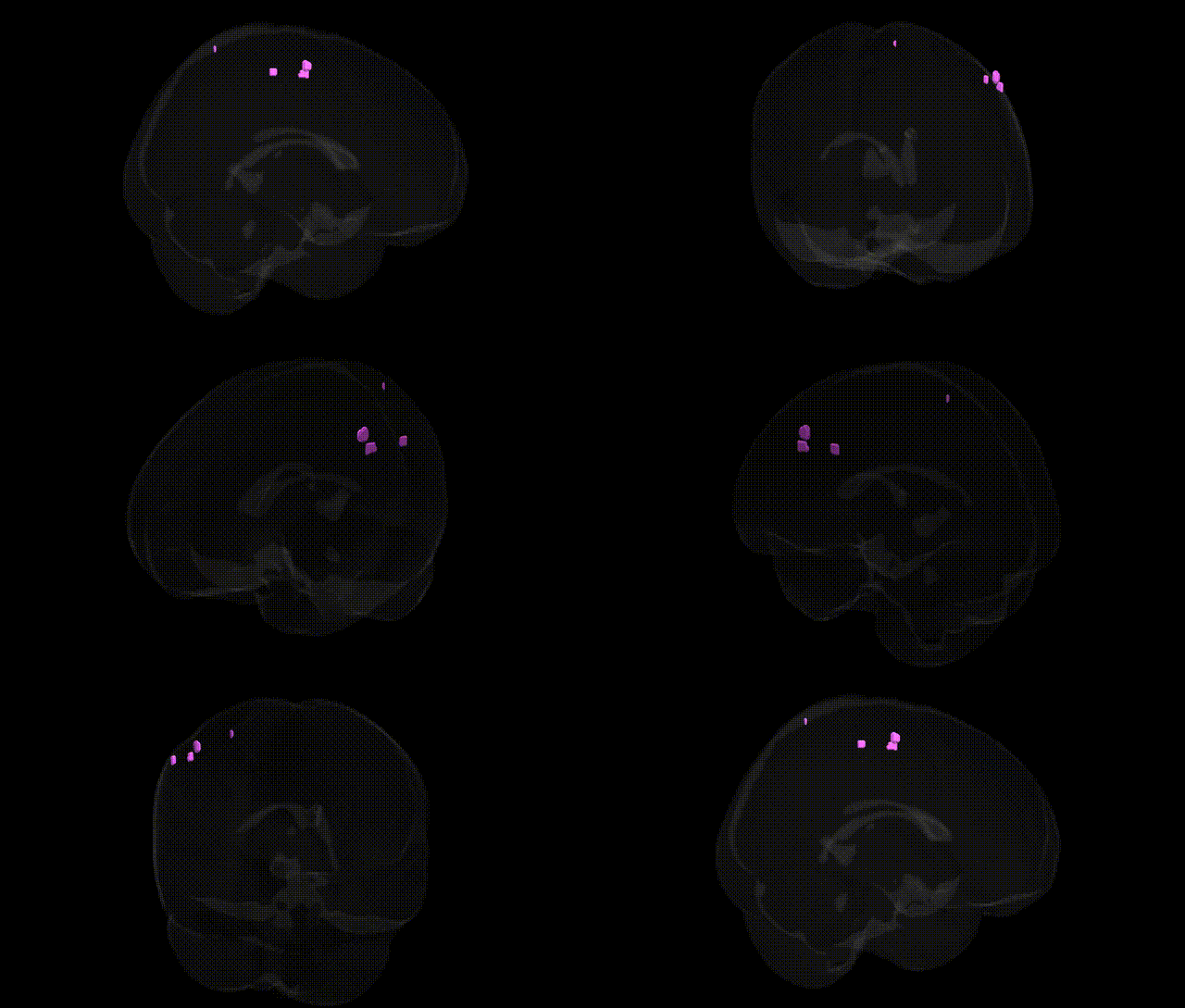
The bilateral Right Cerebrum.Parietal Lobe, as defined in the Talairach 1 mm atlas, encompasses the right parietal cortex of both hemispheres in a mirrored fashion, including superior and inferior parietal regions involved in somatosensory integration, spatial orientation, visuomotor coordination, and aspects of attention and body schema representation. This territory receives multimodal input from primary somatosensory, visual, and auditory areas and participates in constructing internal representations of extrapersonal space, guiding goal-directed reaching and grasping, and supporting higher-order functions such as mental rotation and numerical processing. Lesions affecting this region can contribute to hemispatial neglect, apraxia, and deficits in spatial cognition and tactile perception. No direct Wikipedia article exists for the exact Talairach label, but it corresponds most closely to the Parietal lobe.
The bilateral right parietal lobe, as defined in Talairach 1 mm atlases, has been genetically implicated in a range of cognitive and clinical phenotypes through GWAS and imaging‑genetics studies, particularly within large consortia such as ENIGMA and UK Biobank. Common variants near and within genes involved in synaptic function, neuronal migration, and axon guidance (for example, MAPT on 17q21, CNTNAP2, and several glutamatergic and GABAergic pathway genes) have been associated with parietal cortical thickness, surface area, and volume, and these structural measures often show genetic correlations with general intelligence, working memory, and spatial and numerical processing, functions heavily supported by parietal circuits. Polygenic risk for Alzheimer’s disease, schizophrenia, and autism spectrum disorder has been linked to altered parietal morphology and connectivity, with APOE and other AD‑risk loci contributing to right parietal atrophy patterns, and schizophrenia- and ASD‑associated loci influencing parietal gray matter and default‑mode or dorsal attention networks. Additional GWAS have associated right parietal measures with attention-deficit/hyperactivity disorder, dyslexia, and developmental coordination disorders, consistent with the region’s role in attentional control and sensorimotor integration. Overall, the genetic architecture of the right parietal lobe appears highly polygenic, overlapping substantially with loci that influence global brain size and neurodevelopment, while showing regionally specific associations with neuropsychiatric risk and cognition-related traits.
Overview generated by GPT-4o (2026).
Region ID: 977
Hemisphere: bilateral
Atlas: Talairach labels 1mm
Full Quality Version: Download MP4
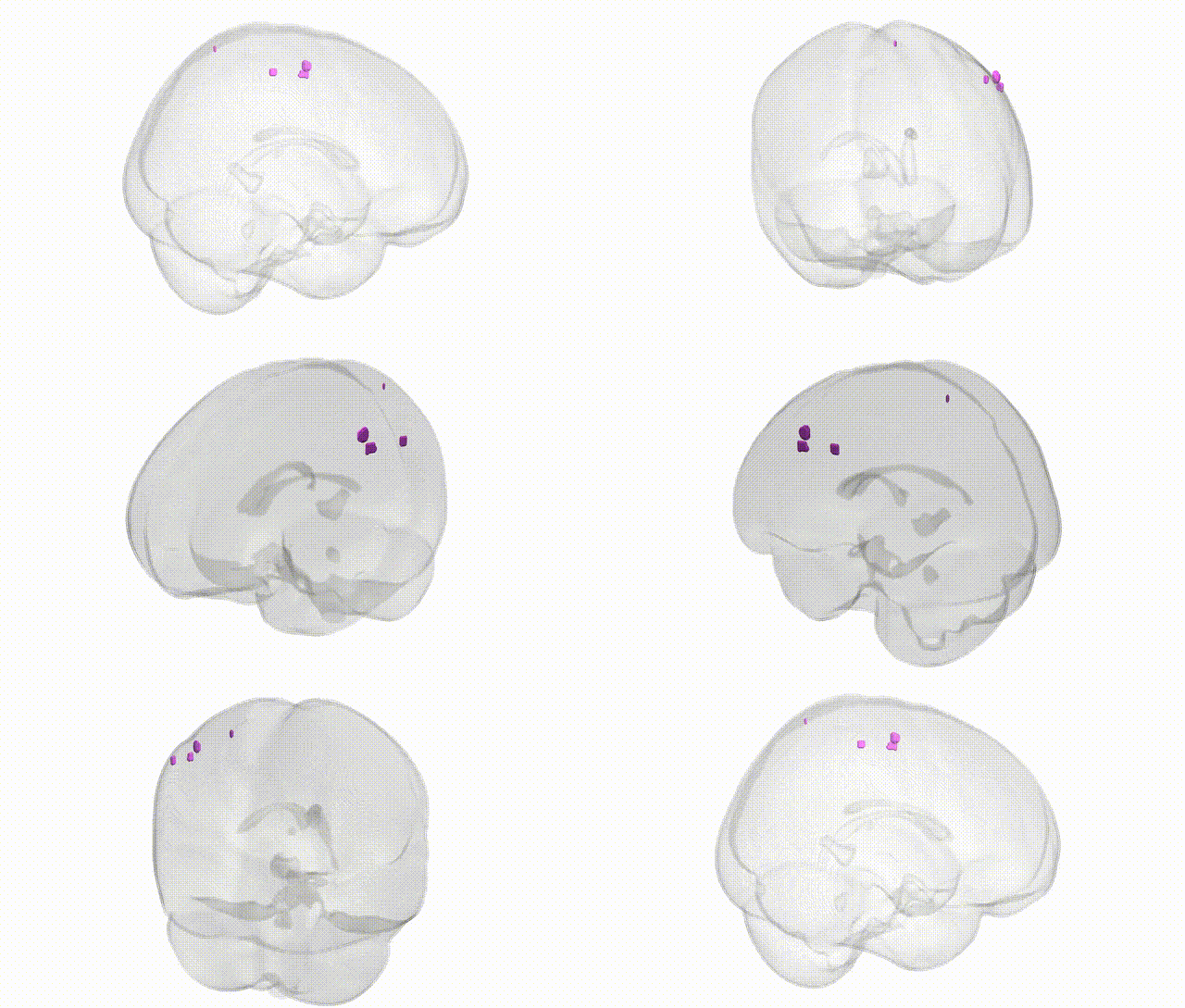
Full Quality Version: Download MP4
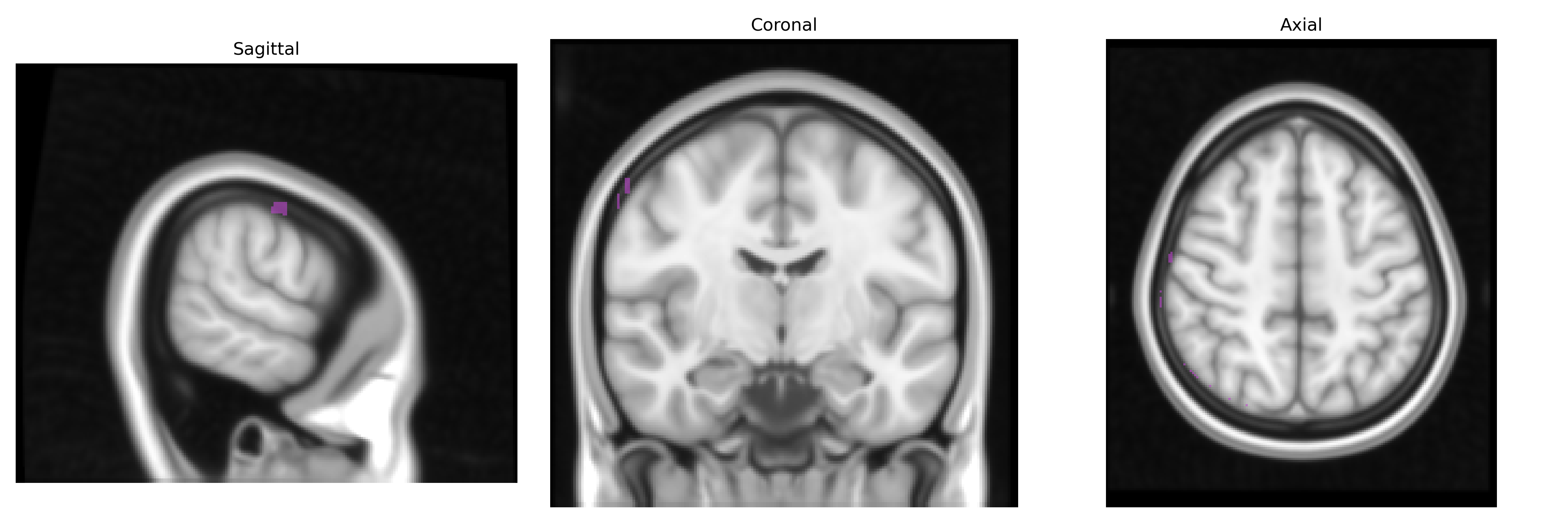
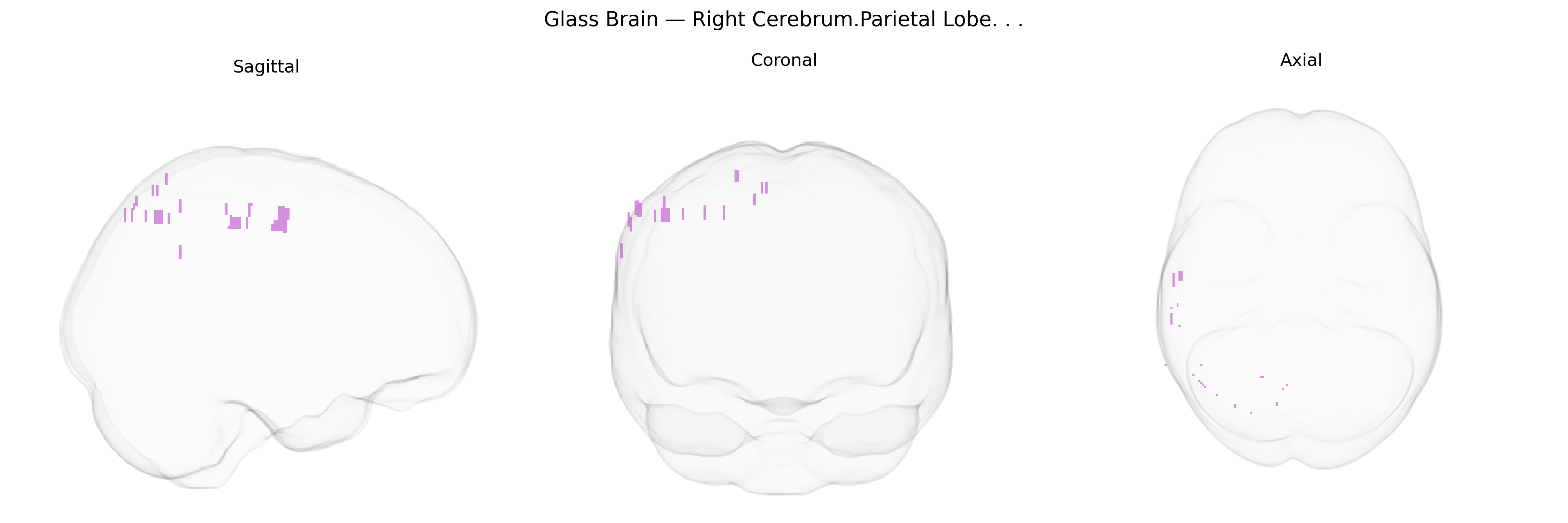
Wali Sidiqyar*, Gaurav Rudravaram*, Elyssa M. McMaster, Trent M. Schwartz, Adam M. Saunders, Kurt G. Schilling, Bennett A. Landman "Introducing SPINS: A Shared Public Visualization Library of Neuroanatomical Structures." Medical Imaging with Deep Learning- short paper
This resource is licensed under CC0 1.0 Universal (Public Domain).