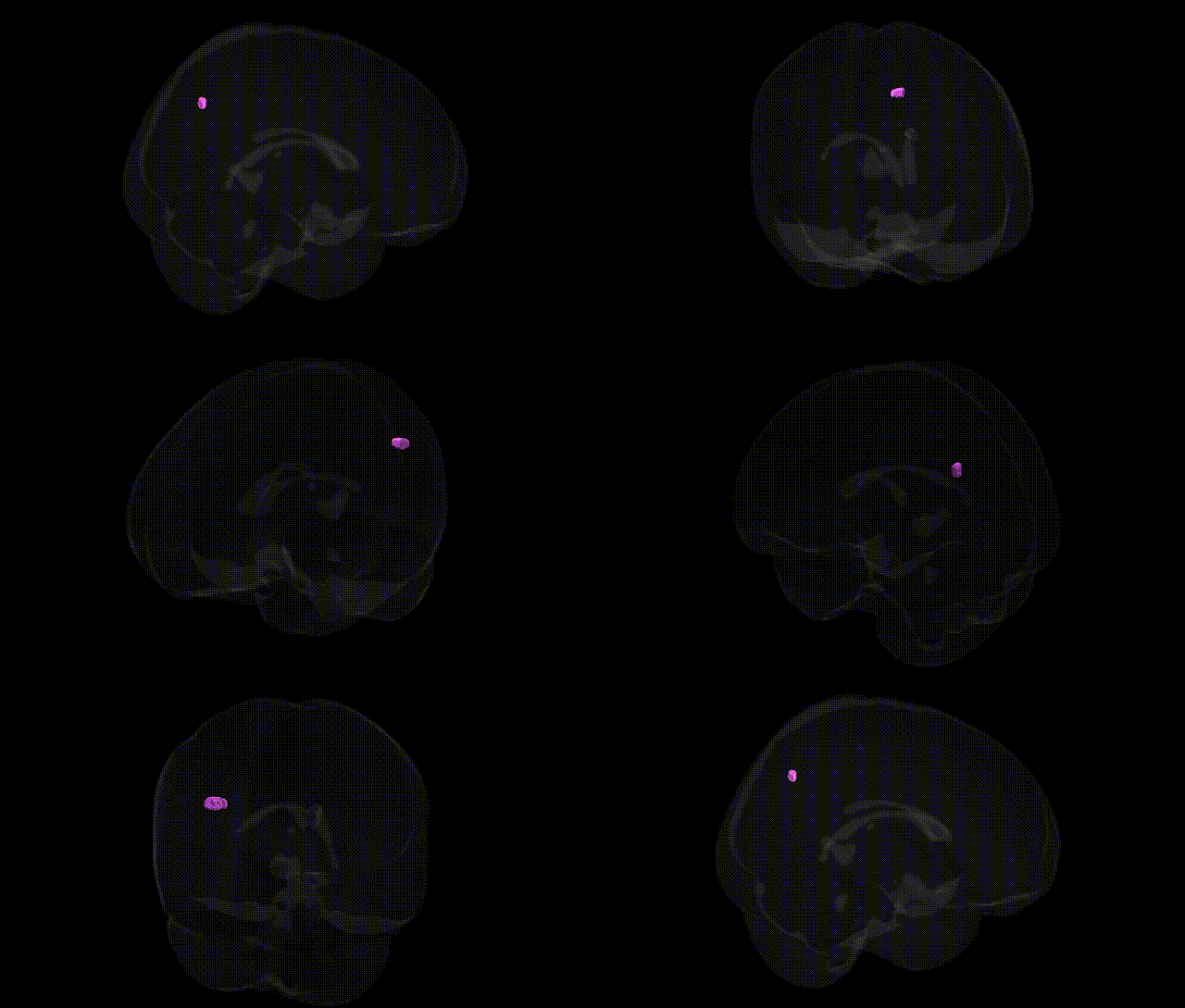
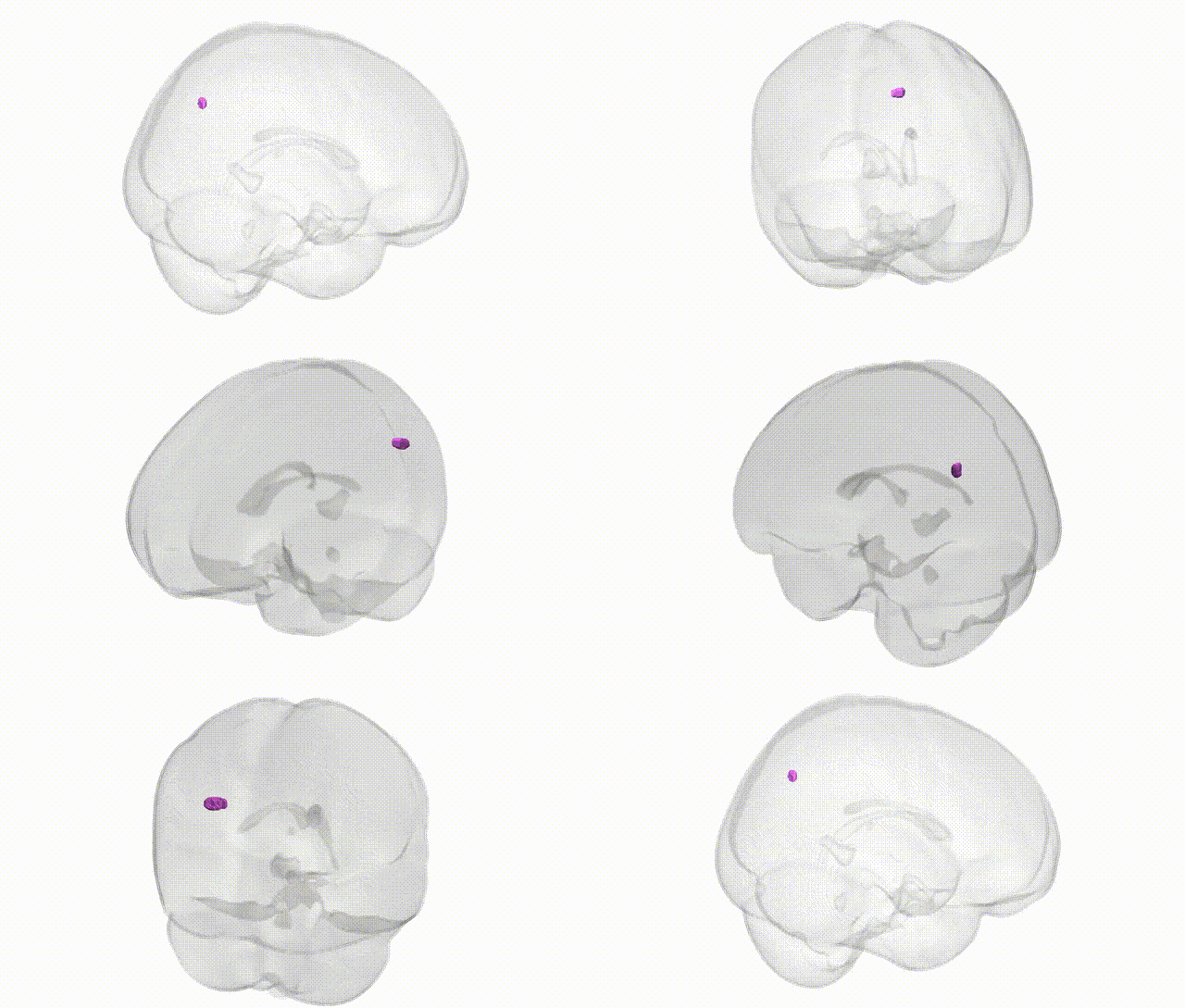
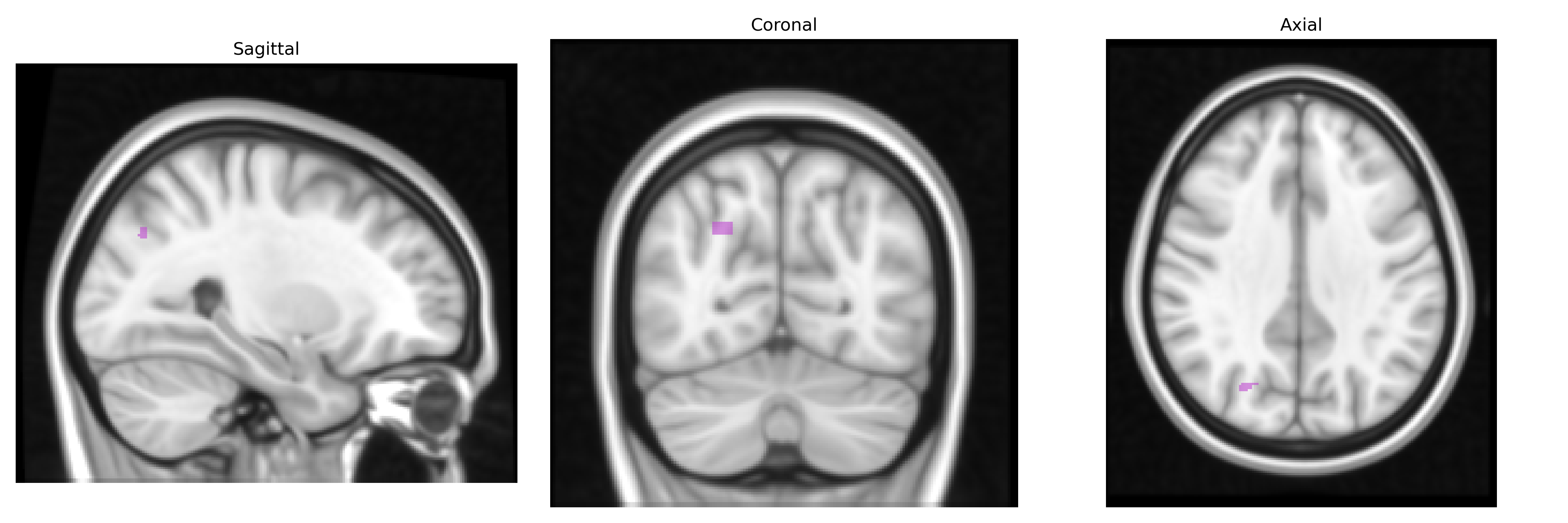
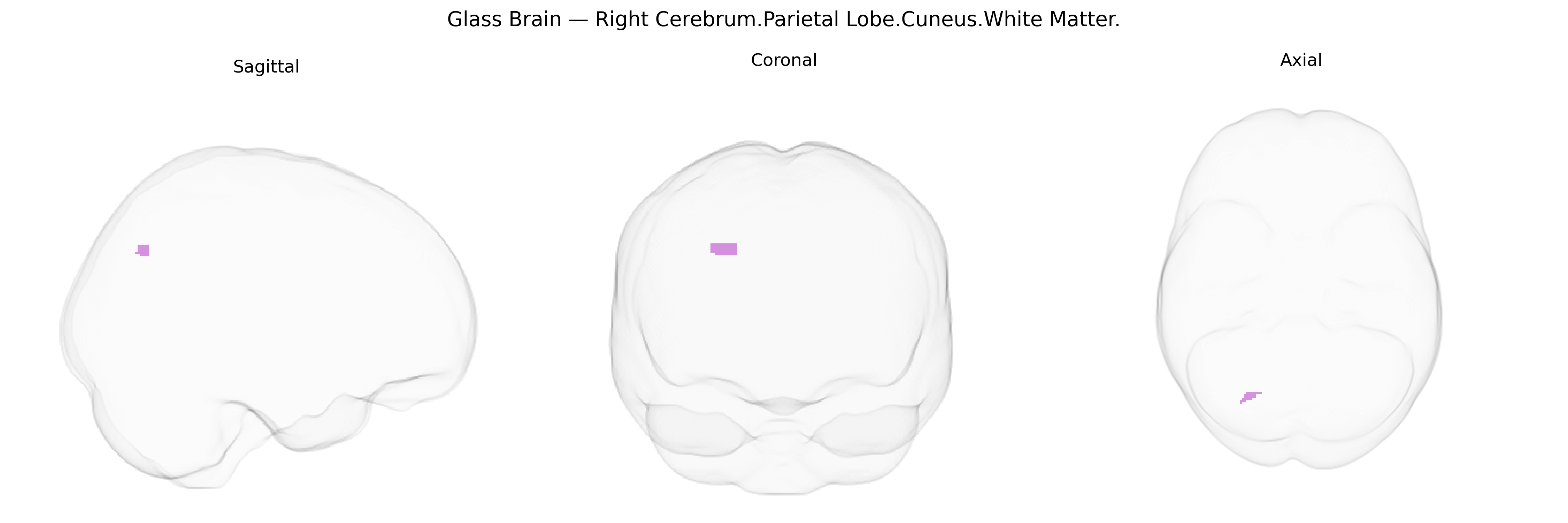
The bilateral Right Cerebrum.Parietal Lobe.Cuneus.White Matter corresponds to the subcortical myelinated fiber tracts underlying the cuneus region of the parietal-occipital cortex in the right hemisphere. The cuneus itself is a wedge-shaped cortical area on the medial surface of the occipital lobe, involved primarily in early visual processing, including aspects of visual field representation and integration of visual information. Its white matter contains association, commissural, and projection fibers that connect the cuneus to other visual cortical areas, parietal visuospatial regions, and thalamic nuclei, supporting pathways important for visual perception, visuospatial attention, and integration of sensory input with higher-order cognitive functions. There is no direct Wikipedia article for this specific white matter subdivision; a related cortical region is the Cuneus.
The bilateral right cuneus white matter in the parietal/occipital transition zone, as defined in the Talairach 1 mm atlas, has been implicated indirectly through GWAS and imaging-genetics studies that examine regional white matter microstructure, cortical thickness, and connectivity rather than this parcel alone, with associations often involving visual, attentional, and higher-order cognitive traits. Polygenic influences from genes related to myelination, axon guidance, and synaptic signaling (for example, variants in genes such as NRG1, CNTNAP2, and MAG), as well as broader neurodevelopmental loci, have been linked to individual differences in cuneus structure and integrity in large MRI cohorts (e.g., ENIGMA and UK Biobank), though findings are usually reported at the level of occipital or parietal white matter tracts rather than the specific “Right Cerebrum.Parietal Lobe.Cuneus.White Matter” label. GWAS of white matter fractional anisotropy and mean diffusivity have identified loci in or near genes involved in oligodendrocyte function and axonal maintenance that show effects in cuneus-adjacent tracts, suggesting a shared genetic architecture with broader visual and association networks. Clinically, genetic risk for disorders such as multiple sclerosis, schizophrenia, major depression, autism spectrum disorder, and Alzheimer’s disease has been associated with altered cuneus or adjacent parietal–occipital white matter metrics, indicating that disease-related polygenic burdens can manifest in this region’s microstructural properties, but no single gene or variant is known to exert a specific, region-exclusive effect on this Talairach-defined cuneus white matter parcel.
Overview generated by GPT-4o (2026).
Region ID: 964
Hemisphere: bilateral
Atlas: Talairach labels 1mm
Full Quality Version: Download MP4
Full Quality Version: Download MP4
Wali Sidiqyar*, Gaurav Rudravaram*, Elyssa M. McMaster, Trent M. Schwartz, Adam M. Saunders, Kurt G. Schilling, Bennett A. Landman "Introducing SPINS: A Shared Public Visualization Library of Neuroanatomical Structures." Medical Imaging with Deep Learning- short paper
This resource is licensed under CC0 1.0 Universal (Public Domain).