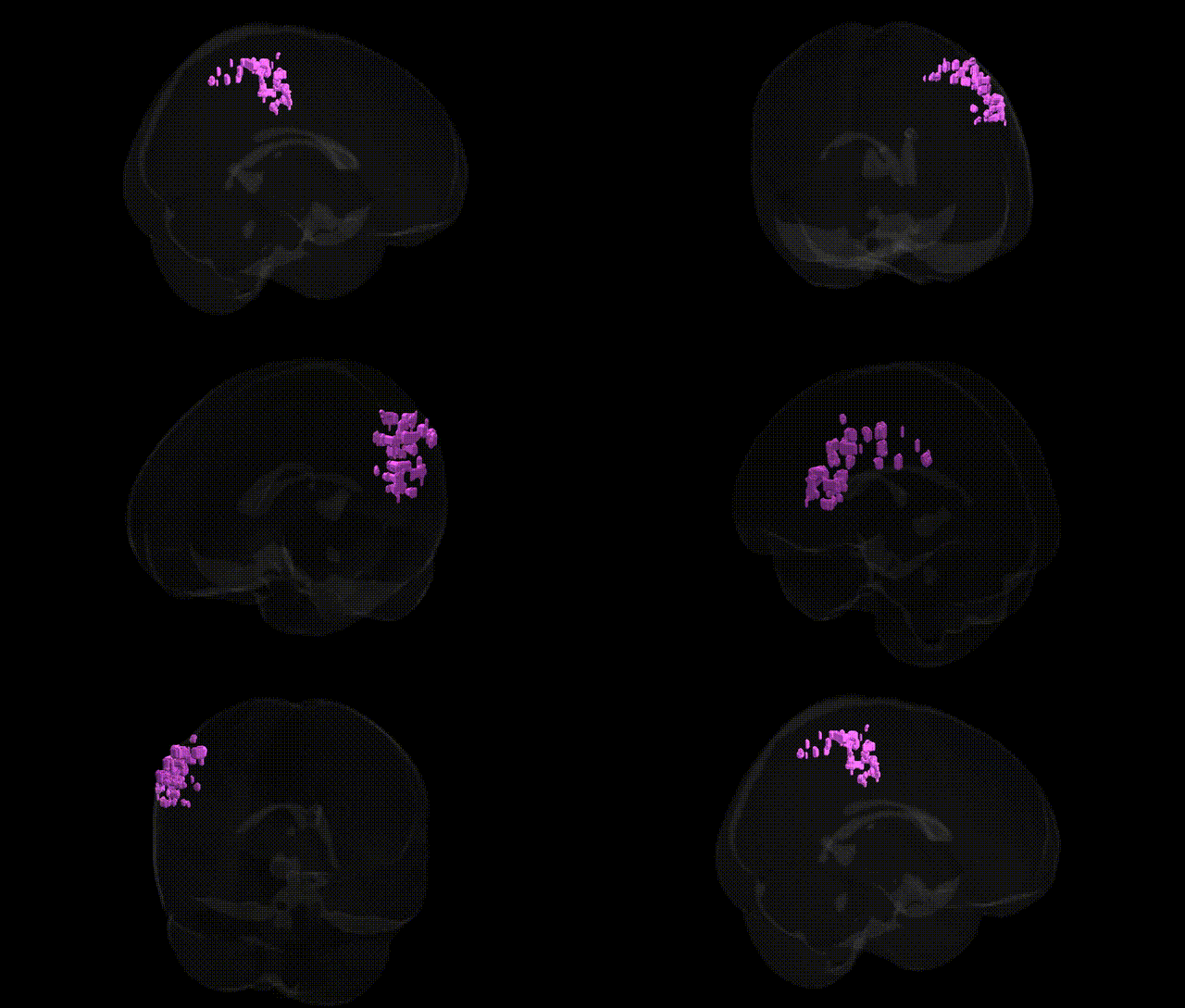
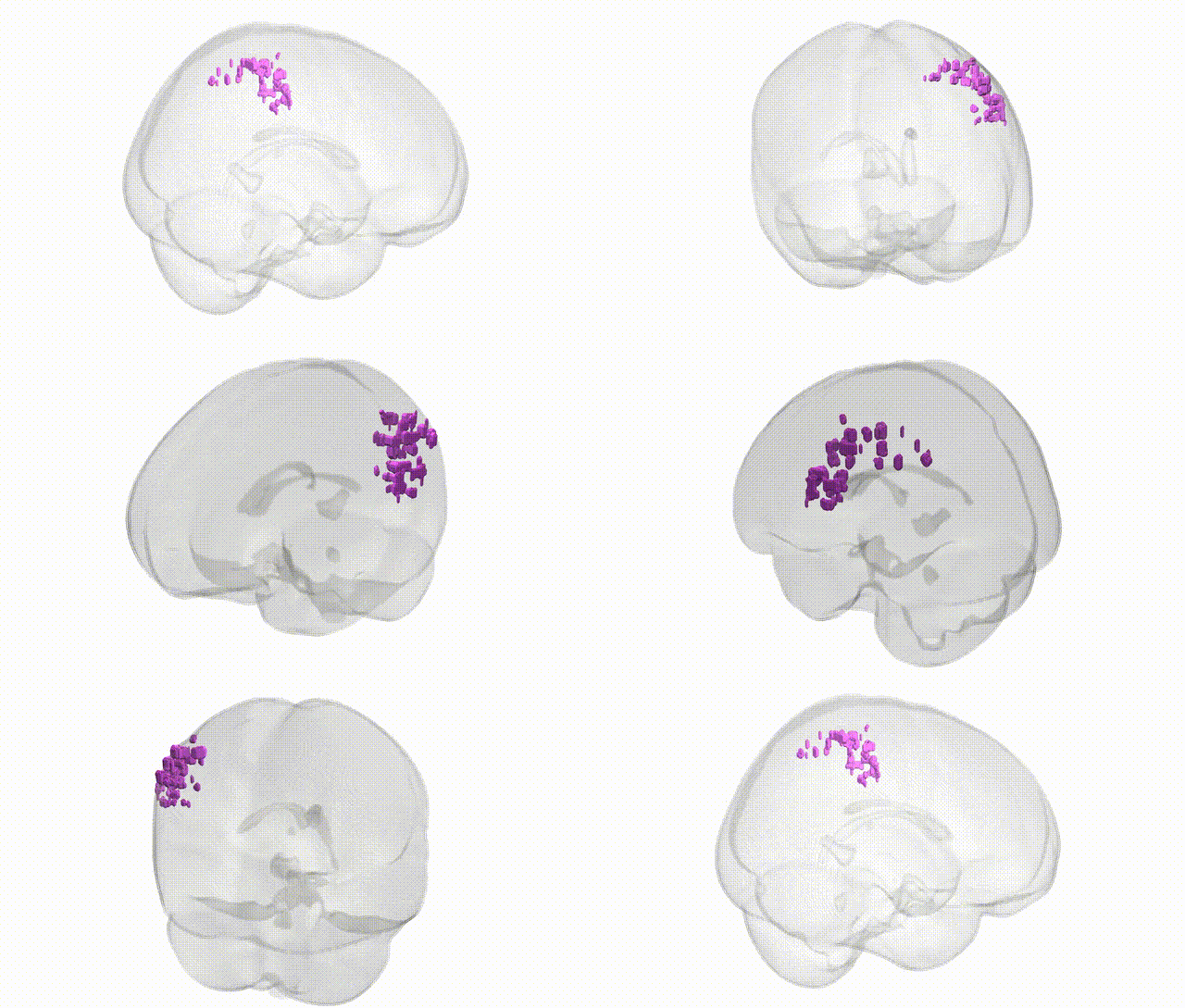
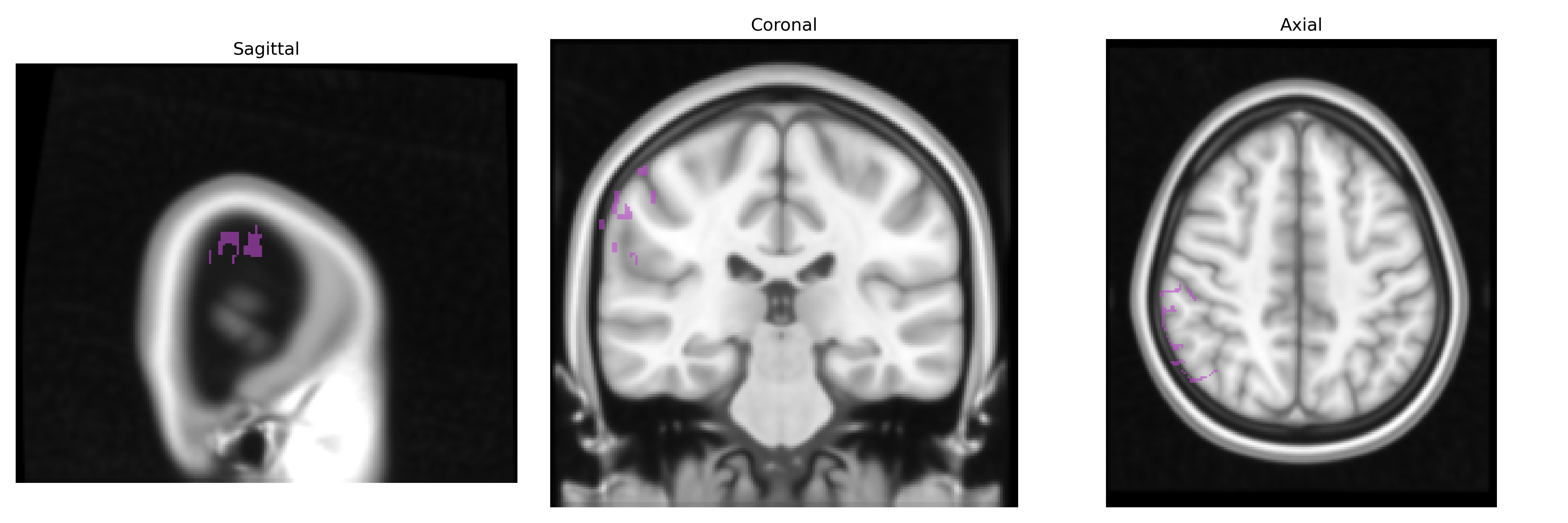
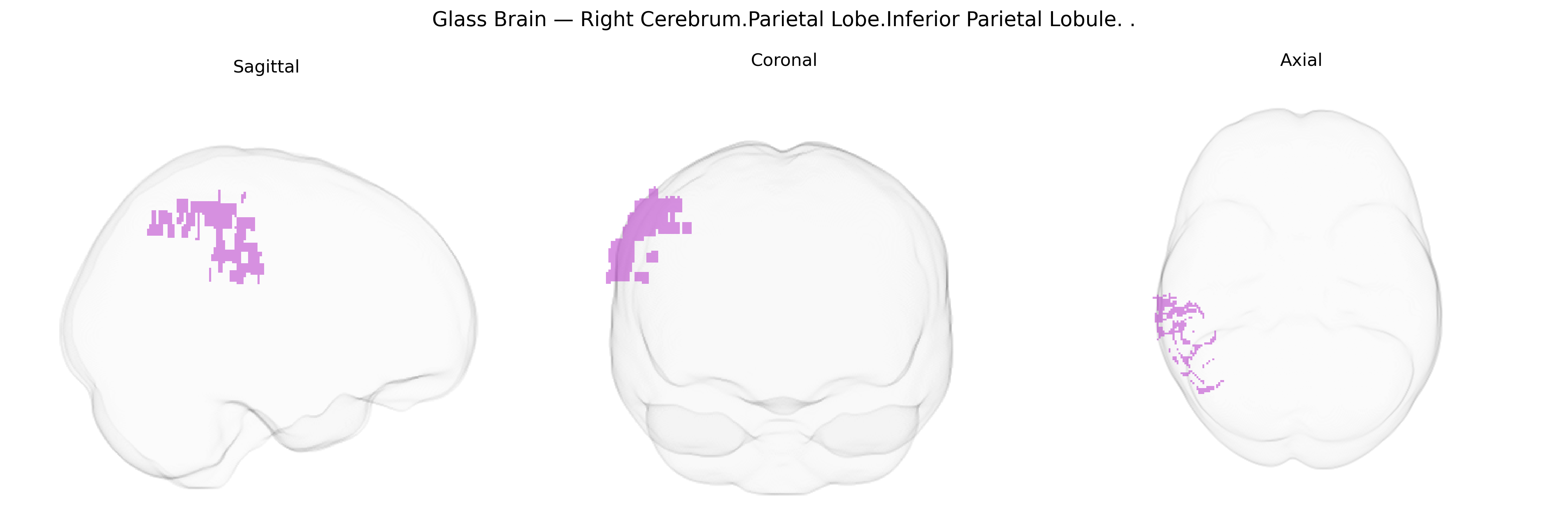
The bilateral Right Cerebrum.Parietal Lobe.Inferior Parietal Lobule corresponds to the inferior parietal lobule (IPL) of the right hemisphere, a multimodal association region situated posterior to the postcentral gyrus and superior to the lateral sulcus, encompassing the supramarginal and angular gyri. This area integrates somatosensory, visual, and auditory inputs and plays key roles in spatial attention, body schema representation, praxis, and aspects of language and numerical cognition, with right-sided IPL particularly implicated in visuospatial processing and attentional reorienting. Lesions in this region are classically associated with hemispatial neglect, constructional apraxia, and disturbances of spatial awareness. A closely related description of this structure is available at Inferior parietal lobule.
The bilateral right inferior parietal lobule (IPL) of the parietal lobe, as defined in the Talairach 1 mm atlas, has been implicated in multiple genetic and genome-wide association studies (GWAS) linking variation in this region to cognition, neurodevelopment, and psychiatric risk. Imaging-genetics work from large cohorts (e.g., ENIGMA, UK Biobank) has shown that cortical thickness, surface area, and volume of the inferior parietal cortex are moderately heritable and associated with common variants in genes related to neurodevelopment, synaptic function, and axon guidance (such as variants near or within genes including HMGA2, MIR2113, KIAA0586, and others that show broad effects on cortical morphology). Polygenic scores for educational attainment, general cognitive ability, and reading-related traits frequently correlate with structural and functional differences in the IPL, consistent with its role in language, numerical processing, and attentional networks. Disorders such as schizophrenia, autism spectrum disorder, attention-deficit/hyperactivity disorder, and major depressive disorder—each strongly influenced by common polygenic variation—show replicated case–control and GWAS-based imaging associations involving reduced right IPL volume or altered connectivity, with some studies linking risk loci (for example in genes such as CACNA1C, GRIN2A, and other synaptic or calcium-channel genes) to structural and functional changes in this region. Additionally, rare copy number variants (e.g., 22q11.2 deletions) and monogenic neurodevelopmental syndromes affecting cortical patterning have been associated with aberrant development of the inferior parietal lobule, further supporting a role for genetically mediated variation in this region in higher-order cognition, language, and vulnerability to neuropsychiatric disorders, although specific gene–region associations often reflect distributed effects on large-scale parietal and frontoparietal networks rather than the right IPL in isolation.
Overview generated by GPT-4o (2026).
Region ID: 889
Hemisphere: bilateral
Atlas: Talairach labels 1mm
Full Quality Version: Download MP4
Full Quality Version: Download MP4
Wali Sidiqyar*, Gaurav Rudravaram*, Elyssa M. McMaster, Trent M. Schwartz, Adam M. Saunders, Kurt G. Schilling, Bennett A. Landman "Introducing SPINS: A Shared Public Visualization Library of Neuroanatomical Structures." Medical Imaging with Deep Learning- short paper
This resource is licensed under CC0 1.0 Universal (Public Domain).