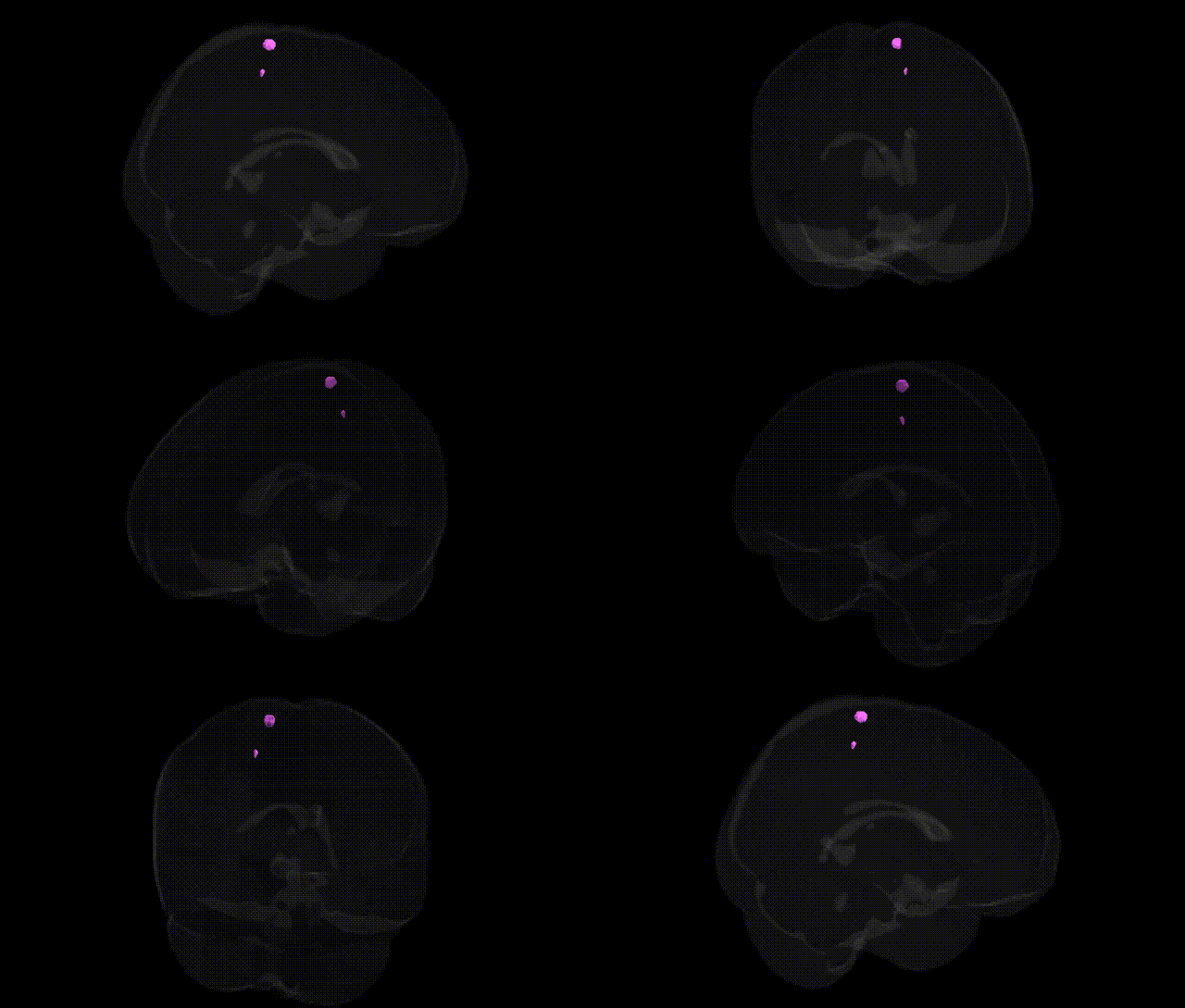
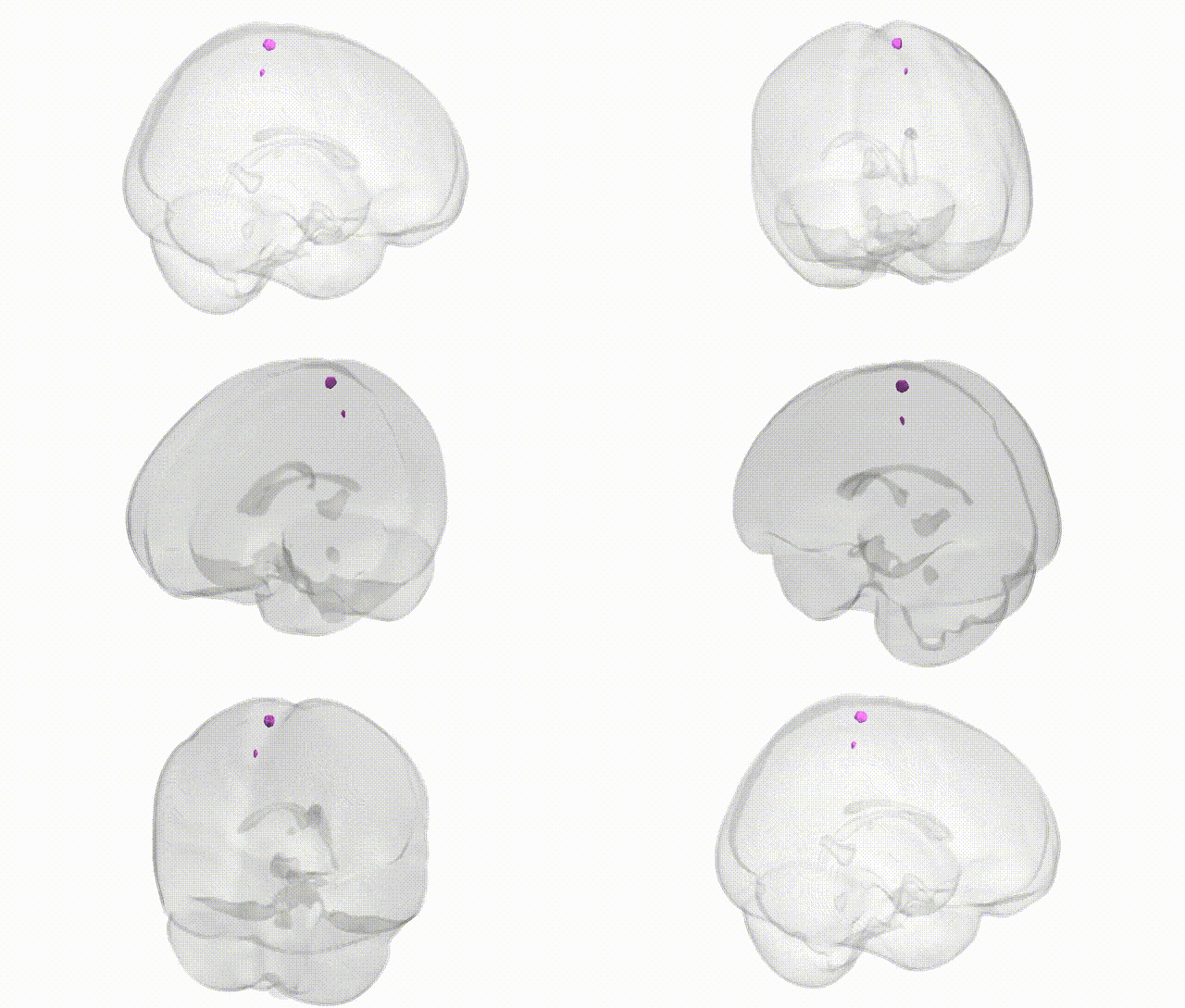
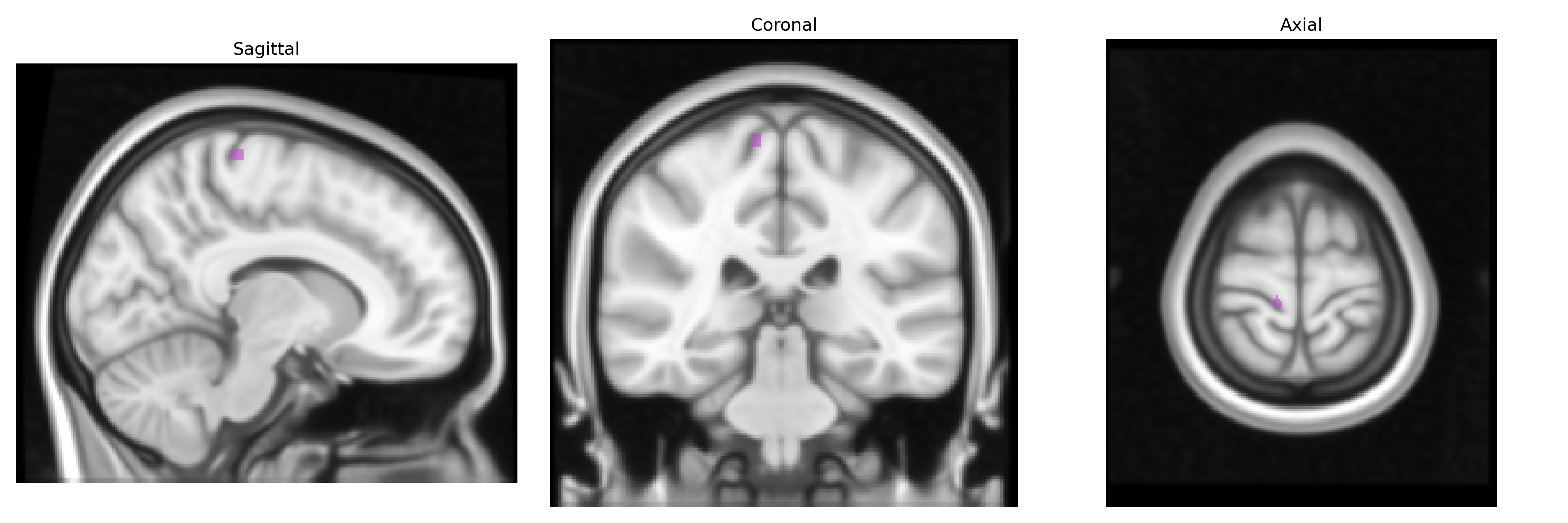
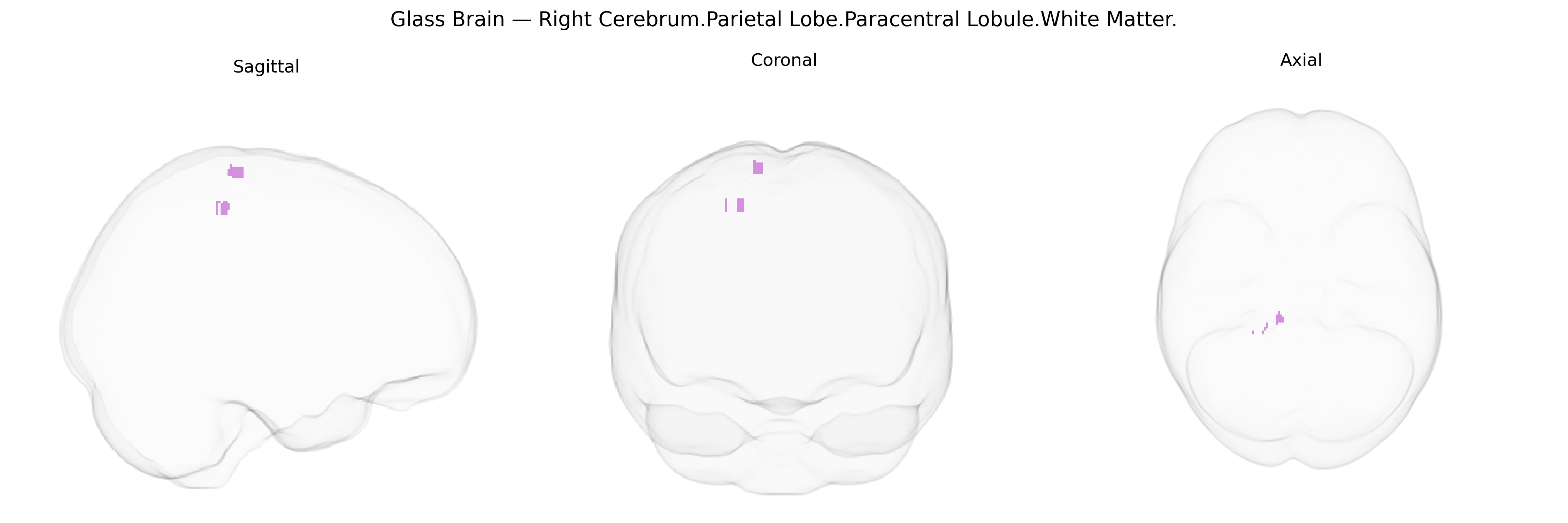
The bilateral Right Cerebrum.Parietal Lobe.Paracentral Lobule.White Matter corresponds to subcortical myelinated fiber tracts underlying the paracentral lobule in the medial parietal region of the right hemisphere, extending across both sides in the Talairach 1 mm atlas context. The paracentral lobule contains parts of the primary motor and somatosensory cortices representing predominantly lower limb and pelvic structures; its white matter mediates cortico-cortical and cortico-subcortical communication between these sensorimotor areas and distributed networks involved in voluntary movement, somatosensory processing, and aspects of motor control. Functionally, these fibers contribute to integration of sensory input with motor output for leg and foot movements, and structurally they participate in the larger frontoparietal and sensorimotor white matter systems. There is no direct Wikipedia article for this exact white matter region; a closely related cortical structure is the Paracentral lobule.
The bilateral paracentral lobule white matter, located in the medial parietal lobe and encompassing corticospinal and sensorimotor projection fibers, has been implicated in several genetic and GWAS findings through its role in motor and somatosensory networks rather than through region-specific single-gene associations. Neuroimaging genetics studies and large consortia (e.g., ENIGMA, UK Biobank) show that diffusion MRI measures (fractional anisotropy, mean diffusivity) and regional white matter volumes in the paracentral and adjacent corticospinal tracts are heritable and associated with common variants near genes involved in axon guidance, myelination, and neurodevelopment (such as those in the MAG, PLP1, NRG, and semaphorin/neuropilin pathways), although these associations are typically reported at the tract level rather than the precise Talairach-defined paracentral lobule. GWAS of motor function, gait, and grip strength, as well as disorders with prominent motor deficits—including amyotrophic lateral sclerosis, multiple sclerosis, and hereditary spastic paraplegias—have highlighted genetic variants that affect integrity of corticospinal and sensorimotor white matter pathways passing through the paracentral region, but the causal genes generally act on widespread networks rather than exclusively on this locus. In psychiatric and neurodevelopmental contexts, polygenic risk for schizophrenia, bipolar disorder, and autism spectrum disorder has been associated with microstructural differences in midline parietal and sensorimotor white matter, including the paracentral area, suggesting that shared genetic architectures influencing synaptic pruning, oligodendrocyte function, and neuroinflammation can manifest as altered connectivity in this region; however, no single variant or gene has yet been uniquely and robustly assigned to the bilateral Right Cerebrum.Parietal Lobe.Paracentral Lobule.White Matter label in the Talairach 1 mm atlas, and current evidence remains largely indirect and network-based.
Overview generated by GPT-4o (2026).
Region ID: 1073
Hemisphere: bilateral
Atlas: Talairach labels 1mm
Full Quality Version: Download MP4
Full Quality Version: Download MP4
Wali Sidiqyar*, Gaurav Rudravaram*, Elyssa M. McMaster, Trent M. Schwartz, Adam M. Saunders, Kurt G. Schilling, Bennett A. Landman "Introducing SPINS: A Shared Public Visualization Library of Neuroanatomical Structures." Medical Imaging with Deep Learning- short paper
This resource is licensed under CC0 1.0 Universal (Public Domain).