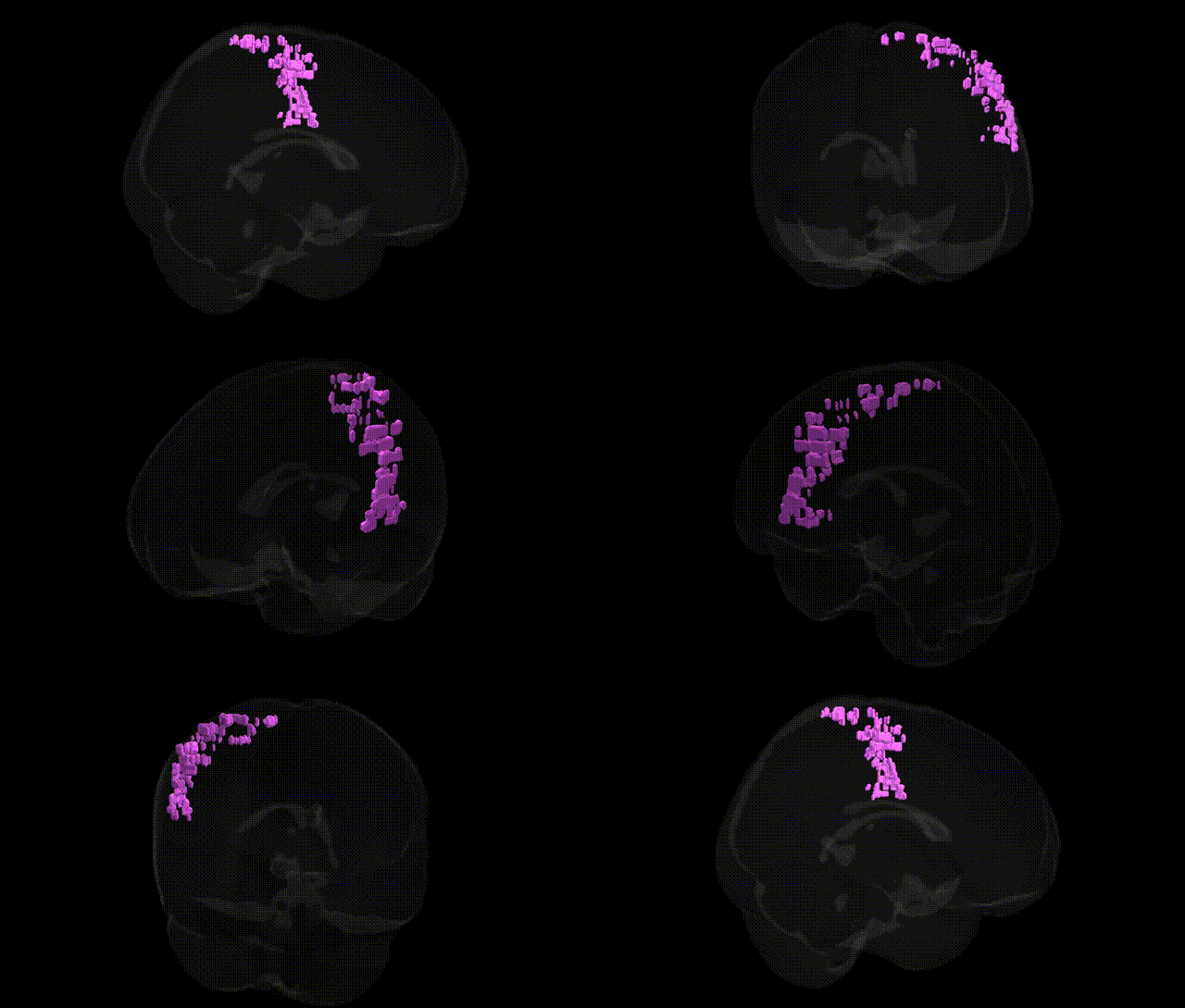
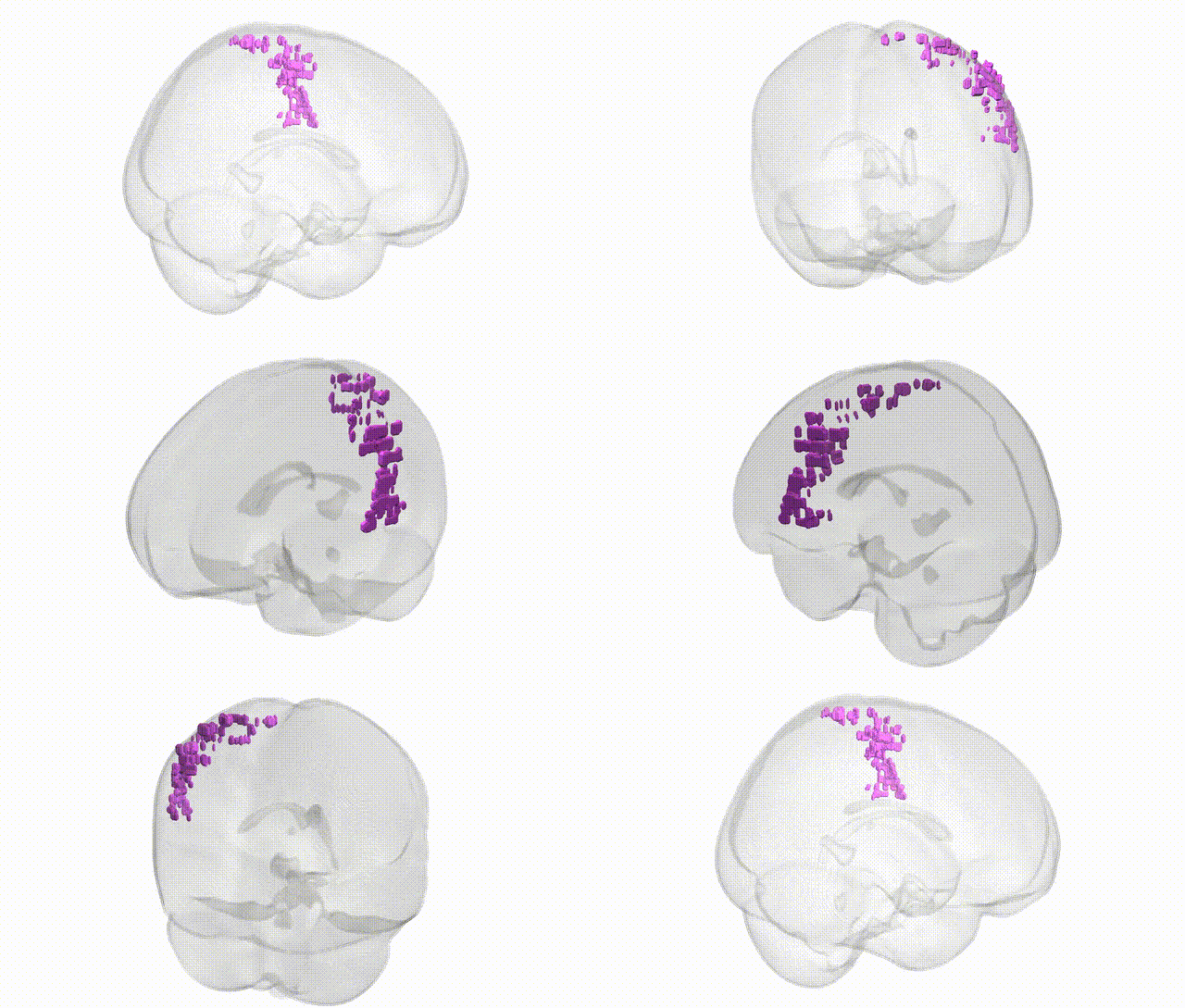
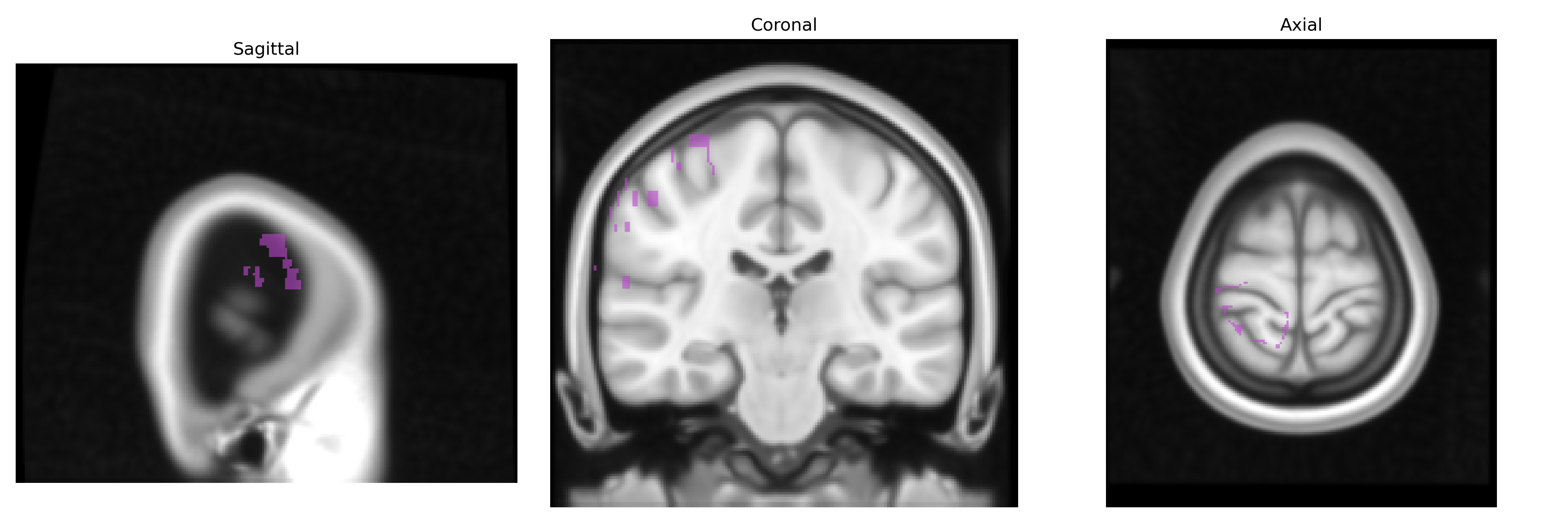
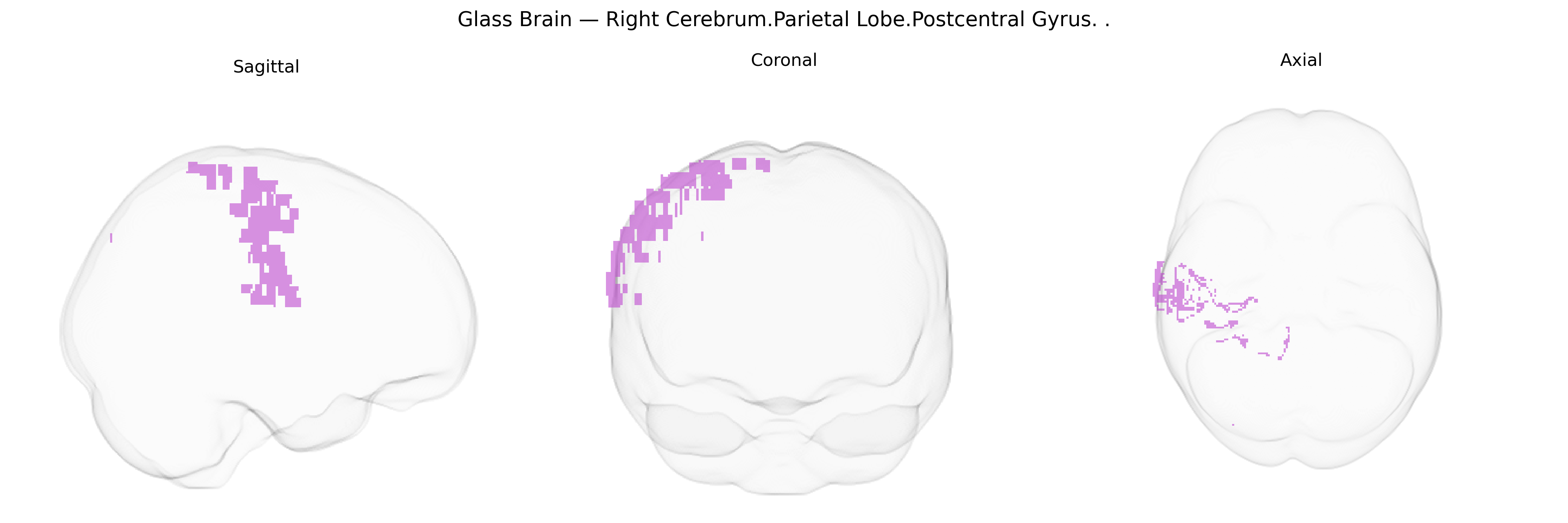
The bilateral right cerebrum parietal lobe postcentral gyrus corresponds to the primary somatosensory cortex located in the parietal lobe immediately posterior to the central sulcus, representing the somatotopic “sensory homunculus” for the contralateral body. This region receives and processes tactile, proprioceptive, and nociceptive input from the thalamus, enabling fine discrimination of touch, vibration, joint position, and body surface localization. Its organization is highly topographic, with distinct territories for different body parts, and it plays critical roles in conscious perception of somatic sensations, sensorimotor integration, and guidance of movements based on sensory feedback. Damage to this area can lead to deficits such as impaired tactile discrimination, astereognosis, or sensory neglect, particularly affecting the side of the body opposite the lesion.
Postcentral gyrus
Genetic associations involving the bilateral Right Cerebrum Parietal Lobe Postcentral Gyrus, the primary somatosensory cortex, emerge largely from imaging-genetics and GWAS of cortical structure and sensorimotor traits rather than from locus-specific studies of this exact Talairach label. Large-scale cortical morphology GWAS (e.g., ENIGMA, UK Biobank) have linked common variants in genes such as HMGA2, IGF1, FOXO3, and multiple loci in neuronal development and synaptic function pathways to regional cortical thickness and surface area in parietal and postcentral regions, implicating neurodevelopmental and growth-related genes in shaping this area. Variants influencing postcentral and broader parietal structure or activation have been associated with risk or endophenotypes for neurodevelopmental and psychiatric disorders including autism spectrum disorder, ADHD, schizophrenia, and major depression, where altered somatosensory and sensorimotor integration is observed. GWAS of chronic pain, somatosensory processing, and motor-related traits (e.g., handedness, fine motor skills) have also implicated genetic loci that modulate activity and connectivity in primary somatosensory and adjacent motor cortices. In addition, polygenic risk for neurodegenerative conditions such as Alzheimer’s disease has been associated with cortical thinning and atrophy patterns extending into parietal and postcentral regions, suggesting that risk loci influencing amyloid processing, tau pathology, or neuroinflammation may contribute indirectly to structural and functional changes in this area rather than to a single region-specific genetic effect.
Overview generated by GPT-4o (2026).
Region ID: 782
Hemisphere: bilateral
Atlas: Talairach labels 1mm
Full Quality Version: Download MP4
Full Quality Version: Download MP4
Wali Sidiqyar*, Gaurav Rudravaram*, Elyssa M. McMaster, Trent M. Schwartz, Adam M. Saunders, Kurt G. Schilling, Bennett A. Landman "Introducing SPINS: A Shared Public Visualization Library of Neuroanatomical Structures." Medical Imaging with Deep Learning- short paper
This resource is licensed under CC0 1.0 Universal (Public Domain).