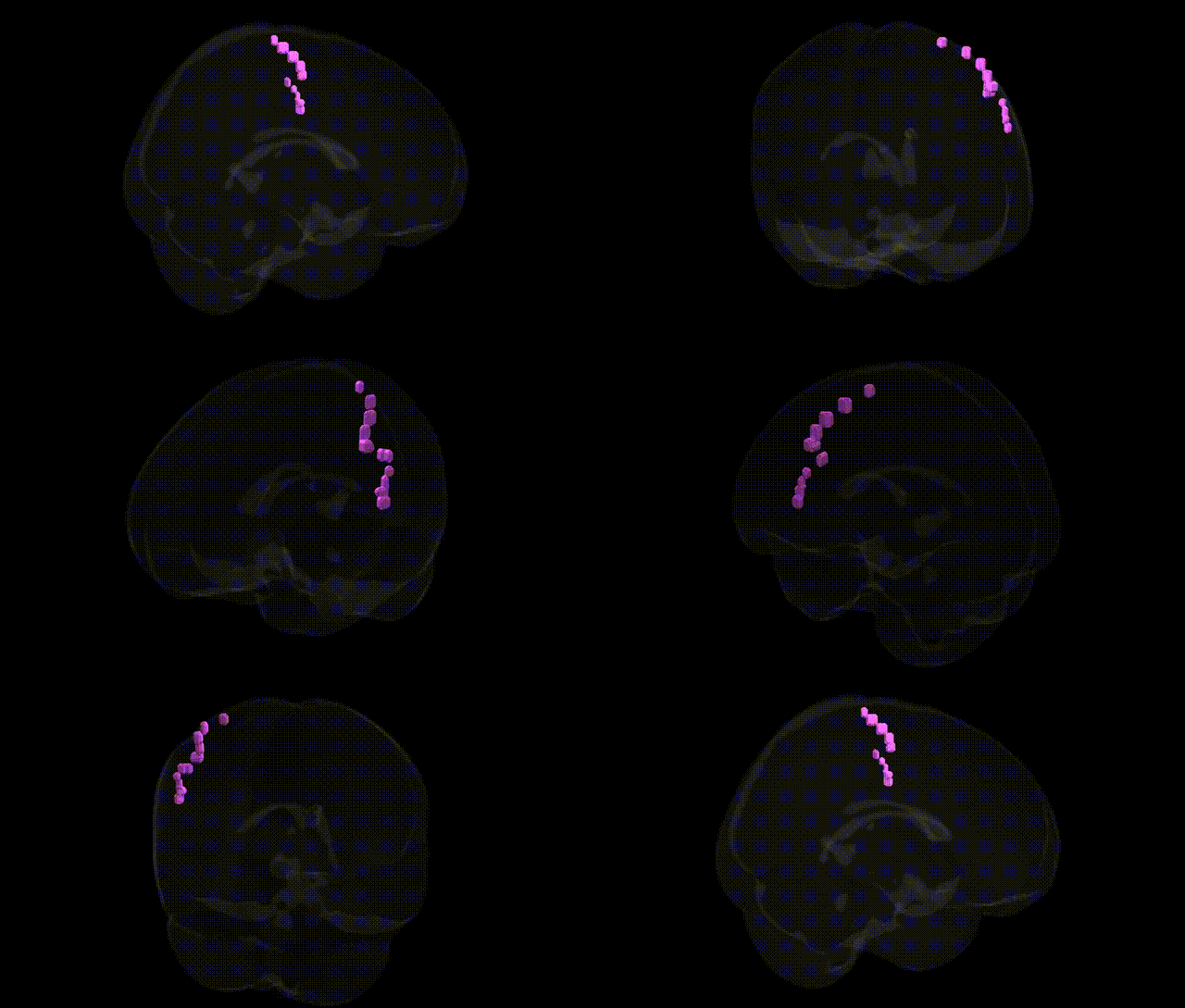
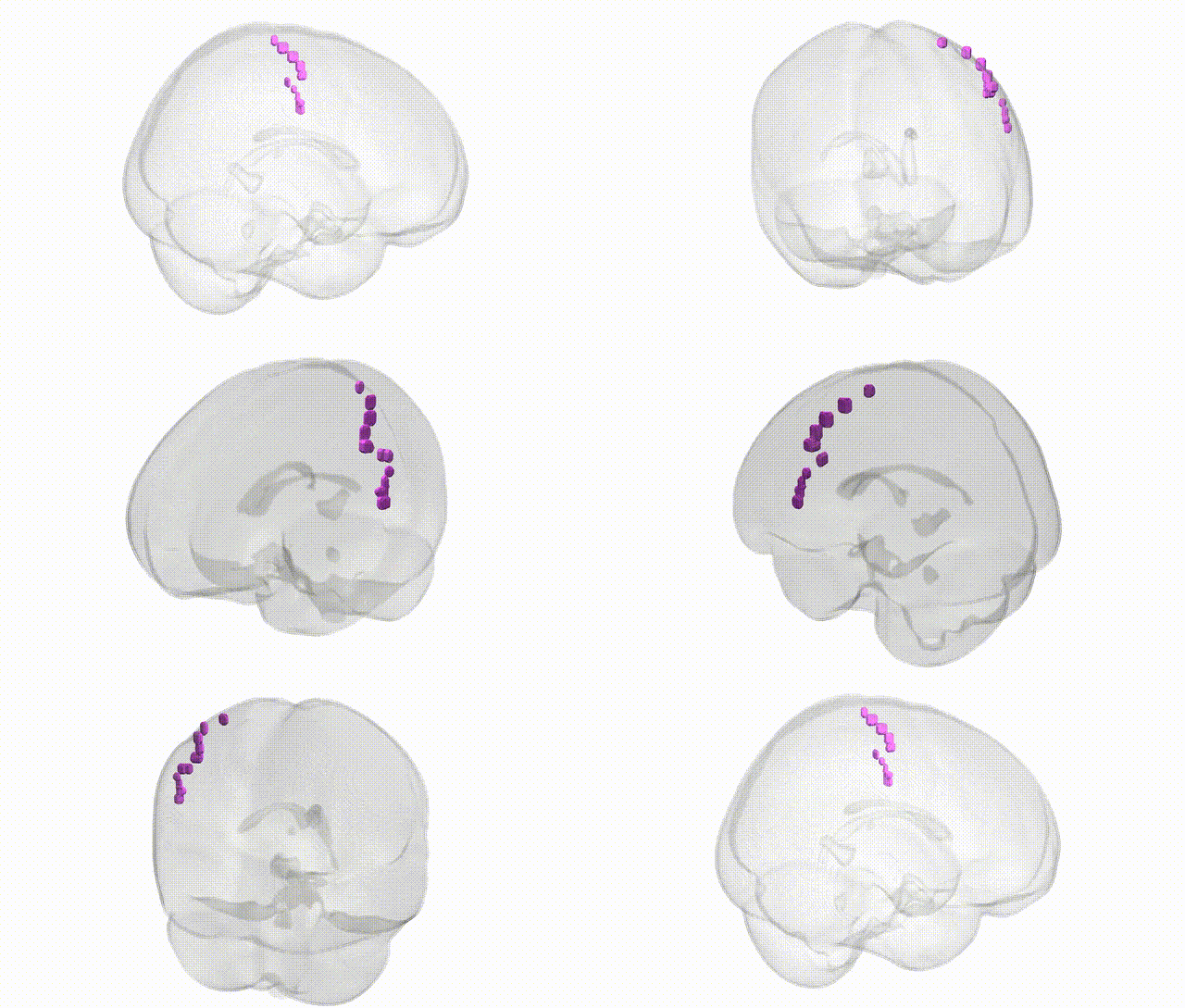
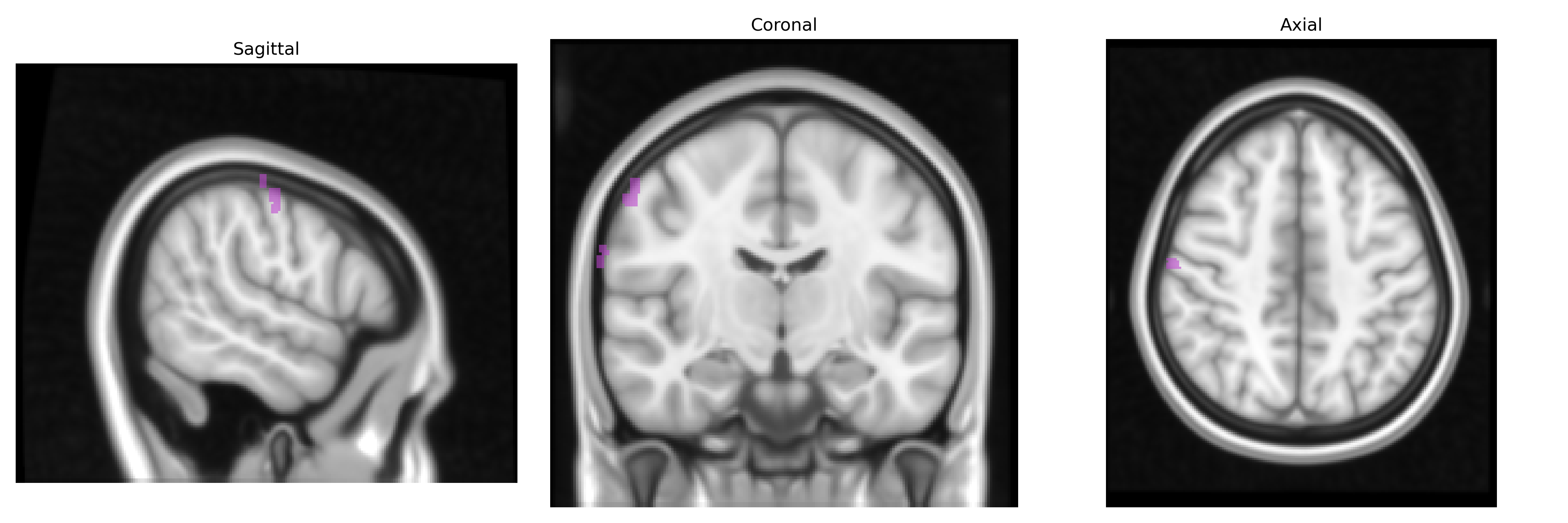
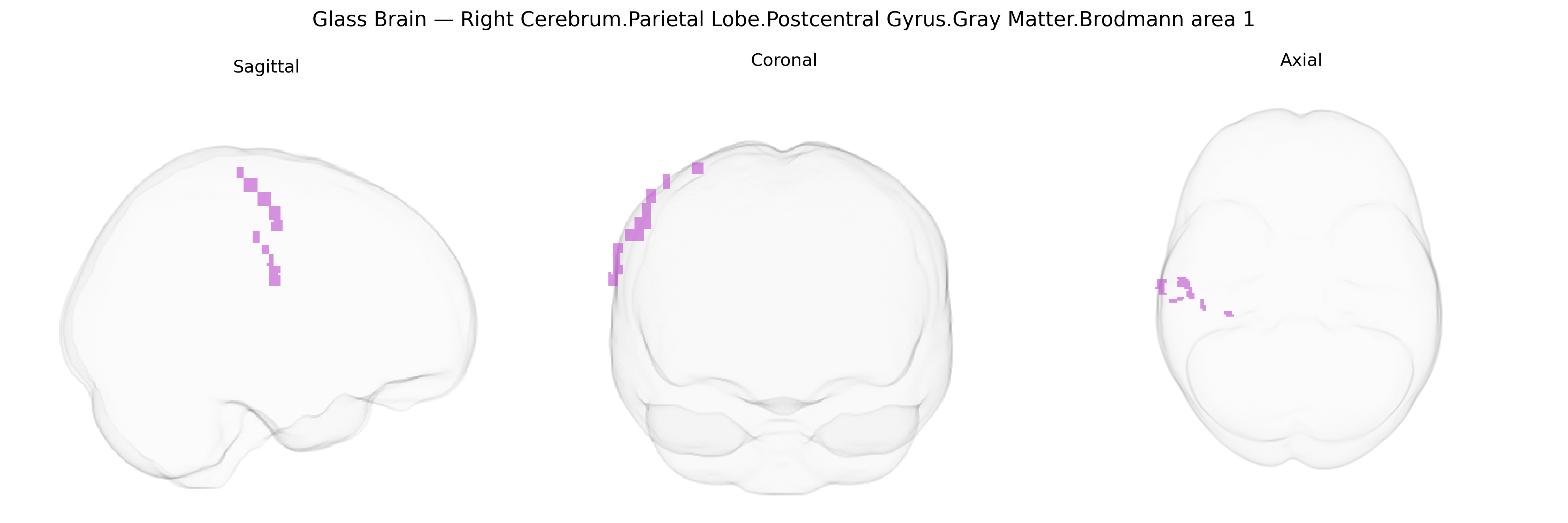
The bilateral Right Cerebrum.Parietal Lobe.Postcentral Gyrus.Gray Matter.Brodmann area 1 corresponds to a primary somatosensory cortical field located in the dorsal bank of the postcentral gyrus within the parietal lobe, predominantly receiving thalamocortical input from the ventral posterior nucleus of the thalamus. Brodmann area 1 is specialized for higher-order processing of tactile information, including texture and fine spatial features of stimuli, integrating signals from cutaneous mechanoreceptors of the contralateral body. Together with Brodmann areas 2 and 3, it forms part of the primary somatosensory cortex (S1), contributing to conscious perception of touch and participating in sensorimotor integration via extensive intra- and interhemispheric connections with motor and association cortices. Primary somatosensory cortex
The bilateral right postcentral gyrus (parietal lobe, Brodmann area 1), a primary somatosensory region, has been implicated in several genetic and GWAS findings through imaging genomics and disorder-associated studies, although most work targets the postcentral gyrus more broadly rather than Brodmann area 1 specifically. Large-scale brain MRI GWAS (e.g., ENIGMA, UK Biobank) have identified common variants in genes involved in neurodevelopment and synaptic function—such as BDNF, CNTNAP2, CADM2, and loci near HMGA2 and microtubule-related genes—as associated with cortical thickness, surface area, or volume in somatosensory and parietal cortices that include the postcentral gyrus. Functional and structural alterations of this region have been reported in genetic studies of neurodevelopmental and psychiatric conditions, including autism spectrum disorder (with risk variants in genes like SHANK3, NRXN1, and synaptic scaffolding pathways), schizophrenia (e.g., complement pathway genes such as C4A and polygenic risk scores linked to somatosensory cortical changes), and attention-deficit/hyperactivity disorder, where polygenic load influences parietal and sensorimotor cortices. Pain and somatosensory traits have been associated with postcentral gyrus activity and morphology, with candidate gene and GWAS signals (e.g., in COMT, OPRM1, and broader nociception-related loci) correlating with variability in pain sensitivity and somatosensory processing. In addition, motor and sensorimotor GWAS, including those focused on handedness and motor skill learning, have linked variants near genes such as PCSK6 and MAP2 to structural and functional differences spanning sensorimotor networks that encompass this region. Overall, genetic influences on neurodevelopment, synaptic signaling, and cortical plasticity contribute to interindividual variation in right postcentral gyrus gray matter measures and to its involvement in heritable neuropsychiatric and somatosensory phenotypes, although highly specific genetic associations confined to Brodmann area 1 as defined in the Talairach labels 1 mm Atlas remain limited.
Overview generated by GPT-4o (2026).
Region ID: 894
Hemisphere: bilateral
Atlas: Talairach labels 1mm
Full Quality Version: Download MP4
Full Quality Version: Download MP4
Wali Sidiqyar*, Gaurav Rudravaram*, Elyssa M. McMaster, Trent M. Schwartz, Adam M. Saunders, Kurt G. Schilling, Bennett A. Landman "Introducing SPINS: A Shared Public Visualization Library of Neuroanatomical Structures." Medical Imaging with Deep Learning- short paper
This resource is licensed under CC0 1.0 Universal (Public Domain).