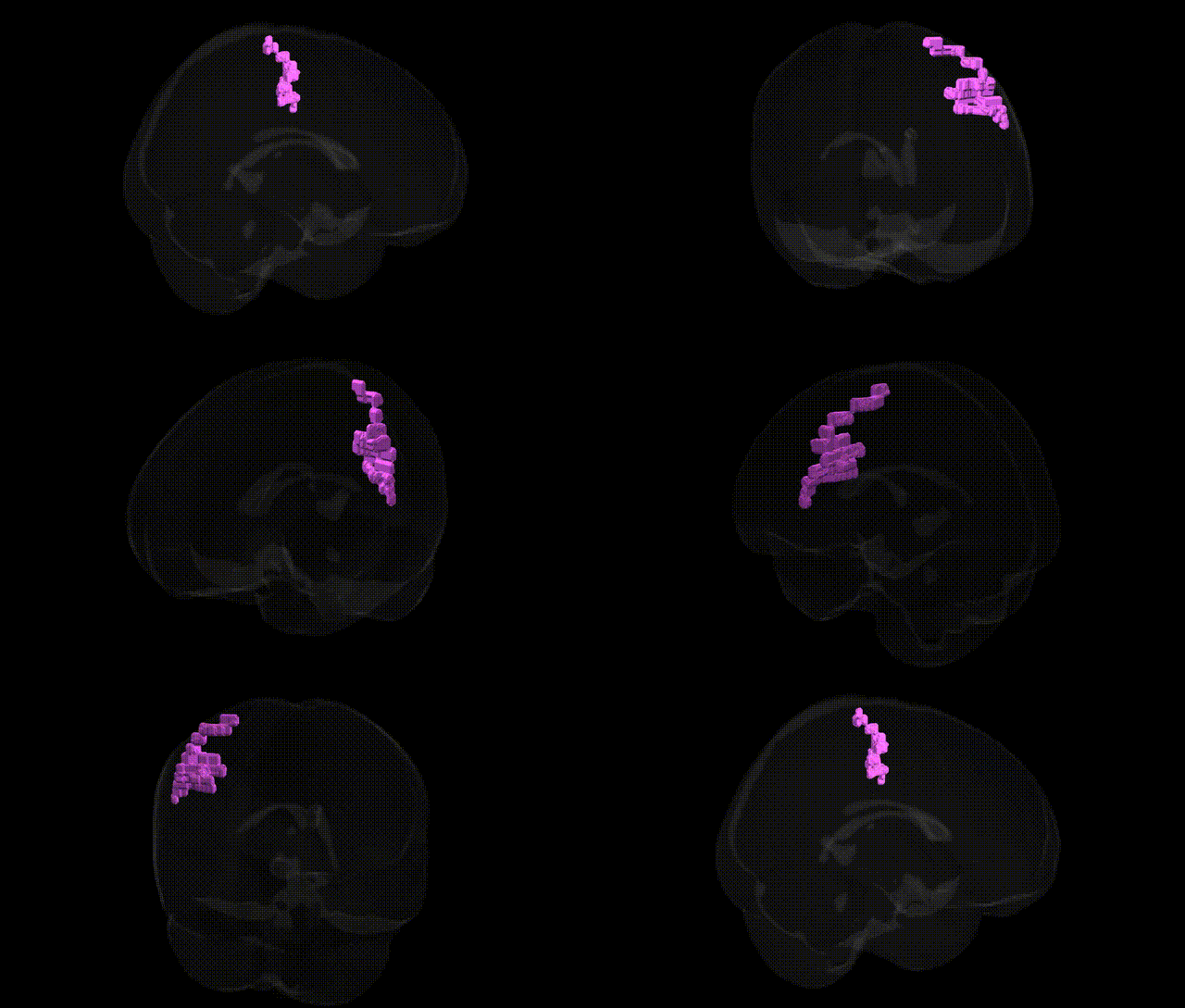
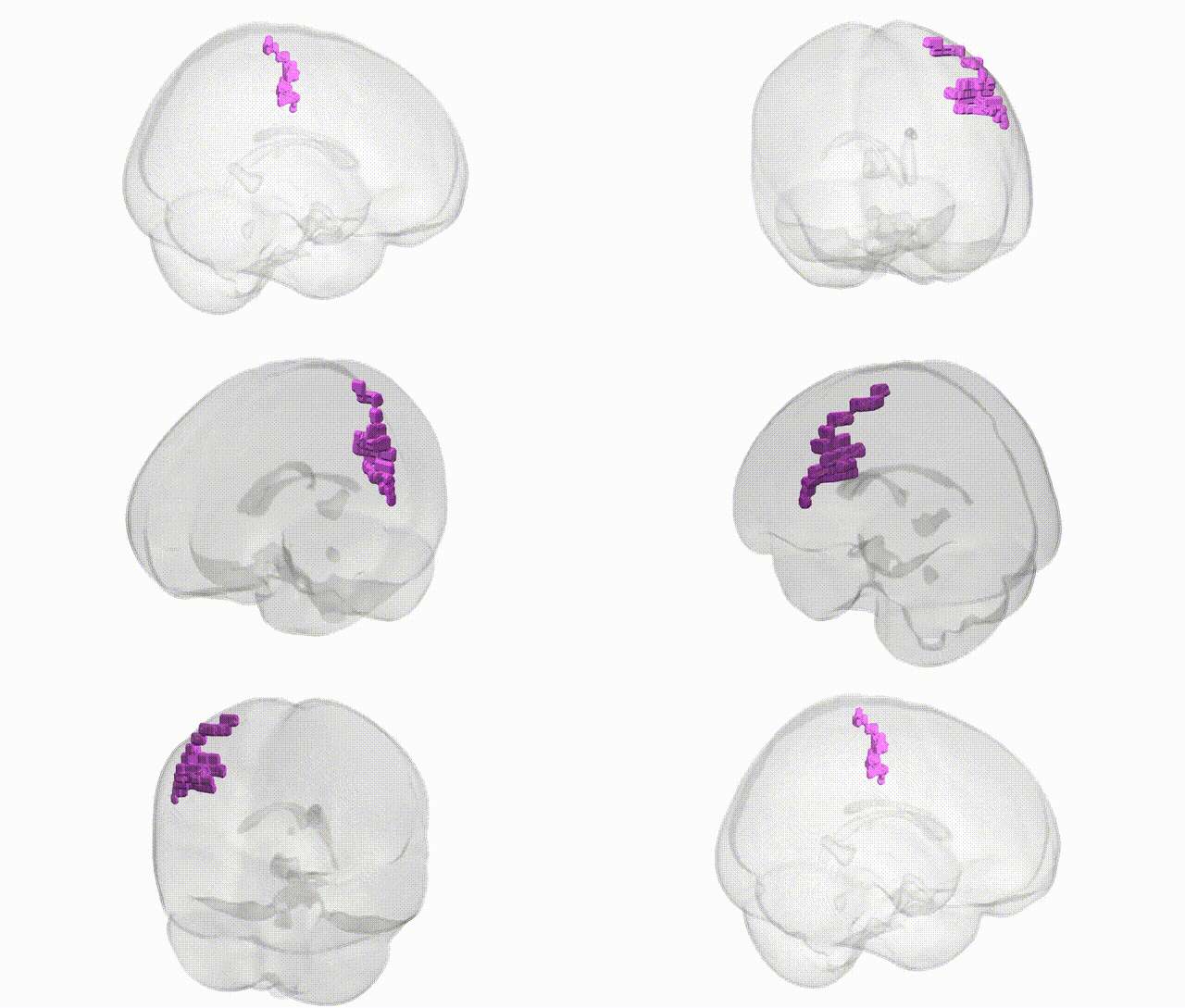
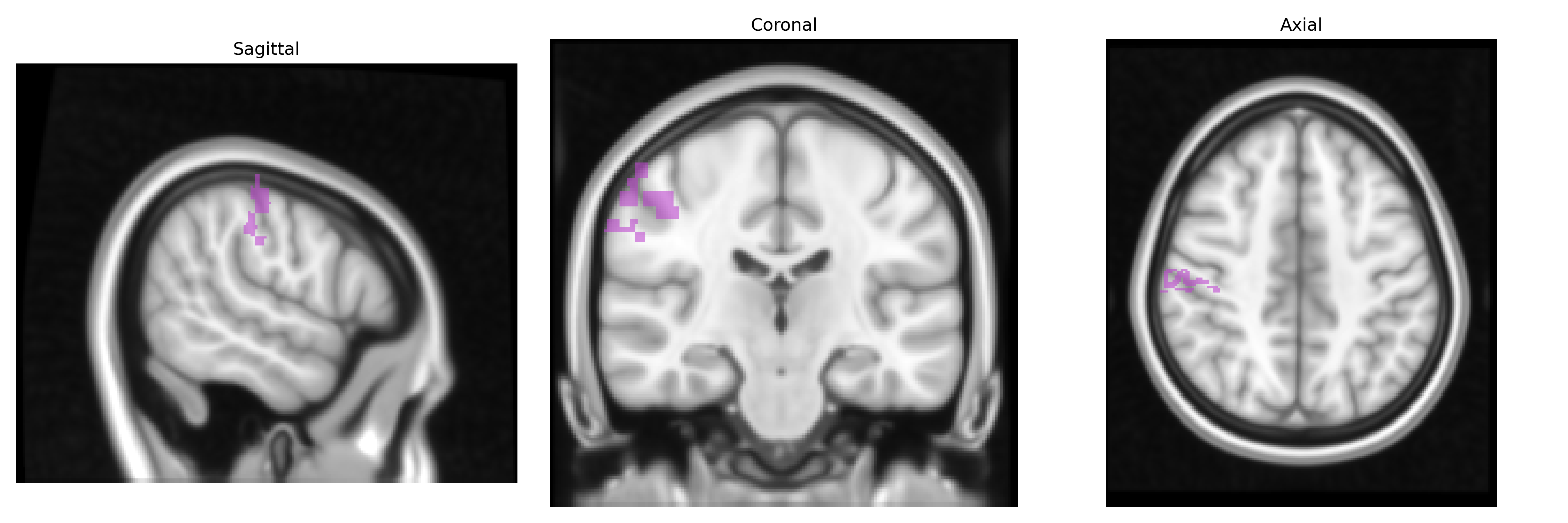
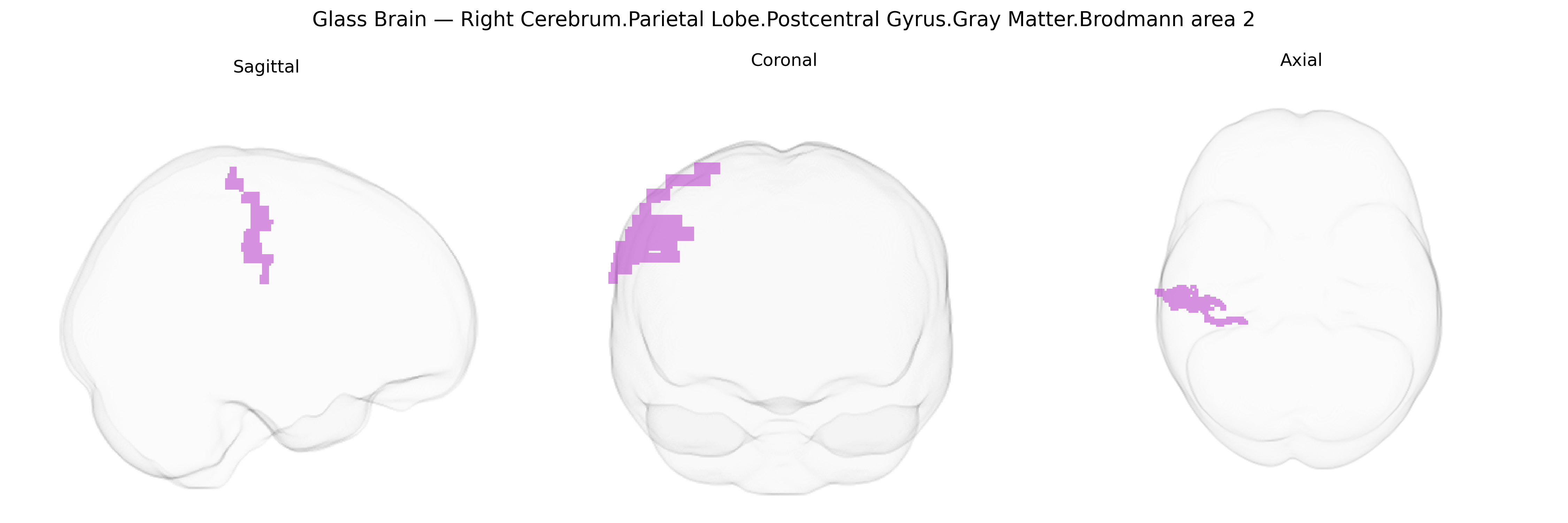
Bilateral Right Cerebrum.Parietal Lobe.Postcentral Gyrus.Gray Matter.Brodmann area 2 corresponds to a somatosensory cortical field within the postcentral gyrus of the parietal lobe, forming part of the primary somatosensory cortex (S1). Brodmann area 2 integrates inputs from cutaneous and deep receptors, including muscle and joint afferents, and is particularly involved in higher-order processing of tactile and proprioceptive information, such as texture discrimination and the assessment of object size and shape through touch. Functionally, it participates in constructing a detailed representation of the body and external environment, contributing to sensorimotor integration and fine manual control. There is no dedicated Wikipedia article for Brodmann area 2; a closely related and encompassing structure is the Primary somatosensory cortex.
Brodmann area 2 of the bilateral postcentral gyrus in the right parietal lobe, a primary somatosensory region involved in tactile and proprioceptive processing, has been implicated in multiple genetic and GWAS-based associations, though typically at the level of cortical thickness, surface area, or volume rather than the Talairach-defined label itself. Large-scale neuroimaging genetics consortia (e.g., ENIGMA, UK Biobank analyses) have identified common variants in genes related to neuronal development, synaptic function, and axon guidance—such as those near MIR137, TBR1, and other neurodevelopmental loci—that influence regional parietal and postcentral cortical metrics, which include or overlap BA2. Polygenic risk scores for schizophrenia, autism spectrum disorder, and major depressive disorder have shown associations with altered somatosensory and parietal cortical morphology, while GWAS of cognitive traits (intelligence, educational attainment) and sensorimotor performance have linked variants in neurodevelopmental genes to structural differences in parietal and postcentral regions. Additionally, somatosensory and parietal abnormalities related to monogenic or high-effect variants—such as those affecting ion channels and synaptic proteins—have been described in rare familial epilepsy and neurodevelopmental syndromes, although these findings often involve broader cortical networks and are not specific to BA2. Overall, current genetic evidence points to a polygenic architecture in which numerous common and some rare variants influencing cortical development, neuronal connectivity, and sensory processing contribute to individual differences in the structure and function of this somatosensory parietal area, as well as to susceptibility to neuropsychiatric and neurodevelopmental disorders in which this region participates.
Overview generated by GPT-4o (2026).
Region ID: 892
Hemisphere: bilateral
Atlas: Talairach labels 1mm
Full Quality Version: Download MP4
Full Quality Version: Download MP4
Wali Sidiqyar*, Gaurav Rudravaram*, Elyssa M. McMaster, Trent M. Schwartz, Adam M. Saunders, Kurt G. Schilling, Bennett A. Landman "Introducing SPINS: A Shared Public Visualization Library of Neuroanatomical Structures." Medical Imaging with Deep Learning- short paper
This resource is licensed under CC0 1.0 Universal (Public Domain).