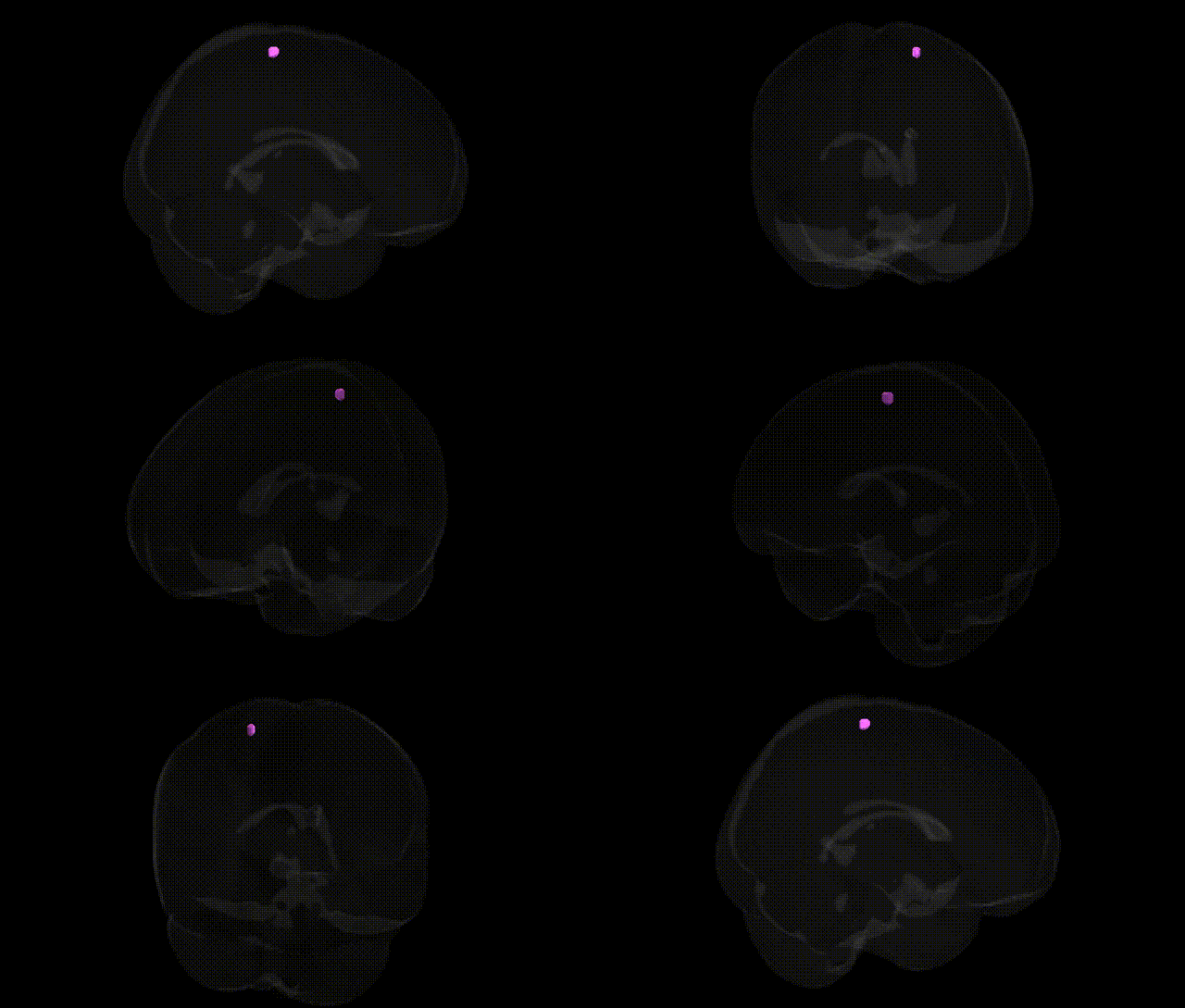
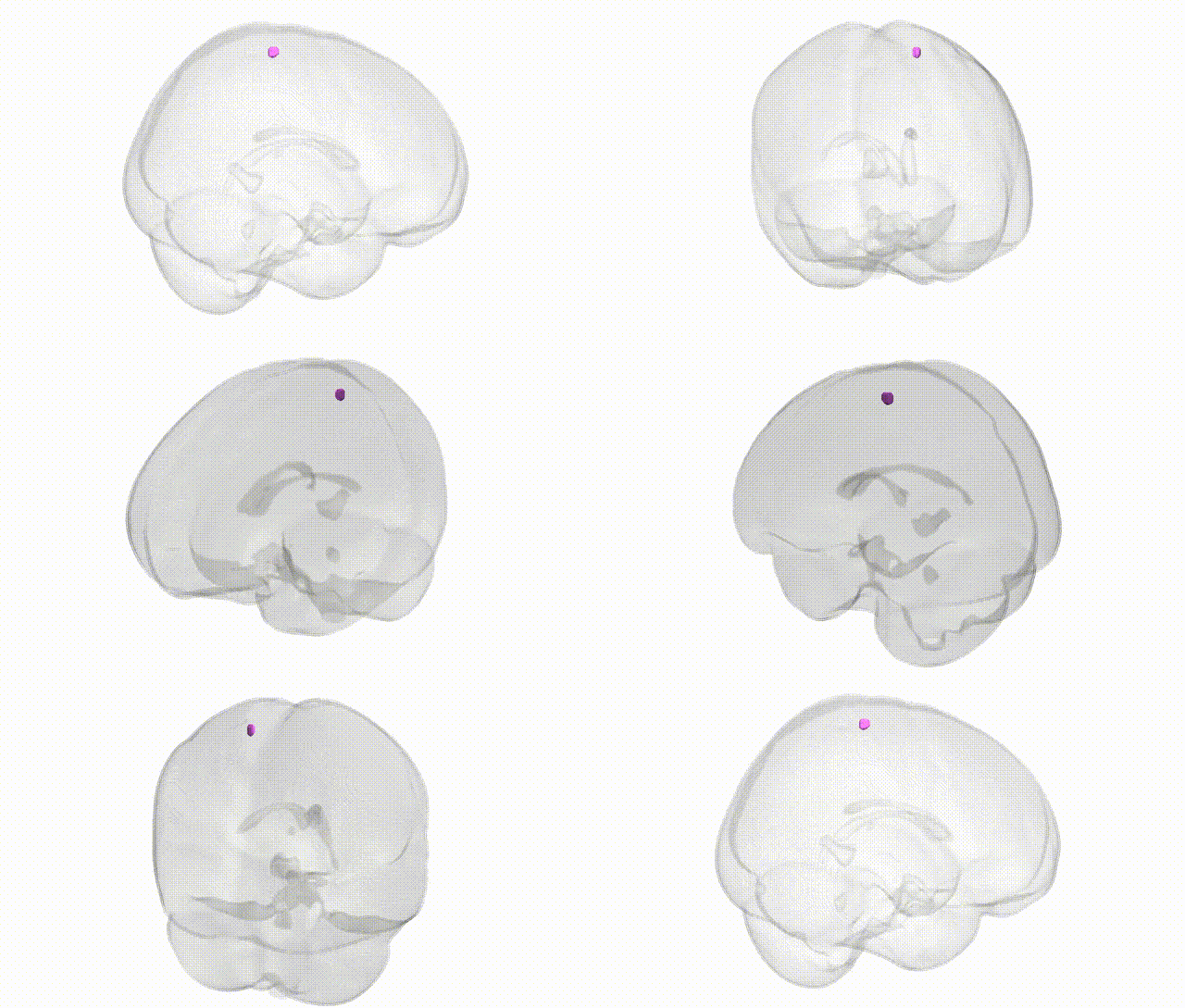
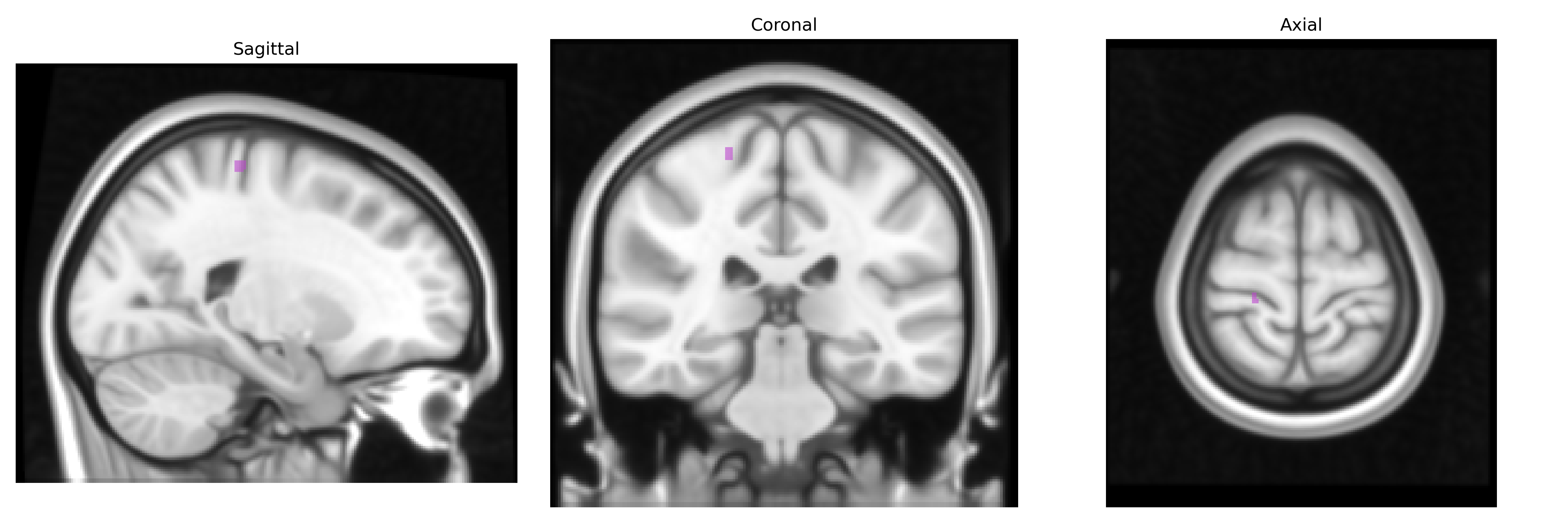
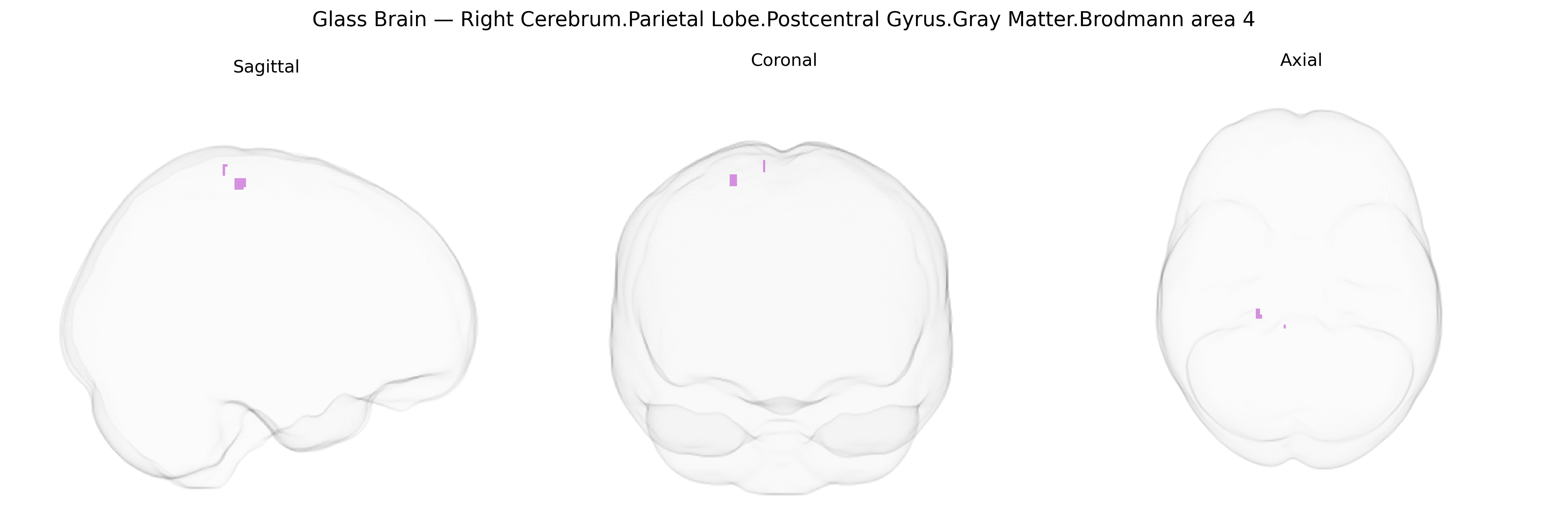
The bilateral Right Cerebrum.Parietal Lobe.Postcentral Gyrus.Gray Matter.Brodmann area 4 (per Talairach 1 mm Atlas) refers to gray matter clusters localized near the postcentral gyrus in the parietal lobe that are functionally or probabilistically assigned to Brodmann area 4, the primary motor cortex. Although classical cytoarchitectonic maps place Brodmann area 4 mainly in the precentral gyrus (frontal lobe), some atlas-based labelings extend or approximate its borders into adjacent regions, including parts of the postcentral region, reflecting variability in individual anatomy and registration. Functionally, this area is associated with the execution of voluntary movements, somatotopic organization of motor output, and integration of motor commands with nearby somatosensory representations. Neurons in this zone project heavily to the spinal cord and brainstem motor nuclei, mediating fine control of distal musculature and contributing to corticospinal pathways that underlie skilled, precise movements. There is no direct Wikipedia article for this composite Talairach label; a closely related structure is Brodmann area 4.
The bilateral Right Cerebrum.Parietal Lobe.Postcentral Gyrus.Gray Matter.Brodmann area 4, as defined in the Talairach 1 mm atlas (a primary sensorimotor/motor region bordering postcentral and precentral territories), has been implicated in multiple genome-wide association and imaging-genetics studies through its involvement in motor function, somatosensation, and related neuropsychiatric phenotypes. Common variants in genes affecting cortical development, synaptic plasticity, and myelination (for example, microtubule-associated genes, glutamatergic and GABAergic signaling genes, and neurodevelopmental regulators such as CNTNAP2, NRG1, and calcium-channel genes) show associations with cortical thickness, surface area, or gyrification in sensorimotor cortex, including postcentral/motor regions overlapping BA4. Large-scale GWAS of brain morphometry (e.g., ENIGMA and UK Biobank–based studies) have identified polygenic contributions to regional volume and surface area in primary motor and somatosensory cortices, with enrichment for genes involved in neurogenesis and axon guidance. These structural and functional characteristics of BA4/postcentral territory have been linked genetically and phenotypically to movement disorders (e.g., Parkinson’s disease, dystonia, essential tremor), neurodevelopmental conditions (autism spectrum disorder, ADHD), and chronic pain or somatosensory disorders through pleiotropic variants that influence both cortical organization and disease risk; however, most effects are polygenic and distributed, and specific variants or genes rarely map uniquely or exclusively to this precise Talairach-defined BA4 postcentral region.
Overview generated by GPT-4o (2026).
Region ID: 1099
Hemisphere: bilateral
Atlas: Talairach labels 1mm
Full Quality Version: Download MP4
Full Quality Version: Download MP4
Wali Sidiqyar*, Gaurav Rudravaram*, Elyssa M. McMaster, Trent M. Schwartz, Adam M. Saunders, Kurt G. Schilling, Bennett A. Landman "Introducing SPINS: A Shared Public Visualization Library of Neuroanatomical Structures." Medical Imaging with Deep Learning- short paper
This resource is licensed under CC0 1.0 Universal (Public Domain).