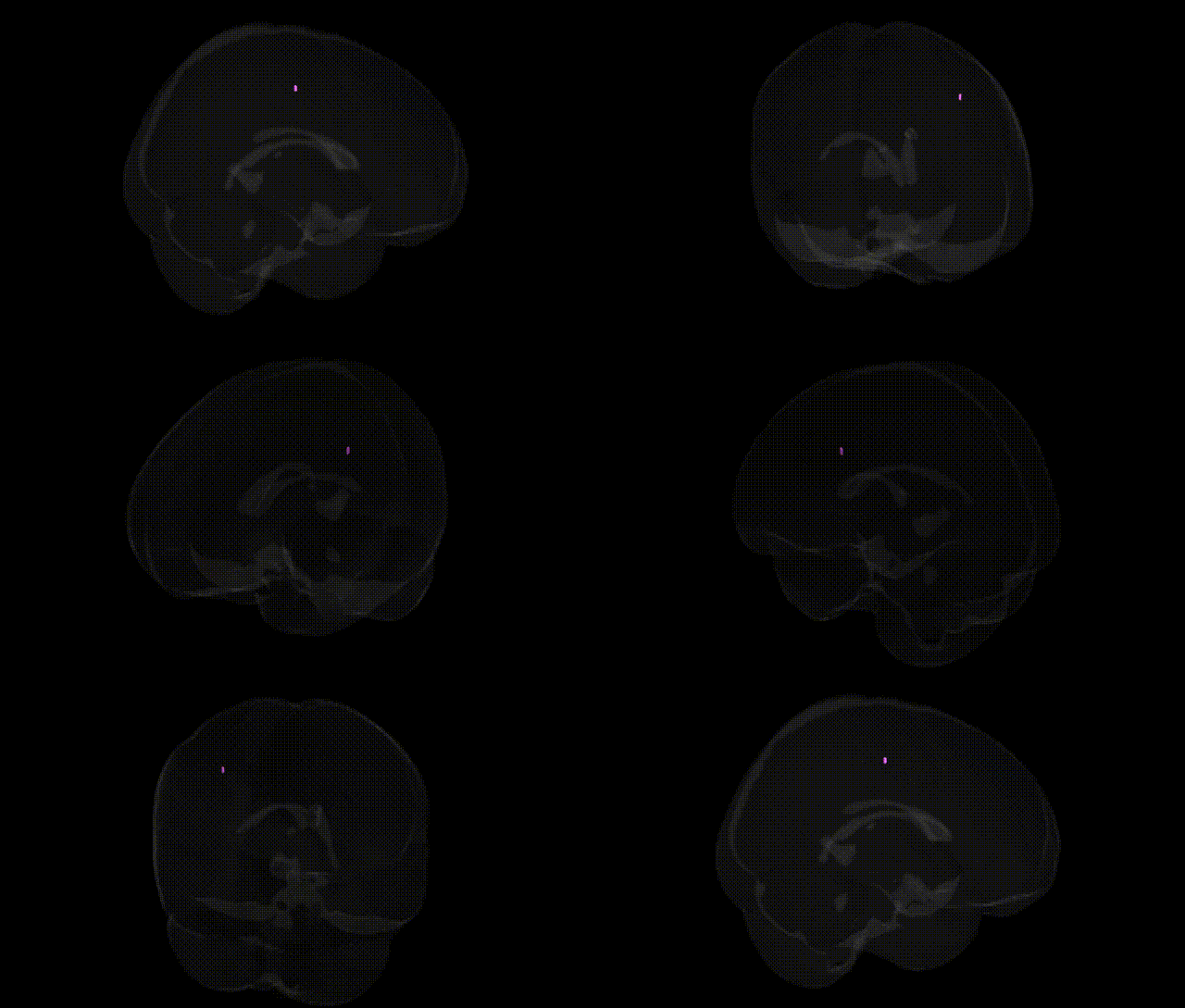
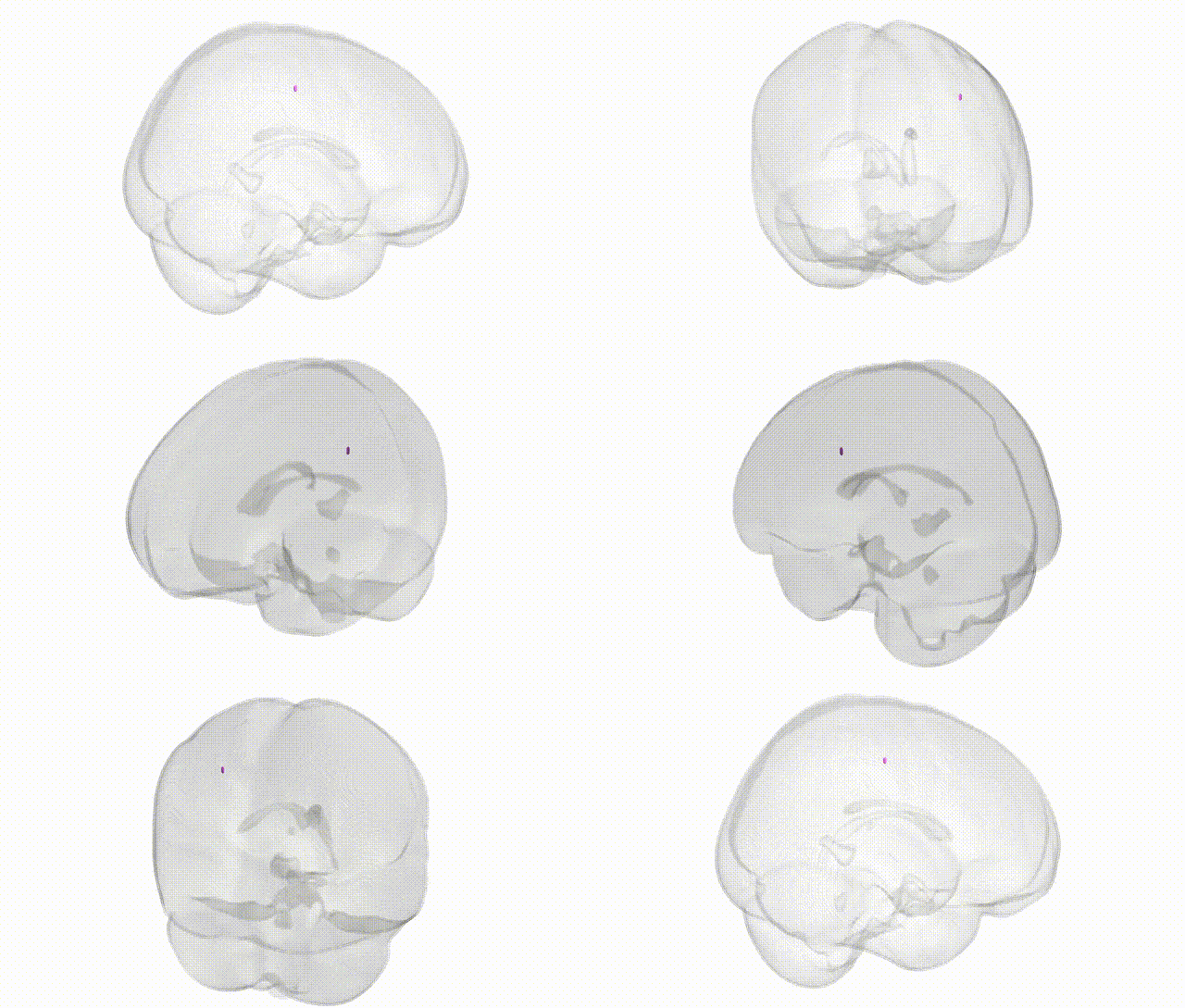
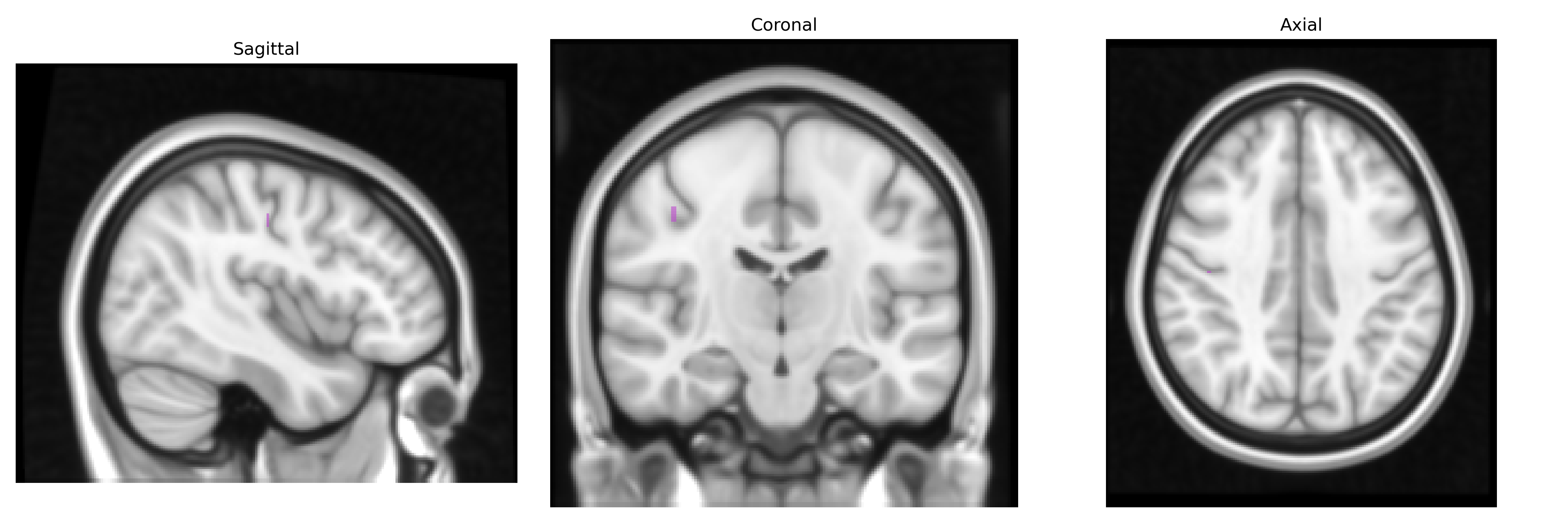
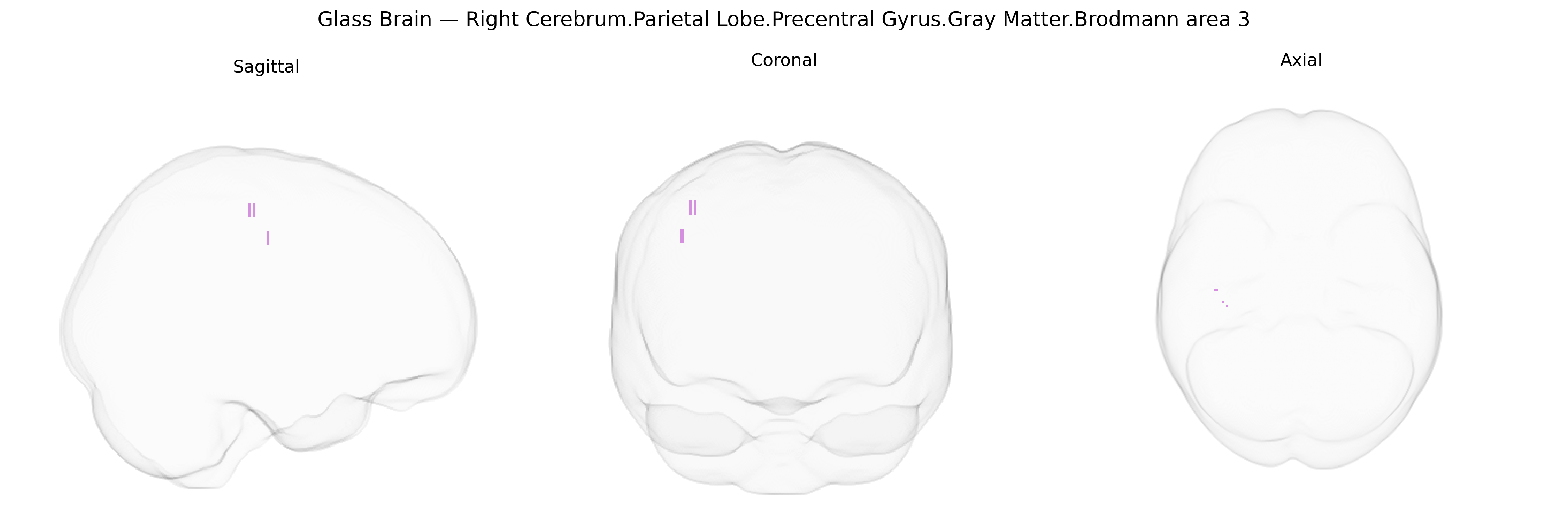
The bilateral Right Cerebrum.Parietal Lobe.Precentral Gyrus.Gray Matter.Brodmann area 3 corresponds primarily to the primary somatosensory cortex (S1), specifically the anterior portion of the postcentral region that processes tactile, proprioceptive, and nociceptive input from the contralateral body. Cytoarchitectonically, Brodmann area 3 is characterized by a prominent granular layer IV and dense thalamocortical terminations, forming part of the somatotopically organized representation of the body surface along the central sulcus. Neurons in this region receive high-fidelity input from the ventral posterior nucleus of the thalamus and are crucial for fine tactile discrimination, texture perception, and precise localization of somatic stimuli. Functionally, area 3 is often subdivided into 3a and 3b, with 3a more strongly associated with proprioceptive input from muscle spindles and 3b with cutaneous information, together forming an essential early stage in cortical somatosensory processing. Primary somatosensory cortex
The bilateral Right Cerebrum Parietal Lobe Precentral Gyrus Gray Matter Brodmann area 3 corresponds largely to primary somatosensory cortex, a region repeatedly implicated in imaging genetics and GWAS of brain structure and function. Large-scale neuroimaging GWAS (e.g., ENIGMA, UK Biobank) have identified common variants in genes such as microtubule-associated and synaptic genes (including MAPT-region loci on 17q21, and several glutamatergic and GABAergic signaling genes) that influence cortical thickness, surface area, and gray matter volume in primary somatosensory and adjacent sensorimotor cortices, sometimes with lateralized effects but generally not restricted solely to the right hemisphere. Somatosensory cortex metrics in this region have also been associated with polygenic risk scores and specific loci for neurodevelopmental and neuropsychiatric conditions, including schizophrenia, autism spectrum disorder, and attention-deficit/hyperactivity disorder, where genetically driven alterations in cortical morphology and connectivity implicate BA3 in sensory processing abnormalities. In addition, GWAS of chronic pain, migraine, and somatosensory traits (e.g., tactile sensitivity) have linked variants in ion channel and neuroinflammatory genes to altered activation and structural differences in this primary somatosensory territory, suggesting genetically mediated vulnerability to aberrant pain and sensory signaling. Although few studies focus narrowly on Talairach-defined BA3 in the right parietal lobe, convergent genetic evidence indicates that variants affecting neurodevelopmental patterning, synaptic architecture, and sensorimotor integration contribute to individual differences and disorder-related changes in this somatosensory cortical region.
Overview generated by GPT-4o (2026).
Region ID: 1019
Hemisphere: bilateral
Atlas: Talairach labels 1mm
Full Quality Version: Download MP4
Full Quality Version: Download MP4
Wali Sidiqyar*, Gaurav Rudravaram*, Elyssa M. McMaster, Trent M. Schwartz, Adam M. Saunders, Kurt G. Schilling, Bennett A. Landman "Introducing SPINS: A Shared Public Visualization Library of Neuroanatomical Structures." Medical Imaging with Deep Learning- short paper
This resource is licensed under CC0 1.0 Universal (Public Domain).