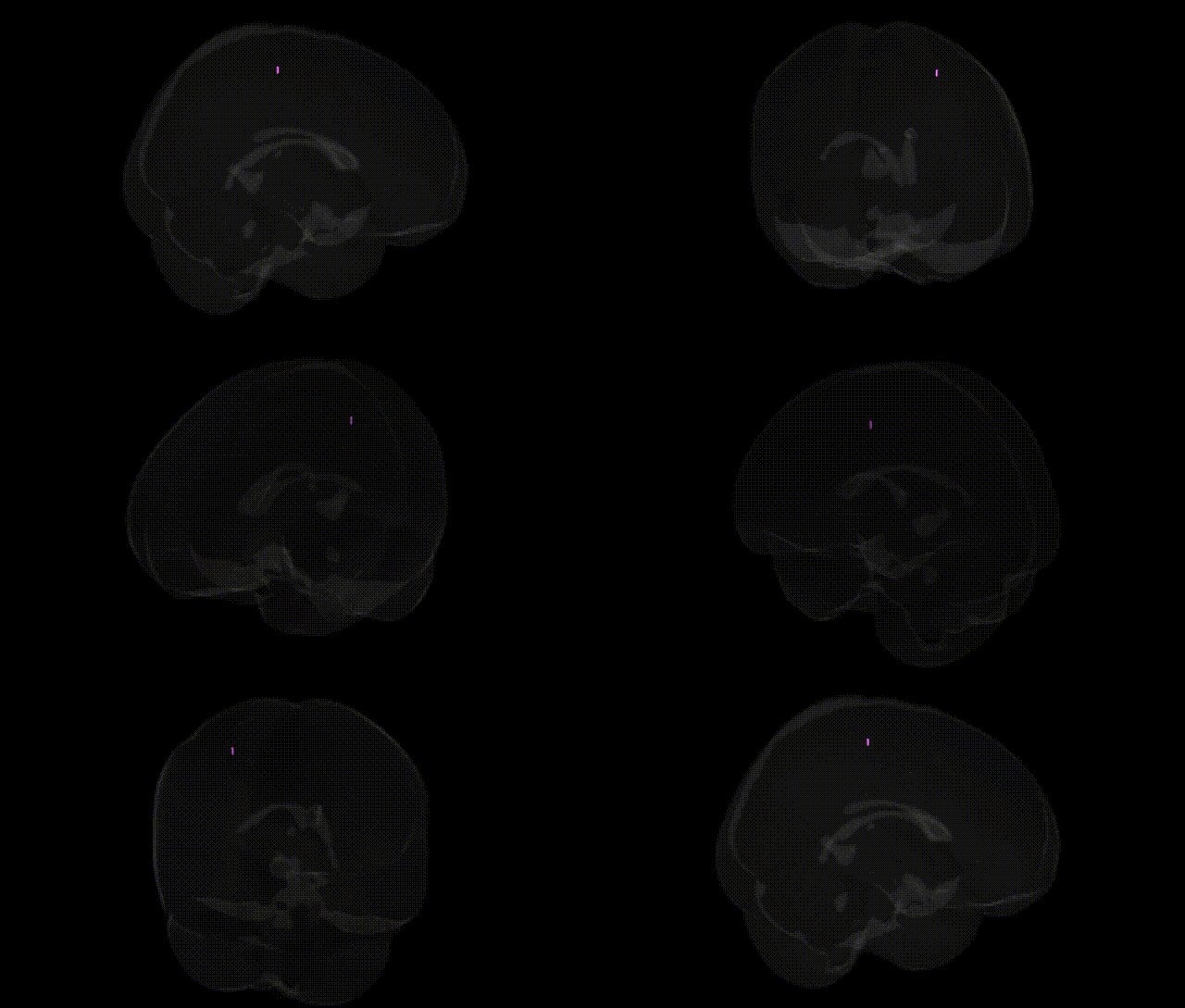
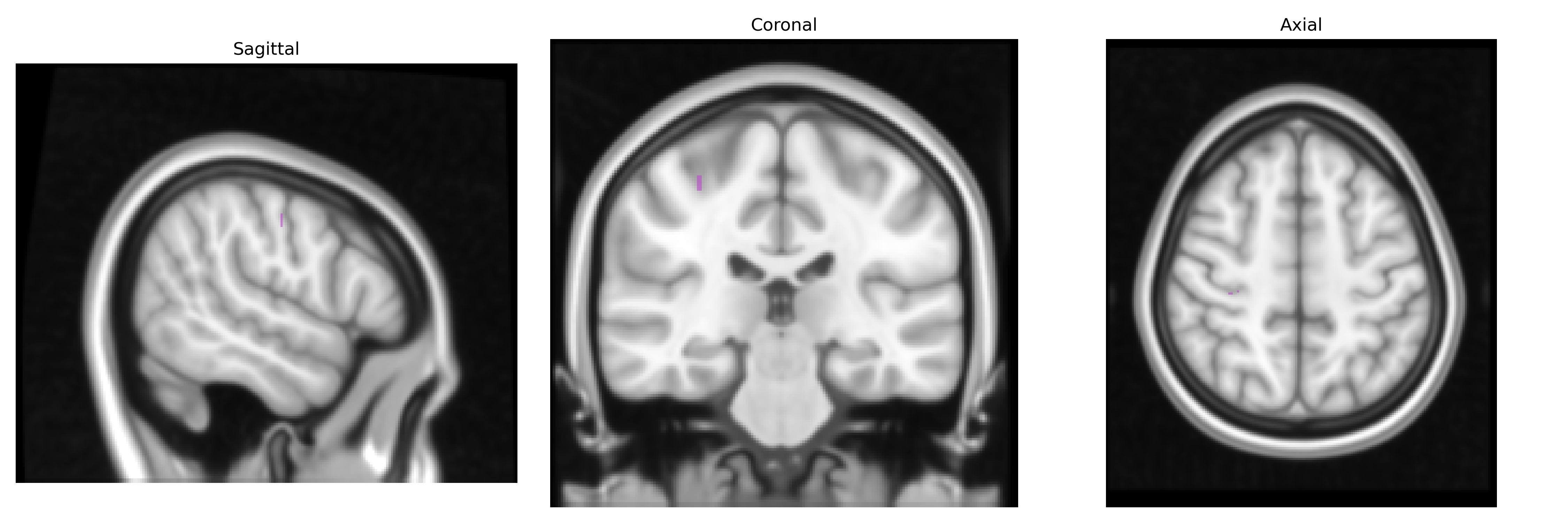
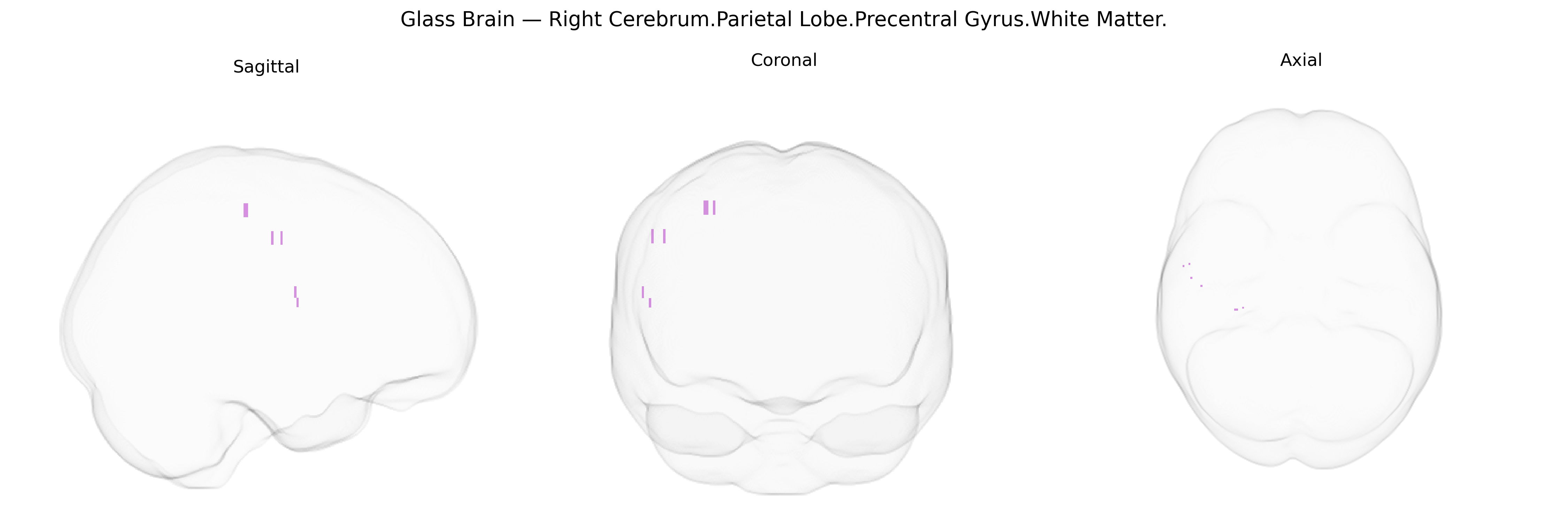
The bilateral Right Cerebrum.Parietal Lobe.Precentral Gyrus.White Matter corresponds to subcortical myelinated fiber tracts underlying the precentral gyrus at the parietal lobe border in the right hemisphere, as defined in the Talairach 1 mm atlas. Functionally, this white matter region contains descending corticospinal and corticobulbar fibers originating from the primary motor cortex, as well as association and possibly short-range U-fibers interconnecting adjacent premotor and parietal areas involved in voluntary motor control, sensorimotor integration, and spatial aspects of movement planning. Damage to this area can disrupt motor output and coordination by impairing conduction between the cortex and subcortical or spinal targets. There is no direct link for this exact composite label; a closely related structure is the Precentral gyrus.
The bilateral Right Cerebrum.Parietal Lobe.Precentral Gyrus.White Matter region (as defined in the Talairach 1 mm atlas) roughly encompasses cortico-subcortical motor pathways underlying the primary motor cortex and adjacent sensorimotor areas, which have been repeatedly implicated in genetic imaging and GWAS studies of brain structure, motor function, and neuropsychiatric disease. Large-scale MRI-based GWAS (e.g., ENIGMA and UK Biobank analyses) have identified common variants in genes involved in neurodevelopment, axon guidance, and myelination—such as MAPT, TCF4, DLG2, and multiple loci near microtubule- and synapse-related genes—associated with regional white matter volume, cortical thickness, and diffusion metrics (FA/MD) in precentral and adjoining parietal white matter. Polygenic risk for schizophrenia, bipolar disorder, ADHD, and autism has been linked to altered microstructure in precentral and superior parietal white matter tracts, suggesting that shared genetic architectures influencing synaptic plasticity and cortical development contribute to abnormalities in this sensorimotor network. Additionally, GWAS of motor performance, handedness, and corticospinal tract integrity have reported associations involving genes such as PCSK6, LRRTM1, and others that modulate hemispheric specialization and motor pathway development, with corresponding effects on precentral white matter measures. Variants in genes regulating oligodendrocyte function (e.g., ERBB4-pathway components) and neuroinflammation have been tied to widespread white matter changes that commonly include the precentral region, especially in disorders like multiple sclerosis and neurodegenerative conditions, where lesion burden and atrophy in motor-related white matter demonstrate heritable components. While few studies isolate the Talairach-defined Right Cerebrum.Parietal Lobe.Precentral Gyrus.White Matter region specifically, convergent evidence from structural and diffusion MRI GWAS, along with genetic studies of motor and psychiatric phenotypes, indicates that this area is a key node in genetically influenced networks governing motor control, sensorimotor integration, and vulnerability to neurodevelopmental and psychiatric disorders.
Overview generated by GPT-4o (2026).
Region ID: 802
Hemisphere: bilateral
Atlas: Talairach labels 1mm
Full Quality Version: Download MP4
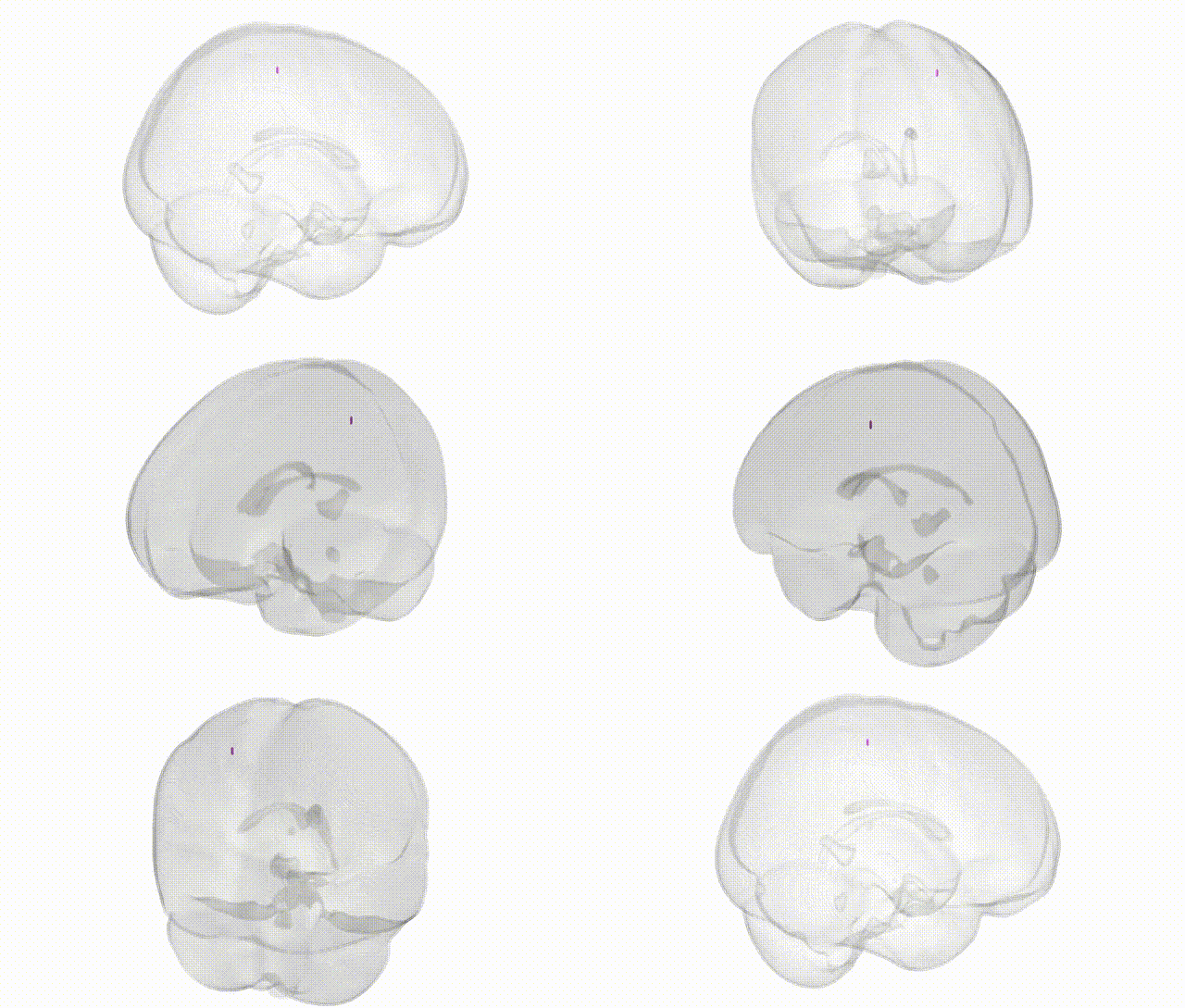
Full Quality Version: Download MP4
Wali Sidiqyar*, Gaurav Rudravaram*, Elyssa M. McMaster, Trent M. Schwartz, Adam M. Saunders, Kurt G. Schilling, Bennett A. Landman "Introducing SPINS: A Shared Public Visualization Library of Neuroanatomical Structures." Medical Imaging with Deep Learning- short paper
This resource is licensed under CC0 1.0 Universal (Public Domain).