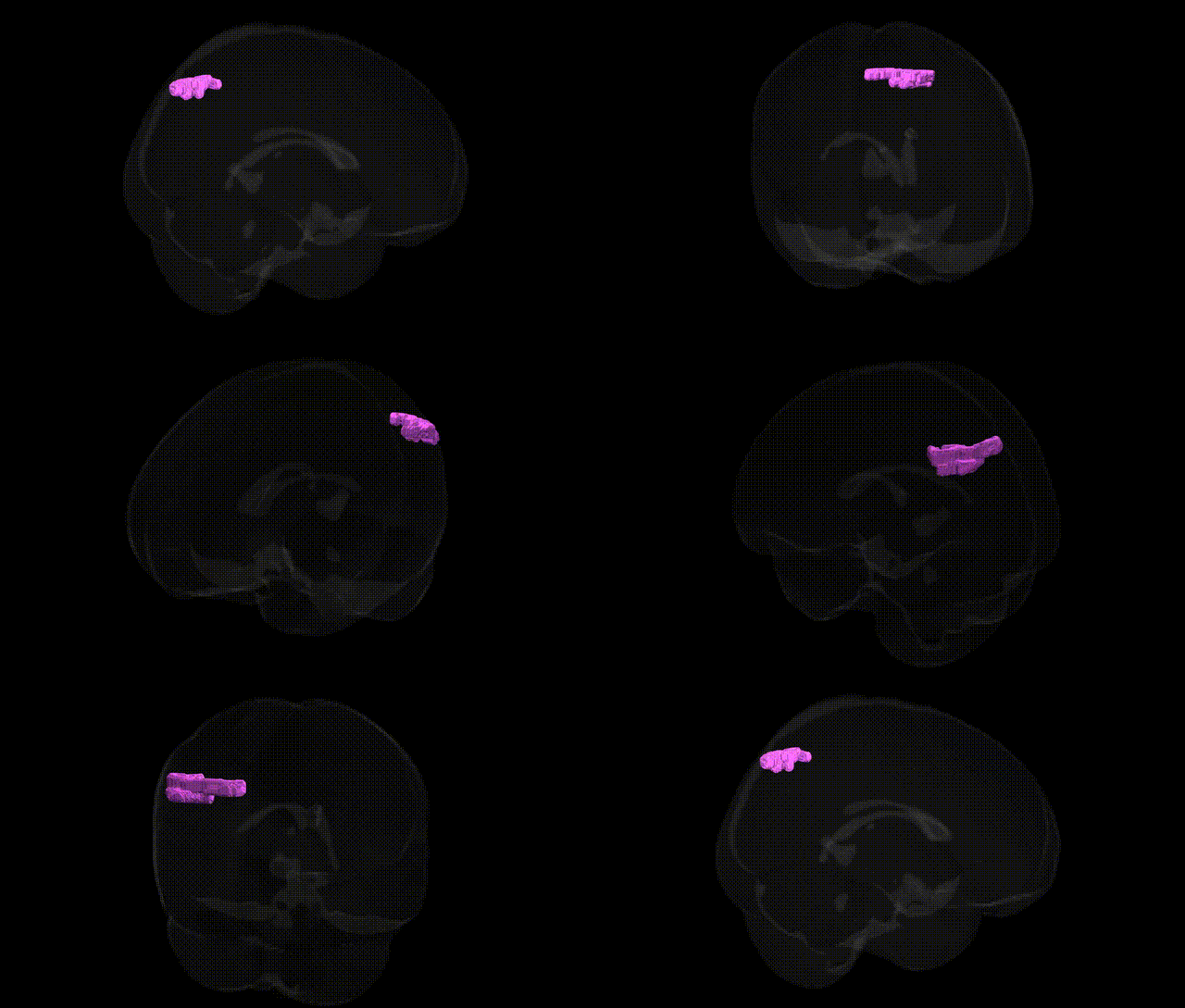
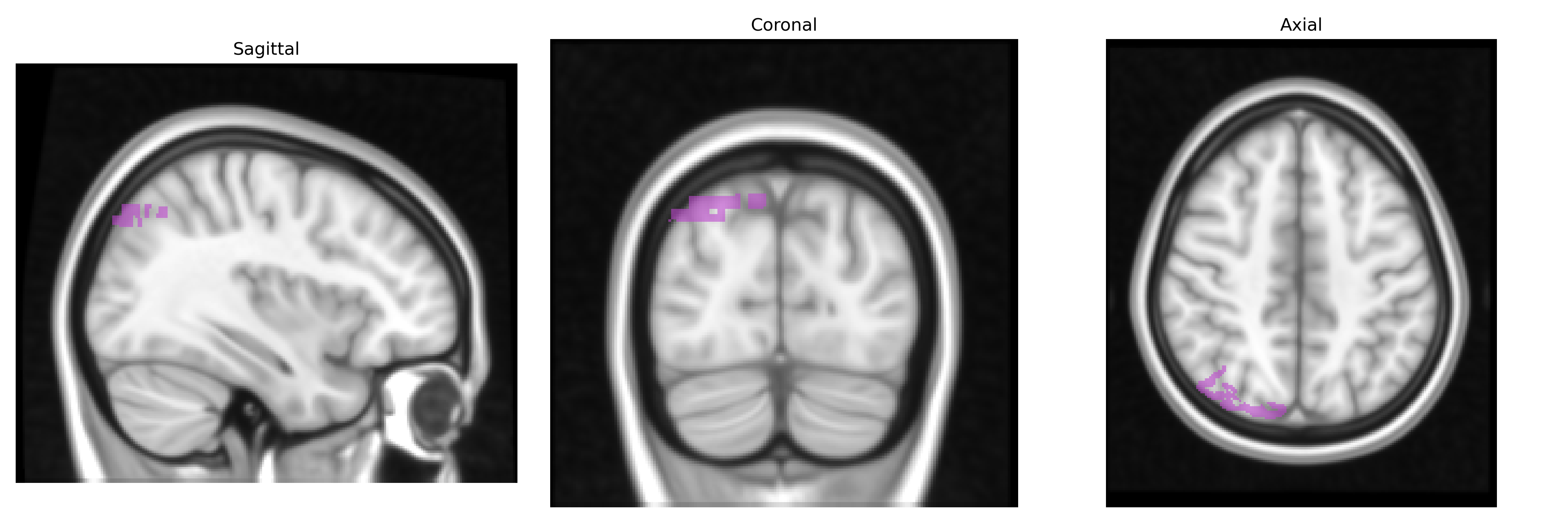
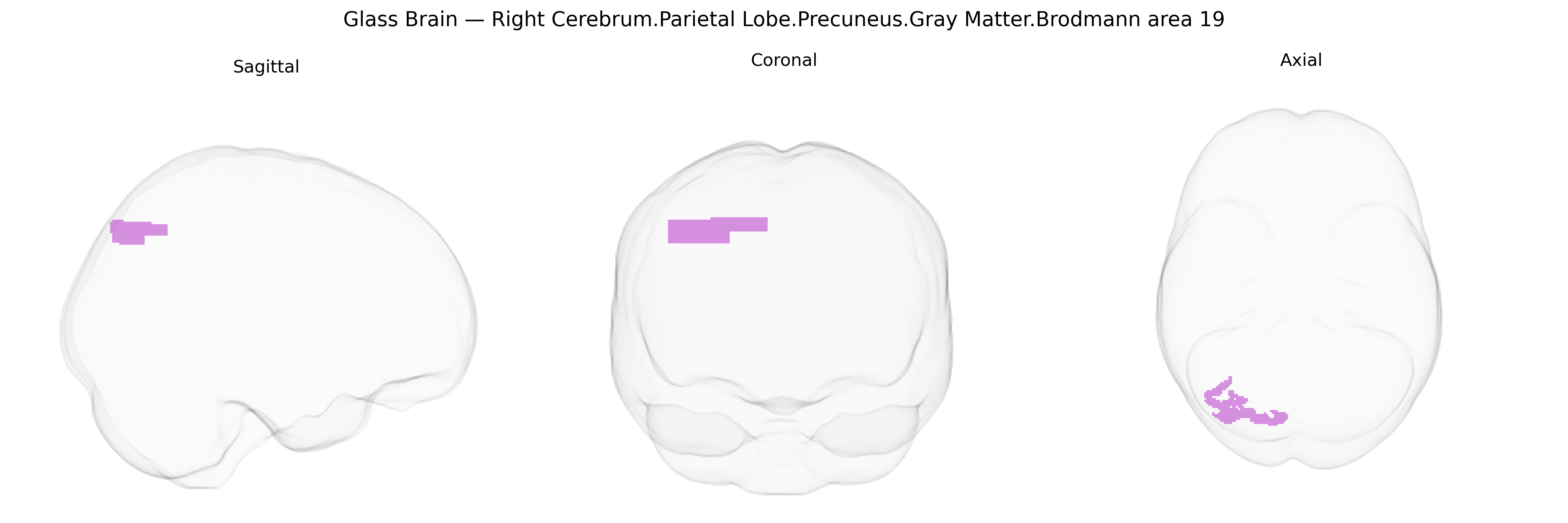
The bilateral Right Cerebrum.Parietal Lobe.Precuneus.Gray Matter.Brodmann area 19 corresponds to a posterior medial parietal region overlapping the precuneus that is functionally associated with higher-order visual and visuospatial processing. As part of Brodmann area 19, it contributes to the associative visual cortex, integrating complex visual information with spatial, attentional, and self-referential processes, and is often implicated in tasks involving visual imagery, visuomotor coordination, and aspects of the default mode network. This region participates in large-scale cortical networks that support scene construction, mental navigation, and the integration of sensory input with internal representations of space and self. There is no direct link for this exact Talairach label; a related structure is the Precuneus.
The bilateral right precuneus gray matter in Brodmann area 19, an association and higher-order visual region in the parietal lobe, has been implicated in several polygenic traits and disorders through GWAS and imaging–genetics studies, though no single gene is uniquely specific to this locus. Variants in genes involved in synaptic function and neurodevelopment (e.g., BDNF, APOE, CNTNAP2, NRG1, and genes within major neurodevelopmental CNV loci) have been associated with structural and functional differences in precuneus and adjacent parietal–occipital cortices, often captured in large-scale imaging GWAS such as ENIGMA and UK Biobank. These studies report that common SNPs explain a substantial proportion of variance in cortical thickness and surface area in parietal and occipital regions, including BA19, with enrichment in pathways related to axon guidance, neuronal differentiation, and calcium signaling. Genetic associations involving this region have been reported in disorders such as Alzheimer’s disease (where APOE ε4 and other AD risk loci correlate with precuneus atrophy and hypometabolism), schizophrenia and bipolar disorder (where risk polygenic scores relate to parietal–occipital structural alterations), autism spectrum disorder (with CNVs and rare variants linked to atypical parietal connectivity), and major depressive disorder and anxiety (where polygenic risk correlates with changes in default mode network hubs including the precuneus). Additionally, GWAS of cognitive ability, educational attainment, and visuospatial skills indicate that polygenic profiles influencing global intelligence and visual processing show structural and functional correlates in the precuneus and BA19, consistent with its role as a multimodal hub integrating visual, attentional, and self-referential processes.
Overview generated by GPT-4o (2026).
Region ID: 987
Hemisphere: bilateral
Atlas: Talairach labels 1mm
Full Quality Version: Download MP4
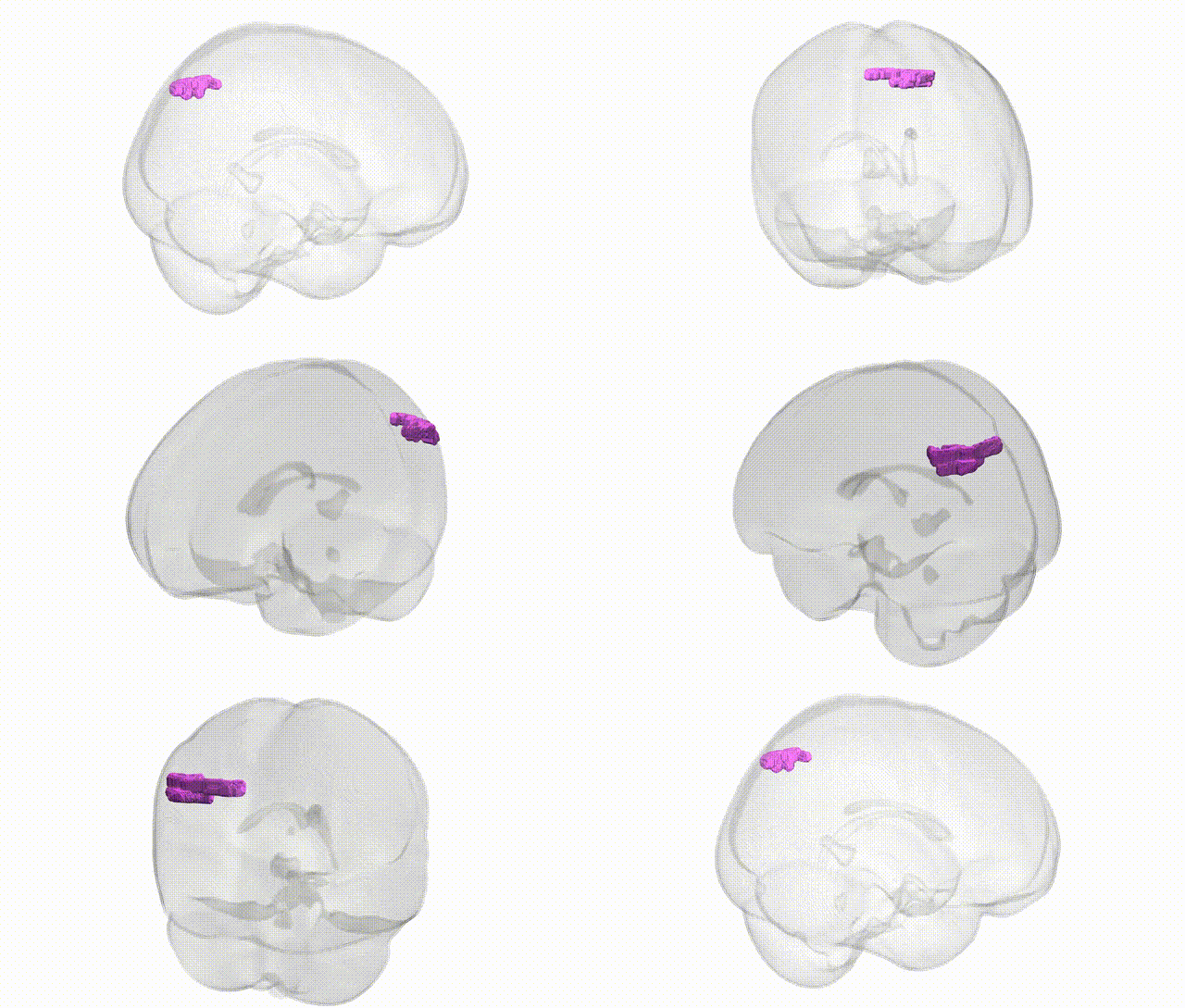
Full Quality Version: Download MP4
Wali Sidiqyar*, Gaurav Rudravaram*, Elyssa M. McMaster, Trent M. Schwartz, Adam M. Saunders, Kurt G. Schilling, Bennett A. Landman "Introducing SPINS: A Shared Public Visualization Library of Neuroanatomical Structures." Medical Imaging with Deep Learning- short paper
This resource is licensed under CC0 1.0 Universal (Public Domain).