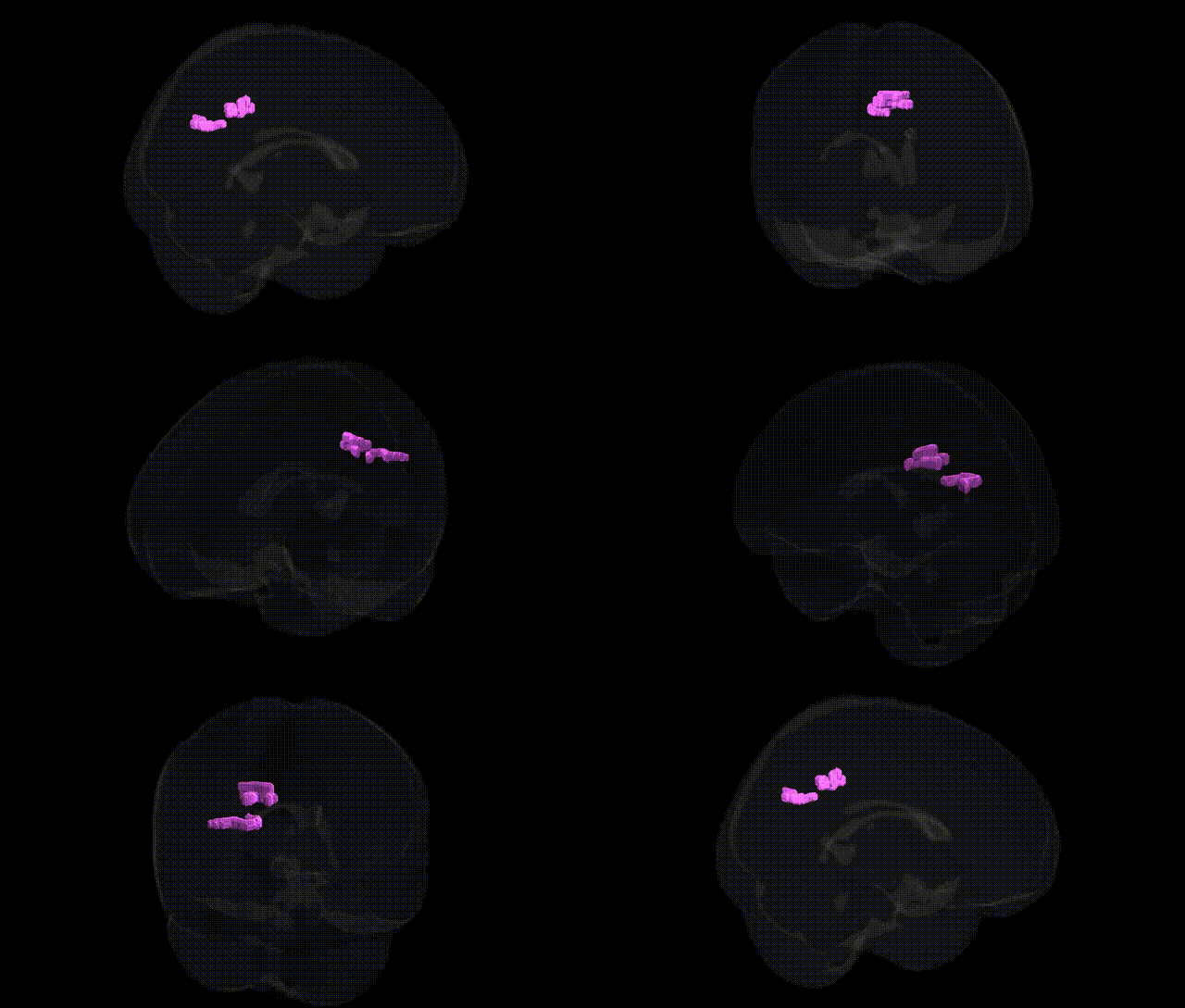
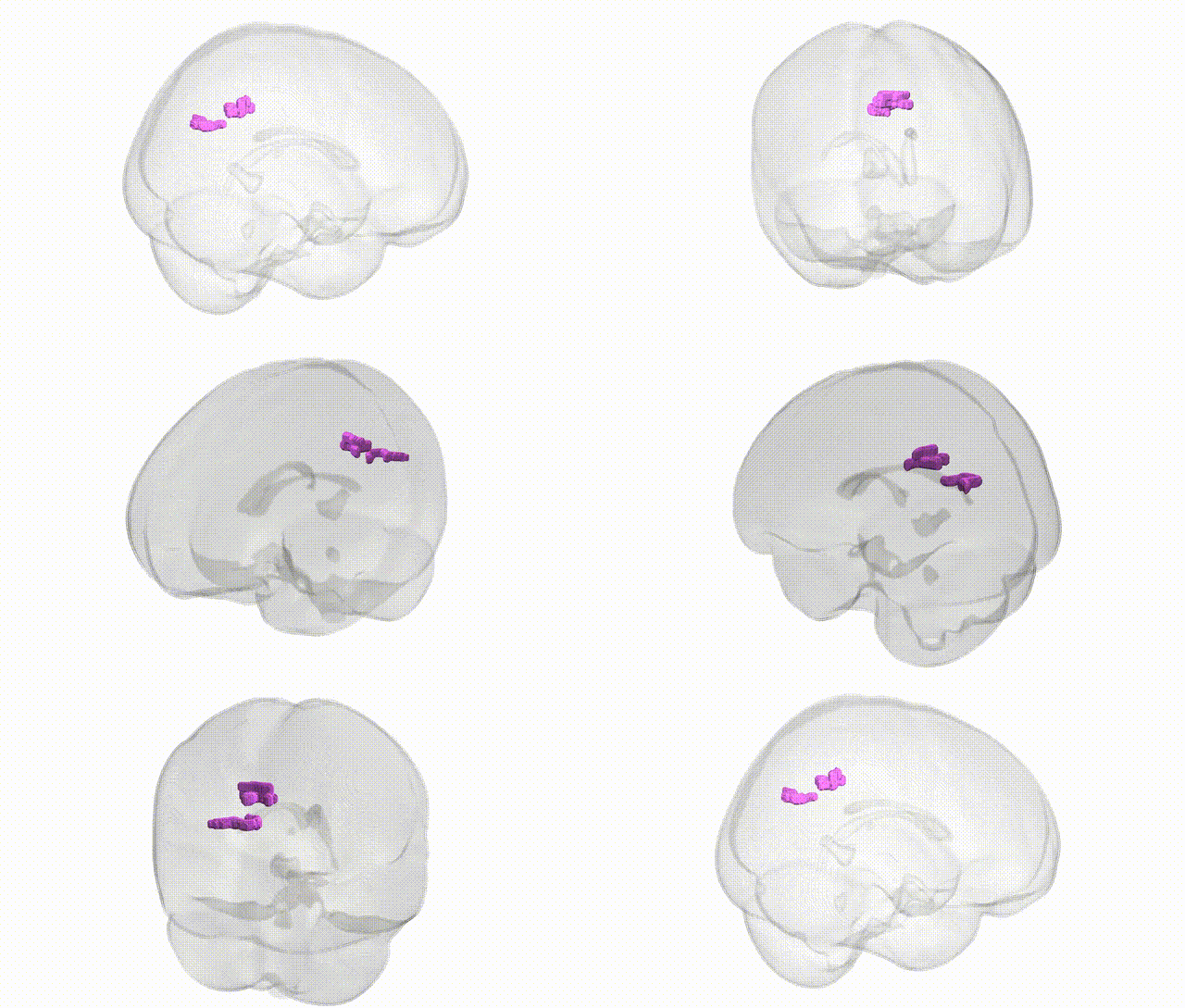
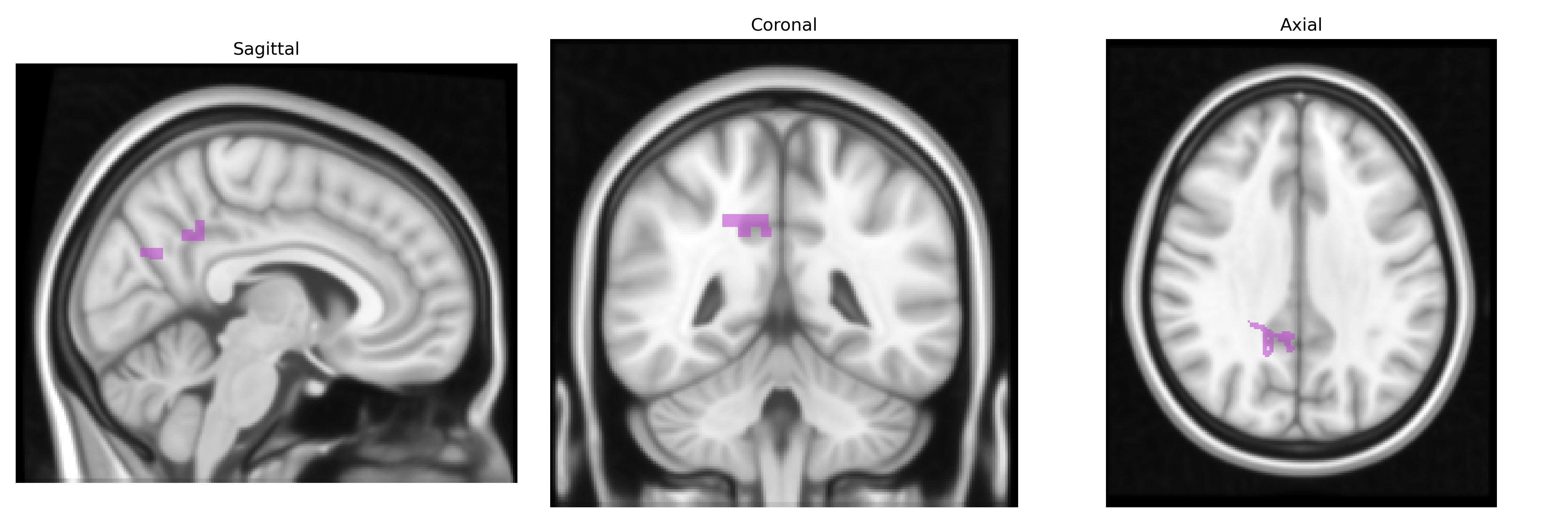
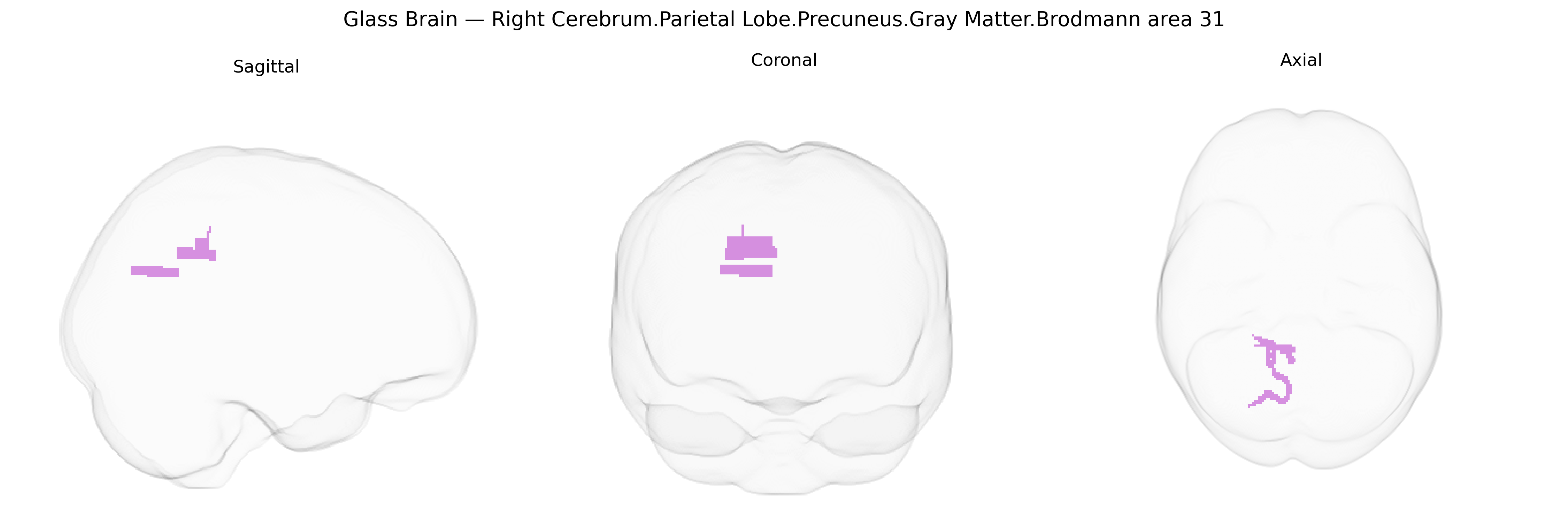
The bilateral Right Cerebrum.Parietal Lobe.Precuneus.Gray Matter.Brodmann area 31 corresponds to a posterior medial parietal cortical territory located along the medial wall of the hemisphere, bordering the posterior cingulate cortex and extending into the precuneus region. Cytoarchitectonically defined as Brodmann area 31, it is part of the posteromedial cortex associated with higher-order associative functions, including aspects of visuospatial imagery, self-referential processing, episodic memory retrieval, and integration of multisensory information. This region is a key node of the default mode network, showing prominent activity during internally directed cognition and deactivation during externally focused tasks. In the Talairach 1 mm atlas, this label designates gray matter confined to the medial parietal lobe within the precuneus, bilaterally, emphasizing its role in large-scale cortical networks that support introspective and memory-related processes. There is no direct link for this exact composite label; a closely related structure is the Precuneus.
Genetic associations involving the bilateral precuneus gray matter in Brodmann area 31 implicate a diverse set of loci linked mainly through imaging genetics and large-scale GWAS of cortical thickness, surface area, and functional connectivity, as well as disease risk. Variants in genes such as APOE, CLU, and PICALM are associated with Alzheimer’s disease–related atrophy and hypometabolism in the posterior cingulate–precuneus region, while polygenic risk scores for Alzheimer’s and other dementias correlate with structural and functional alterations in this area. Large neuroimaging GWAS (e.g., ENIGMA, UK Biobank) show that common variants in genes involved in synaptic function, neurodevelopment, and myelination (including pathways with genes like MAPT, BDNF, and those in Wnt and axon-guidance signaling) contribute to interindividual differences in precuneus thickness, surface area, and connectivity. The precuneus, as a core default mode network hub, exhibits genetic correlations with traits such as general cognitive ability, educational attainment, and neuroticism, and is implicated in polygenic architectures of disorders including schizophrenia, major depressive disorder, and autism spectrum disorder, in which risk variants associate with altered default mode network structure or activity. Collectively, these findings suggest that the BA31 precuneus region is a key anatomical substrate through which pleiotropic neuropsychiatric and cognitive risk variants exert effects on brain organization and disease vulnerability.
Overview generated by GPT-4o (2026).
Region ID: 859
Hemisphere: bilateral
Atlas: Talairach labels 1mm
Full Quality Version: Download MP4
Full Quality Version: Download MP4
Wali Sidiqyar*, Gaurav Rudravaram*, Elyssa M. McMaster, Trent M. Schwartz, Adam M. Saunders, Kurt G. Schilling, Bennett A. Landman "Introducing SPINS: A Shared Public Visualization Library of Neuroanatomical Structures." Medical Imaging with Deep Learning- short paper
This resource is licensed under CC0 1.0 Universal (Public Domain).