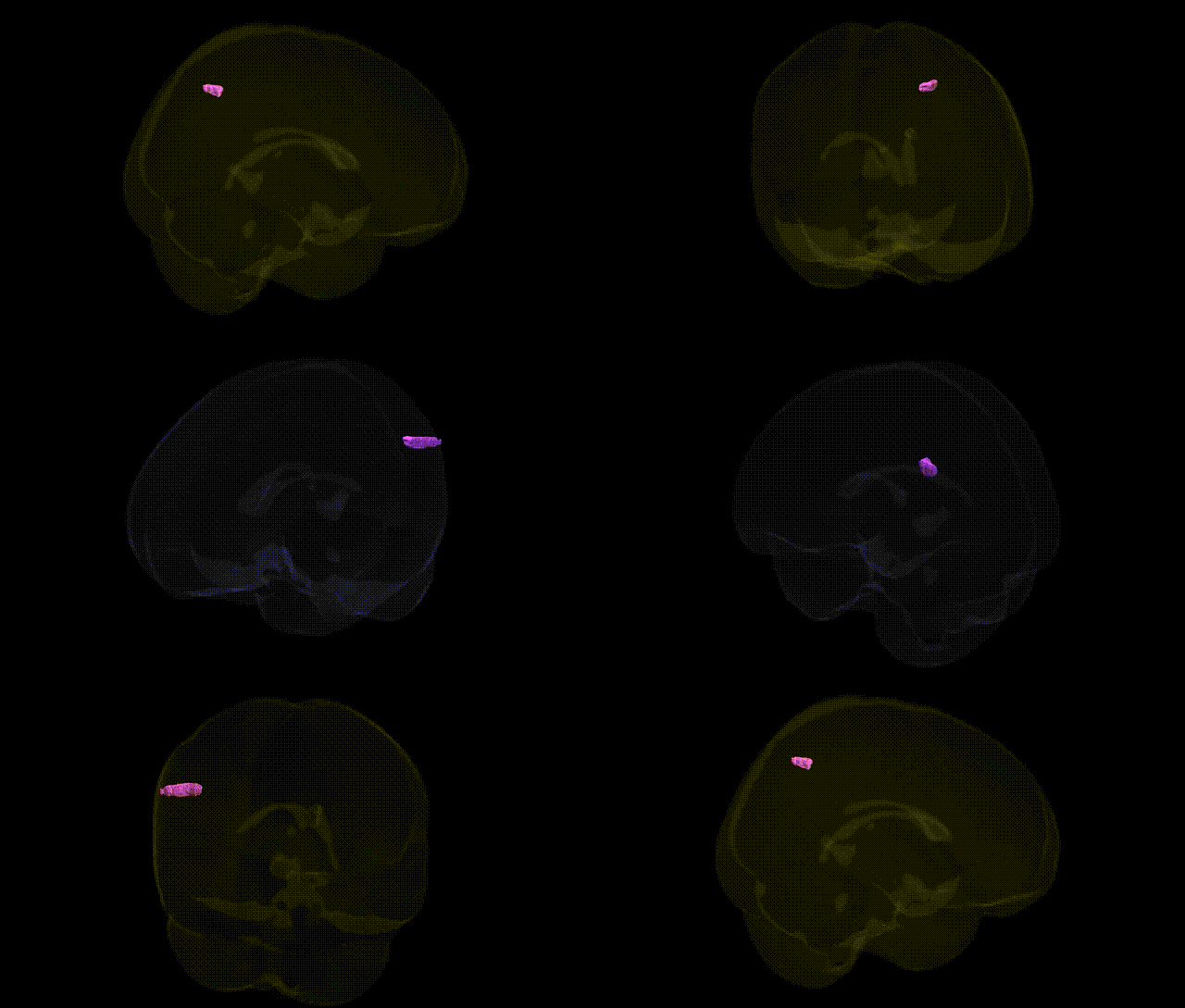
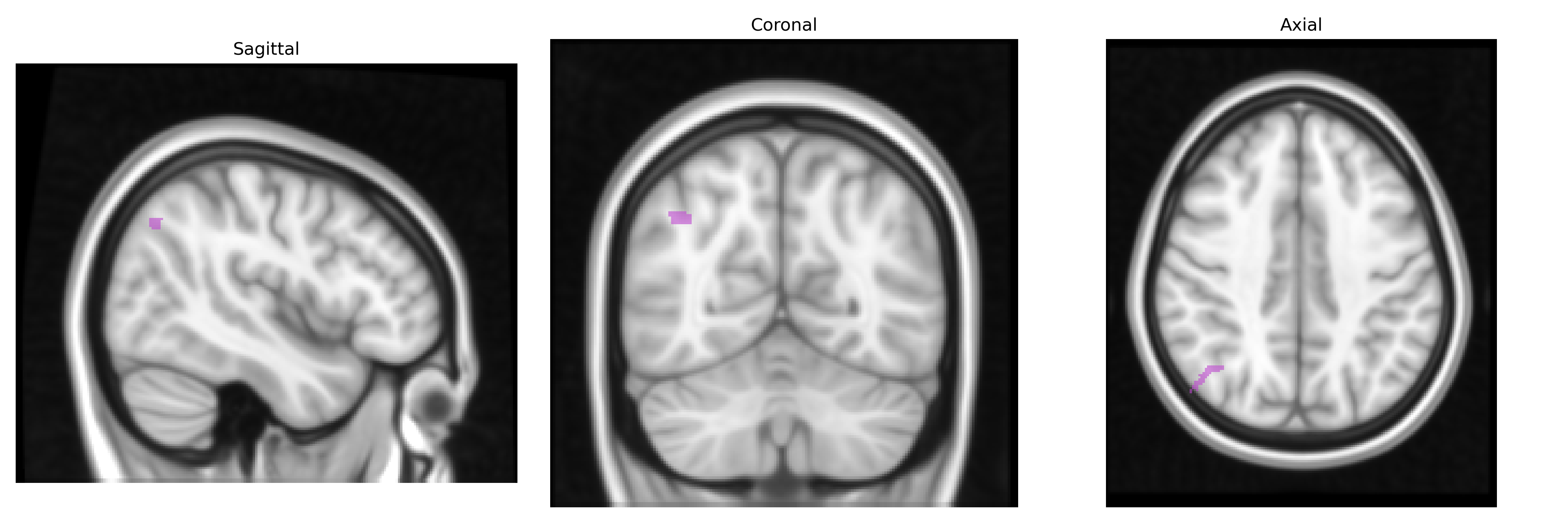
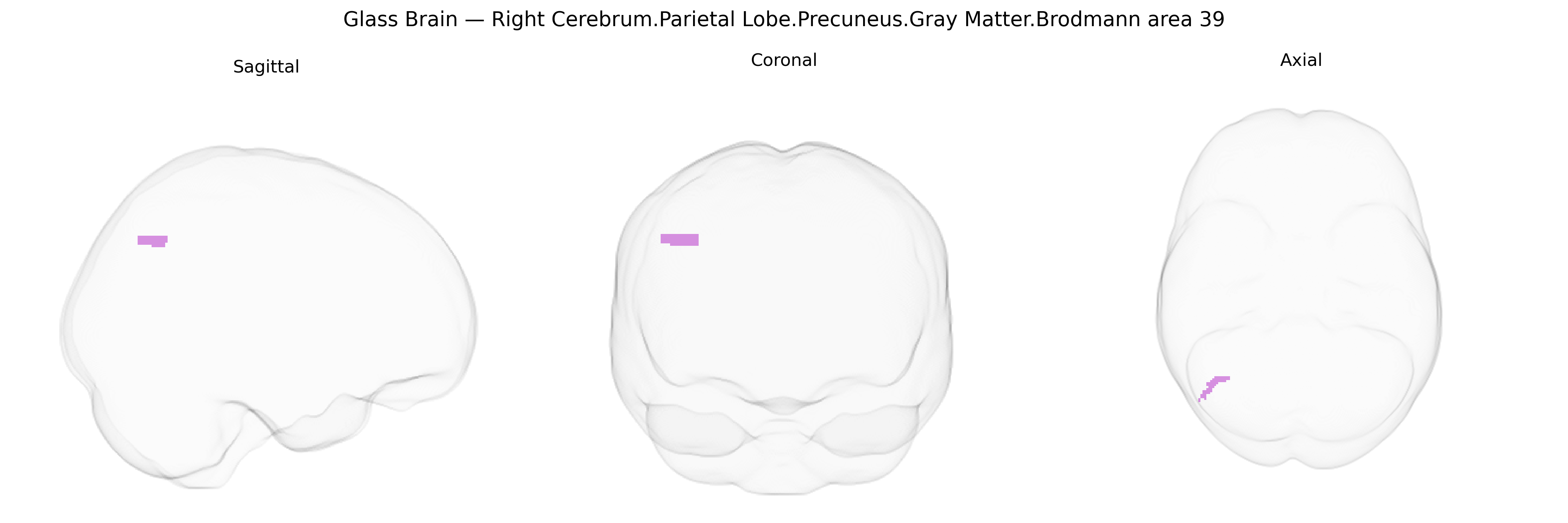
The bilateral Right Cerebrum.Parietal Lobe.Precuneus.Gray Matter.Brodmann area 39 corresponds primarily to the angular gyrus region within the inferior parietal lobule, located near the junction of the parietal, temporal, and occipital lobes. This heteromodal association cortex is implicated in complex language functions (including reading and semantic processing), number processing, spatial cognition, memory retrieval, theory of mind, and aspects of self-referential and default-mode network activity. Cytoarchitectonically, Brodmann area 39 exhibits a well-developed granular layer IV and prominent pyramidal neurons in layers III and V, consistent with its role in integrative multimodal processing and higher-order cognitive operations. There is no direct link for “Brodmann area 39” as a standalone article, but it is encompassed by the Angular gyrus.
The bilateral right precuneus gray matter in Brodmann area 39 (angular gyrus region) has been implicated in multiple genetically influenced traits and disorders through neuroimaging–genetics and GWAS-based mapping studies, although few findings are region-specific at the level of the Talairach 1 mm atlas. Large-scale imaging GWAS (e.g., UK Biobank–based ENIGMA and related consortia) have identified heritable variation in parietal and precuneus cortical thickness and surface area linked to loci near genes involved in neurodevelopment and synaptic function (such as MIR137, CENPW, and genes in the Wnt and axon-guidance pathways), with overlapping genetic architecture with general cognitive ability, educational attainment, and intracranial volume. Polygenic risk for Alzheimer’s disease and other dementias shows associations with parietal and precuneus atrophy and hypometabolism, consistent with APOE and other AD risk loci influencing structural and functional integrity in this region. Schizophrenia, autism spectrum disorder, and major depression polygenic risk scores have been linked to altered parietal and default mode network structure and connectivity, including precuneus/BA39 nodes, suggesting shared genetic factors affecting higher-order associative cortex. GWAS for reading ability, dyslexia, and language-related traits have implicated left-dominant angular gyrus/BA39 circuits, but bilateral parietal contributions—including right BA39—are suggested by imaging–genetic correlation patterns. Overall, genetic associations for this region emerge mainly from distributed cortical and network-level studies rather than from single-region GWAS, indicating that right BA39 precuneus gray matter is a convergent hub for polygenic influences on cognition, neurodevelopmental and psychiatric disorders, and neurodegenerative disease risk.
Overview generated by GPT-4o (2026).
Region ID: 989
Hemisphere: bilateral
Atlas: Talairach labels 1mm
Full Quality Version: Download MP4
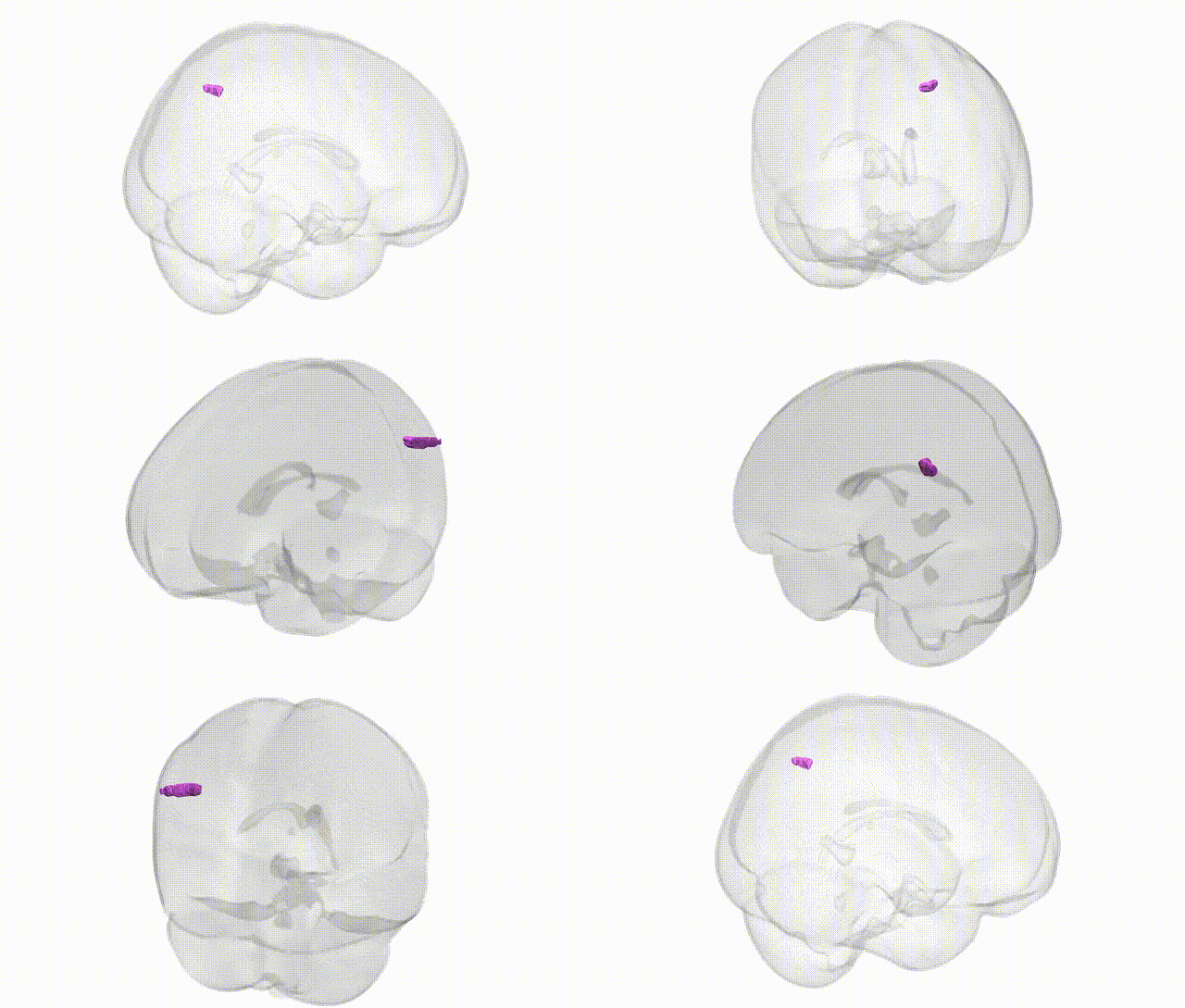
Full Quality Version: Download MP4
Wali Sidiqyar*, Gaurav Rudravaram*, Elyssa M. McMaster, Trent M. Schwartz, Adam M. Saunders, Kurt G. Schilling, Bennett A. Landman "Introducing SPINS: A Shared Public Visualization Library of Neuroanatomical Structures." Medical Imaging with Deep Learning- short paper
This resource is licensed under CC0 1.0 Universal (Public Domain).