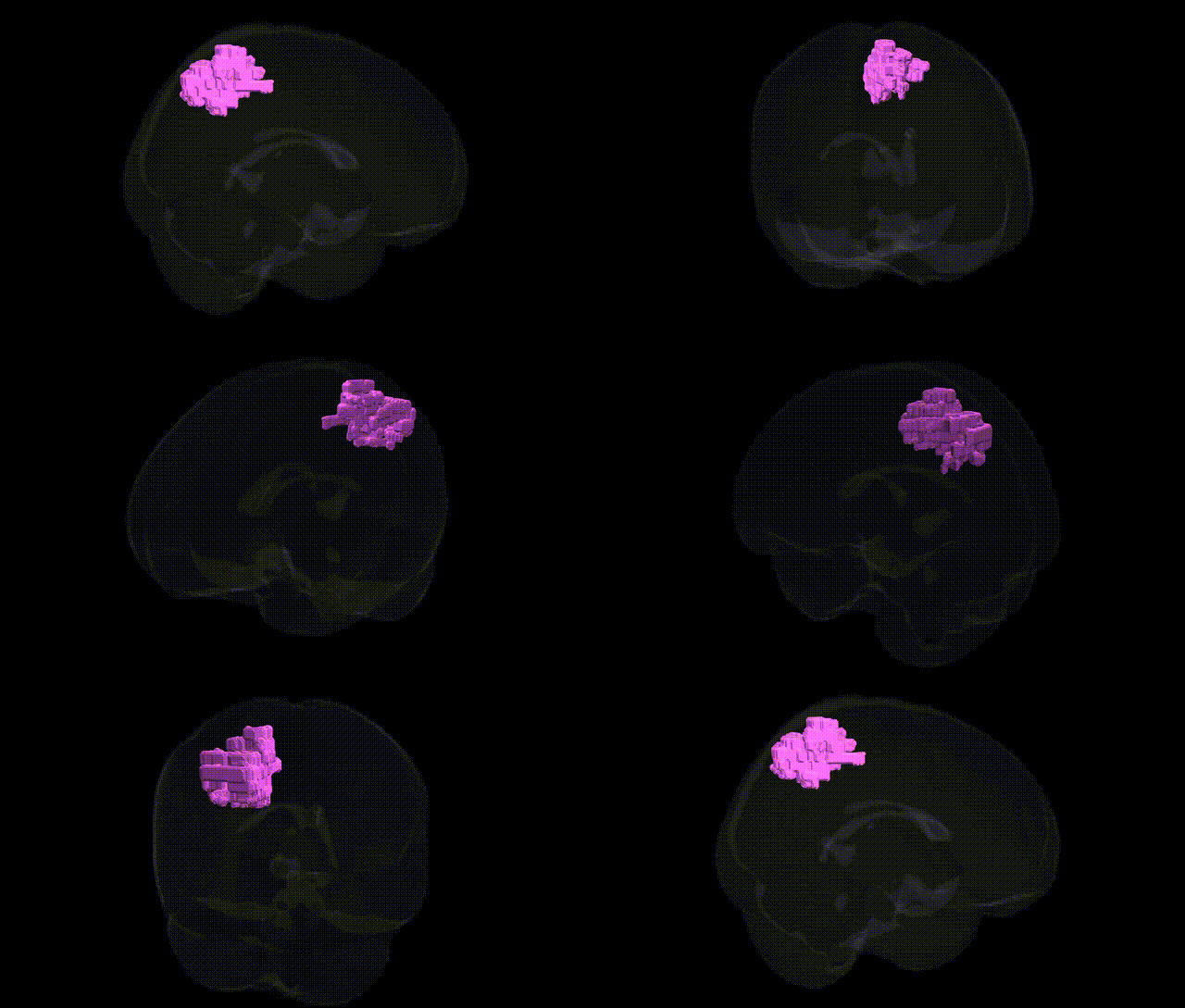
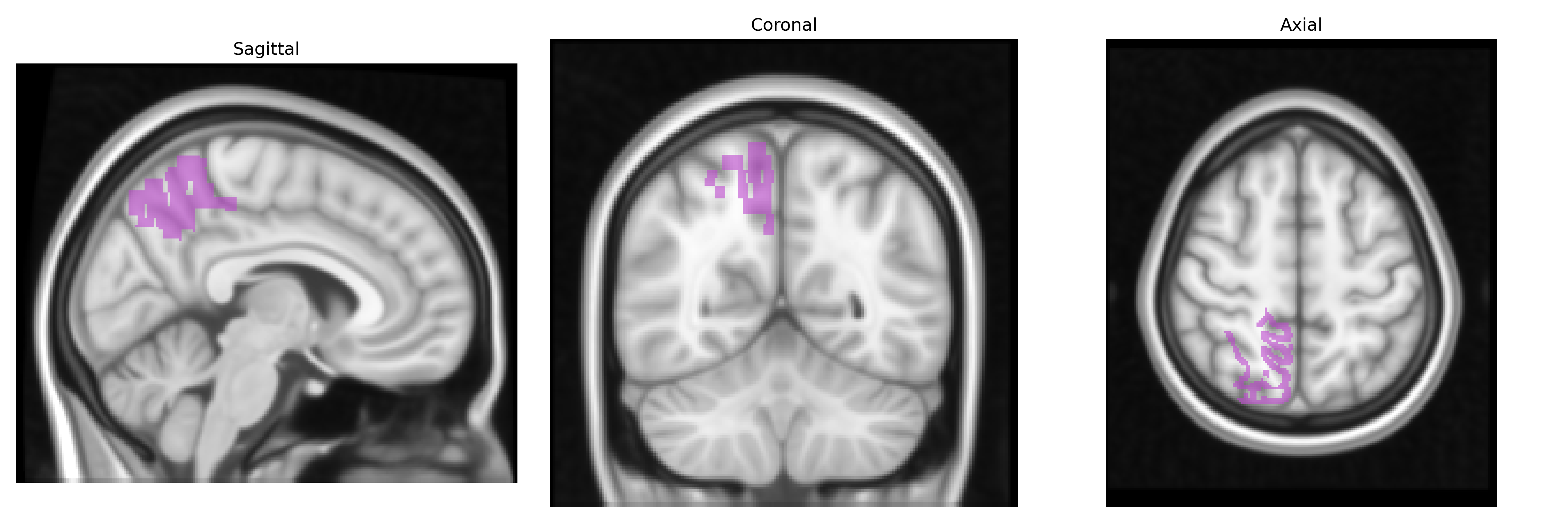
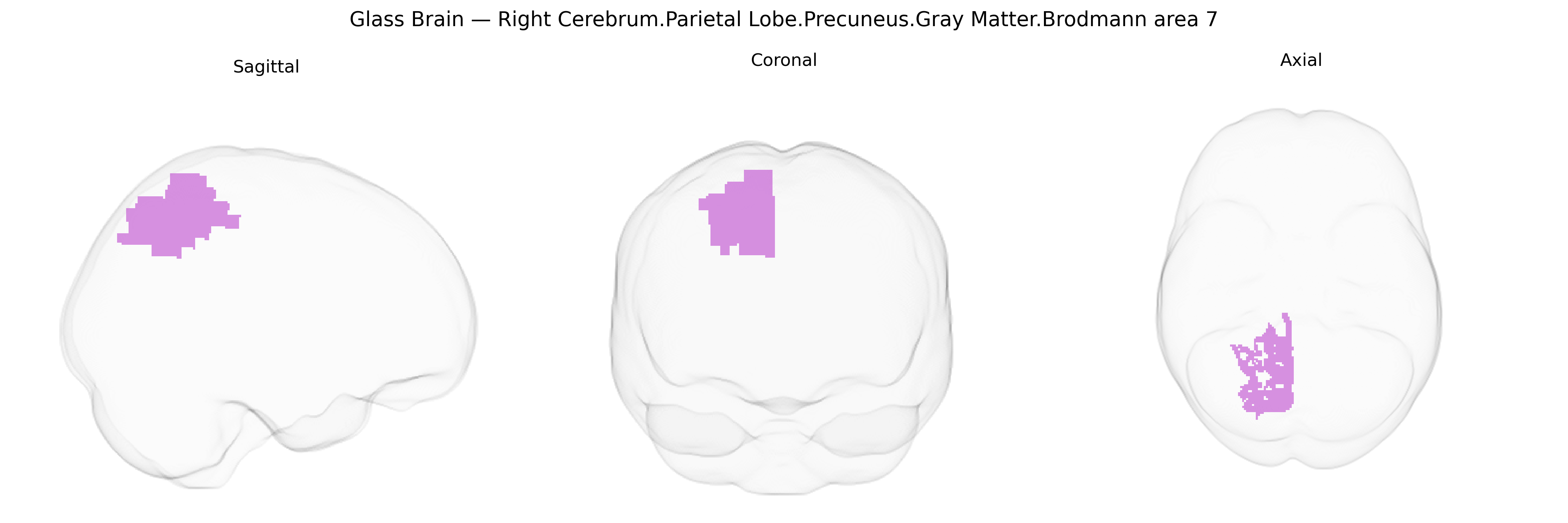
The bilateral Right Cerebrum.Parietal Lobe.Precuneus.Gray Matter.Brodmann area 7 corresponds to a portion of the superior parietal lobule within the precuneus, a medial parietal cortical region involved in higher-order visuospatial integration, sensorimotor coordination, and aspects of attention and imagery. Brodmann area 7 receives convergent input from visual, somatosensory, and motor-related areas, supporting functions such as spatial awareness, visuomotor transformations, and the coordination of eye and limb movements in space. In the precuneus, this area also contributes to more complex cognitive processes, including aspects of self-referential processing, episodic memory retrieval, and integration of internal and external information within large-scale cortical networks such as the default mode network. There is no direct Wikipedia article specifically for “Broddmann area 7 in the precuneus,” but it is encompassed within the broader Precuneus region.
The bilateral precuneus (right cerebrum, parietal lobe, Brodmann area 7) has emerged in genetic and imaging-genetics studies as a key association hub for multiple neuropsychiatric and cognitive traits, although most findings relate to broader networks rather than this atlas-defined parcel alone. GWAS and ENIGMA-based imaging genetics analyses have shown that common variants in genes involved in synaptic function, neurodevelopment, and myelination (e.g., BDNF, APOE, GRIN2B, CNTNAP2, and several MHC-region loci) are associated with precuneus cortical thickness, surface area, and resting-state connectivity, particularly within the default mode network. Structural and functional alterations of the precuneus have been linked, via genetic risk scores or locus-specific findings, to Alzheimer’s disease (APOE ε4 and other AD risk loci influencing amyloid and tau burden), schizophrenia and bipolar disorder (polygenic risk scores and loci in CACNA1C, MIR137, and complement pathway genes associated with default-mode dysconnectivity), autism spectrum conditions (variants in synaptic and cell-adhesion genes such as SHANK3 and NRXN family contributing to atypical parietal connectivity), and major depression and anxiety-related traits (loci regulating stress response and serotonergic signaling impacting DMN activity). Large-scale GWAS of general cognitive ability, educational attainment, and introspective/rumination-related traits indicate that polygenic variants enhancing parietal and precuneus integrity and connectivity are associated with higher cognitive performance and more efficient visuospatial and attentional processing, while risk alleles for dementia, psychosis, and mood disorders often converge on reduced gray matter volume or altered connectivity in this region, underscoring the precuneus as a genetically influenced hub in cognition, self-referential processing, and vulnerability to neuropsychiatric disease.
Overview generated by GPT-4o (2026).
Region ID: 972
Hemisphere: bilateral
Atlas: Talairach labels 1mm
Full Quality Version: Download MP4
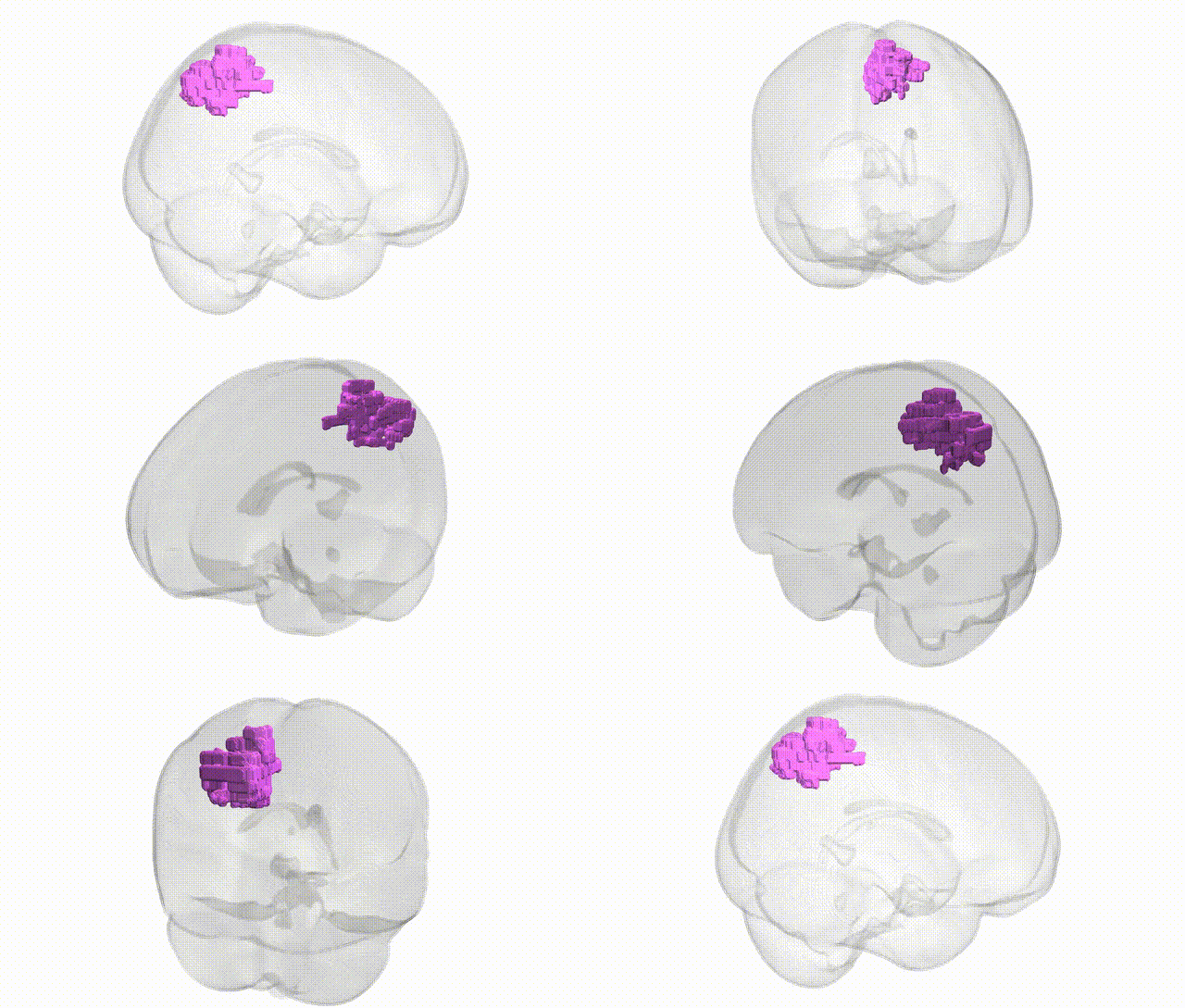
Full Quality Version: Download MP4
Wali Sidiqyar*, Gaurav Rudravaram*, Elyssa M. McMaster, Trent M. Schwartz, Adam M. Saunders, Kurt G. Schilling, Bennett A. Landman "Introducing SPINS: A Shared Public Visualization Library of Neuroanatomical Structures." Medical Imaging with Deep Learning- short paper
This resource is licensed under CC0 1.0 Universal (Public Domain).