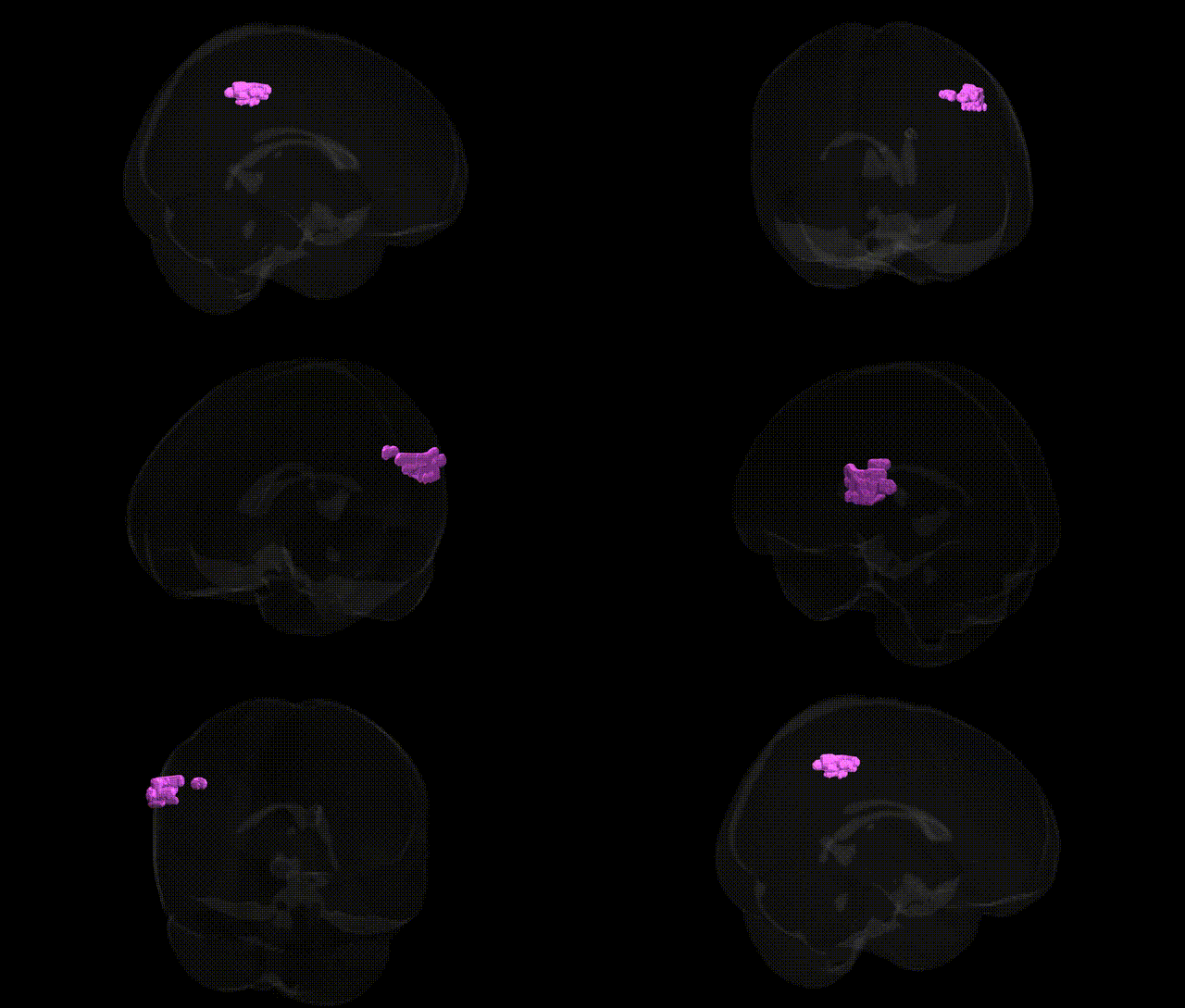
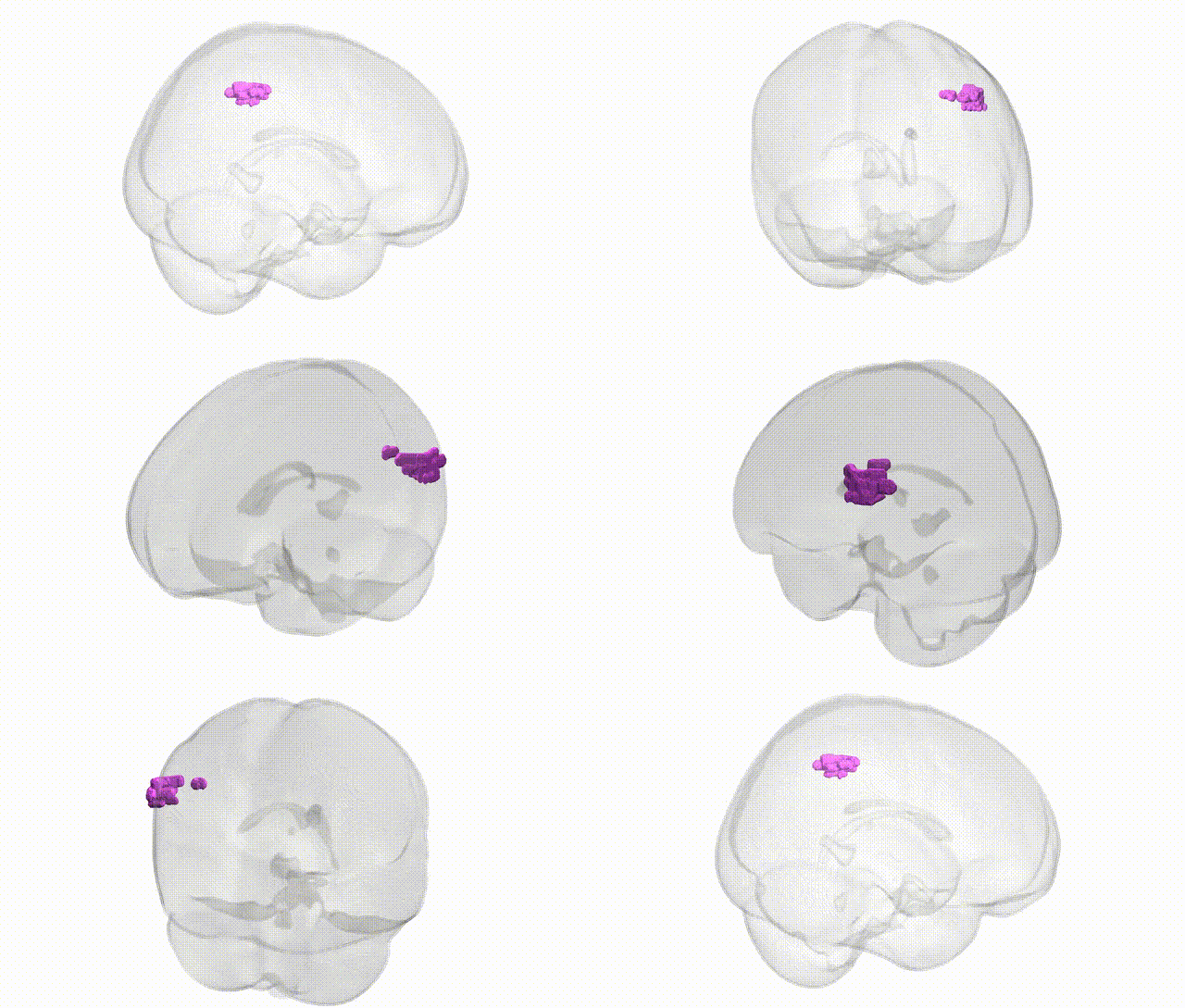
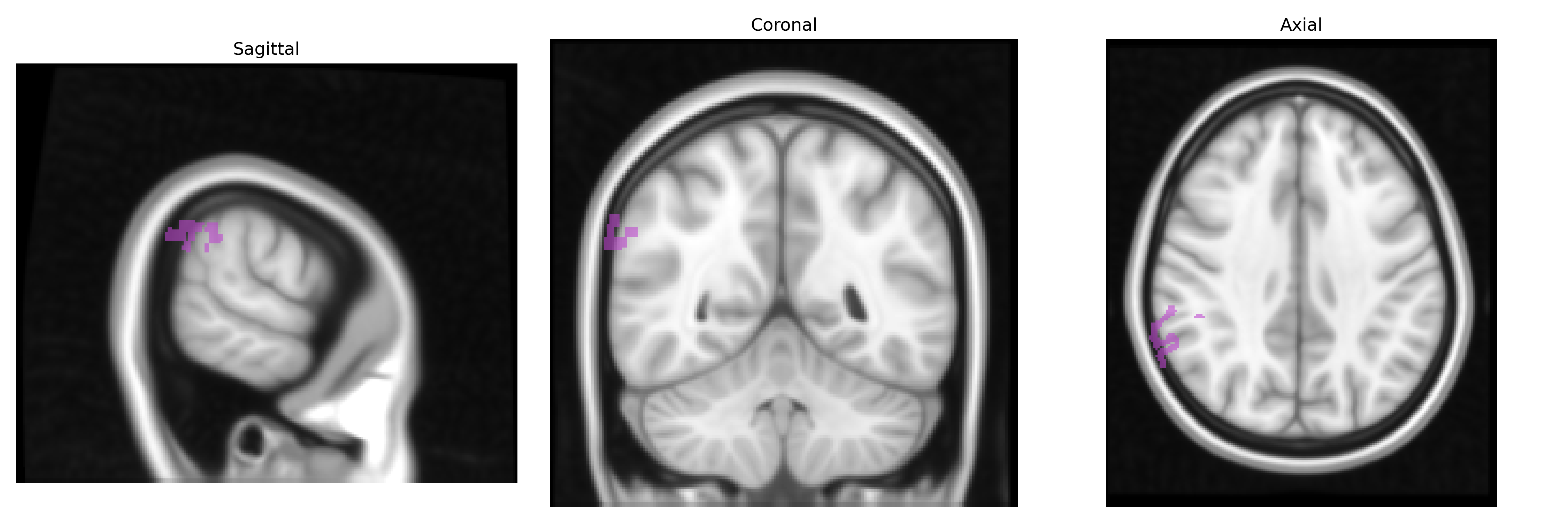
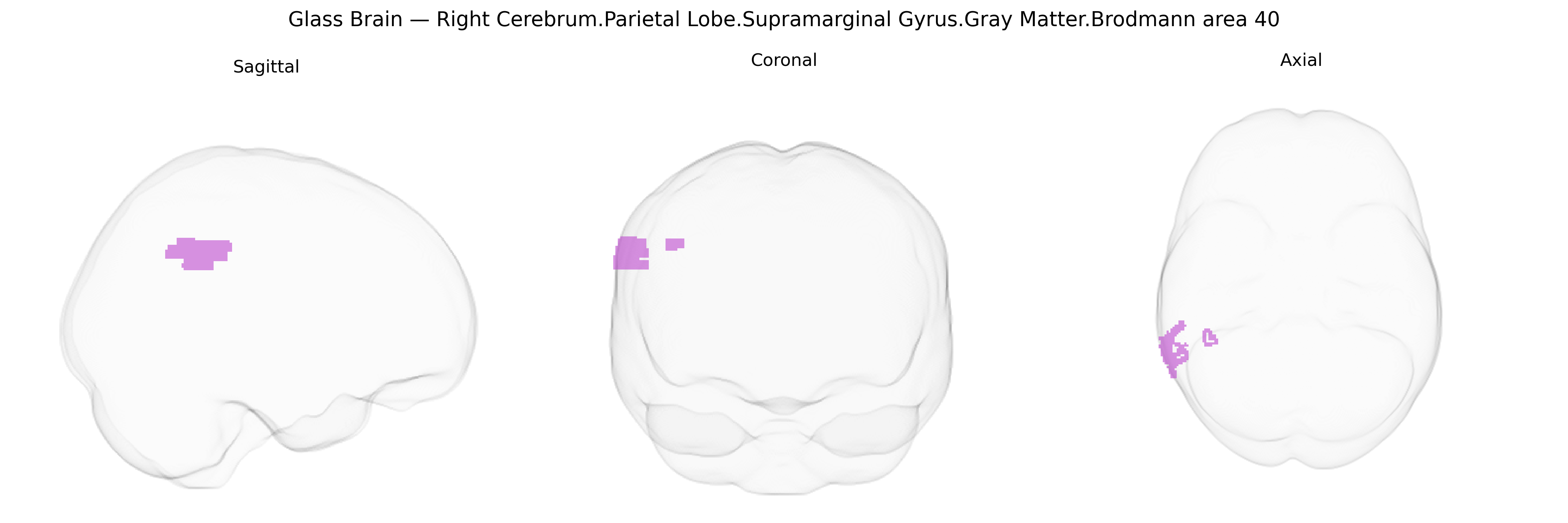
The bilateral Right Cerebrum.Parietal Lobe.Supramarginal Gyrus.Gray Matter.Brodmann area 40 corresponds to a cortical region in the inferior parietal lobule that wraps around the posterior end of the lateral (Sylvian) fissure and is cytoarchitectonically defined as Brodmann area 40. This region is implicated in multimodal integration of auditory, somatosensory, and visual information, and plays a key role in language processing (particularly phonological and articulatory aspects), spatial attention, praxis, and aspects of working memory. Functionally, it contributes to the dorsal language stream and to the integration of sensorimotor information necessary for speech and tool use, with lateralization patterns often favoring the left hemisphere for language and the right for spatial and attentional processes. There is no direct link for “Brodmann area 40” as a standalone article; a related entry describing its anatomical context is Supramarginal gyrus.
The bilateral right supramarginal gyrus (SMG; Brodmann area 40) has been implicated in multiple genetically influenced traits and disorders through imaging-genetics and GWAS-based brain morphology studies, which often report regionally specific associations for cortical thickness, surface area, or gray-matter volume in parietal regions encompassing BA40. Variants in genes involved in neurodevelopment, synaptic function, and axon guidance—such as those in the major histocompatibility complex (MHC) region, BDNF, and pathways including Wnt and glutamatergic signaling—have been associated with structural differences in inferior parietal and supramarginal regions, frequently in large-scale consortia (e.g., ENIGMA) examining cortical metrics. The right SMG has been functionally and structurally linked, via genetically informed studies, to reading and language traits (including developmental dyslexia), phonological processing, and aspects of working memory and attention; several GWAS of educational attainment, cognitive performance, and reading ability report enrichment in networks that prominently include inferior parietal/SMG nodes. In psychiatric and neurodevelopmental disorders, polygenic risk scores for schizophrenia, autism spectrum disorder, ADHD, and major depressive disorder have shown associations with altered structure or connectivity of the supramarginal and adjacent inferior parietal cortex, suggesting that part of the genetic liability for these conditions manifests in this region’s morphology and function, even though single loci are rarely uniquely specific to BA40. Additionally, imaging-genetics work in Alzheimer’s disease, frontotemporal dementia, and other dementias indicates that risk variants, such as APOE ε4 and genes involved in amyloid and tau pathways, are associated with early atrophy or altered connectivity patterns that include the right supramarginal gyrus as part of broader parietal and temporoparietal vulnerability networks.
Overview generated by GPT-4o (2026).
Region ID: 928
Hemisphere: bilateral
Atlas: Talairach labels 1mm
Full Quality Version: Download MP4
Full Quality Version: Download MP4
Wali Sidiqyar*, Gaurav Rudravaram*, Elyssa M. McMaster, Trent M. Schwartz, Adam M. Saunders, Kurt G. Schilling, Bennett A. Landman "Introducing SPINS: A Shared Public Visualization Library of Neuroanatomical Structures." Medical Imaging with Deep Learning- short paper
This resource is licensed under CC0 1.0 Universal (Public Domain).