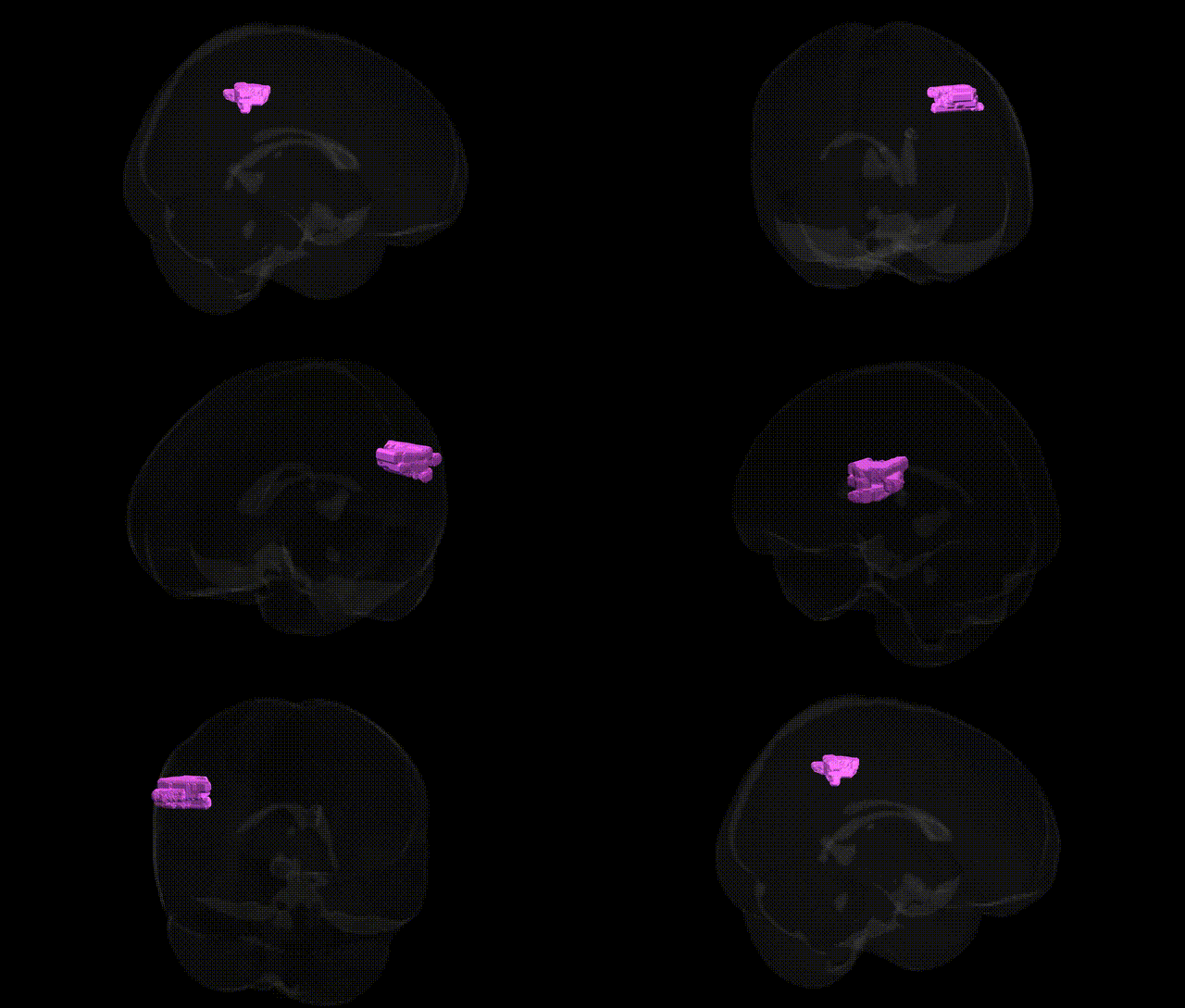
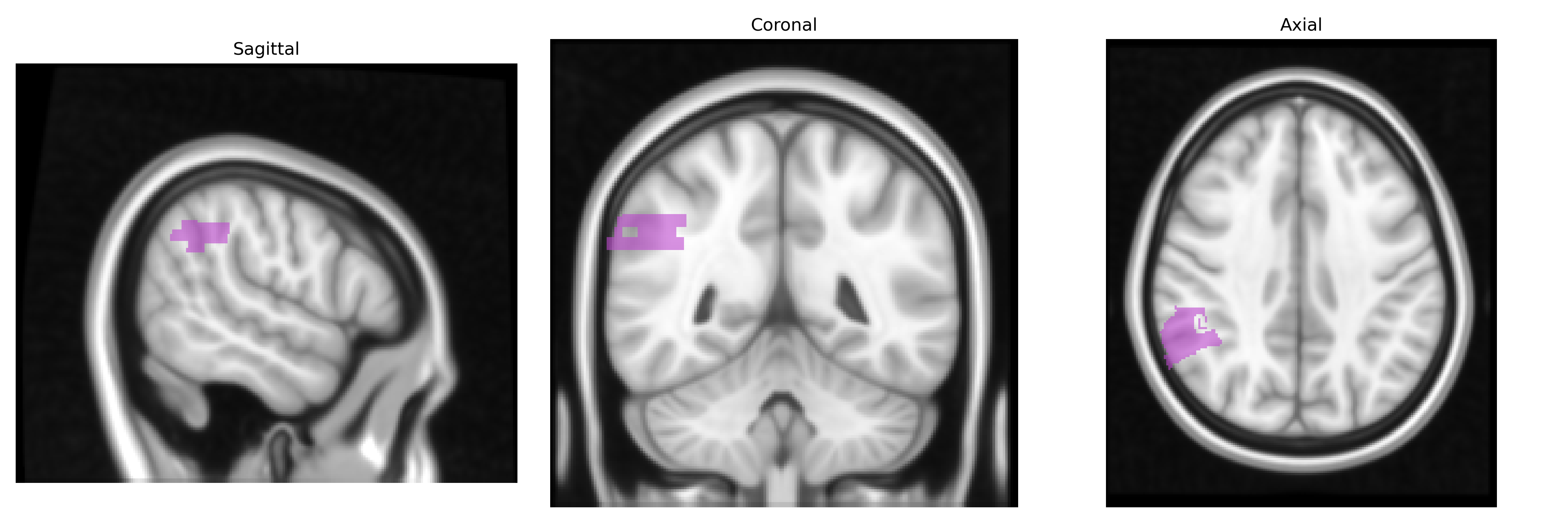
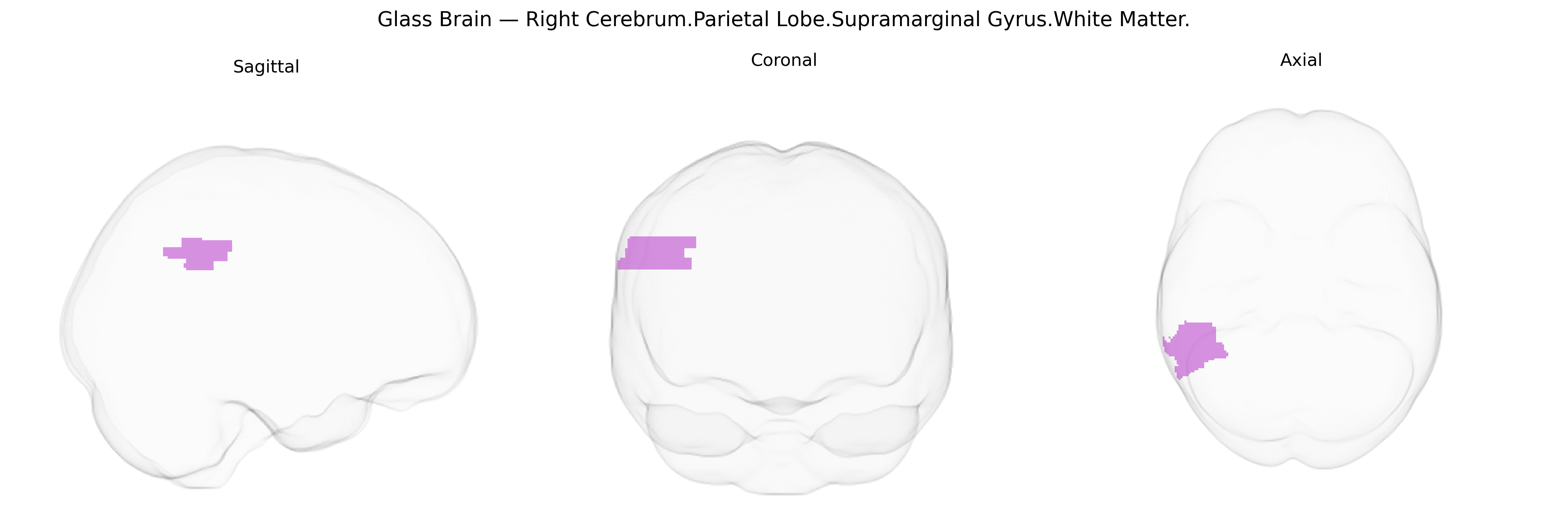
The bilateral Right Cerebrum.Parietal Lobe.Supramarginal Gyrus.White Matter corresponds to the subcortical fiber pathways underlying the supramarginal gyrus of the inferior parietal lobule in the right cerebral hemisphere. This white matter region contains association fibers interconnecting parietal language- and multimodal-integration areas with frontal, temporal, and other parietal cortices, supporting functions such as phonological processing, sensorimotor integration for speech, spatial attention, and praxis. It lies deep to the cortical ribbon of the supramarginal gyrus, bordering adjacent white matter of the angular gyrus and superior parietal lobule, and participates in major tracts such as components of the superior longitudinal fasciculus and arcuate fasciculus. There is no direct link for this exact white-matter subdivision; see the related cortical structure Supramarginal gyrus.
The bilateral right supramarginal gyrus white matter has been implicated in multiple genetic and GWAS findings through its roles in language, visuospatial integration, and social cognition, though most associations derive from broader parietal or temporoparietal regions rather than this microanatomical label specifically. Large-scale imaging–genetics consortia (e.g., ENIGMA, UK Biobank) have reported heritable variation in supramarginal gyrus volume and white-matter microstructure (e.g., fractional anisotropy) associated with common variants in genes involved in neurodevelopment, axon guidance, and myelination, such as NRG1/NRG3, CNTNAP2, BDNF, and cell-adhesion or synaptic genes, though individual locus effects are typically small and not limited to this gyrus. Polygenic risk for schizophrenia, autism spectrum disorder, ADHD, and major depressive disorder has been linked to altered structure or connectivity in the right supramarginal and adjacent inferior parietal regions, consistent with its role in language, attention, and social/affective processing; similarly, risk alleles for dyslexia and language impairment (e.g., in DCDC2, KIAA0319) have been associated with structural and functional differences in temporoparietal areas that include the supramarginal gyrus. GWAS of cognitive performance, educational attainment, and general intelligence also show enrichment of associations in genes expressed in association cortex, including parietal white matter, aligning with observed correlations between polygenic cognitive scores and supramarginal gyrus morphology. Overall, current evidence supports a genetically influenced contribution of right supramarginal white matter to neurodevelopmental and psychiatric phenotypes, but no single gene or variant is uniquely or specifically tied to the “Right Cerebrum.Parietal Lobe.Supramarginal Gyrus.White Matter” region as defined in the Talairach 1 mm atlas, and most findings reflect distributed, polygenic effects on parietal–temporal association networks.
Overview generated by GPT-4o (2026).
Region ID: 930
Hemisphere: bilateral
Atlas: Talairach labels 1mm
Full Quality Version: Download MP4
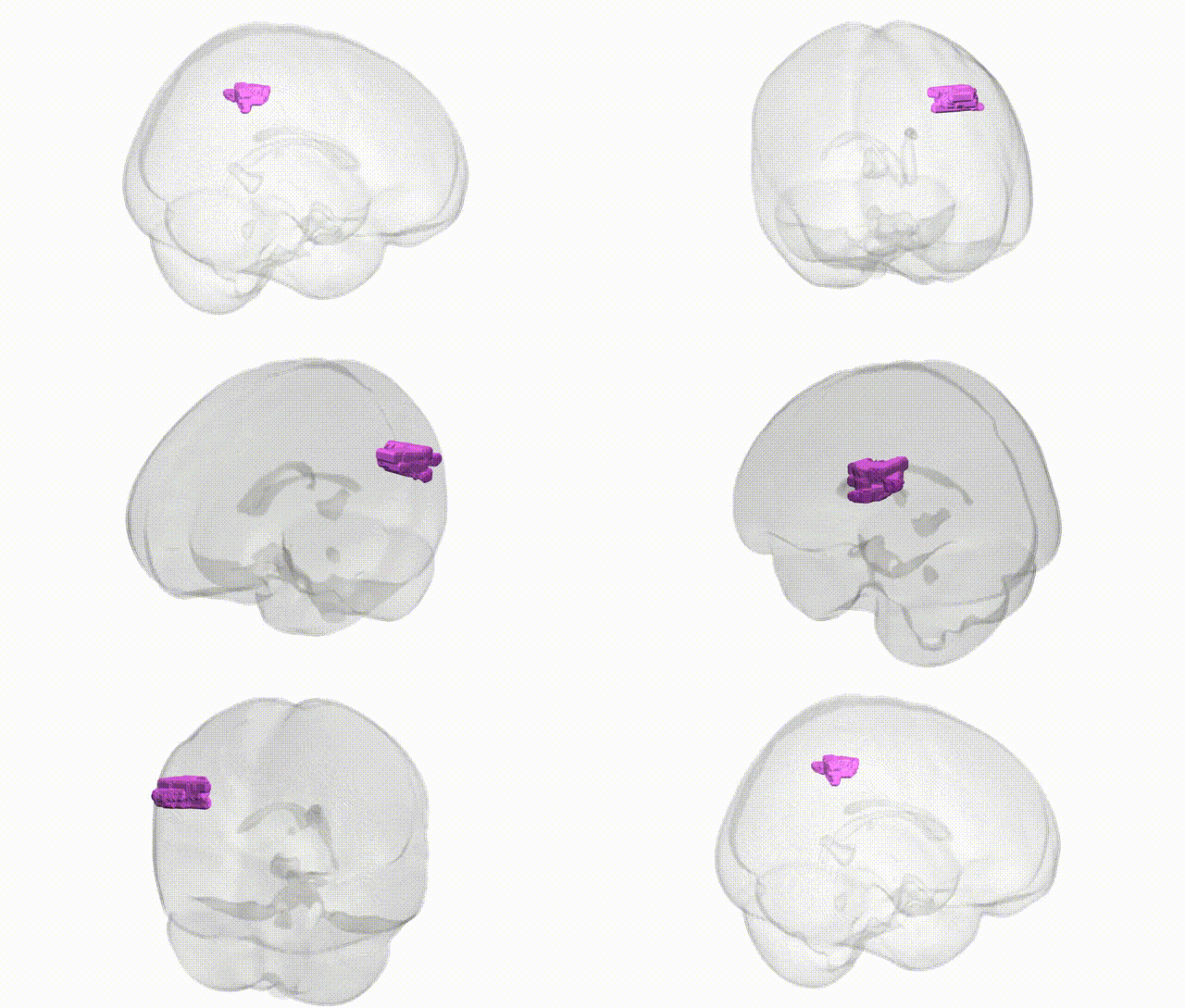
Full Quality Version: Download MP4
Wali Sidiqyar*, Gaurav Rudravaram*, Elyssa M. McMaster, Trent M. Schwartz, Adam M. Saunders, Kurt G. Schilling, Bennett A. Landman "Introducing SPINS: A Shared Public Visualization Library of Neuroanatomical Structures." Medical Imaging with Deep Learning- short paper
This resource is licensed under CC0 1.0 Universal (Public Domain).