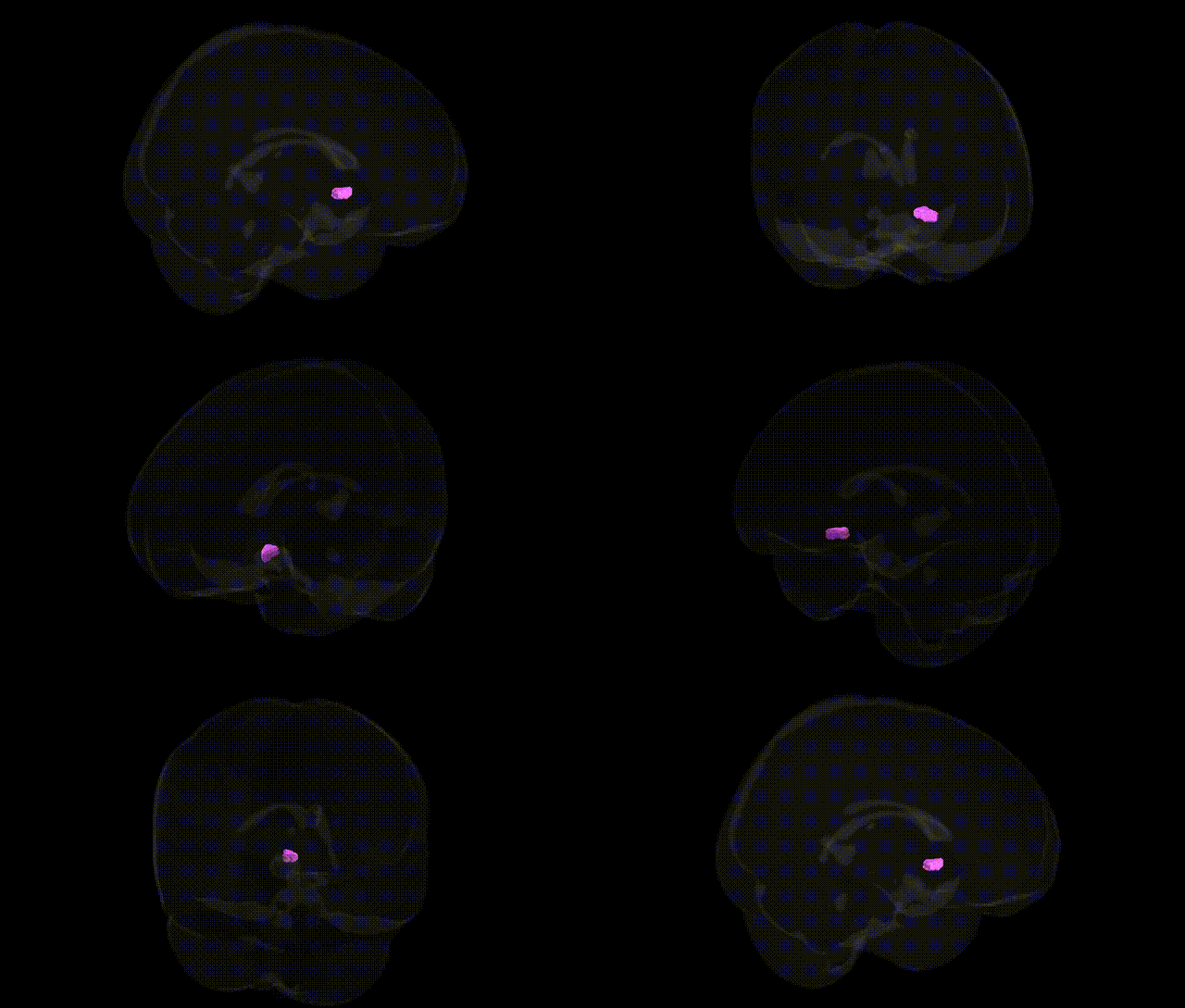
The bilateral Right Cerebrum.Sub-lobar.Gray Matter, as defined in the Talairach 1 mm atlas, refers to gray-matter structures located beneath the cerebral cortex within the right cerebral hemisphere, including key deep nuclei and associated regions such as the basal ganglia (e.g., putamen, globus pallidus), parts of the internal capsule-adjacent gray matter, and related subcortical components embedded in the white matter. These sub-lobar gray-matter regions are critical for integrating cortical input with motor, cognitive, and limbic processing, contributing to movement regulation, habit formation, reward processing, and aspects of executive function and emotion. In the Talairach framework, “sub-lobar” emphasizes their position between the overlying cortical (lobar) areas and deeper diencephalic structures, serving as major relay and modulation hubs within large-scale cortico-subcortical networks. There is no direct Wikipedia article for this composite Talairach label; a closely related structure is the Basal ganglia.
The Talairach 1 mm “Right Cerebrum.Sub-lobar.Gray Matter” label broadly encompasses deep gray-matter structures such as the insula, claustrum, and adjacent subcortical regions, which are not typically analyzed as a single unit in modern imaging–genetics work; however, GWAS and large-scale neuroimaging consortia (e.g., ENIGMA, UK Biobank) have repeatedly implicated genes influencing gray-matter volume and cortical thickness in nearby insular and subcortical territories. Common variants in genes involved in neurodevelopment and synaptic function (for example, BDNF, COMT, and genes related to glutamatergic and GABAergic signaling) have been associated with insular and subcortical gray-matter differences that overlap this sub-lobar zone, and polygenic risk scores for schizophrenia, major depressive disorder, bipolar disorder, and autism spectrum disorder show robust associations with reduced gray-matter volume or altered morphology in insula- and basal-ganglia–adjacent regions. Additionally, GWAS of cognitive performance, pain sensitivity, risk-taking, smoking and alcohol use, and body mass index have linked specific loci (including variants near DRD2, FTO, and other metabolic and dopaminergic genes) to structural metrics in insular and neighboring sub-lobar gray matter, suggesting that genetic influences on reward processing, interoception, and emotional regulation are partly mediated through this territory, even though the Talairach “Right Cerebrum.Sub-lobar.Gray Matter” label itself is coarser than current parcellation schemes used in most contemporary genetic studies.
Overview generated by GPT-4o (2026).
Region ID: 386
Hemisphere: bilateral
Atlas: Talairach labels 1mm
Full Quality Version: Download MP4
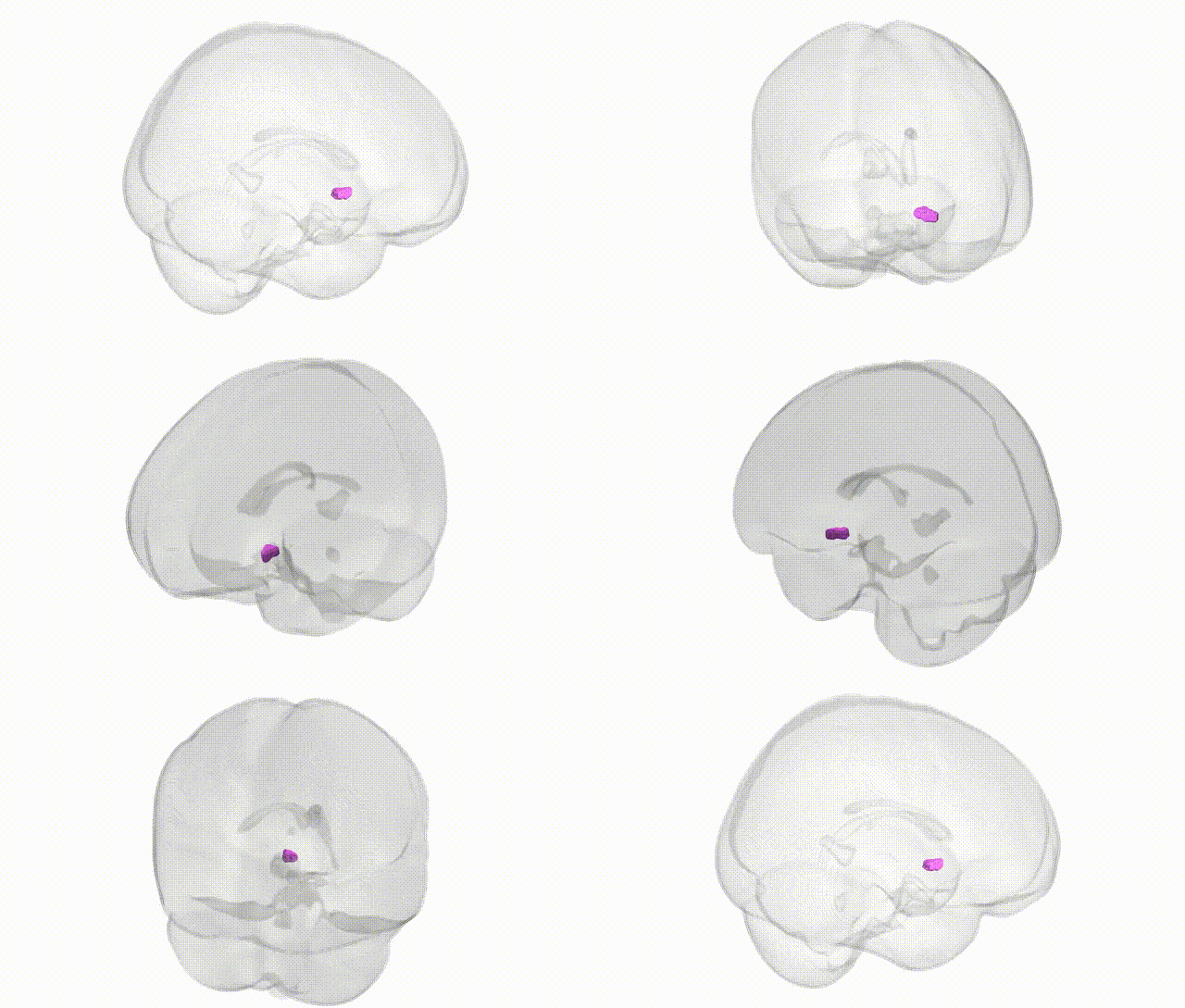
Full Quality Version: Download MP4
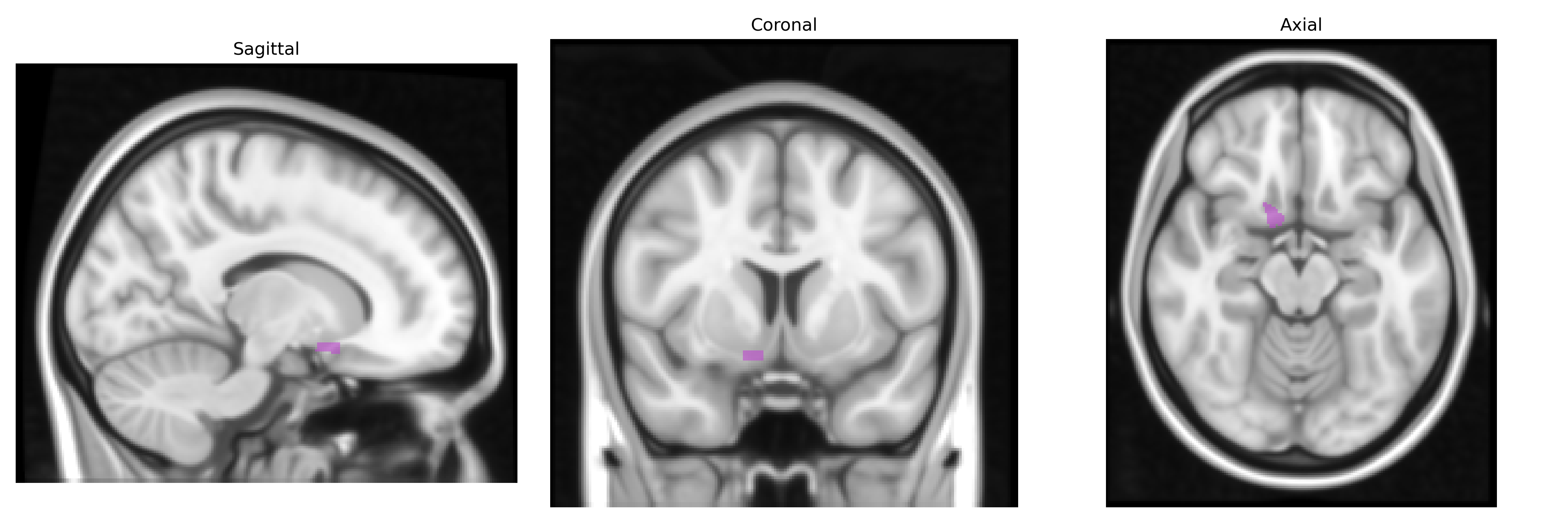
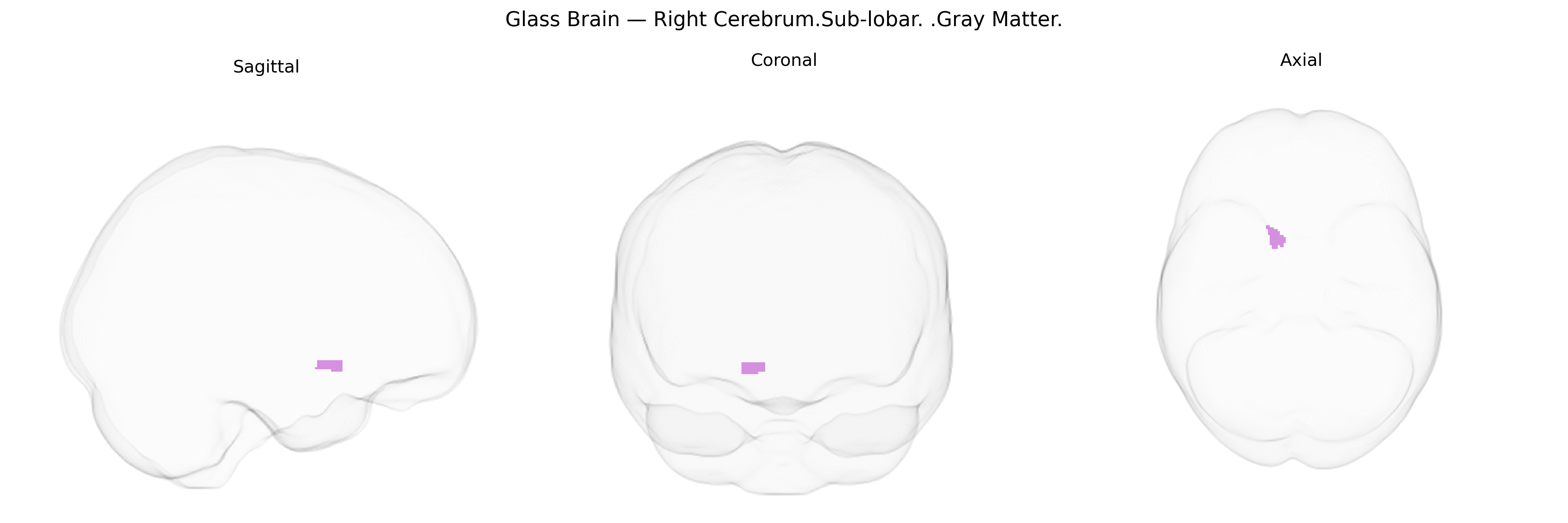
Wali Sidiqyar*, Gaurav Rudravaram*, Elyssa M. McMaster, Trent M. Schwartz, Adam M. Saunders, Kurt G. Schilling, Bennett A. Landman "Introducing SPINS: A Shared Public Visualization Library of Neuroanatomical Structures." Medical Imaging with Deep Learning- short paper
This resource is licensed under CC0 1.0 Universal (Public Domain).