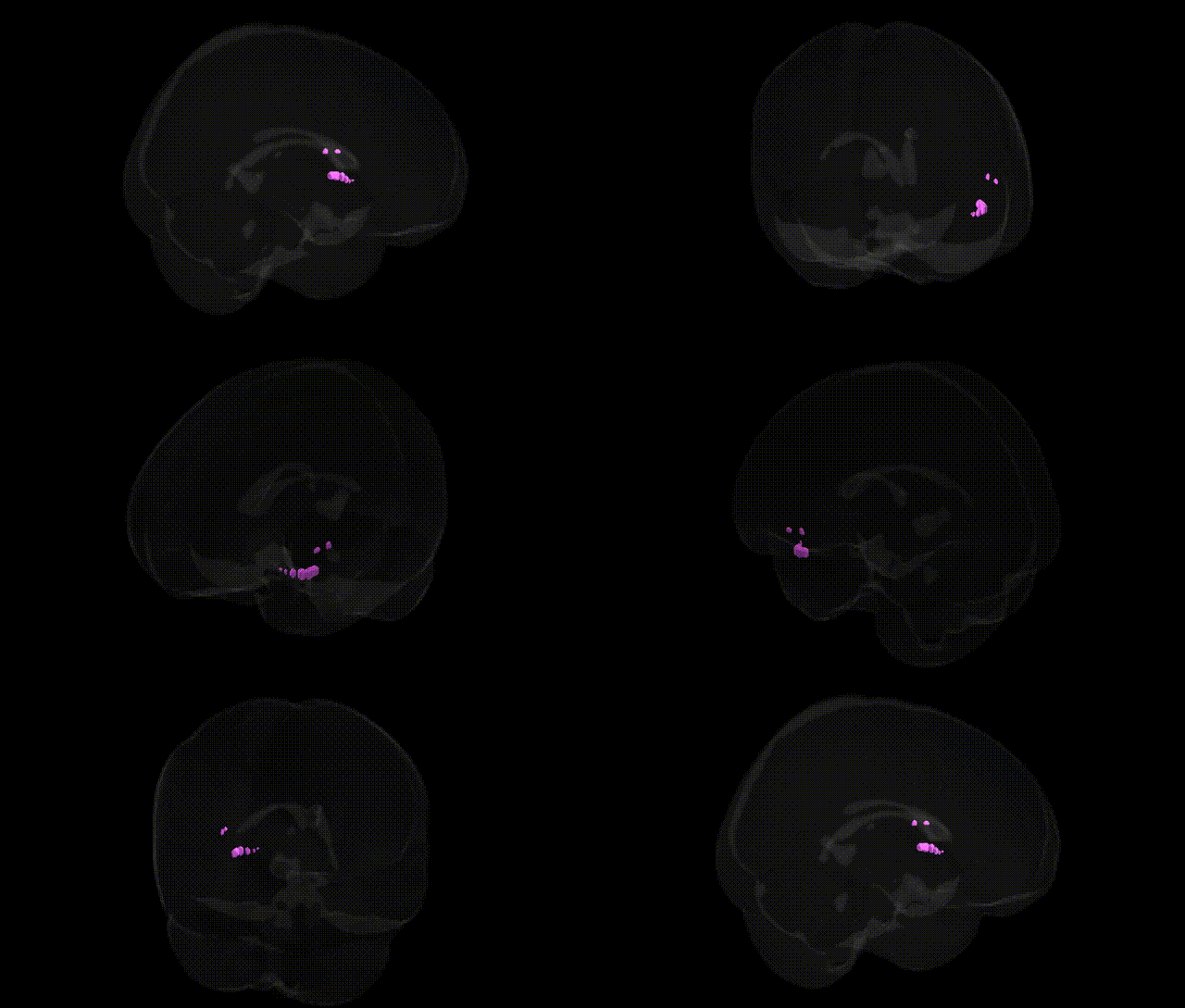
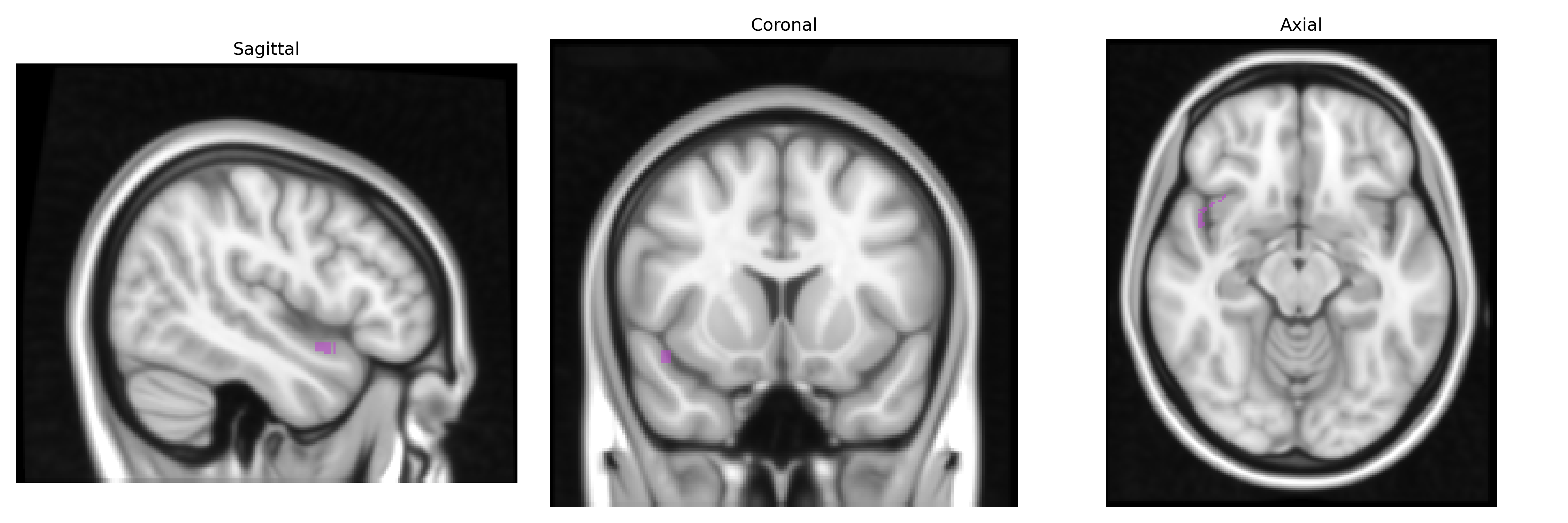
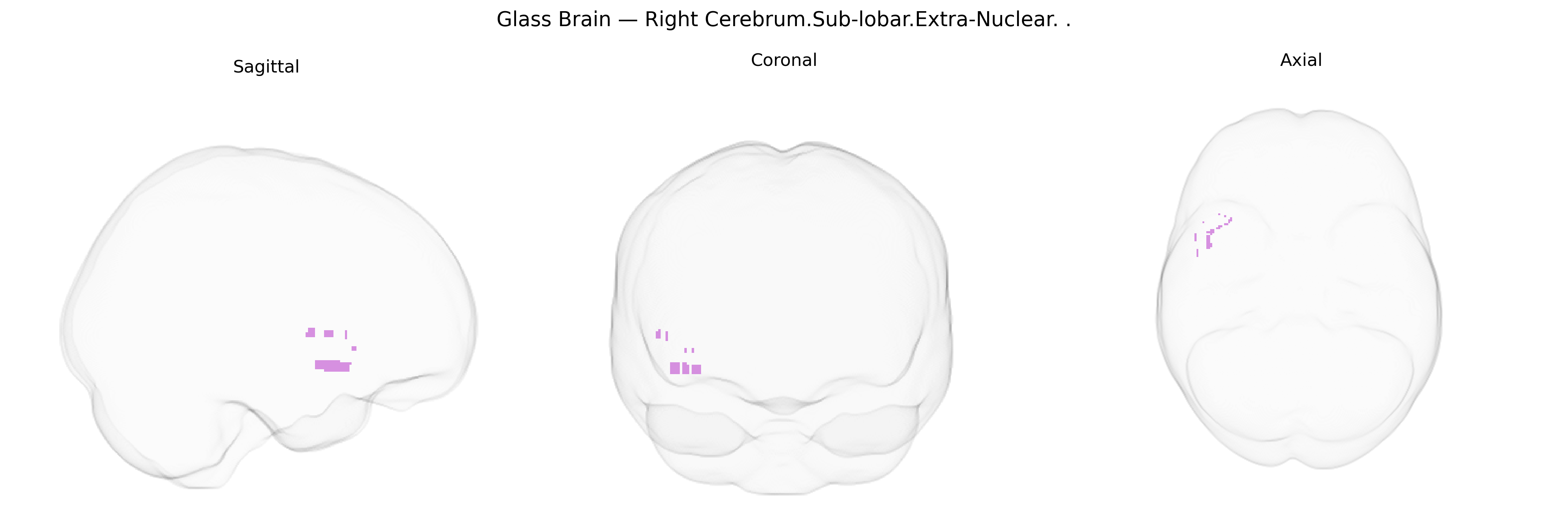
The bilateral Right Cerebrum.Sub-lobar.Extra-Nuclear region in the Talairach 1 mm atlas refers to subcortical white and gray matter areas lying beneath the cerebral cortex but outside the major, clearly delineated nuclear masses such as the basal ganglia and thalamus. This “extra-nuclear” territory typically includes periventricular and deep subcortical zones containing fiber pathways (e.g., internal capsule components), smaller or less distinct nuclei, and transitional regions between cortical and classic nuclear structures. Functionally, it participates in large-scale cortico-subcortical networks underlying motor control, sensory integration, and higher-order cognitive processes, by serving as a conduit and integrative substrate for information flow between cortical areas and major subcortical nuclei. There is no direct Wikipedia article for this specific Talairach label; a closely related structure and context is the Cerebrum.
The bilateral Right Cerebrum.Sub-lobar.Extra-Nuclear region in the Talairach 1 mm atlas primarily corresponds to deep subcortical white matter and adjacent nuclei (including parts of the internal capsule, claustrum, and periventricular white matter), for which direct, region-specific genetic associations are not well characterized; instead, evidence comes mostly from imaging genetics and GWAS of related subcortical and white-matter traits. Large-scale MRI–GWAS consortia (e.g., ENIGMA, UK Biobank) have identified numerous loci affecting global and regional white-matter microstructure—particularly fractional anisotropy and mean diffusivity in internal capsule and periventricular tracts—implicating genes involved in myelination (e.g., MAG, MBP), axonal guidance and cytoskeleton (e.g., ROBO1/2, CNTN4, NCAM1), and oligodendrocyte function. Variants in these and related pathways contribute to susceptibility for disorders with prominent deep white-matter and extra-nuclear involvement, including multiple sclerosis, leukodystrophies, small-vessel cerebrovascular disease, schizophrenia, bipolar disorder, and major depression, where polygenic risk scores correlate with alterations in sublobar and periventricular white matter. In addition, GWAS of cognitive performance, educational attainment, and general brain structural measures have identified pleiotropic loci (e.g., near MAPT, FOXO3, CRHR1, and other neurodevelopmental and neurodegeneration-related genes) associated with global white-matter volume and integrity, which likely extend to the extra-nuclear sublobar regions, although explicit, Talairach-defined bilateral Right Cerebrum.Sub-lobar.Extra-Nuclear–specific genetic findings remain sparse and largely inferential.
Overview generated by GPT-4o (2026).
Region ID: 383
Hemisphere: bilateral
Atlas: Talairach labels 1mm
Full Quality Version: Download MP4
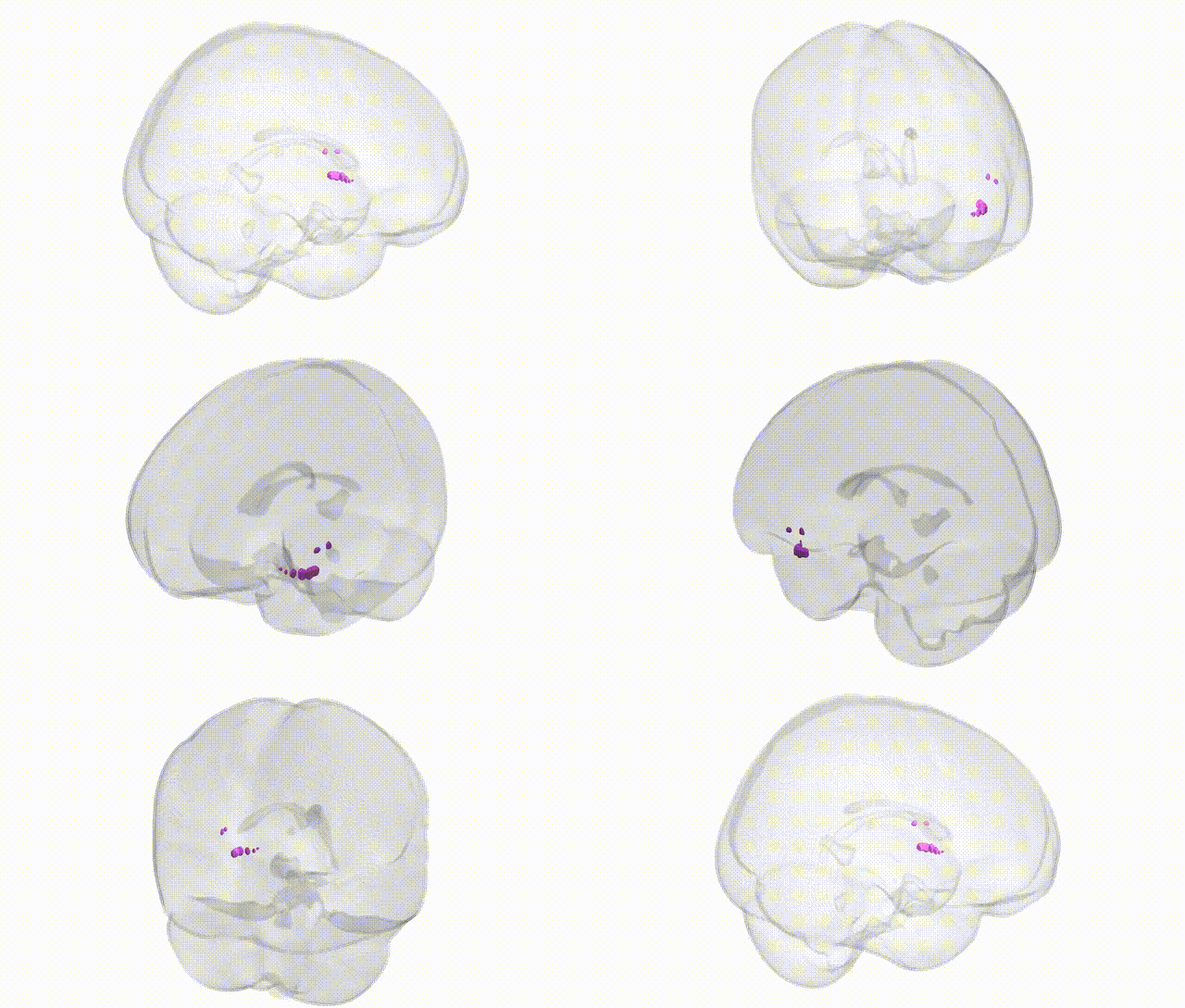
Full Quality Version: Download MP4
Wali Sidiqyar*, Gaurav Rudravaram*, Elyssa M. McMaster, Trent M. Schwartz, Adam M. Saunders, Kurt G. Schilling, Bennett A. Landman "Introducing SPINS: A Shared Public Visualization Library of Neuroanatomical Structures." Medical Imaging with Deep Learning- short paper
This resource is licensed under CC0 1.0 Universal (Public Domain).