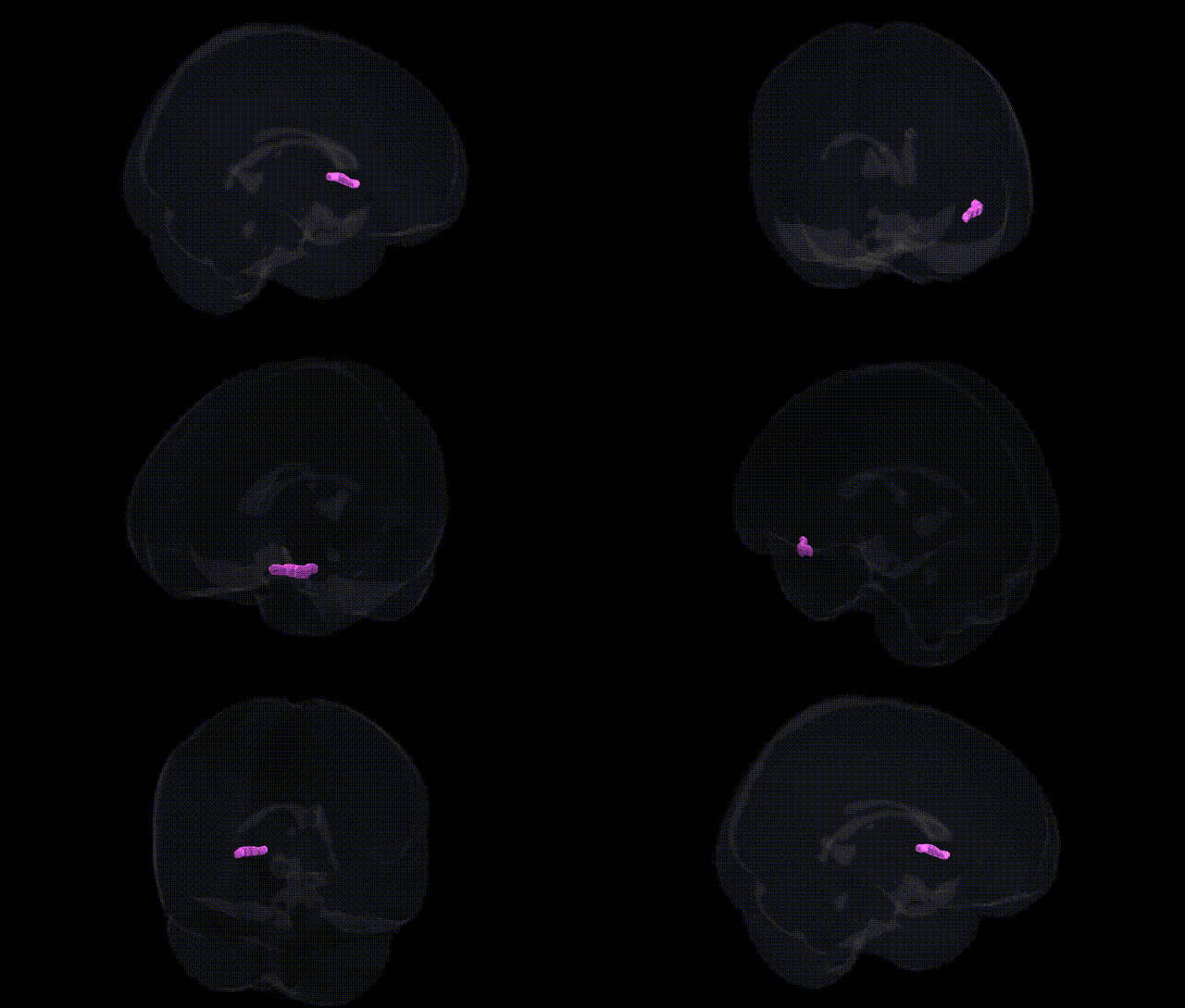
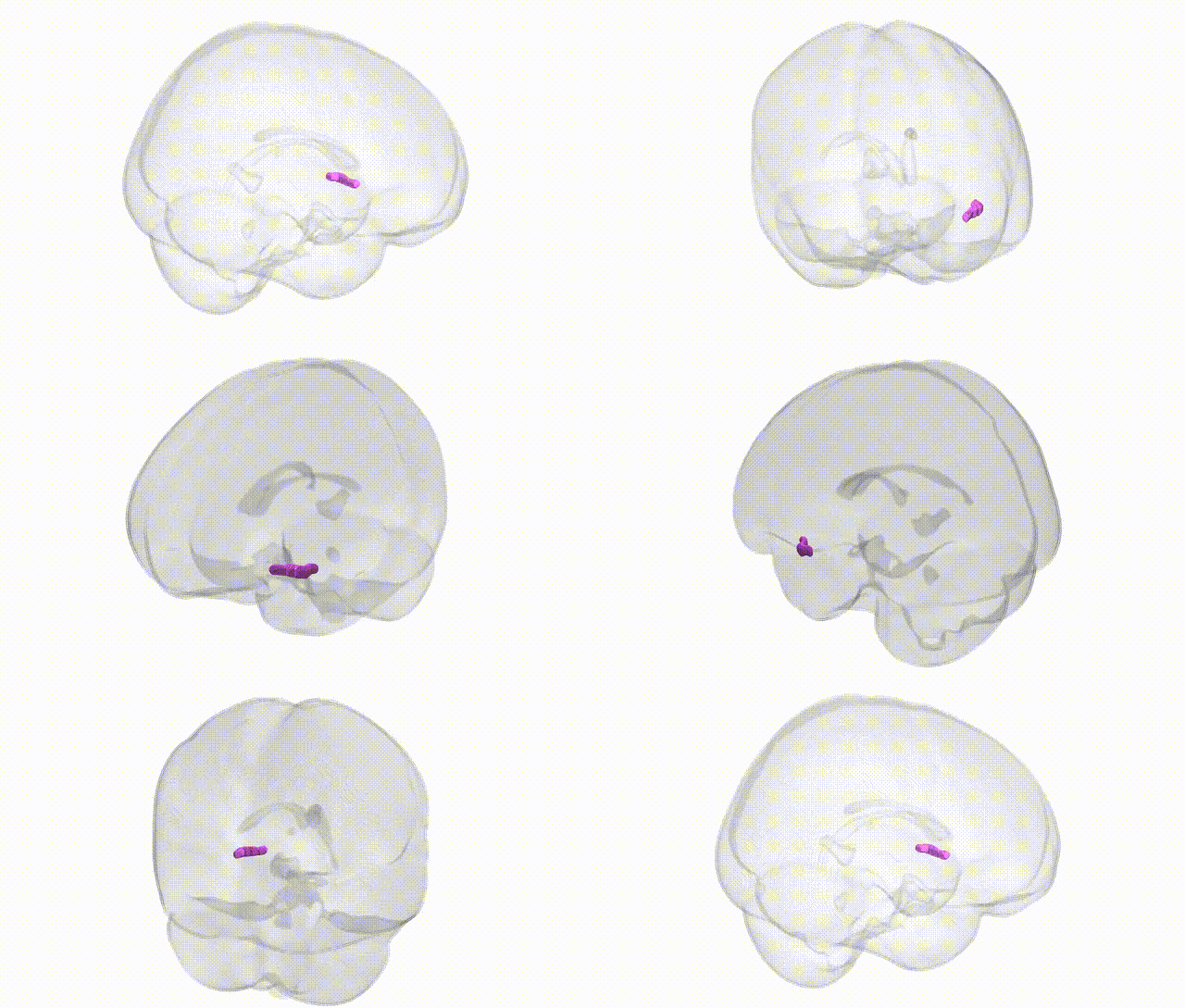
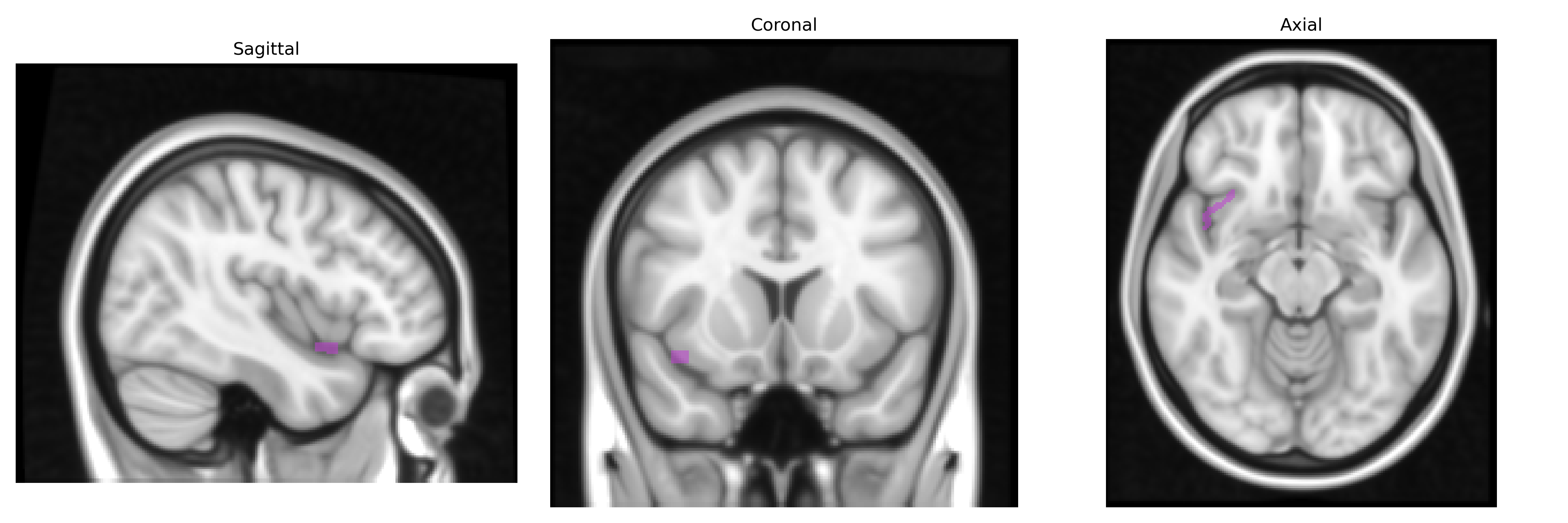
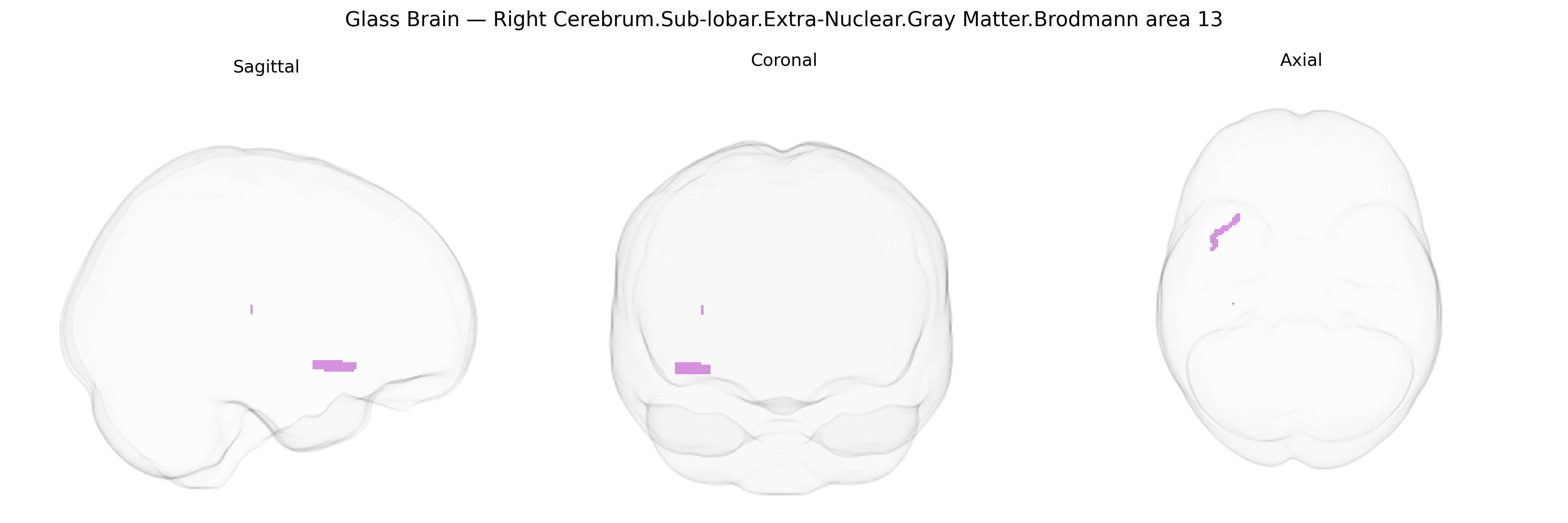
The bilateral Right Cerebrum.Sub-lobar.Extra-Nuclear.Gray Matter.Brodmann area 13 corresponds primarily to a deep subdivision of the insular cortex, often termed the agranular or anterior insula, located within the lateral sulcus beneath the frontal, parietal, and temporal opercula. Brodmann area 13 is characterized cytoarchitectonically by a transition from allocortical to isocortical organization, with relatively fewer granular layers and dense connections to limbic, prefrontal, and sensory association regions. Functionally, this region is implicated in interoceptive awareness, emotional processing, autonomic regulation, and integration of visceral and somatosensory information, contributing to complex subjective feeling states, decision-making under uncertainty, and aspects of social-emotional behavior. There is no direct link for “Brodmann area 13” as a standalone article; a closely related and encompassing structure is the Insular cortex.
Brodmann area 13, located in the insular/extra-nuclear region of the sub-lobar right cerebrum in the Talairach 1 mm atlas, has been implicated in several genetic and genome-wide association contexts, primarily via its roles in interoception, affective processing, and salience network function rather than through region-specific single-gene effects. Imaging genetics studies link common variants in serotonin-related genes (e.g., SLC6A4/5-HTTLPR), dopamine genes (e.g., DRD2, COMT), and neurotrophin genes (e.g., BDNF Val66Met) to altered right insula/BA13 gray matter volume or functional activation, particularly in tasks involving emotion, risk, and pain processing. Large-scale GWAS of brain structure have identified multiple loci associated with insular and adjacent sub-lobar gray matter thickness or volume (including variants near genes such as CRTC1, HMGA2, and others), although these effects typically encompass broader insular or fronto-temporo-limbic territories rather than BA13 in isolation. Clinically, polygenic risk for major depressive disorder, bipolar disorder, schizophrenia, and anxiety traits has been associated with structural or functional alterations in the right insula/BA13 region, consistent with this area’s role in mood and salience network disturbances, while genetic risk for substance use and risk-taking behavior also correlates with insula-based activation patterns. Overall, the genetic architecture of BA13 appears highly polygenic and shared with larger insular and salience-network circuits, with current evidence reflecting distributed, small-effect common variants rather than discrete, BA13-specific genetic associations.
Overview generated by GPT-4o (2026).
Region ID: 376
Hemisphere: bilateral
Atlas: Talairach labels 1mm
Full Quality Version: Download MP4
Full Quality Version: Download MP4
Wali Sidiqyar*, Gaurav Rudravaram*, Elyssa M. McMaster, Trent M. Schwartz, Adam M. Saunders, Kurt G. Schilling, Bennett A. Landman "Introducing SPINS: A Shared Public Visualization Library of Neuroanatomical Structures." Medical Imaging with Deep Learning- short paper
This resource is licensed under CC0 1.0 Universal (Public Domain).