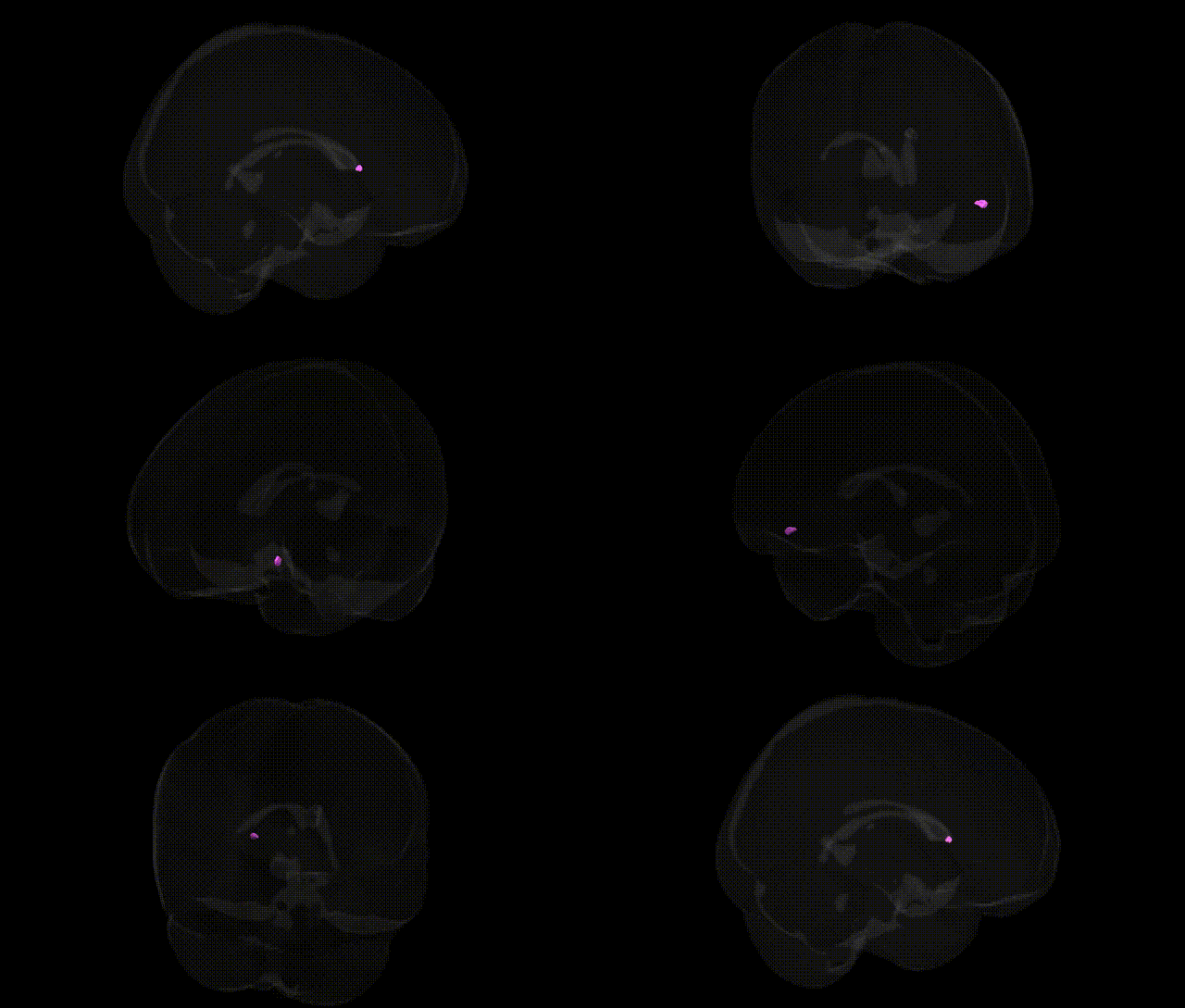
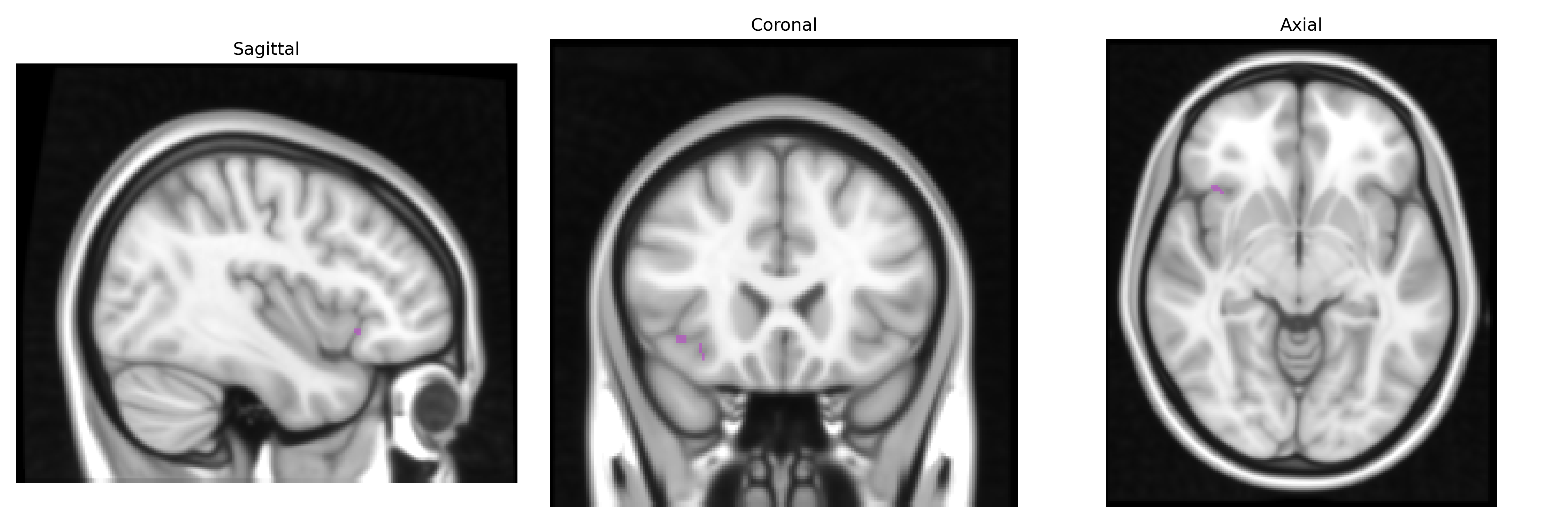
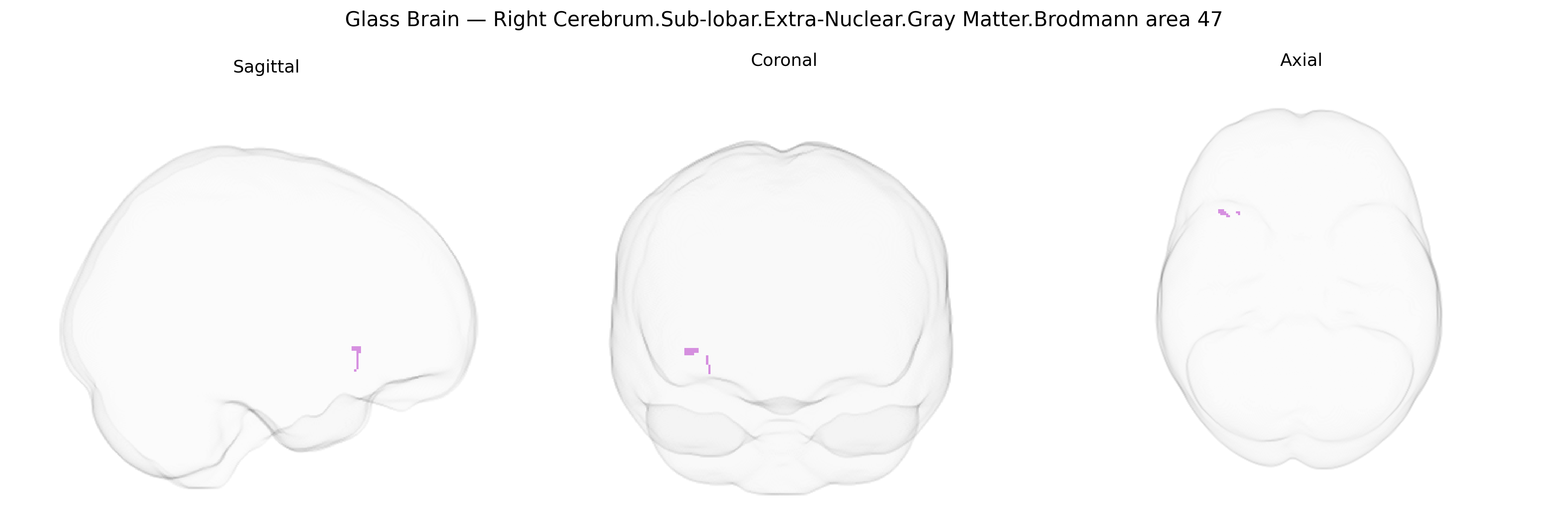
Bilateral Right Cerebrum.Sub-lobar.Extra-Nuclear.Gray Matter.Brodmann area 47 corresponds primarily to the orbitofrontal portion of the inferior frontal gyrus, situated in the ventrolateral prefrontal cortex overlying the anterior portions of the insula and adjacent sub-lobar structures. This association cortex is characterized cytoarchitectonically by a granular to dysgranular laminar organization and is heavily interconnected with limbic, paralimbic, and sensory association areas, including the amygdala, temporal pole, and anterior cingulate cortex. Functionally, Brodmann area 47 is implicated in higher-order processes such as semantic language processing, reward-based decision making, evaluation of emotional and social stimuli, and integration of multimodal sensory information into flexible behavioral responses. There is no direct link for “Brodmann area 47 (sub-lobar extra-nuclear)” as a distinct entry, but the broader region is described under Brodmann area 47.
Brodmann area 47 (inferior frontal gyrus/anterior insula–orbitofrontal region) has been implicated in multiple genetic and GWAS findings, particularly through imaging-genetics and large-scale neuroimaging consortia (e.g., ENIGMA, UK Biobank) that relate cortical thickness, surface area, and gray matter volume in this region to common genetic variants. Polygenic influences from genes involved in synaptic function, neurodevelopment, and neurotransmission—such as those in glutamatergic (e.g., GRIN2B), GABAergic (e.g., GAD1), and dopaminergic pathways—have been associated with structural and functional variation in BA47, especially in the context of executive control, language, and affective regulation. GWAS of cortical morphology have identified loci influencing inferior frontal and orbitofrontal regions (for example in genes like HMGA2 and those near IGF1 and microtubule-related genes), though these findings are often regionally broad and not exclusively restricted to BA47. Disorder-focused genetic studies link BA47 gray matter or activation differences to polygenic risk scores and candidate variants for major depressive disorder, bipolar disorder, schizophrenia, autism spectrum disorders, and obsessive-compulsive disorder, consistent with the region’s role in emotion regulation and cognitive control networks. Additional associations have been reported with genetic risk for substance use (alcohol and nicotine), impulsivity-related traits, and anxiety-related phenotypes, where carriers of specific risk alleles show altered volume, connectivity, or task-related activation in this area. Overall, known genetic associations with BA47 reflect distributed, small-effect polygenic architecture rather than single strong locus effects, with many findings emerging from whole-brain analyses that highlight inferior frontal/orbitofrontal clusters encompassing Talairach-labeled BA47 rather than pinpointing it uniquely.
Overview generated by GPT-4o (2026).
Region ID: 401
Hemisphere: bilateral
Atlas: Talairach labels 1mm
Full Quality Version: Download MP4
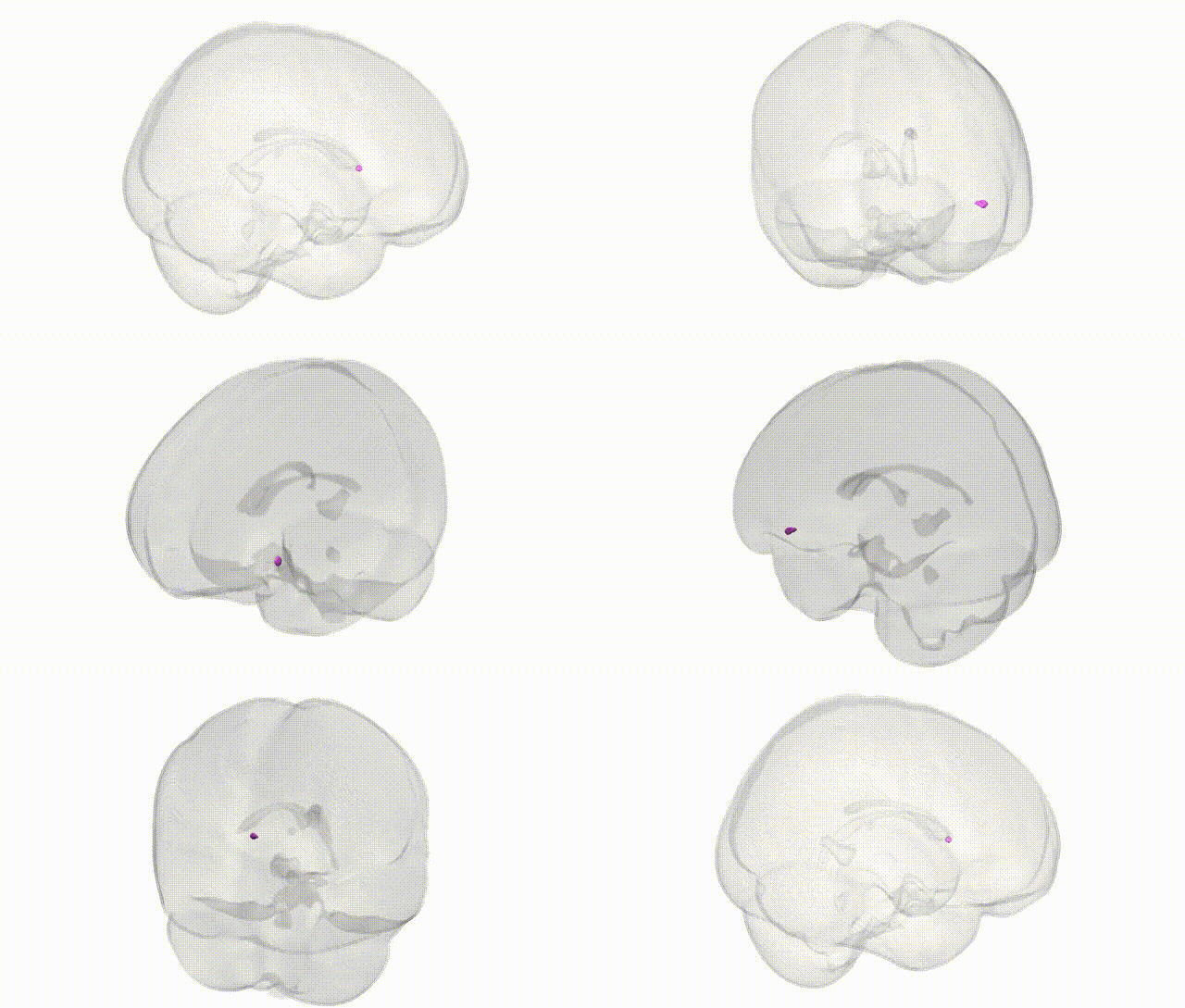
Full Quality Version: Download MP4
Wali Sidiqyar*, Gaurav Rudravaram*, Elyssa M. McMaster, Trent M. Schwartz, Adam M. Saunders, Kurt G. Schilling, Bennett A. Landman "Introducing SPINS: A Shared Public Visualization Library of Neuroanatomical Structures." Medical Imaging with Deep Learning- short paper
This resource is licensed under CC0 1.0 Universal (Public Domain).