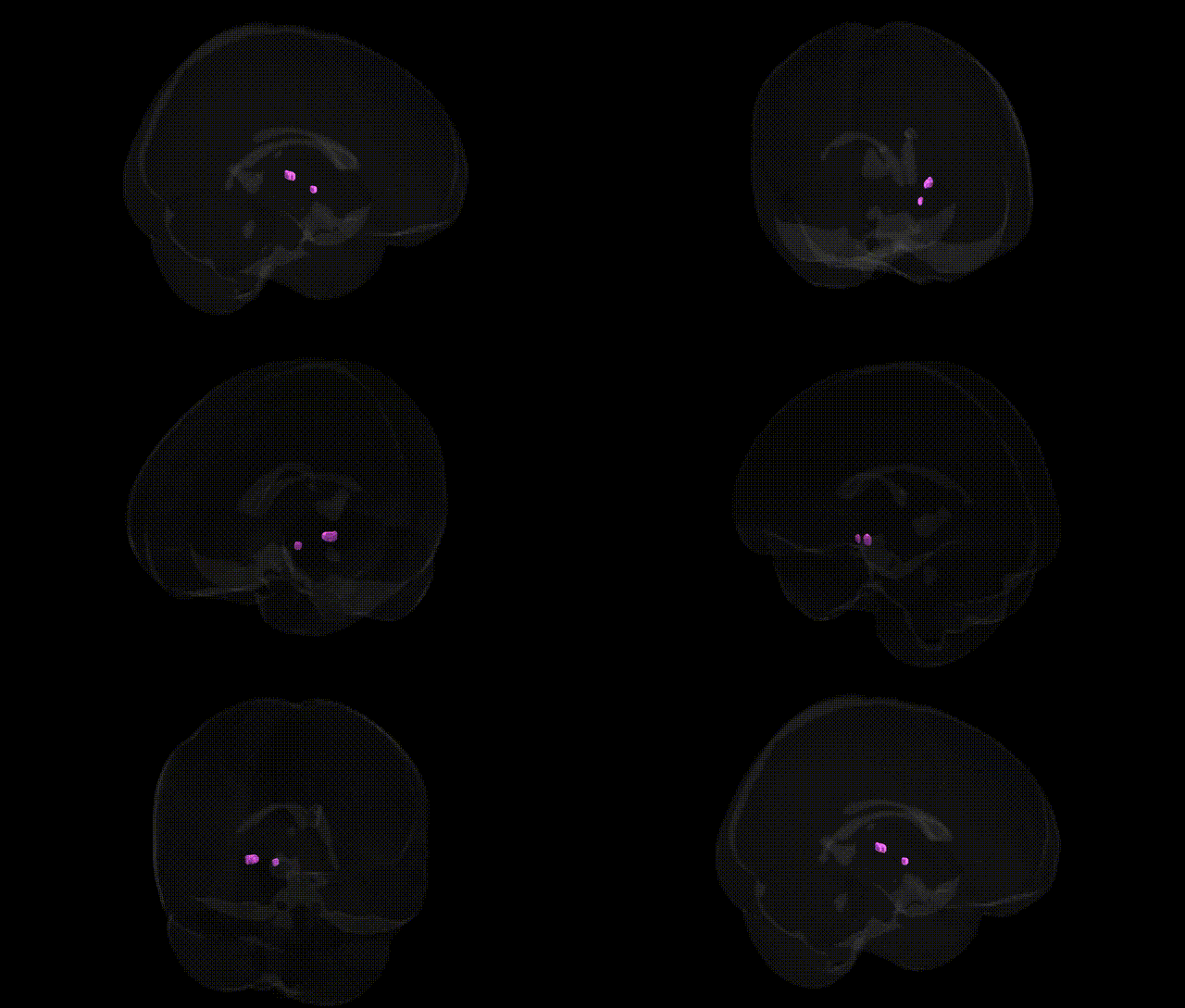
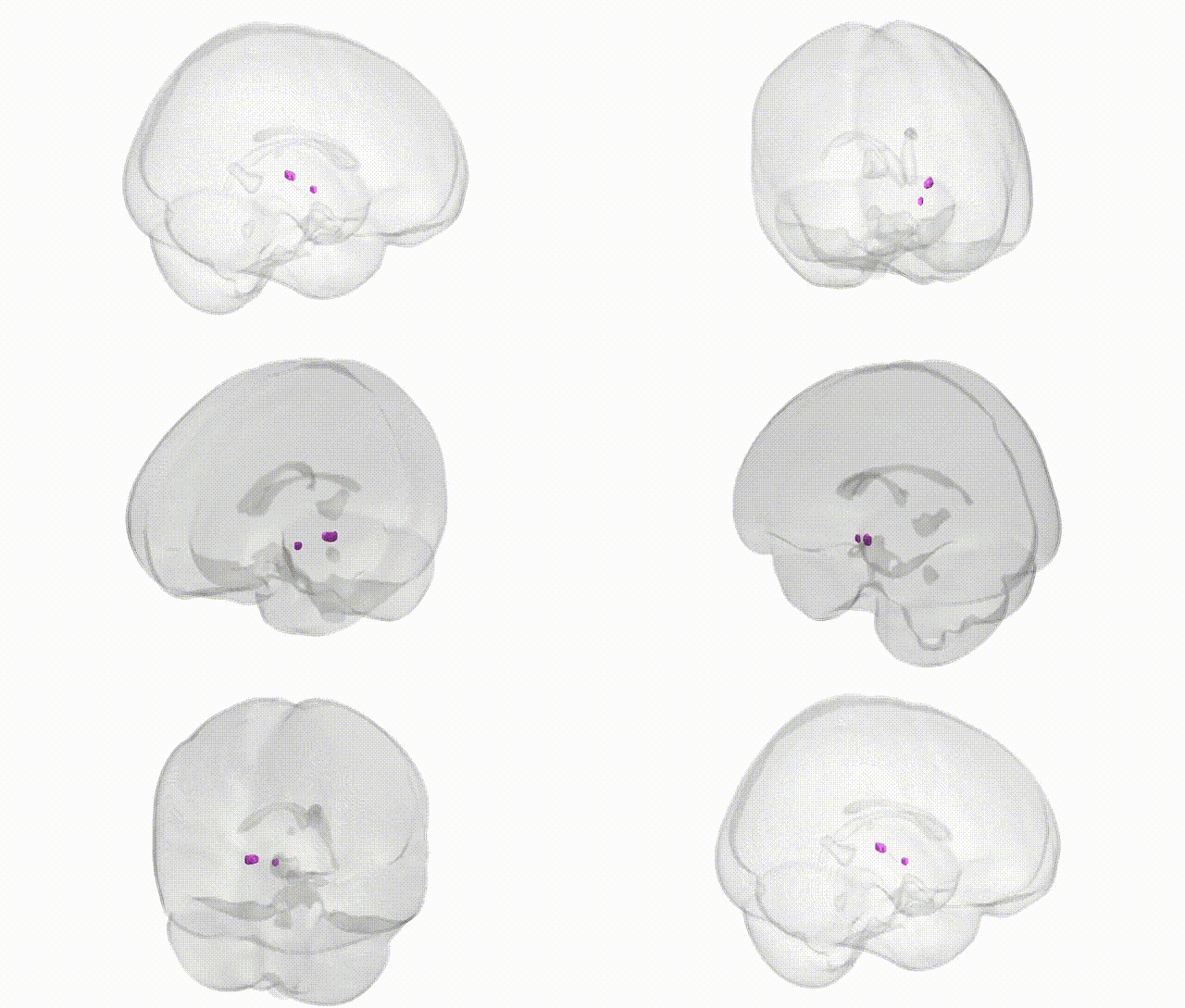
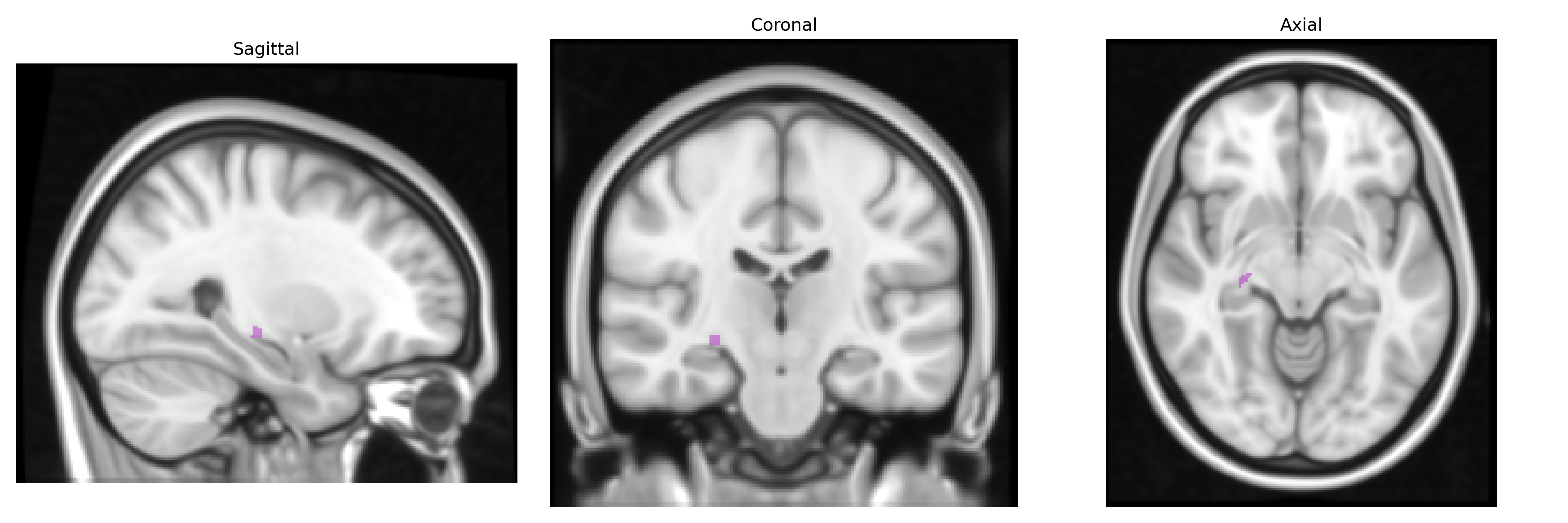
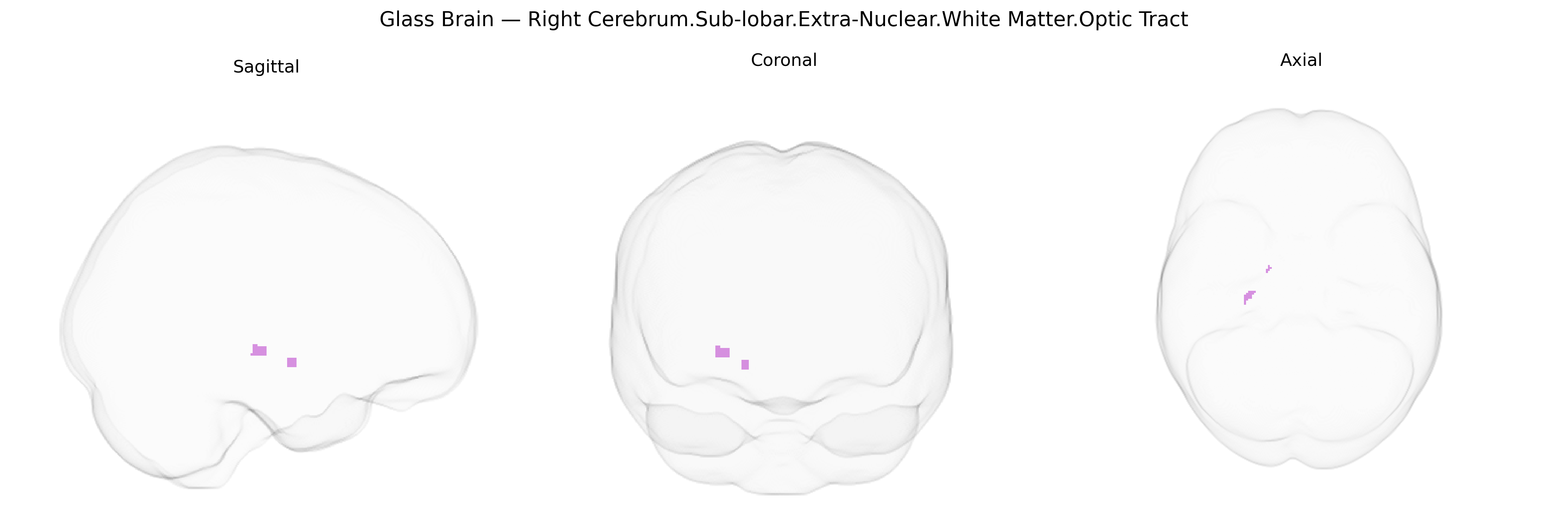
The bilateral Right Cerebrum.Sub-lobar.Extra-Nuclear.White Matter.Optic Tract region corresponds to the right optic tract, a white matter pathway that carries visual information from the optic chiasm to subcortical visual relay nuclei, primarily the lateral geniculate nucleus of the thalamus, as well as to the superior colliculus and other midbrain structures involved in reflexive and orienting visual responses. It contains axons originating largely from retinal ganglion cells, organized retinotopically and maintaining partial segregation of fibers from the ipsilateral and contralateral visual fields after decussation at the optic chiasm. Functionally, the optic tract is critical for conscious visual perception, visual field mapping, and visuomotor coordination, and lesions in this pathway can result in characteristic visual field deficits such as contralateral homonymous hemianopia. No direct Talairach-specific article exists; the closest relevant structure is the Optic tract.
Genetic associations specifically targeting the bilateral Right Cerebrum.Sub-lobar.Extra-Nuclear.White Matter.Optic Tract region in the Talairach 1 mm atlas are uncommon, but broader GWAS and imaging‑genetics studies of white matter microstructure and visual pathway integrity implicate several loci and pathways relevant to this region. Variants influencing global and tract‑specific fractional anisotropy and mean diffusivity—such as those near genes involved in axon guidance, myelination, and oligodendrocyte function (e.g., CNTN4, NRG1, MAG, and genes in the ERBB and semaphorin pathways)—have been associated with white matter organization that includes the optic tract. Polygenic risk for multiple sclerosis and other demyelinating or neuroinflammatory conditions is linked to altered optic tract and optic radiation integrity, with risk alleles in HLA‑DRB1 and other immune‑related loci contributing to visual pathway damage. GWAS of glaucoma and optic nerve head morphology (including loci near SIX6, CDKN2B-AS1, and MYOC) indirectly implicate the optic nerve–optic tract continuum by influencing retinal ganglion cell survival and downstream white matter structure. Imaging‑genetics work in neurodegenerative and neuropsychiatric disorders, particularly Alzheimer’s disease, schizophrenia, and bipolar disorder, shows that risk variants (for example in APOE, CLU, and CACNA1C) can modulate white matter connectivity in occipital and sub‑lobar regions encompassing the optic tract, although these effects are generally diffuse rather than region‑specific. Overall, the genetic signal related to this Talairach‑defined optic tract region emerges mainly from studies of global white matter integrity, visual system diseases, and demyelinating and neurodegenerative conditions, rather than from GWAS focused solely on this tract.
Overview generated by GPT-4o (2026).
Region ID: 361
Hemisphere: bilateral
Atlas: Talairach labels 1mm
Full Quality Version: Download MP4
Full Quality Version: Download MP4
Wali Sidiqyar*, Gaurav Rudravaram*, Elyssa M. McMaster, Trent M. Schwartz, Adam M. Saunders, Kurt G. Schilling, Bennett A. Landman "Introducing SPINS: A Shared Public Visualization Library of Neuroanatomical Structures." Medical Imaging with Deep Learning- short paper
This resource is licensed under CC0 1.0 Universal (Public Domain).