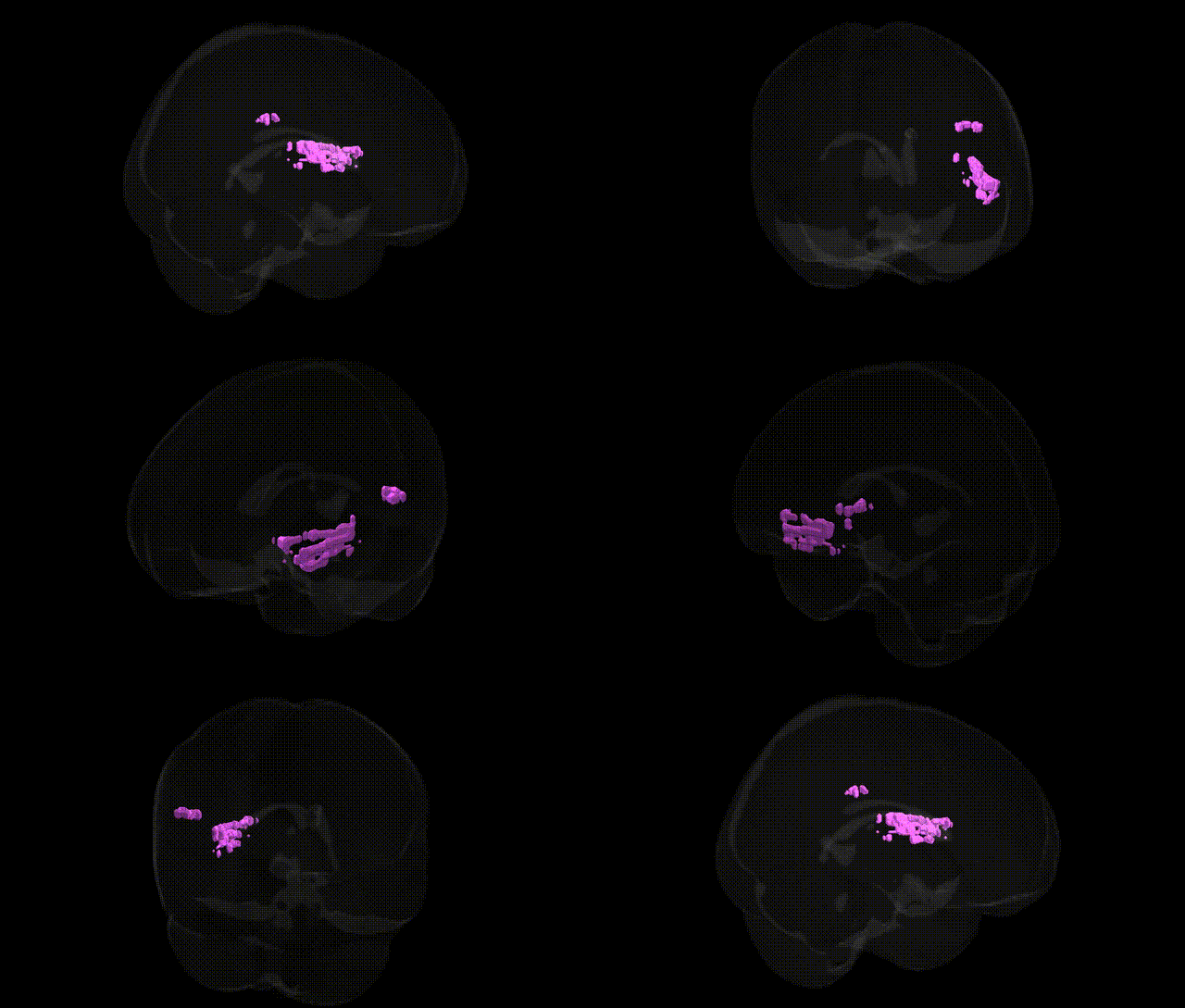
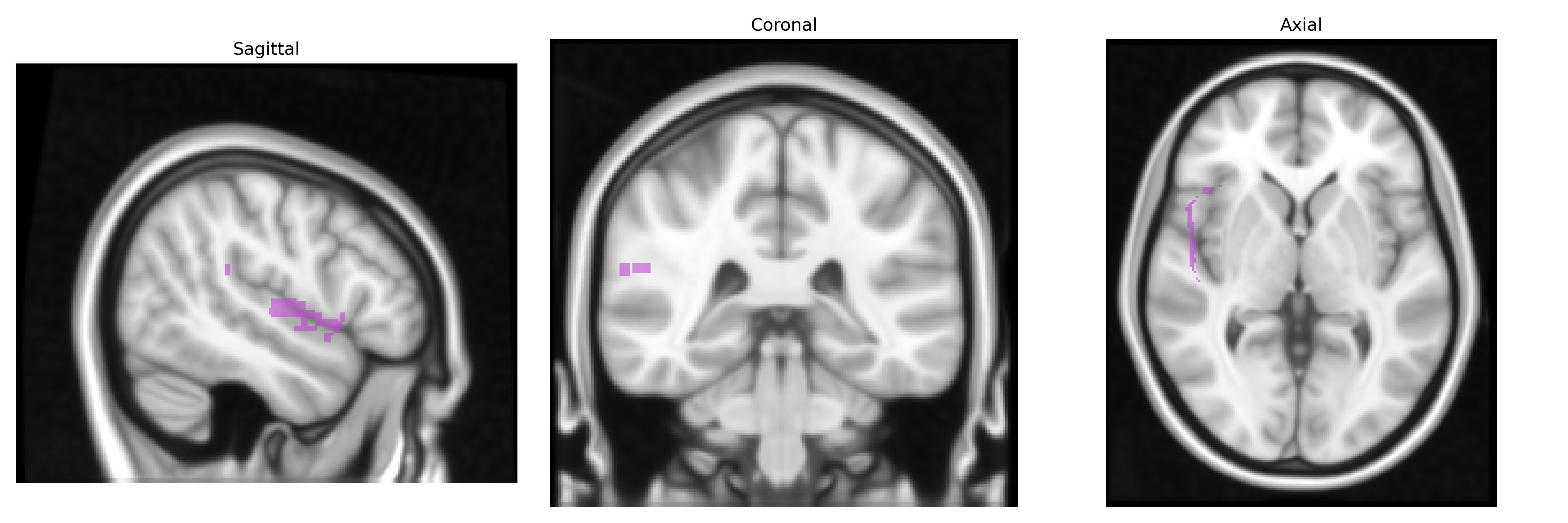
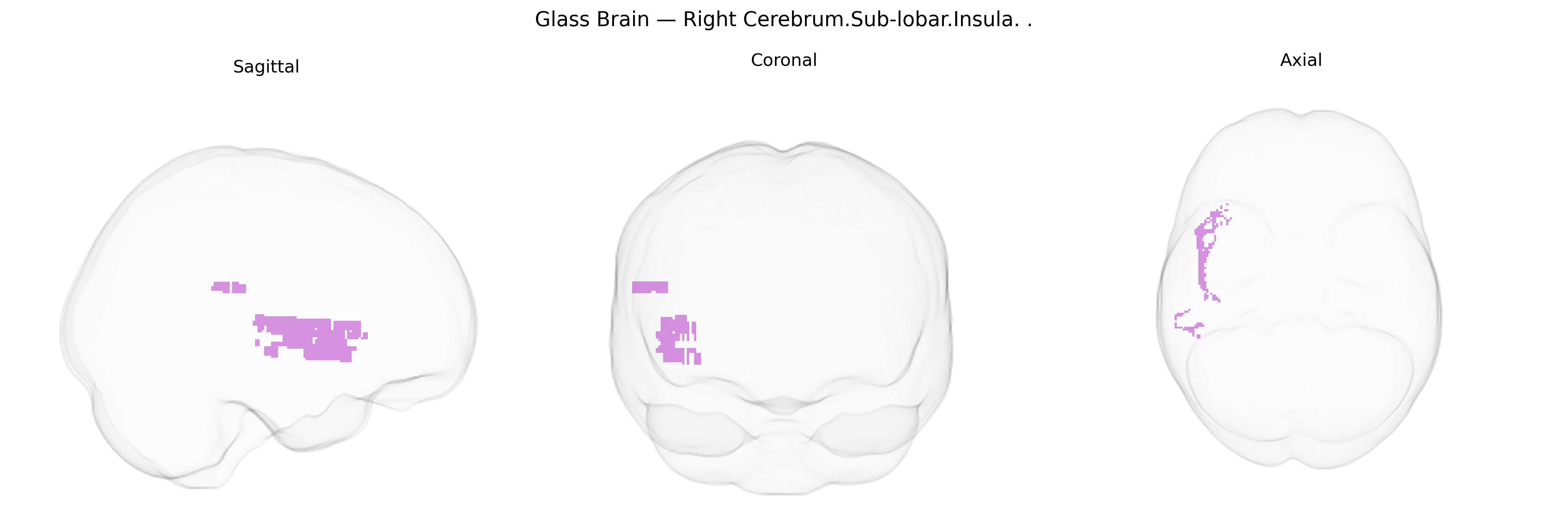
The bilateral Right Cerebrum.Sub-lobar.Insula refers to the insular cortex located deep within the lateral sulcus of the right cerebral hemisphere, classified as a sub-lobar structure in the Talairach 1 mm atlas. The insula is covered by portions of the frontal, parietal, and temporal opercula and is organized into anterior and posterior insular regions with distinct cytoarchitecture and connectivity. Functionally, it plays a key role in interoception (representation of internal bodily states), multimodal sensory integration (including taste, visceral, and somatosensory input), affective processing, pain perception, autonomic regulation, and components of language and social-emotional cognition. The right insula, in particular, has been implicated in sympathetic autonomic control, awareness of bodily arousal, and aspects of emotional experience and risk processing, through its extensive connections with limbic, prefrontal, and sensorimotor networks. Insular cortex
The bilateral right sub-lobar insula (Talairach 1 mm Atlas) has been implicated in multiple genetic and genome-wide association studies through its roles in salience processing, interoception, and affective regulation; insular volume, cortical thickness, and functional connectivity show significant SNP-based heritability and have been linked to common variants in neurodevelopmental and synaptic genes, including loci near HMGA2, IGF1, and other general cortical morphology genes identified by ENIGMA and UK Biobank imaging-GWAS consortia. Polygenic risk scores for major depressive disorder, schizophrenia, bipolar disorder, and autism spectrum disorder have been associated with structural and functional alterations of the insula, particularly in right-lateralized networks related to salience and default-mode coupling; specific risk loci (e.g., in CACNA1C, ZNF804A, and other calcium-channel and synaptic genes) have been tied to insular activation differences in task-based fMRI genetics. Genetic variants associated with anxiety, neuroticism, and pain sensitivity often converge on insula-related circuits, and alcohol use disorder, nicotine dependence, and obesity-related traits show imaging-genetics links to right insular structure and connectivity, suggesting that common polygenic architectures influencing neurodevelopment, emotional regulation, and interoceptive awareness contribute to interindividual differences in this region.
Overview generated by GPT-4o (2026).
Region ID: 451
Hemisphere: bilateral
Atlas: Talairach labels 1mm
Full Quality Version: Download MP4
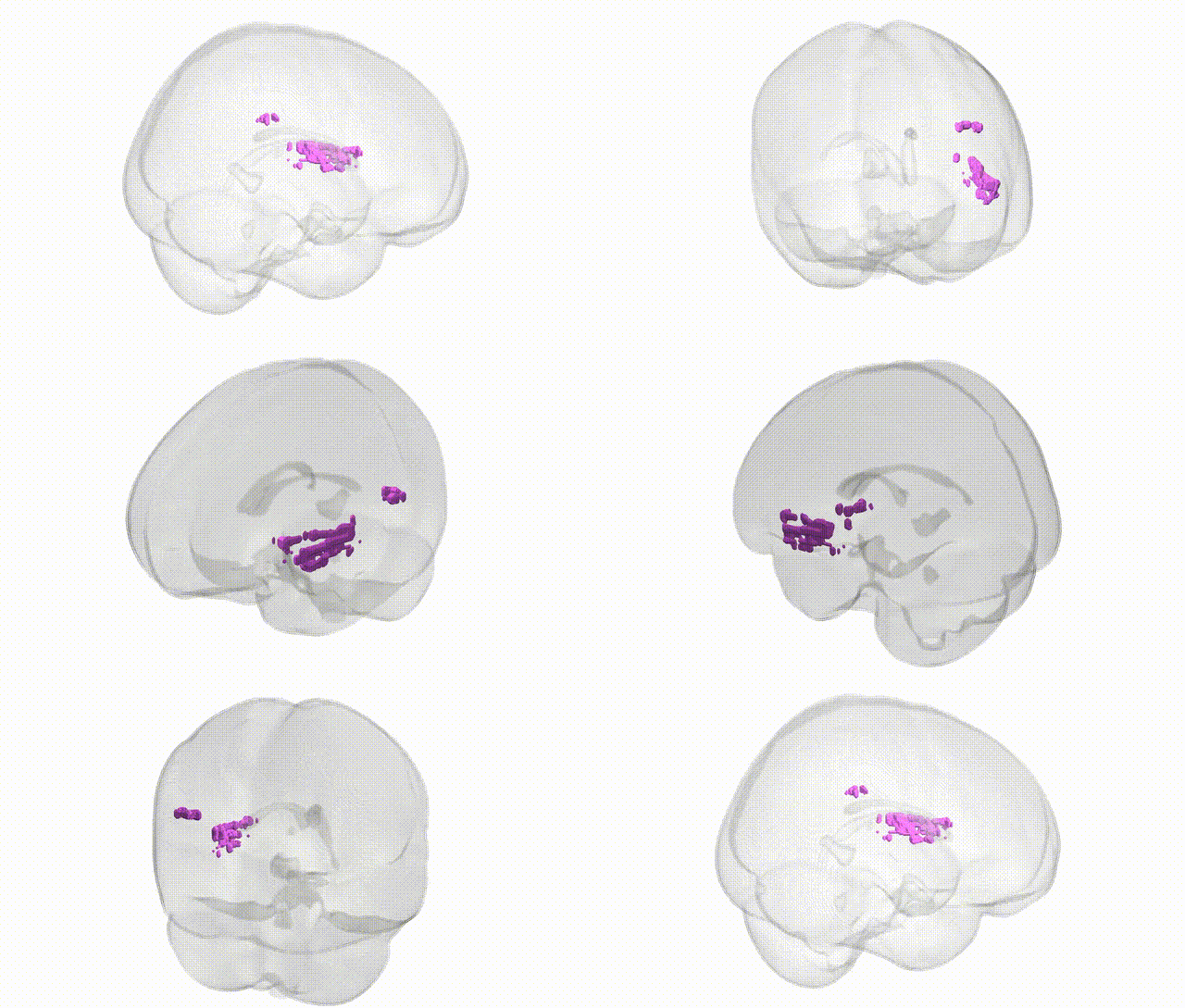
Full Quality Version: Download MP4
Wali Sidiqyar*, Gaurav Rudravaram*, Elyssa M. McMaster, Trent M. Schwartz, Adam M. Saunders, Kurt G. Schilling, Bennett A. Landman "Introducing SPINS: A Shared Public Visualization Library of Neuroanatomical Structures." Medical Imaging with Deep Learning- short paper
This resource is licensed under CC0 1.0 Universal (Public Domain).