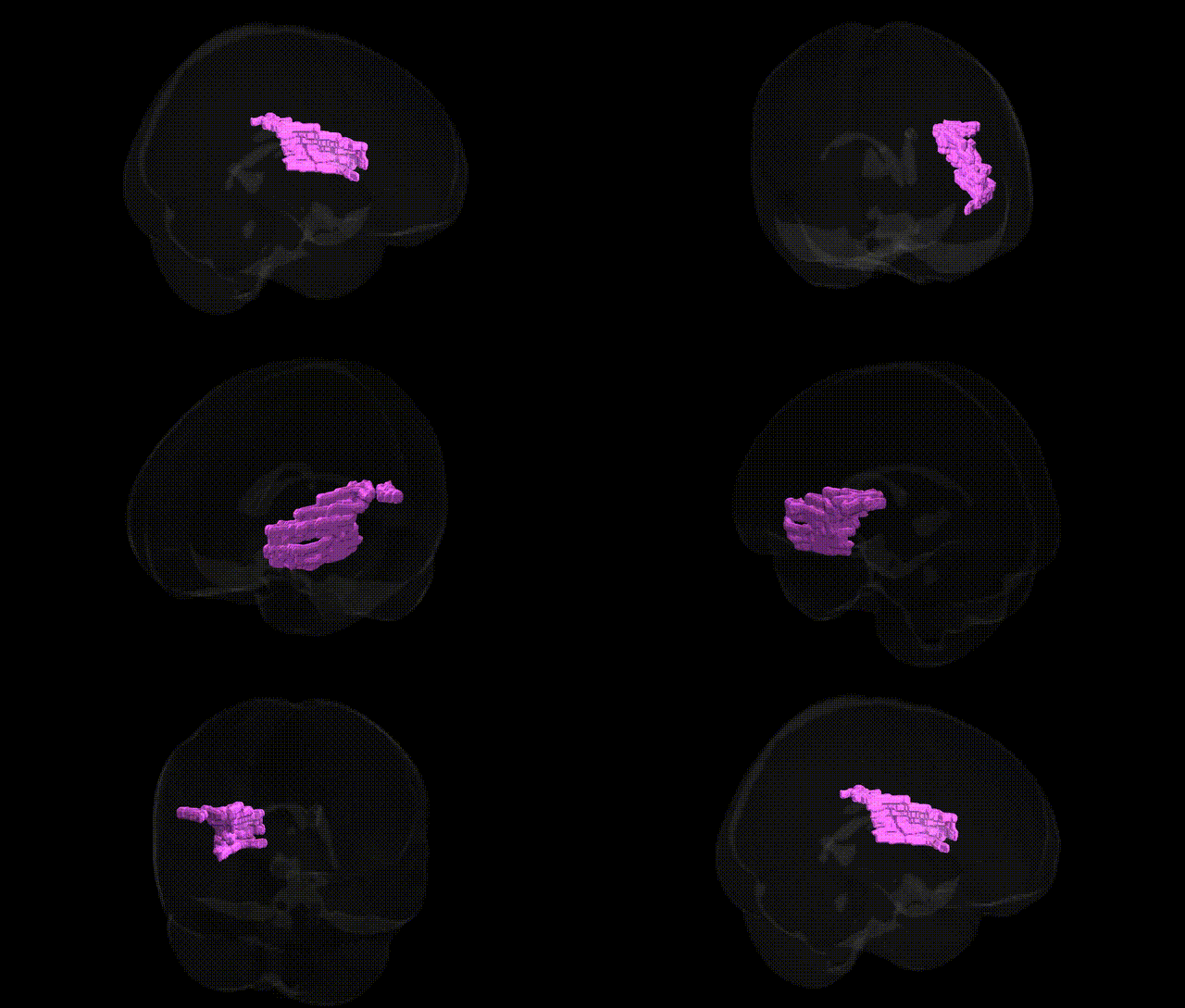
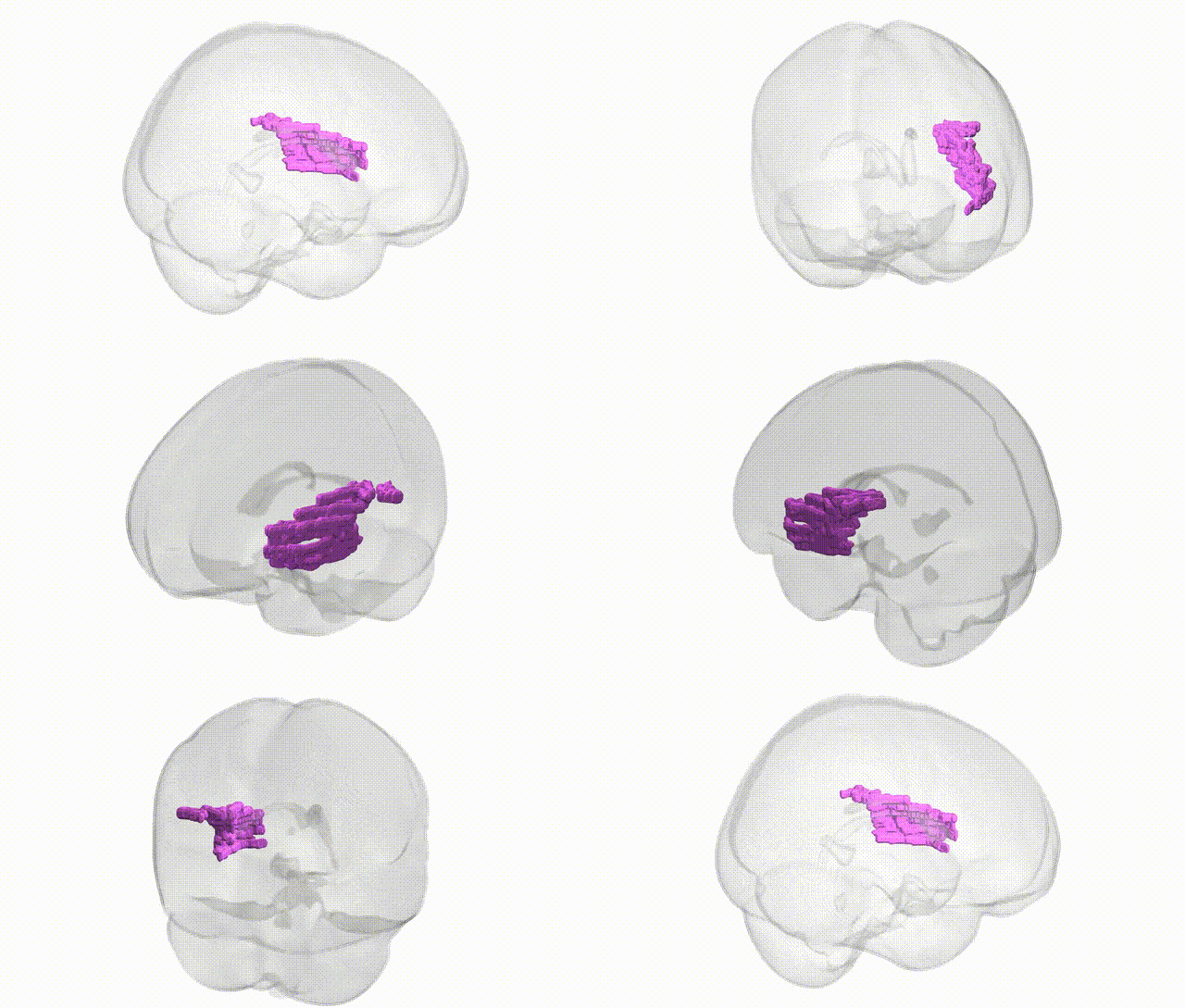
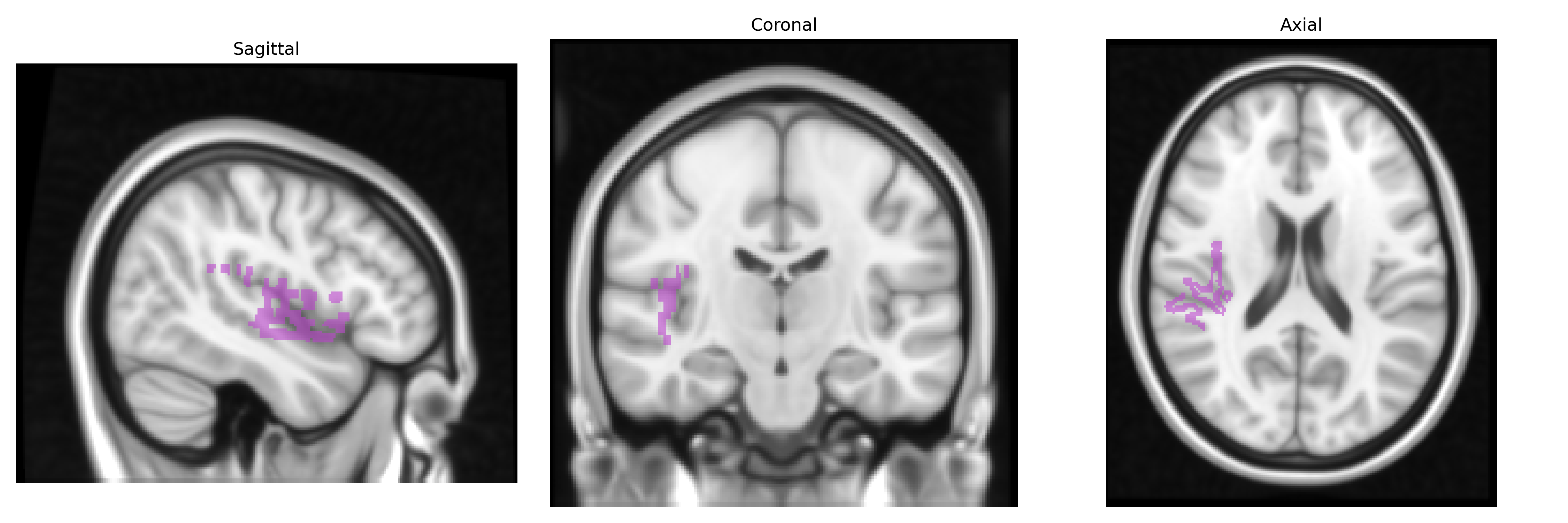
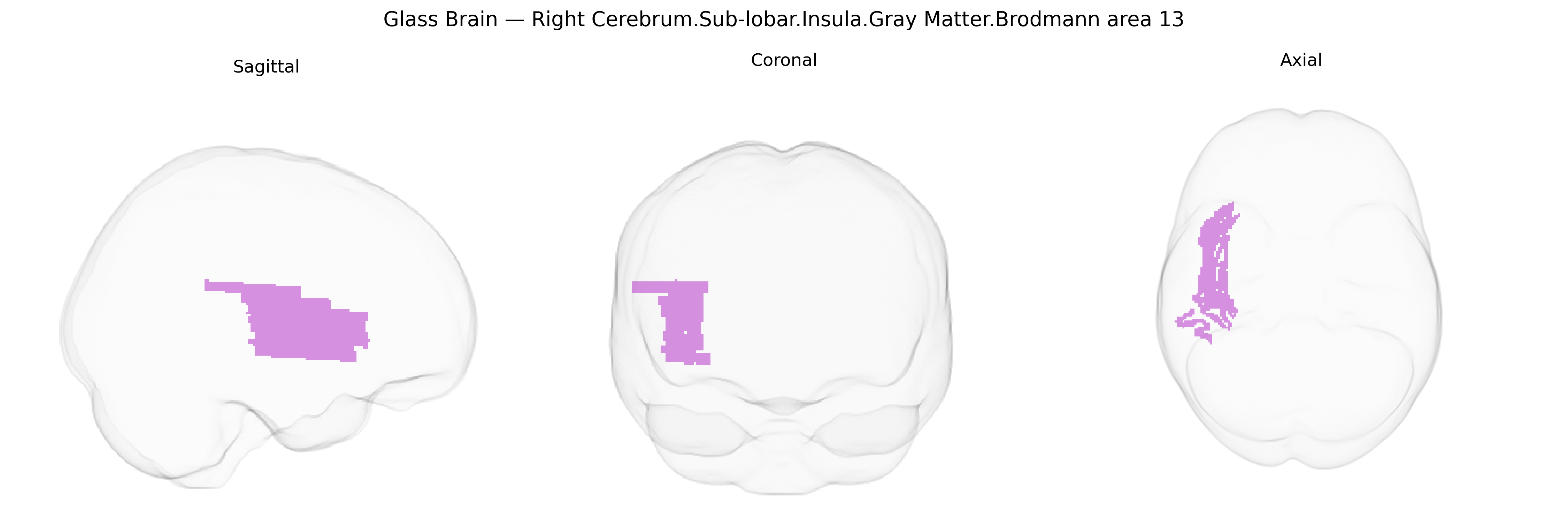
The bilateral Right Cerebrum.Sub-lobar.Insula.Gray Matter.Brodmann area 13 corresponds to a portion of the insular cortex buried within the lateral sulcus, deep to the frontal, parietal, and temporal opercula. Brodmann area 13 is part of the posterior–mid insula and is involved in multimodal integration of interoceptive, visceral, somatosensory, and affective information, contributing to functions such as autonomic regulation, pain and temperature perception, gustatory processing, and aspects of emotional and cognitive control. This region participates in salience detection and network switching between default mode and executive systems, and is heavily interconnected with limbic, prefrontal, and sensory association cortices as well as subcortical autonomic centers. There is no direct link for Brodmann area 13; a related structure is the Insular cortex.
Bilateral gray matter in the sub-lobar insula, particularly Brodmann area 13 as defined in the Talairach 1 mm atlas, has been repeatedly implicated in genetic studies of neuropsychiatric and behavioral traits, though most findings derive from broader insular or fronto-insular parcels rather than this subfield alone. GWAS and imaging-genetics studies of cortical thickness, surface area, and insular volume have identified associations with common variants in genes involved in neurodevelopment, synaptic function, and neuronal signaling (for example, RELN, NRG1, and TCF4 in psychosis-related cohorts, and calcium channel genes such as CACNA1C and CACNB2 in mood and affective traits), while large consortia (e.g., ENIGMA) have reported heritable variation in insular metrics linked to polygenic risk scores for schizophrenia, major depressive disorder, bipolar disorder, and autism spectrum disorders. The insula, including BA13, also shows genetically influenced structural and functional alterations in GWAS of substance use (alcohol, nicotine, and polysubstance dependence), anxiety and neuroticism, and chronic pain and interoceptive traits, with implicated loci often overlapping dopaminergic, glutamatergic, and GABAergic pathways. In neurodegenerative and cerebrovascular genetics, variants in APOE and other Alzheimer’s disease–related genes, as well as loci affecting small-vessel disease and white-matter integrity, have been linked to insular atrophy or connectivity changes. Overall, the region emerges as a hub where polygenic risk for psychiatric, addiction, affective, and pain-related phenotypes converges on structural and functional variation, although current GWAS typically lack resolution to ascribe effects uniquely and specifically to Brodmann area 13 within the insula.
Overview generated by GPT-4o (2026).
Region ID: 444
Hemisphere: bilateral
Atlas: Talairach labels 1mm
Full Quality Version: Download MP4
Full Quality Version: Download MP4
Wali Sidiqyar*, Gaurav Rudravaram*, Elyssa M. McMaster, Trent M. Schwartz, Adam M. Saunders, Kurt G. Schilling, Bennett A. Landman "Introducing SPINS: A Shared Public Visualization Library of Neuroanatomical Structures." Medical Imaging with Deep Learning- short paper
This resource is licensed under CC0 1.0 Universal (Public Domain).