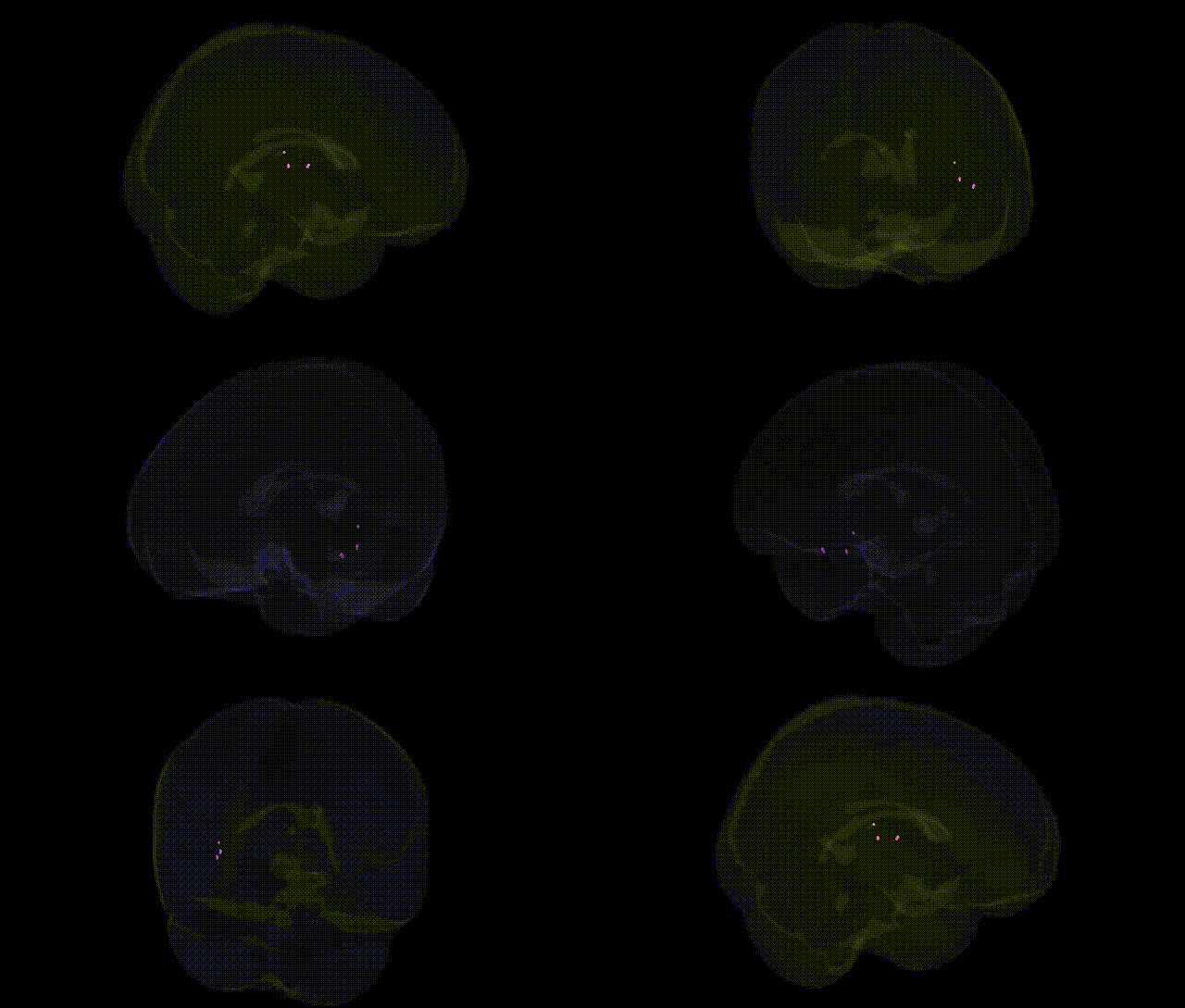
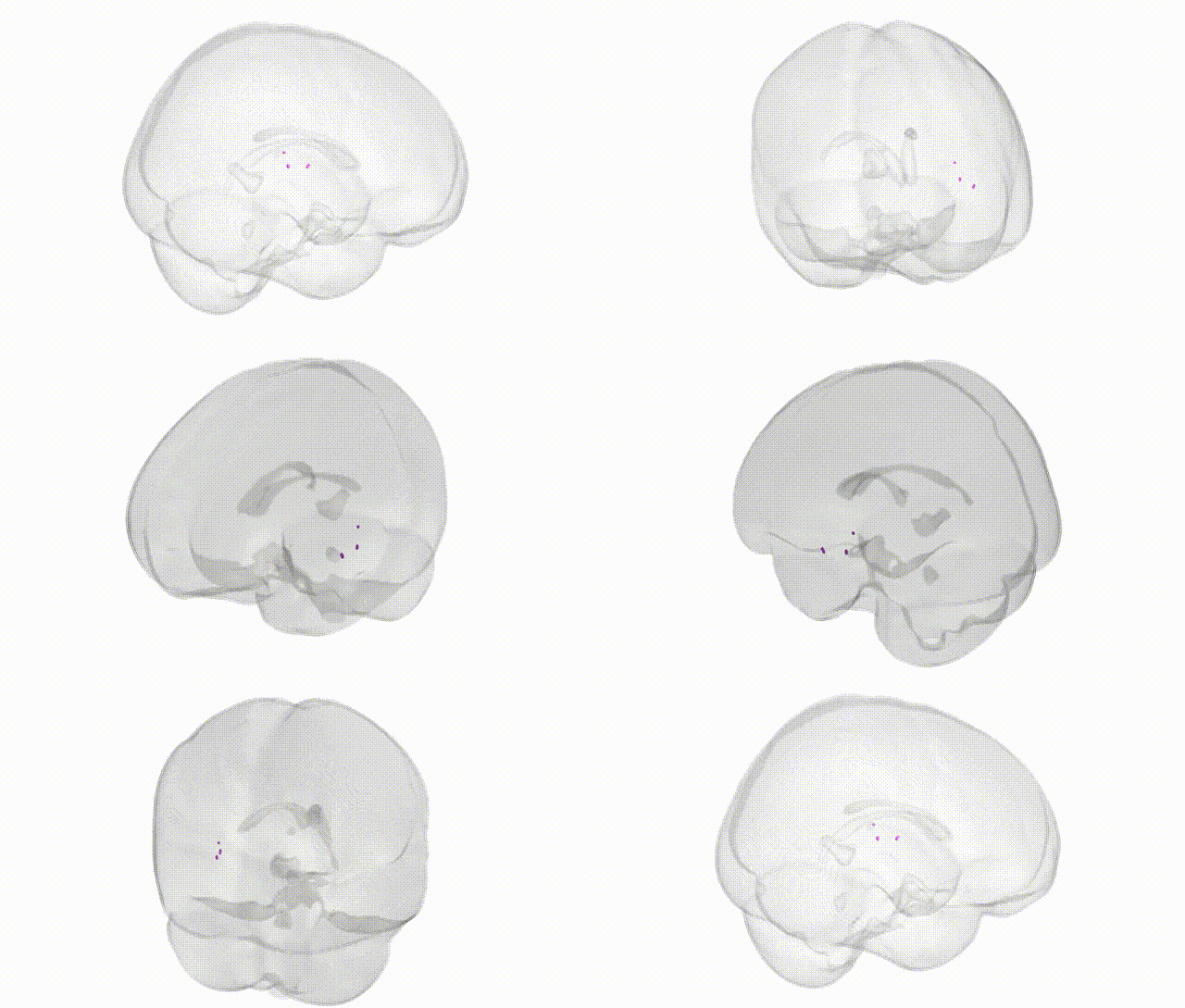
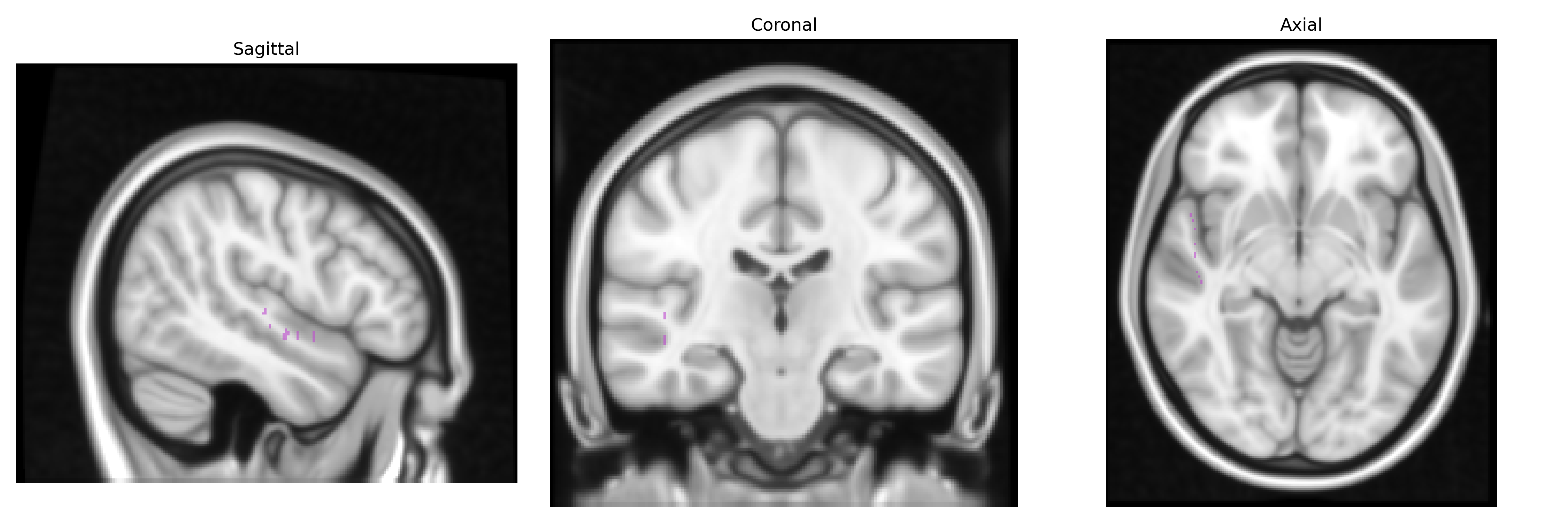
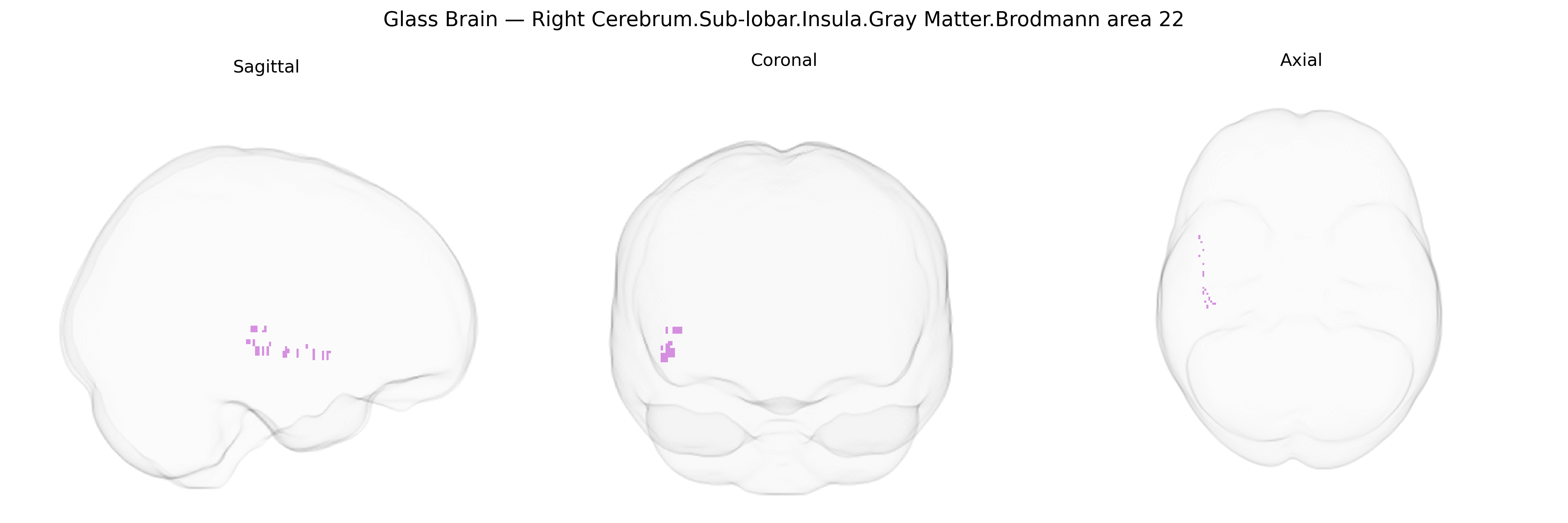
The bilateral Right Cerebrum.Sub-lobar.Insula.Gray Matter.Brodmann area 22 region, as defined in the Talairach 1 mm atlas, corresponds to insular cortex territory functionally associated with the superior temporal (BA22) auditory and language-related regions, but located within the sub-lobar insula of the right cerebral hemisphere. This area integrates complex auditory, language, and socio-emotional information with interoceptive and autonomic signals processed by the insula, contributing to functions such as affective prosody, auditory scene analysis, and higher-order sensory integration. Its gray matter organization reflects a convergence of multimodal inputs, linking temporal lobe auditory and language networks with insular circuits involved in salience detection, visceral awareness, and emotional processing, and is part of larger right-lateralized functional networks implicated in communication, attention, and emotional intonation. Related article: Insular cortex.
The bilateral right insular gray matter in Brodmann area 22 (a region overlapping anterior/mid-insula and superior temporal cortex) has been implicated in multiple genetic and genomic studies, though often indirectly via imaging genetics and GWAS of cortical structure and psychiatric traits. Large-scale cortical GWAS (e.g., ENIGMA and UK Biobank) have identified common variants in genes such as MIR924HG, LRP1B, CRHR1, KIAA0586, and others associated with insular and superior temporal cortical thickness and surface area, with some hemispheric asymmetry but generally overlapping loci for right-sided structures. Polygenic risk for schizophrenia, bipolar disorder, major depression, and autism spectrum disorder has been linked to altered volume and cortical thickness in the insula and adjacent BA22/superior temporal regions, with consistent findings of gray matter reduction in schizophrenia and psychosis risk, and heritable patterns of insular atrophy in familial high-risk cohorts. GWAS of auditory hallucinations, language-related traits, and social communication difficulties have also highlighted variants in or near genes regulating synaptic function (e.g., GRIN2A, CNTNAP2, FOXP2-related networks) that influence structure and function in BA22/temporal-insular networks, supporting a genetic contribution to alterations of this region in psychosis, primary progressive aphasia, temporal lobe epilepsy, and frontotemporal dementia, though most associations remain polygenic, regionally nonspecific, and mediated by broader temporal–insular–frontoparietal networks rather than BA22-insula alone.
Overview generated by GPT-4o (2026).
Region ID: 445
Hemisphere: bilateral
Atlas: Talairach labels 1mm
Full Quality Version: Download MP4
Full Quality Version: Download MP4
Wali Sidiqyar*, Gaurav Rudravaram*, Elyssa M. McMaster, Trent M. Schwartz, Adam M. Saunders, Kurt G. Schilling, Bennett A. Landman "Introducing SPINS: A Shared Public Visualization Library of Neuroanatomical Structures." Medical Imaging with Deep Learning- short paper
This resource is licensed under CC0 1.0 Universal (Public Domain).