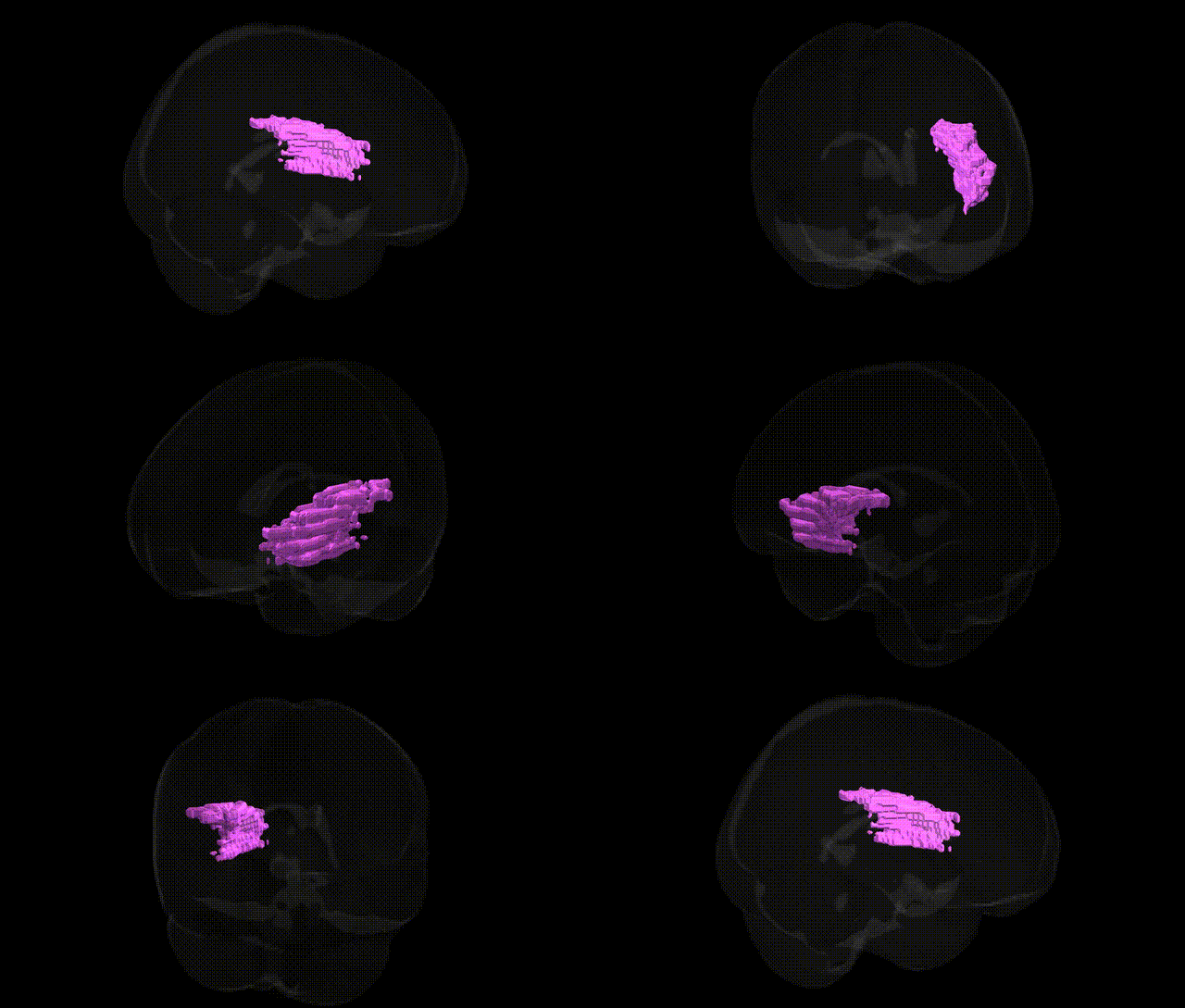
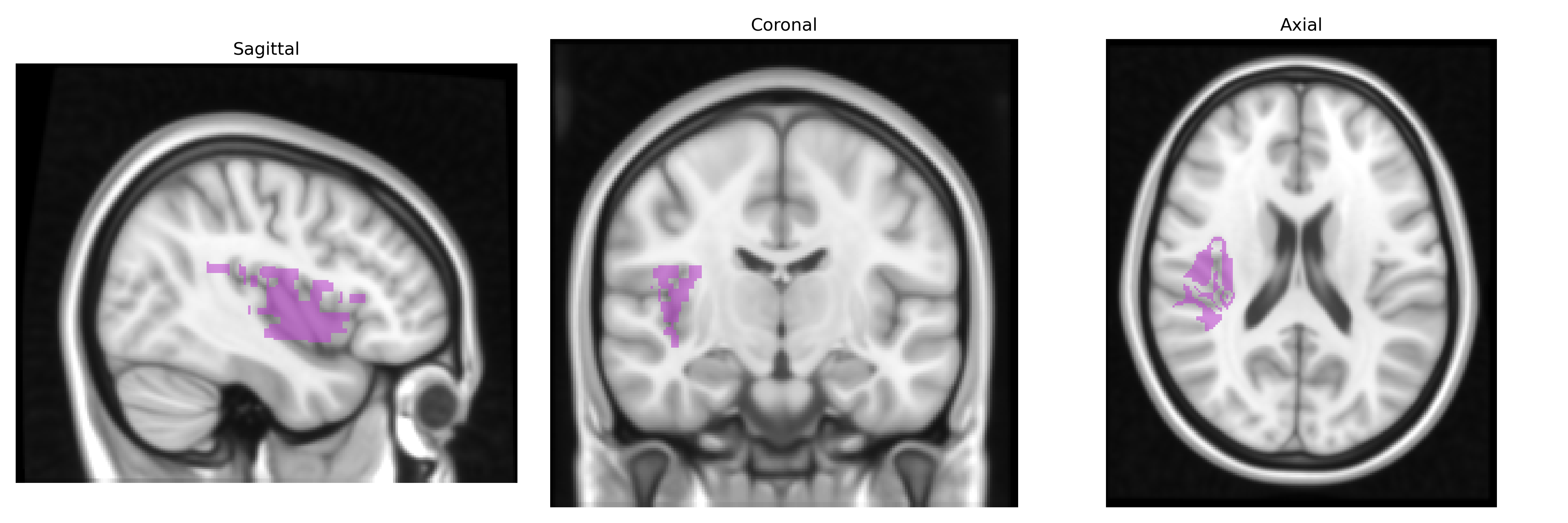
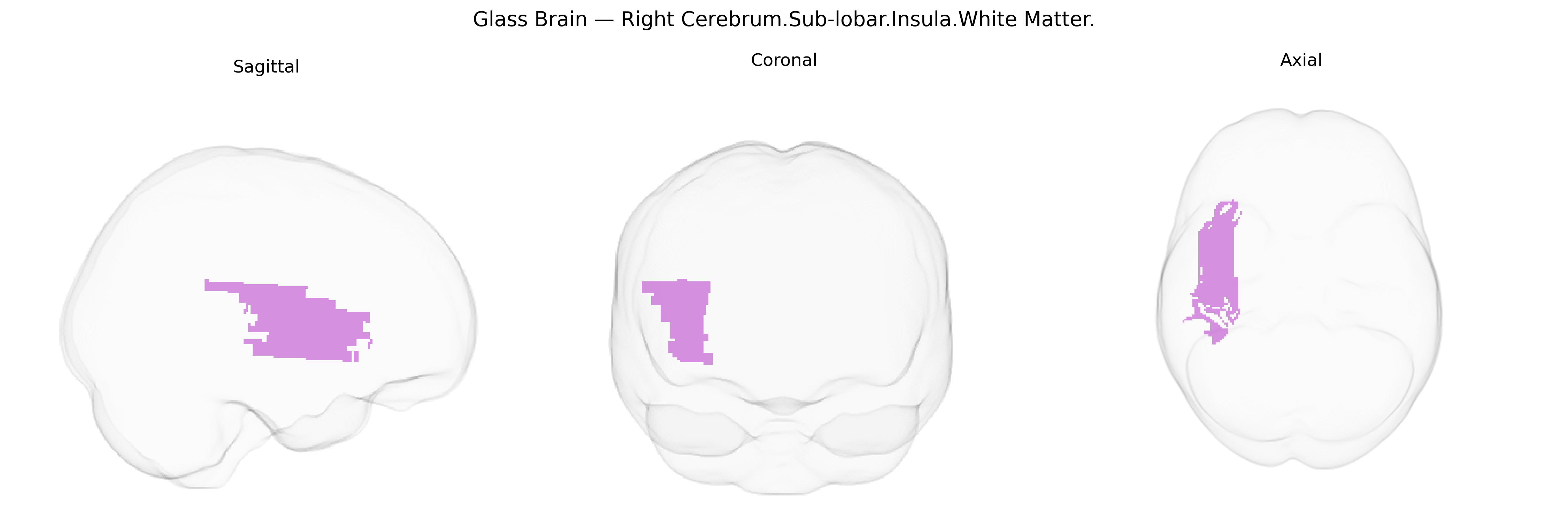
The bilateral Right Cerebrum.Sub-lobar.Insula.White Matter corresponds to the myelinated fiber pathways coursing beneath the insular cortex within the right cerebral hemisphere, classified as a sub-lobar structure in the Talairach 1 mm Atlas. These white matter tracts include short association fibers linking different insular gyri, as well as longer association pathways connecting the insula with adjacent frontal, temporal, and parietal opercular regions, thereby integrating interoceptive, visceral, sensory, and affective information across distributed networks. Functionally, this insular white matter supports the insula’s roles in autonomic regulation, pain and temperature processing, gustation, emotional awareness, and components of salience and cognitive control networks by enabling efficient communication between insular gray matter and widespread cortical and subcortical targets. There is no direct Wikipedia article for this exact white matter label; a closely related structure is the Insular cortex.
The bilateral right insular white matter, as defined in the Talairach 1 mm atlas, lies within the broader insular and salience-network circuitry, for which multiple genetic associations have been reported through imaging-genetics and GWAS of brain structure and connectivity rather than this specific micro-anatomical label. Variants in genes affecting white-matter integrity and myelination (for example, NRG1/NRG3, ERBB4, and MAG) and axon guidance and synaptic organization (such as CNTNAP2 and ROBO family genes) have been associated with altered insula-related diffusion tensor imaging measures, often in the right hemisphere, in population cohorts and clinical samples. Large-scale GWAS of brain MRI phenotypes (e.g., ENIGMA and UK Biobank studies) have identified polygenic influences on insular cortical thickness, surface area, and nearby white-matter tracts, with shared genetic architecture involving loci also implicated in schizophrenia, major depressive disorder, bipolar disorder, autism spectrum disorder, and anxiety traits, consistent with the insula’s role in interoception, affective processing, and salience detection. Additional associations link insula-related white-matter microstructure to substance-use phenotypes (including alcohol and nicotine dependence), pain sensitivity, and neuroticism, suggesting that common genetic variants influencing neurodevelopment, oligodendrocyte function, and synaptic plasticity contribute to interindividual variability in the structure and connectivity of right insular white matter and to risk for several psychiatric and behavioral disorders, although precise, label-specific GWAS for the “Right Cerebrum.Sub-lobar.Insula.White Matter” region remain limited and indirect.
Overview generated by GPT-4o (2026).
Region ID: 441
Hemisphere: bilateral
Atlas: Talairach labels 1mm
Full Quality Version: Download MP4
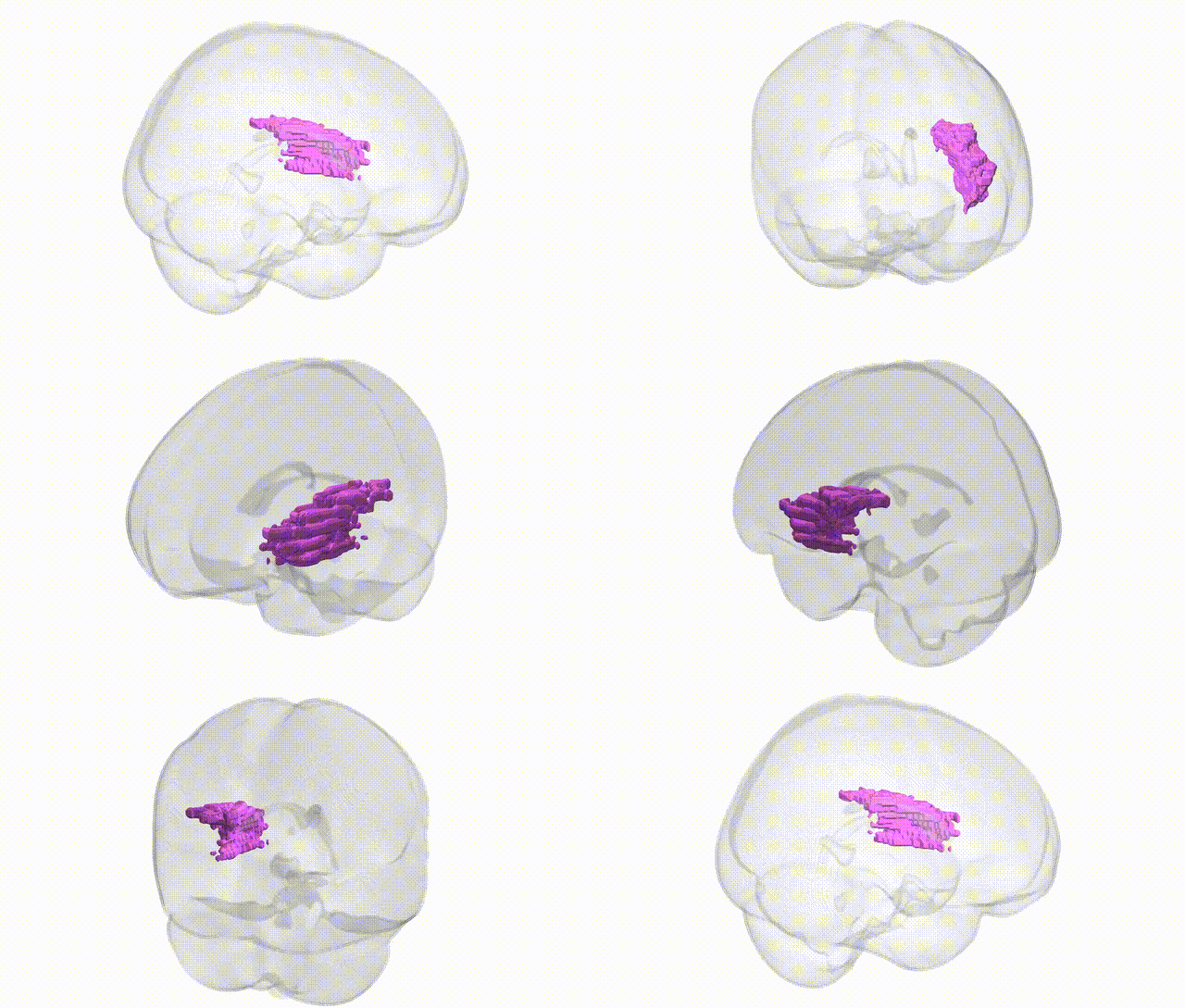
Full Quality Version: Download MP4
Wali Sidiqyar*, Gaurav Rudravaram*, Elyssa M. McMaster, Trent M. Schwartz, Adam M. Saunders, Kurt G. Schilling, Bennett A. Landman "Introducing SPINS: A Shared Public Visualization Library of Neuroanatomical Structures." Medical Imaging with Deep Learning- short paper
This resource is licensed under CC0 1.0 Universal (Public Domain).