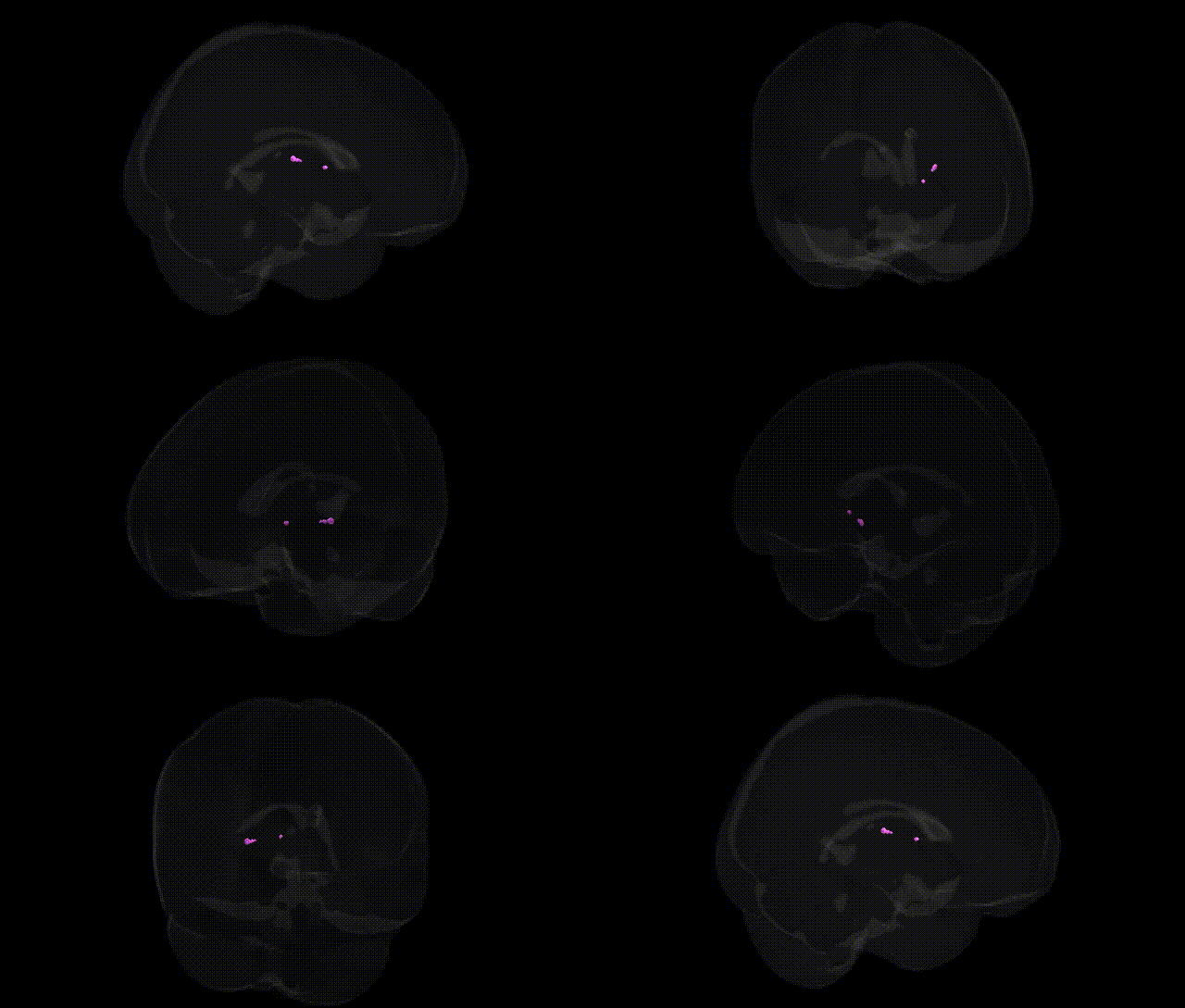
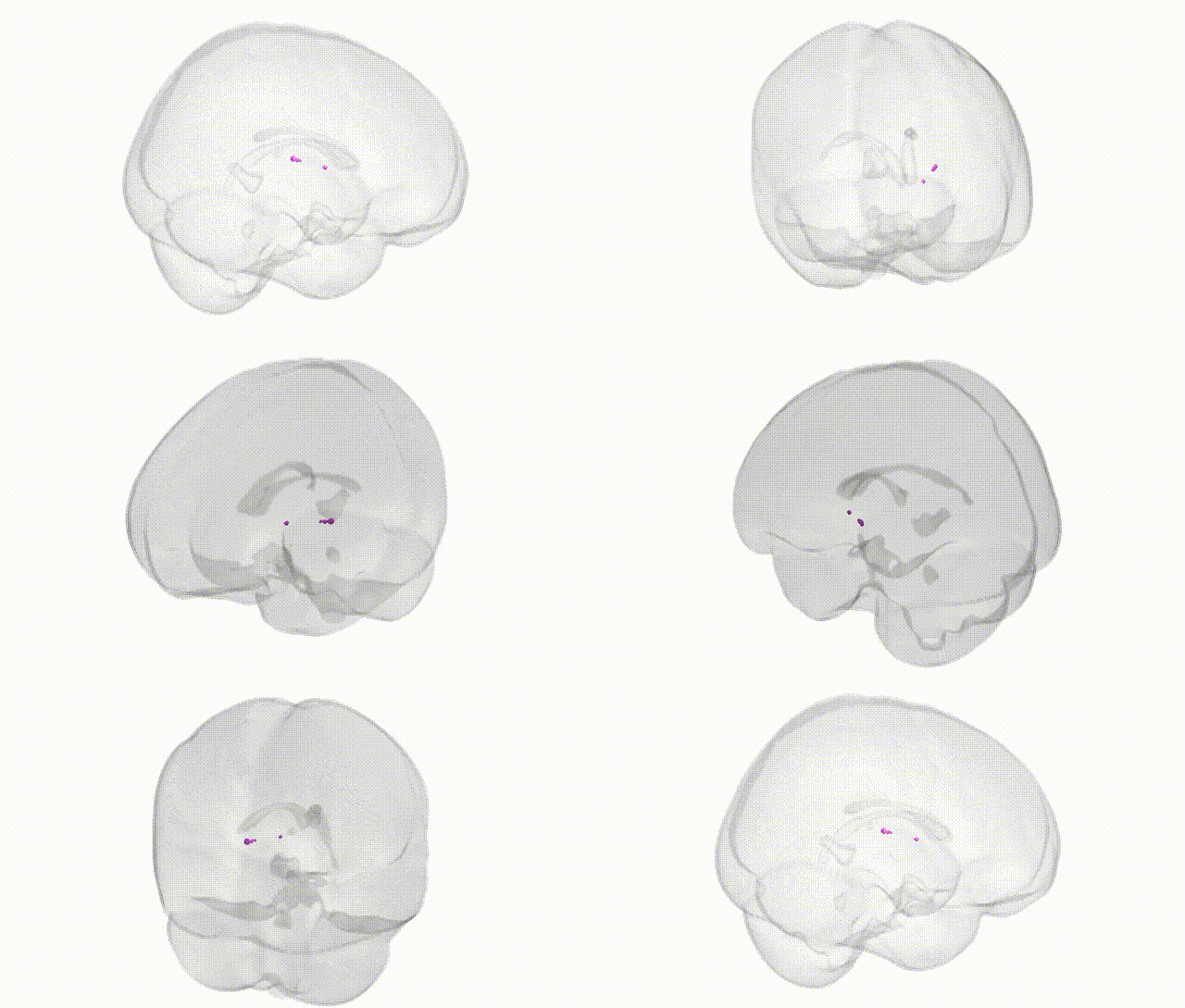
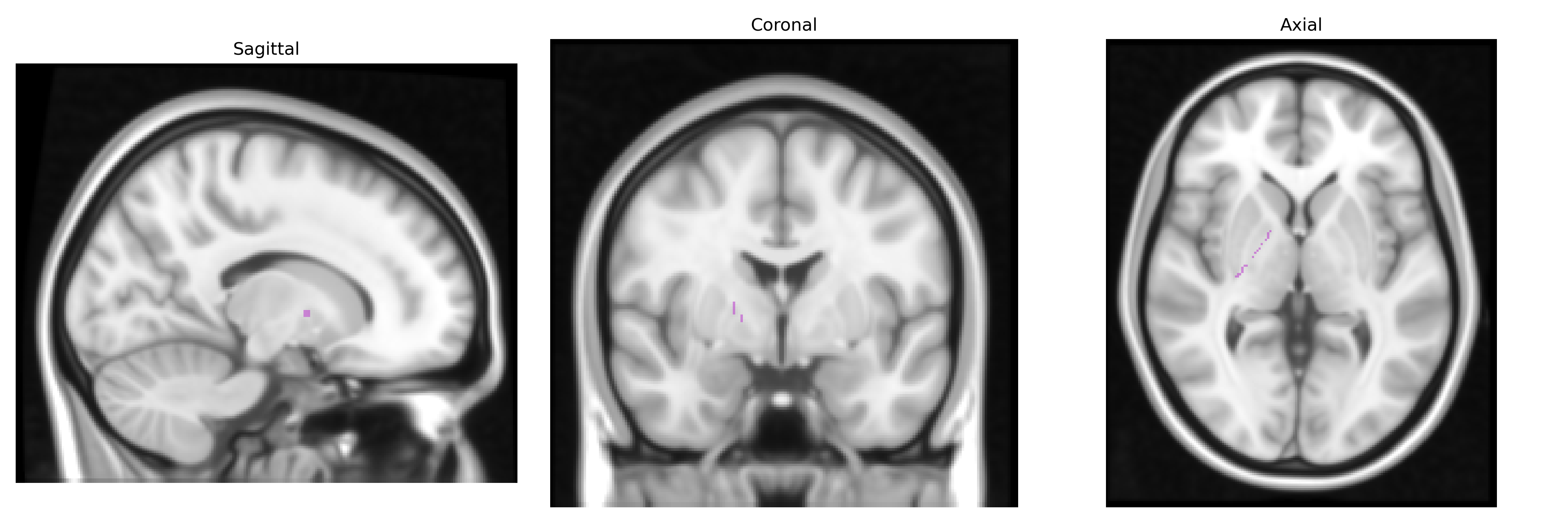
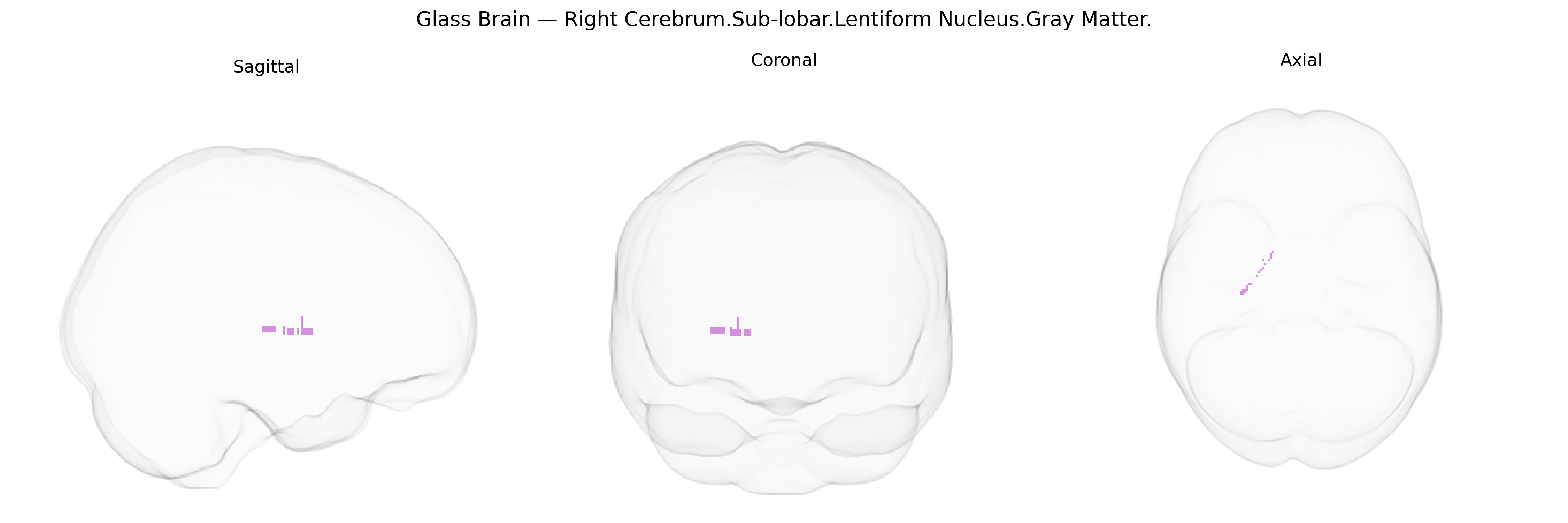
The bilateral Right Cerebrum.Sub-lobar.Lentiform Nucleus.Gray Matter corresponds to the gray matter of the lentiform (or lenticular) nucleus, a biconvex, lens-shaped subcortical structure within the basal ganglia of the right cerebral hemisphere. It is composed primarily of the putamen and the globus pallidus, which together are critically involved in the regulation of voluntary motor control, motor learning, habit formation, and aspects of cognitive and limbic processing via extensive reciprocal connections with the cortex, thalamus, and other basal ganglia nuclei. Neurons in this region integrate excitatory cortical input with modulatory dopaminergic, GABAergic, and glutamatergic signals to influence the initiation, scaling, and inhibition of movements, and dysfunction of the lentiform nucleus is associated with movement disorders such as Parkinson’s disease, dystonia, and chorea. There is no direct link for “lentiform nucleus”; see the related structure Basal ganglia.
The right lentiform nucleus gray matter, encompassing putamen and globus pallidus within the sub-lobar basal ganglia, has been implicated in multiple genetic and GWAS findings linking its structure and function to neuropsychiatric and motor traits. Large-scale imaging–genetics consortia (e.g., ENIGMA, UK Biobank) have identified common variants in genes related to dopamine signaling (such as DRD2), synaptic plasticity (e.g., BDNF), neurodevelopment (e.g., NRG1, DISC1), and ion channels that are associated with individual differences in lentiform volume and shape, often bilaterally rather than strictly right-lateralized. These structural and functional variations overlap with risk loci for schizophrenia, bipolar disorder, major depression, ADHD, and obsessive–compulsive disorder, as well as movement disorders including Parkinson’s disease and dystonia, where genes such as LRRK2, SNCA, and various lysosomal or mitochondrial genes contribute to basal ganglia vulnerability. Polygenic risk scores for schizophrenia and other psychiatric conditions show correlations with altered basal ganglia morphometry and connectivity, including the lentiform nucleus; GWAS of traits like cognitive performance, educational attainment, risk-taking, and substance use have also reported associations with basal ganglia–related variants that modulate dopaminergic and habit-learning circuits. Although most studies do not isolate the Talairach-defined right lentiform nucleus separately from its left counterpart, convergent genetic evidence supports a substantial role for this bilateral basal ganglia region in mediating heritable risk for psychiatric disorders, motor system diseases, and complex behavioral and cognitive phenotypes.
Overview generated by GPT-4o (2026).
Region ID: 640
Hemisphere: bilateral
Atlas: Talairach labels 1mm
Full Quality Version: Download MP4
Full Quality Version: Download MP4
Wali Sidiqyar*, Gaurav Rudravaram*, Elyssa M. McMaster, Trent M. Schwartz, Adam M. Saunders, Kurt G. Schilling, Bennett A. Landman "Introducing SPINS: A Shared Public Visualization Library of Neuroanatomical Structures." Medical Imaging with Deep Learning- short paper
This resource is licensed under CC0 1.0 Universal (Public Domain).