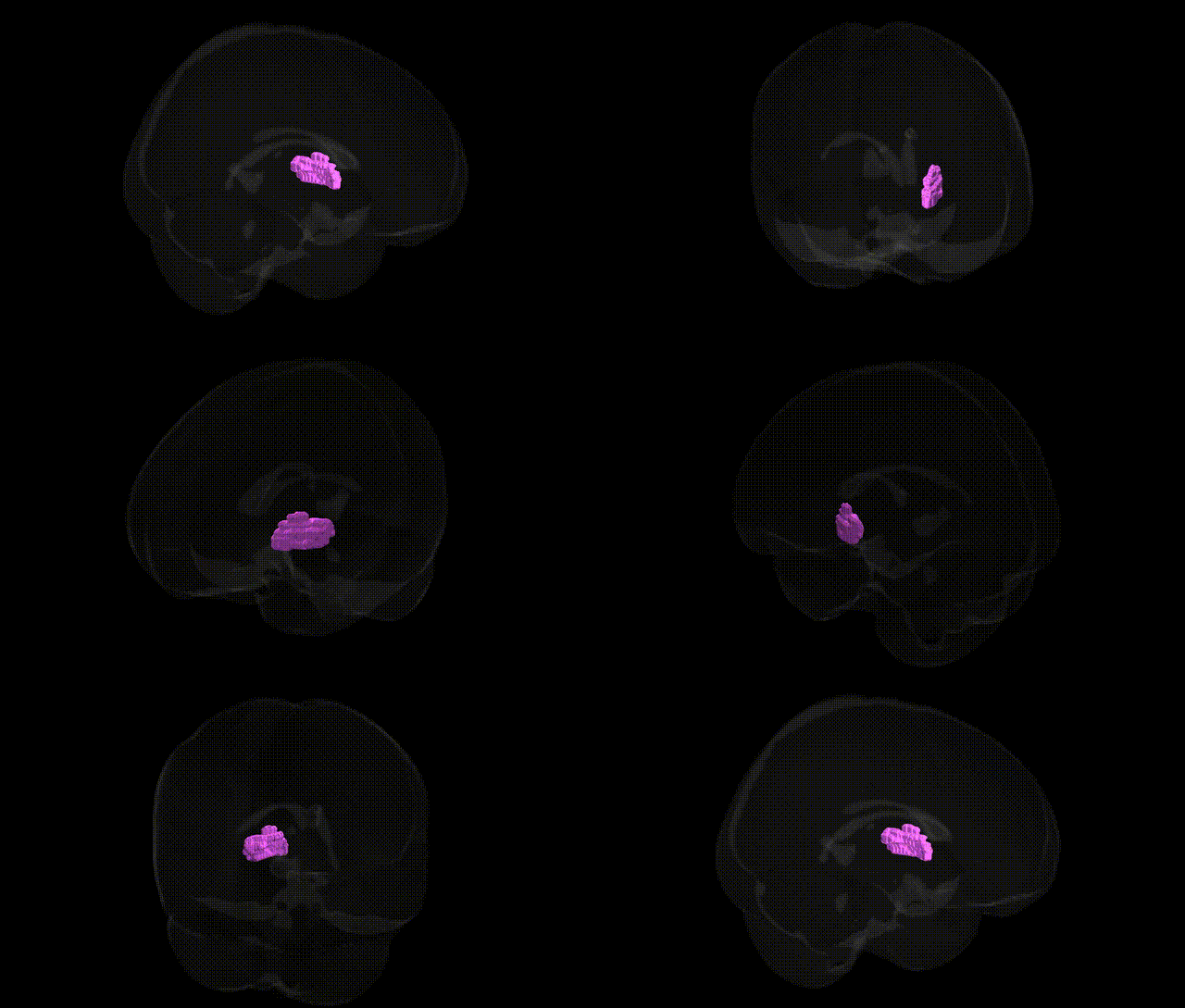
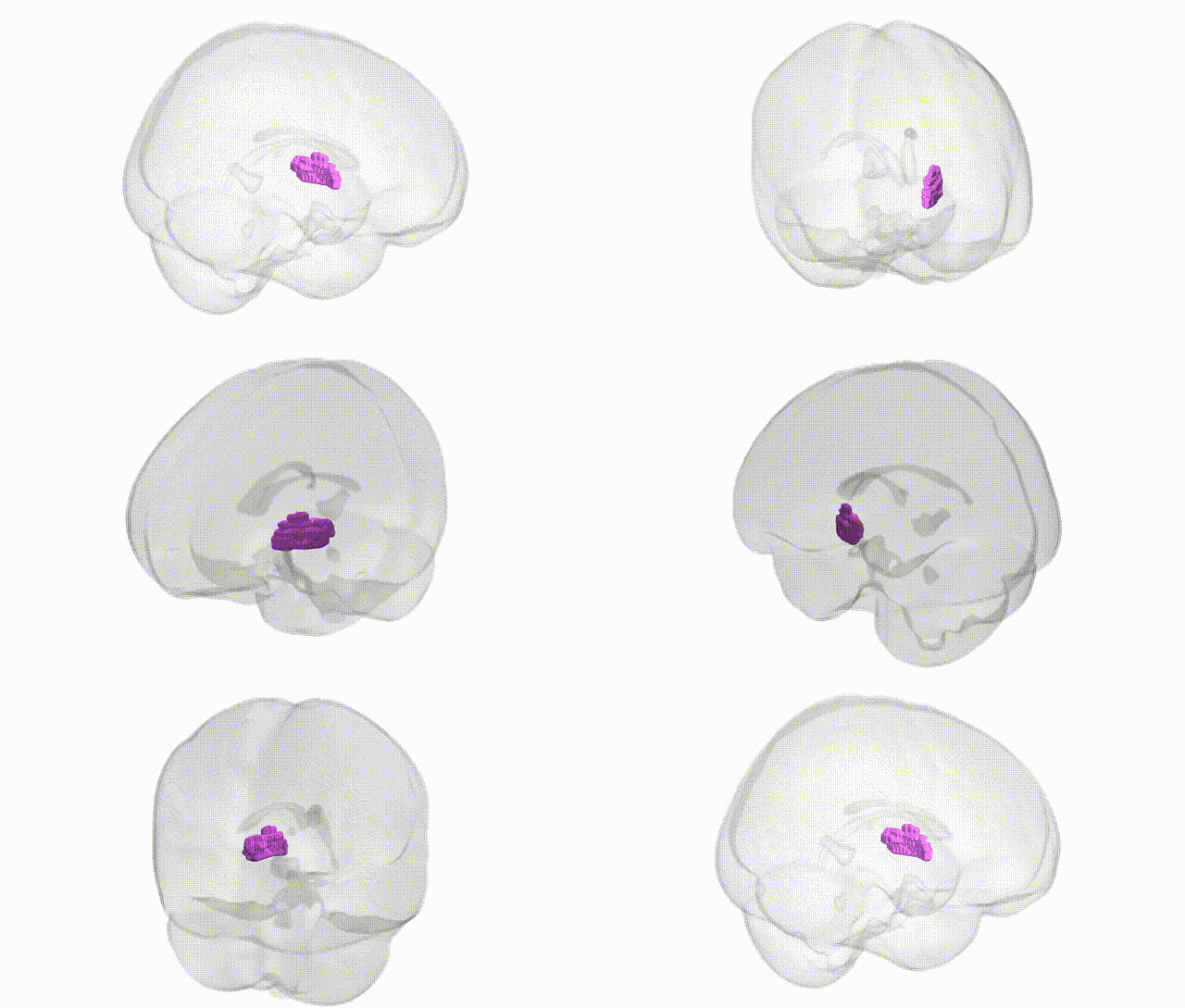
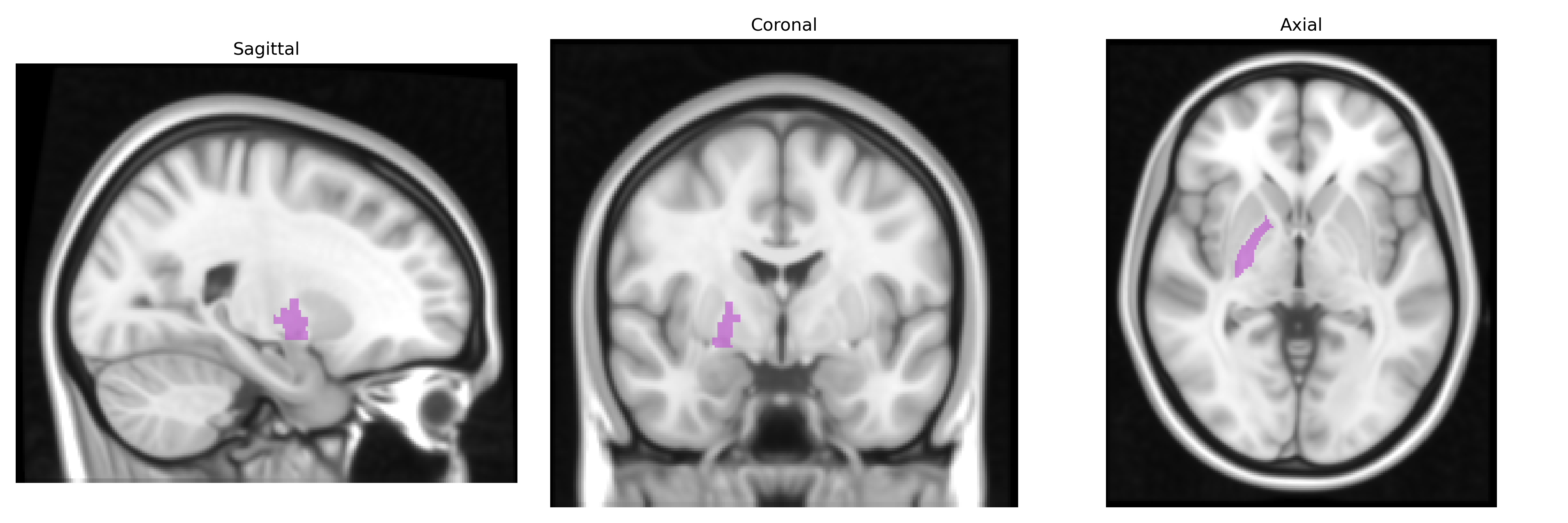
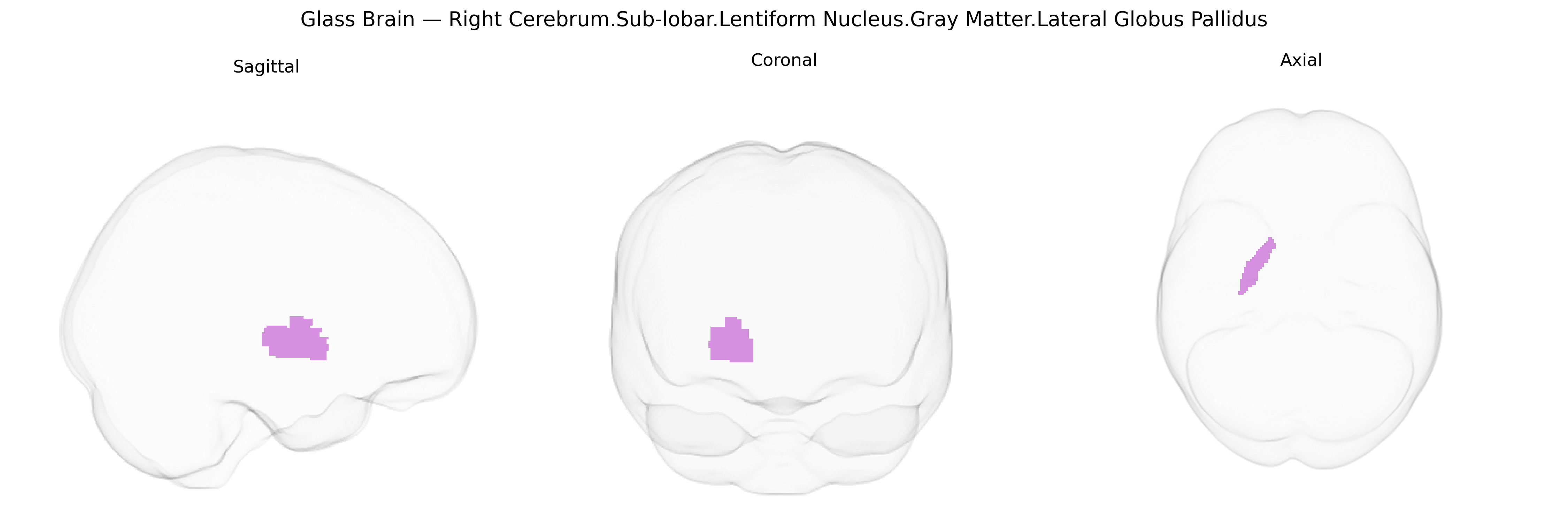
The bilateral Right Cerebrum.Sub-lobar.Lentiform Nucleus.Gray Matter.Lateral Globus Pallidus corresponds to the lateral segment of the globus pallidus, a core component of the basal ganglia situated in the subcortical (sub-lobar) region of the cerebral hemispheres. Composed primarily of GABAergic projection neurons, the lateral globus pallidus participates in the indirect pathway of motor control, receiving major inhibitory input from the striatum and projecting to the subthalamic nucleus and other basal ganglia nuclei. Through these circuits, it modulates thalamocortical activity and contributes to the regulation of movement initiation, scaling, and inhibition, as well as aspects of habit formation and certain cognitive and affective processes. Dysfunction or degeneration in this region is implicated in movement disorders such as Parkinson’s disease and dystonia. There is no direct link for the lateral globus pallidus as a separate article; a closely related and encompassing structure is the Globus Pallidus.
The lateral globus pallidus, part of the lentiform nucleus within the sub-lobar gray matter of the right cerebrum, has been implicated in multiple genetic and genome-wide association studies (GWAS) through its roles in motor control, reward processing, and basal ganglia circuitry. Variants in genes related to dopaminergic and GABAergic signaling (such as DRD2, GABRA2, and SLC6A3) and in neurodevelopmental or synaptic genes (including those in the major histocompatibility complex region and polygenic risk loci for schizophrenia and bipolar disorder) have been associated with structural and functional alterations in the globus pallidus, including volume differences and connectivity changes. GWAS of subcortical brain volumes (e.g., ENIGMA and UK Biobank consortia) have identified common variants influencing pallidal volume in or near genes involved in neurodevelopment, axon guidance, and neuronal signaling (such as DCC, FTO, and various loci on chromosomes 3, 8, and 11), with some overlap with risk loci for psychiatric and neurodegenerative disorders. The region is strongly implicated in monogenic and polygenic movement disorders, especially Parkinson’s disease and dystonia, where variants in genes like LRRK2, GBA, PRKN, and TOR1A influence basal ganglia degeneration or dysfunction, and deep brain stimulation of the globus pallidus is guided by these pathophysiological insights. Additional associations link pallidal structure or activity to genetic risk for obsessive-compulsive disorder, Tourette syndrome, attention-deficit/hyperactivity disorder, and substance use traits, where polygenic risk scores and specific loci correlate with altered pallidal volume or activity patterns, underscoring the lateral globus pallidus as a convergence point for genetic influences on motor and cognitive-emotional circuits.
Overview generated by GPT-4o (2026).
Region ID: 455
Hemisphere: bilateral
Atlas: Talairach labels 1mm
Full Quality Version: Download MP4
Full Quality Version: Download MP4
Wali Sidiqyar*, Gaurav Rudravaram*, Elyssa M. McMaster, Trent M. Schwartz, Adam M. Saunders, Kurt G. Schilling, Bennett A. Landman "Introducing SPINS: A Shared Public Visualization Library of Neuroanatomical Structures." Medical Imaging with Deep Learning- short paper
This resource is licensed under CC0 1.0 Universal (Public Domain).