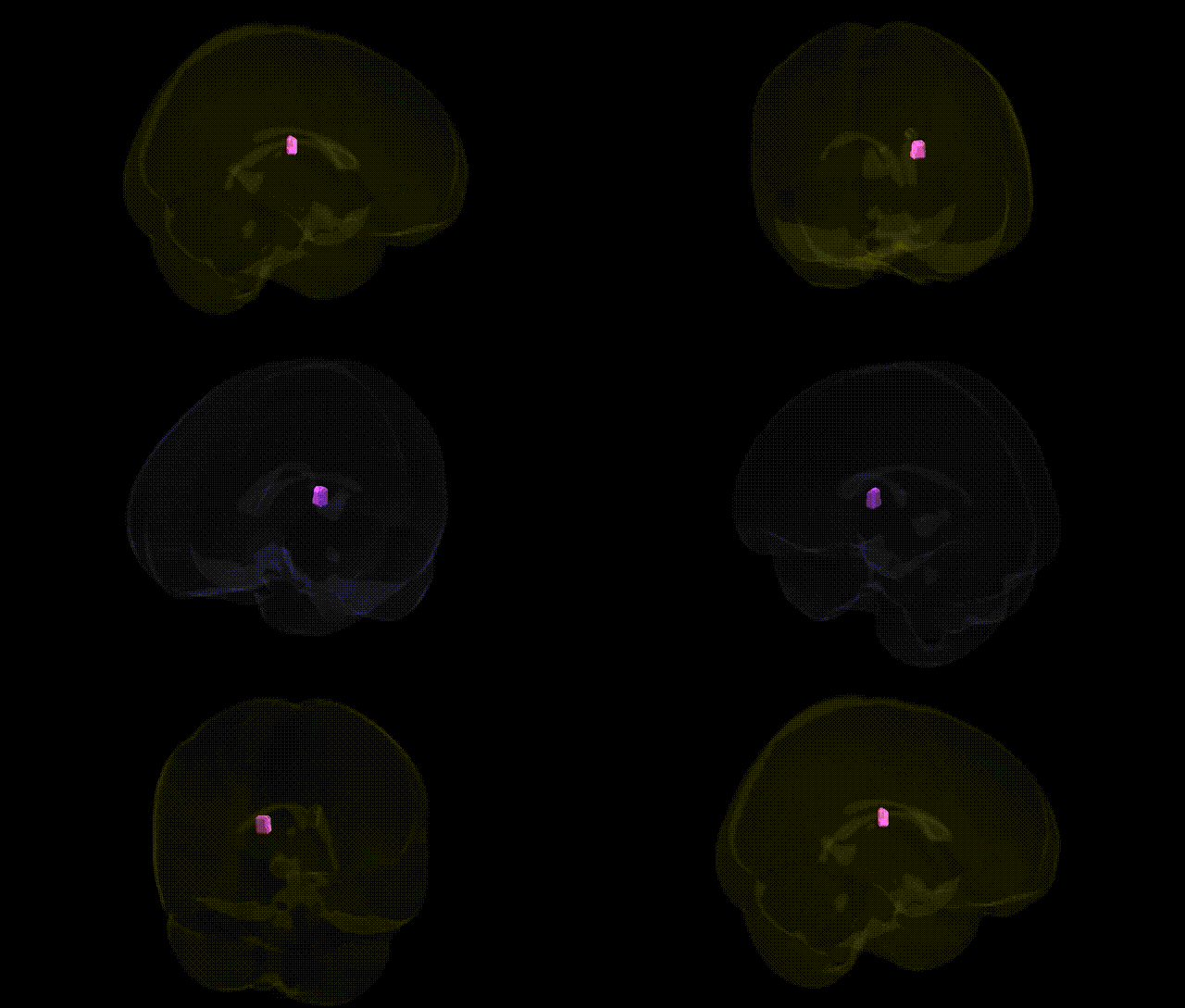
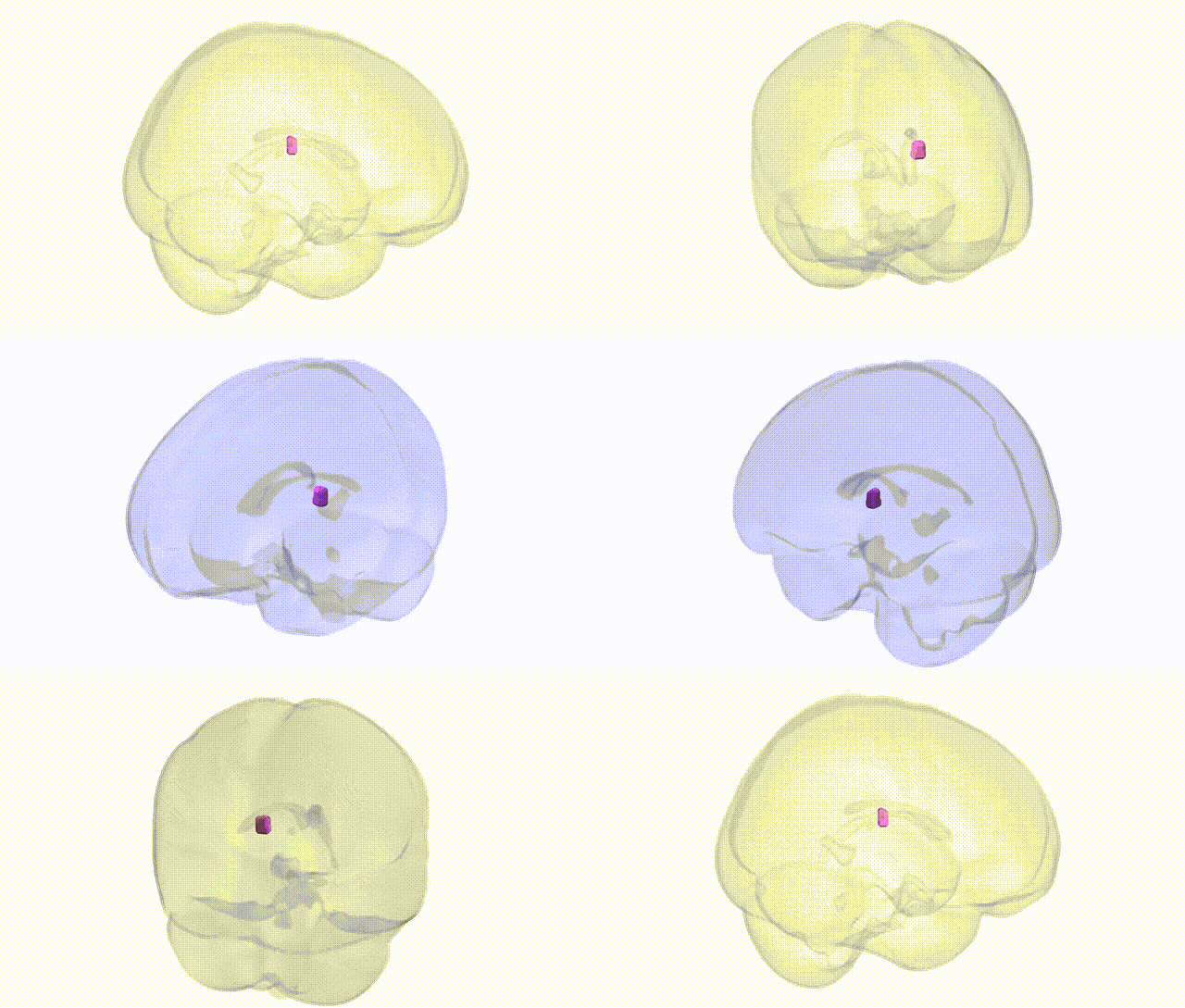
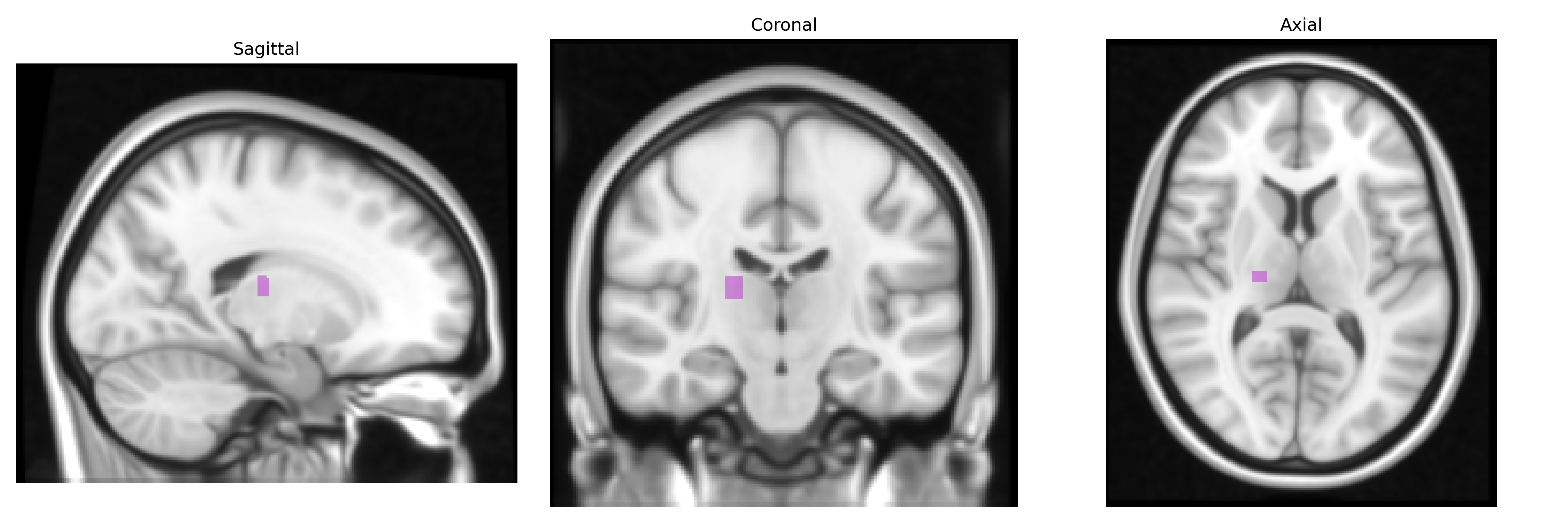
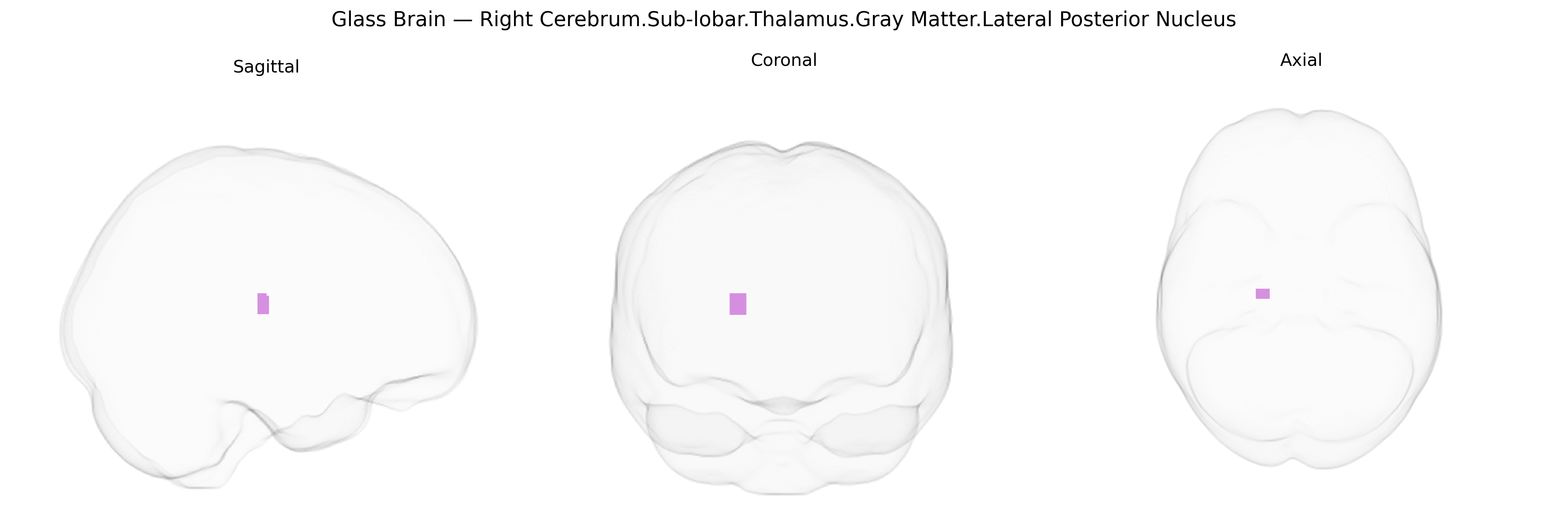
The bilateral Right Cerebrum.Sub-lobar.Thalamus.Gray Matter.Lateral Posterior Nucleus corresponds to the lateral posterior nucleus of the thalamus, a higher-order associative thalamic relay involved in integrating and modulating multimodal sensory and cortical information. Located in the posterior aspect of the thalamus, this nucleus has strong reciprocal connections with parietal and occipital association cortices and participates in visuospatial processing, attention, and higher-order sensory integration. Functionally, it contributes to the coordination of complex cognitive operations by relaying processed information between cortical association areas, thereby supporting perception, spatial awareness, and aspects of cognition that depend on the dynamic coupling of sensory and associative networks. There is no direct link; see the related structure Thalamus.
The lateral posterior nucleus of the thalamus, a higher-order associative relay within the sub-lobar gray matter of the right cerebrum, has been implicated in several genetic and genome-wide association studies (GWAS) primarily through its participation in thalamic volume, thalamocortical connectivity, and broader thalamic circuitry rather than via nucleus-specific analyses; polygenic influences involving genes related to neurodevelopment (e.g., variants in genes governing axonal guidance, synaptic plasticity, and neuronal differentiation, such as those in the Nogo receptor pathway, semaphorins, and cell-adhesion molecules) have been associated with overall thalamic structure and connectivity that encompass lateral posterior territories, while large imaging-GWAS consortia (e.g., ENIGMA, UK Biobank analyses) have identified common variants in loci including, but not confined to, those near genes like MAPT, GRIN2A, and others involved in glutamatergic signaling and cortical–subcortical development that relate to thalamic volume and shape; clinically, genetic risk architectures for schizophrenia, bipolar disorder, major depressive disorder, and autism spectrum disorder frequently converge on thalamic networks—including posterior and lateral thalamic nuclei—via polygenic risk scores and structural/functional MRI GWAS, and thalamic associations have also emerged in studies of attention-deficit/hyperactivity disorder, epilepsy, and cognitive traits such as general intelligence and processing speed, although current human genetic studies rarely provide lateral posterior nucleus–specific loci and instead support a distributed, polygenic influence on thalamic associative nuclei as a group.
Overview generated by GPT-4o (2026).
Region ID: 726
Hemisphere: bilateral
Atlas: Talairach labels 1mm
Full Quality Version: Download MP4
Full Quality Version: Download MP4
Wali Sidiqyar*, Gaurav Rudravaram*, Elyssa M. McMaster, Trent M. Schwartz, Adam M. Saunders, Kurt G. Schilling, Bennett A. Landman "Introducing SPINS: A Shared Public Visualization Library of Neuroanatomical Structures." Medical Imaging with Deep Learning- short paper
This resource is licensed under CC0 1.0 Universal (Public Domain).