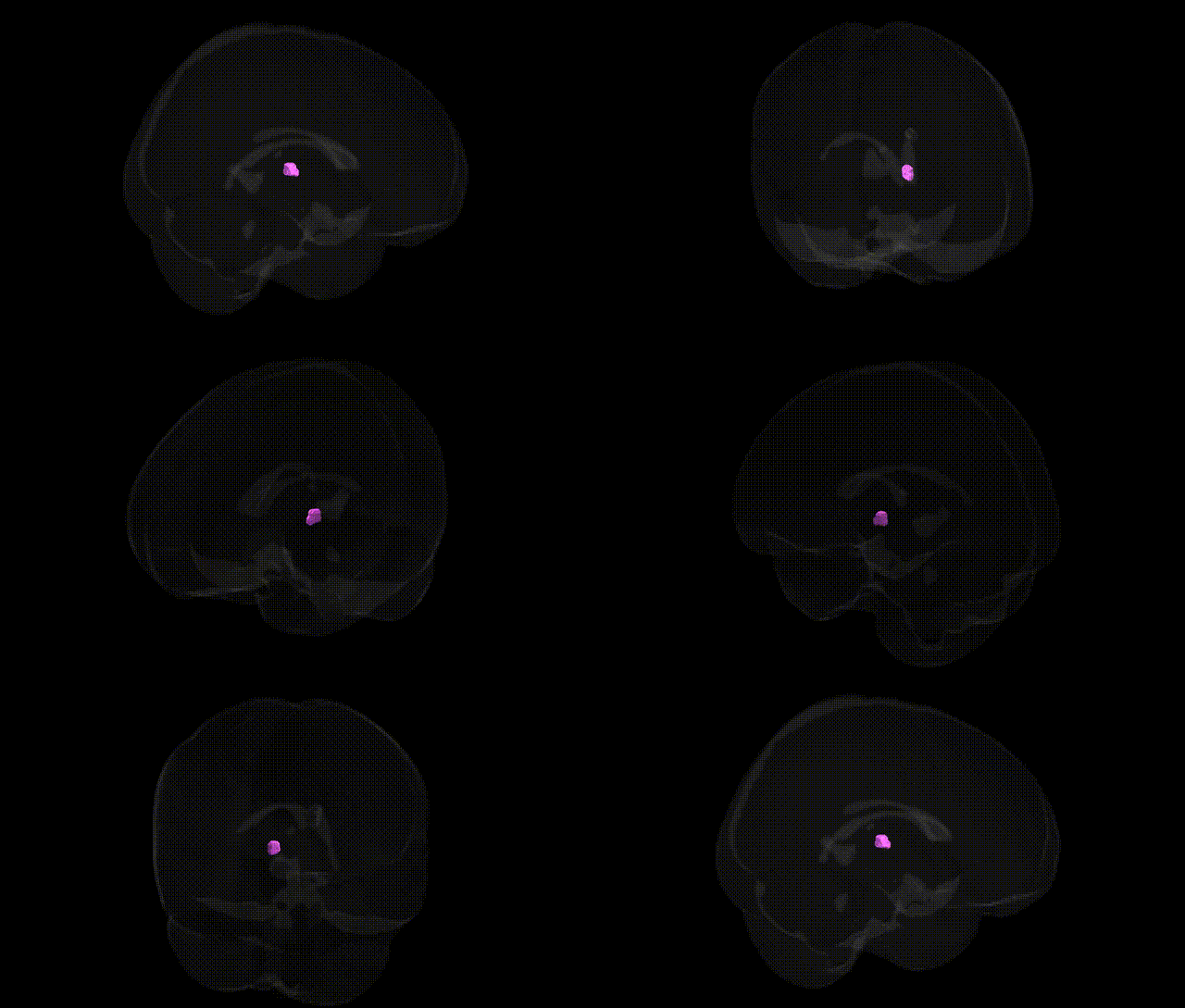
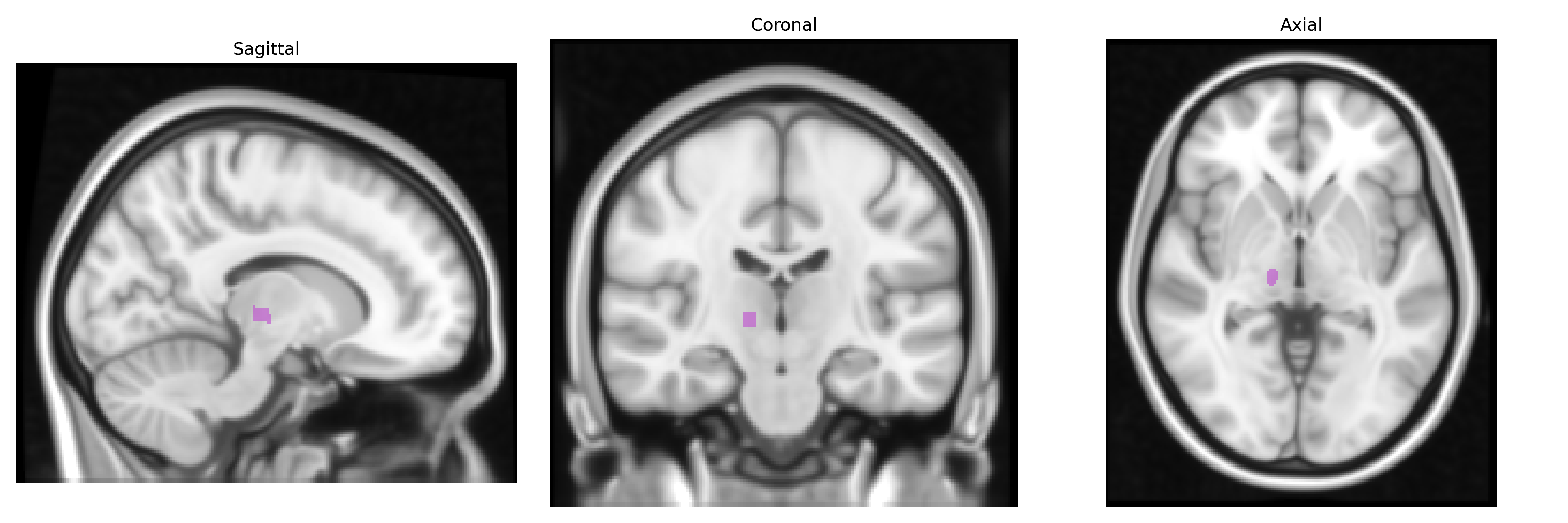
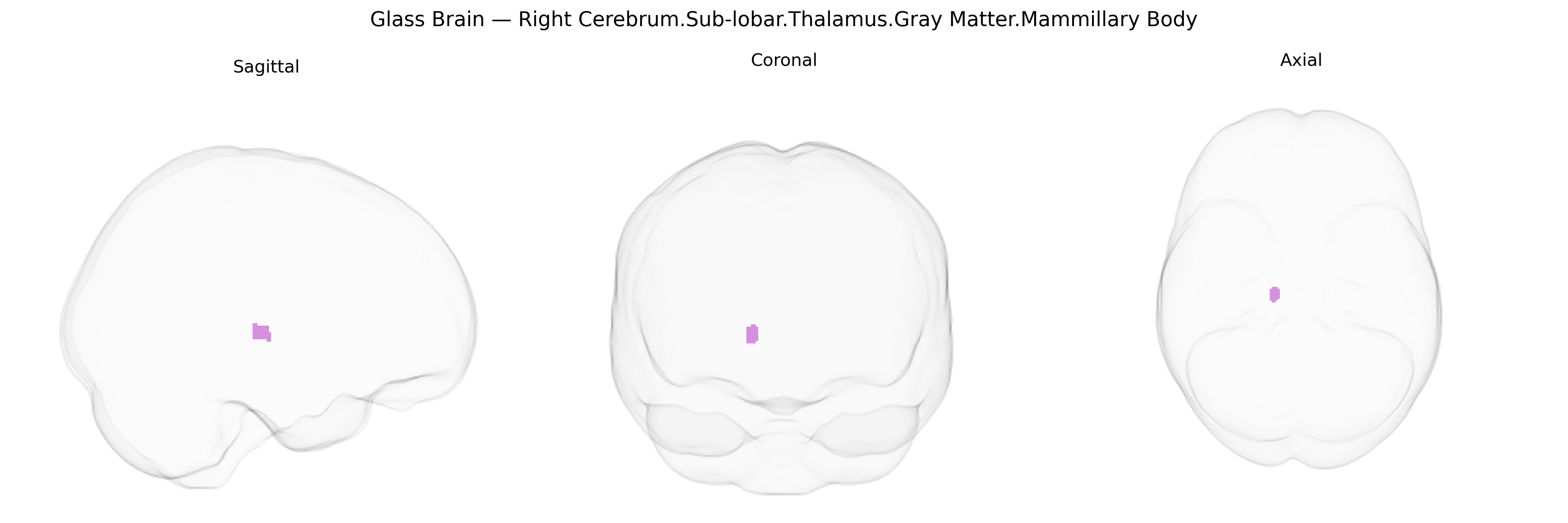
The bilateral Right Cerebrum.Sub-lobar.Thalamus.Gray Matter.Mammillary Body region corresponds to the paired mammillary bodies, small rounded structures on the ventral surface of the hypothalamus that form part of the limbic system and are closely associated with the anterior thalamus. Composed primarily of gray matter, these nuclei receive major input from the hippocampal formation via the fornix and project to the anterior thalamic nuclei through the mammillothalamic tract, forming a critical link in the Papez circuit for memory processing. Damage to the mammillary bodies, as seen in conditions such as Wernicke–Korsakoff syndrome, is strongly associated with anterograde amnesia and disturbances in episodic memory, highlighting their role in the encoding and consolidation of declarative memory. Mammillary body
The mammillary bodies, small diencephalic structures within the sub-lobar thalamic/limbic circuitry, are not typically isolated as a primary phenotype in large-scale GWAS, but genetic associations emerge via related traits and disorders that affect this region’s structure and function. Variants influencing hippocampal–diencephalic networks (notably in genes such as APOE, MAPT, and other Alzheimer’s disease risk loci like CLU, BIN1, and PICALM) have been implicated in conditions where mammillary body atrophy and connectivity changes are observed, including Alzheimer’s disease, other dementias, and Korsakoff syndrome, although the latter is more classically linked to thiamine deficiency than specific germline variants. Neurodevelopmental and psychiatric GWAS implicating limbic–thalamic circuitry—particularly for schizophrenia, bipolar disorder, and major depression—highlight risk loci in synaptic and neurodevelopmental genes (e.g., CACNA1C, GRIN2A, DRD2, and multiple glutamatergic and GABAergic pathway genes) that may influence mammillary body volume or connectivity as part of broader limbic system alterations, as shown in imaging–genetics and ENIGMA-style structural MRI meta-analyses. In addition, polygenic influences on memory performance and episodic memory integrity, often mapped to hippocampal and thalamic volumes in GWAS, point to shared genetic architecture involving neuronal plasticity, axonal guidance, and myelination genes that contribute to structural variation in the mammillary bodies, though locus-specific, mammillary-body–focused associations remain rare and typically inferred from broader limbic or thalamic phenotypes rather than directly reported in standard Talairach-based atlases.
Overview generated by GPT-4o (2026).
Region ID: 582
Hemisphere: bilateral
Atlas: Talairach labels 1mm
Full Quality Version: Download MP4
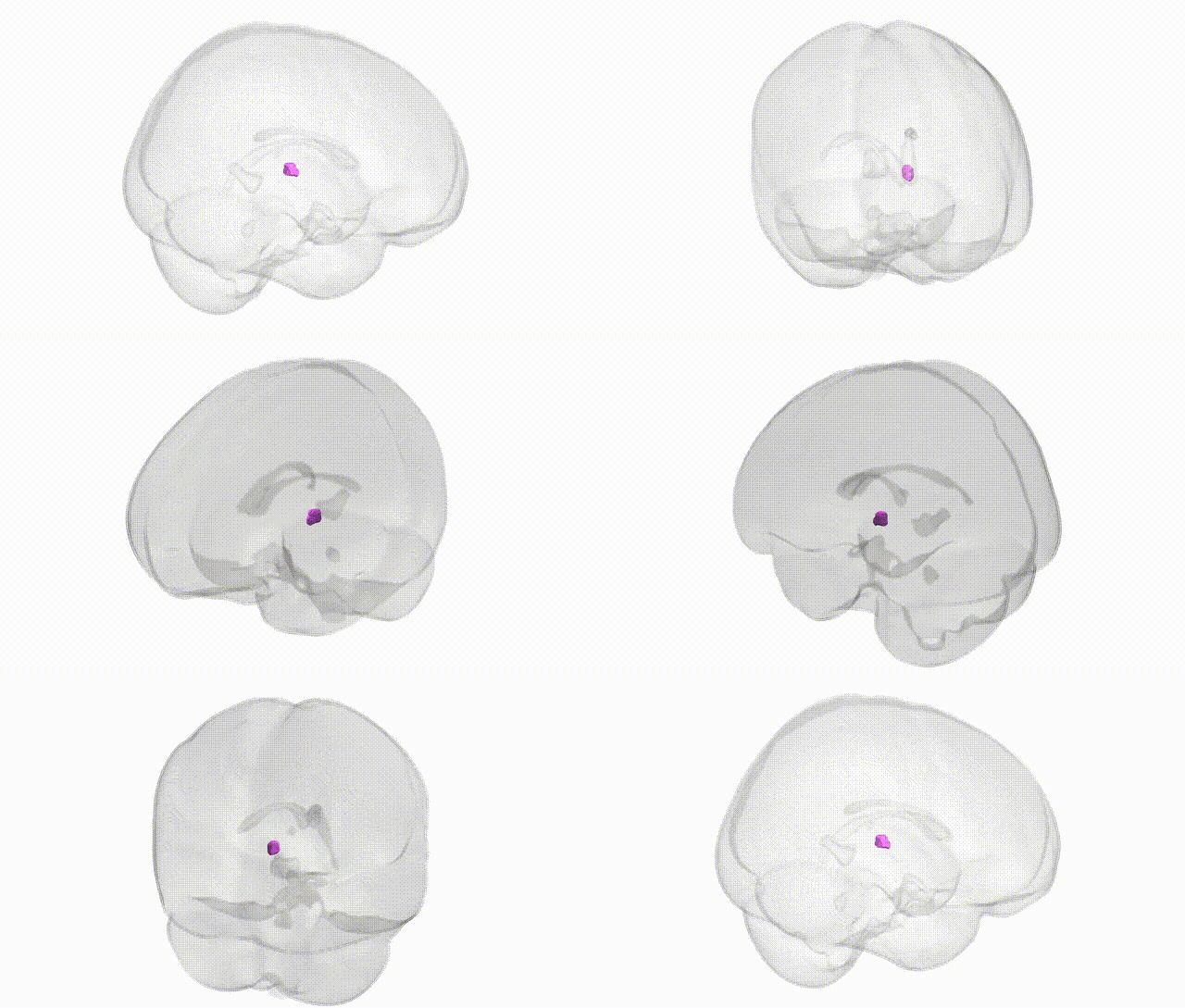
Full Quality Version: Download MP4
Wali Sidiqyar*, Gaurav Rudravaram*, Elyssa M. McMaster, Trent M. Schwartz, Adam M. Saunders, Kurt G. Schilling, Bennett A. Landman "Introducing SPINS: A Shared Public Visualization Library of Neuroanatomical Structures." Medical Imaging with Deep Learning- short paper
This resource is licensed under CC0 1.0 Universal (Public Domain).