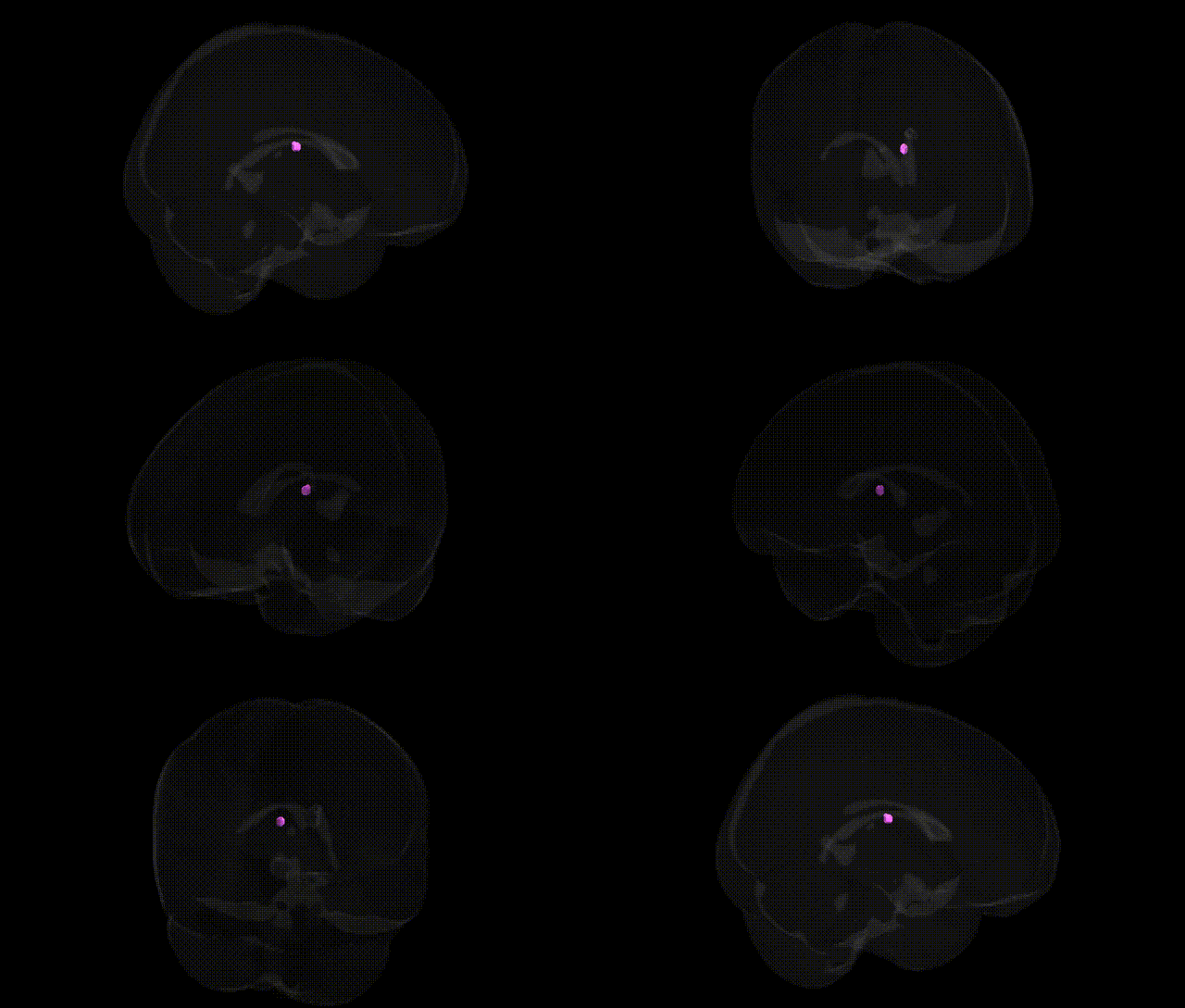
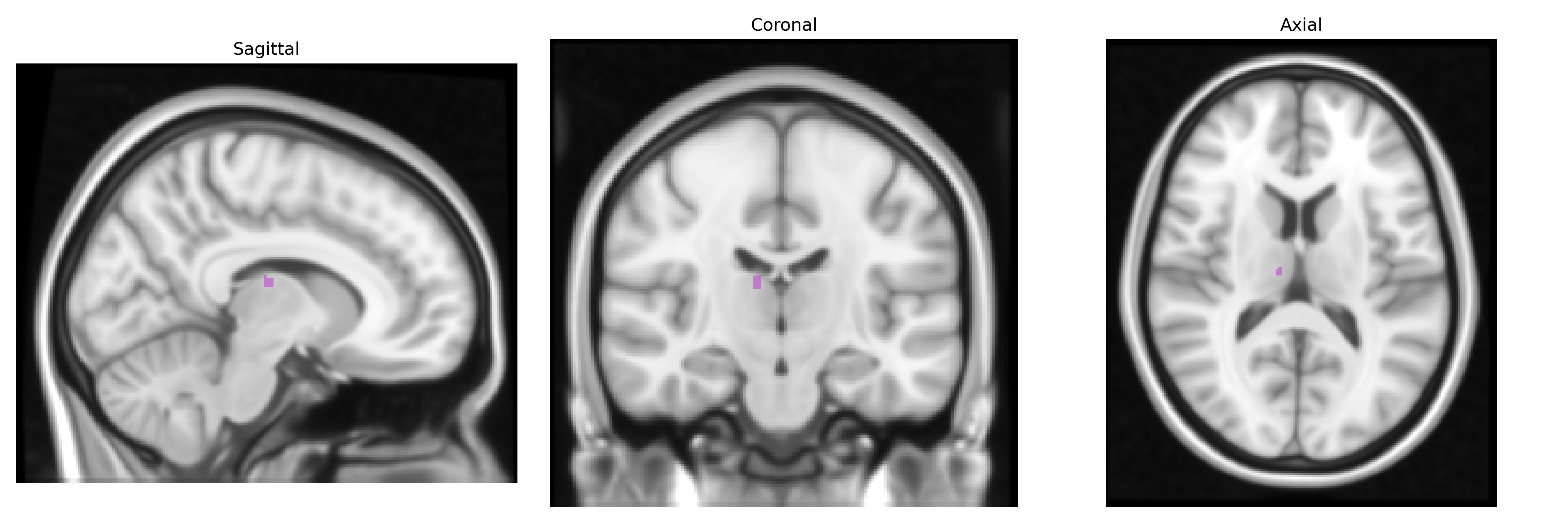
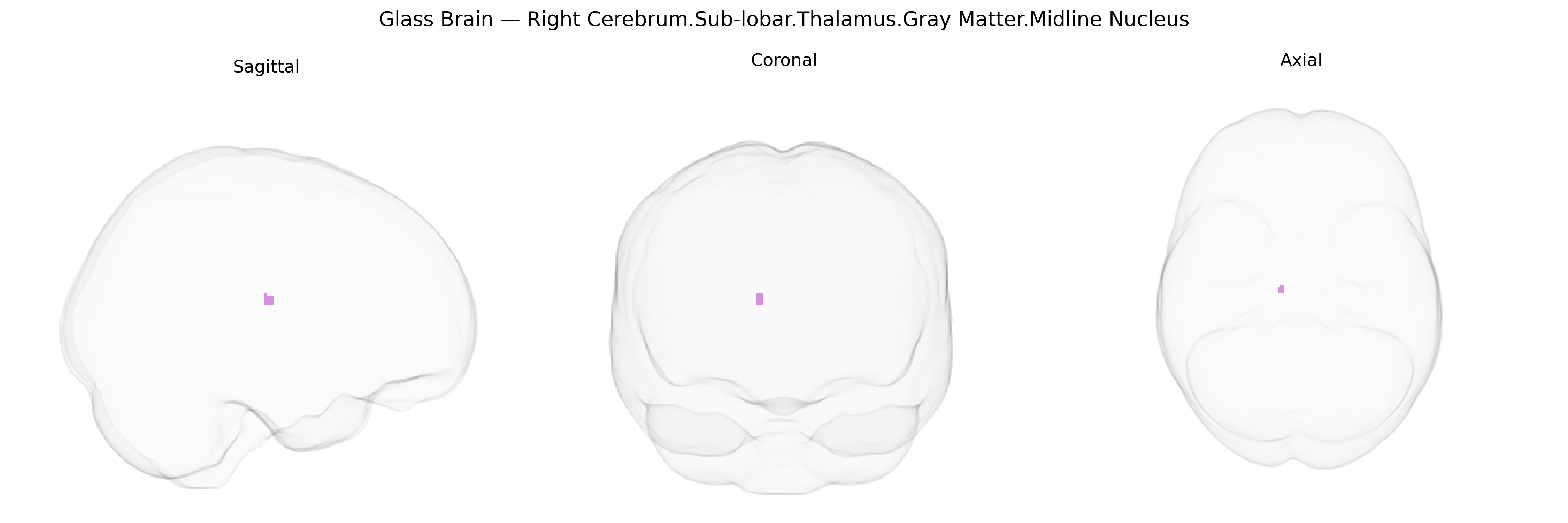
The bilateral Right Cerebrum.Sub-lobar.Thalamus.Gray Matter.Midline Nucleus region, as defined in the Talairach 1 mm Atlas, refers to midline thalamic nuclei located within the sub-lobar gray matter of the right cerebral hemisphere, adjacent to the third ventricle. These nuclei are part of the medial thalamic complex and are involved in limbic, arousal, and associative functions, with extensive connections to the prefrontal cortex, cingulate cortex, and hippocampal formation. Functionally, they contribute to regulation of consciousness, attention, memory processing, and emotional integration, acting as a key hub in thalamo-cortico-limbic circuits. There is no direct link for “midline nucleus” as a standalone thalamic structure; a related structure entry is Thalamus.
The bilateral right thalamic midline nuclei, as defined in the Talairach 1 mm atlas, are centrally implicated in large-scale genetic architectures of subcortical volume, cognition, and psychiatric risk, though few GWAS target this specific microanatomical label directly; instead, they are usually subsumed within global thalamus or thalamic subregion measures. Genome-wide association studies of thalamic volume and thalamic nuclei (e.g., ENIGMA and UK Biobank–based studies) have identified loci in and near genes such as MAPT, APOE, SLC39A8, MHC-region genes, and several neuronal development and synaptic genes, indicating polygenic influences on thalamic structure that overlap with risk architectures for schizophrenia, bipolar disorder, major depressive disorder, autism spectrum disorder, and Alzheimer’s disease. Polygenic scores for schizophrenia and other psychiatric disorders have been associated with altered thalamic volumes and thalamo-cortical connectivity, implicating shared genetic factors affecting midline thalamic regions involved in arousal, attention, and limbic integration. Variants linked to sleep, chronotype, and cognitive performance have also been associated with thalamic measures, consistent with the thalamus’s role in sleep–wake regulation and higher-order cognition. While lateralized or nucleus-specific genetic effects within the right midline thalamus are less well resolved, current evidence suggests that this region participates in a distributed, highly polygenic network of risk and resilience loci influencing subcortical morphology, neurodevelopment, and vulnerability to neuropsychiatric and neurodegenerative disorders.
Overview generated by GPT-4o (2026).
Region ID: 791
Hemisphere: bilateral
Atlas: Talairach labels 1mm
Full Quality Version: Download MP4
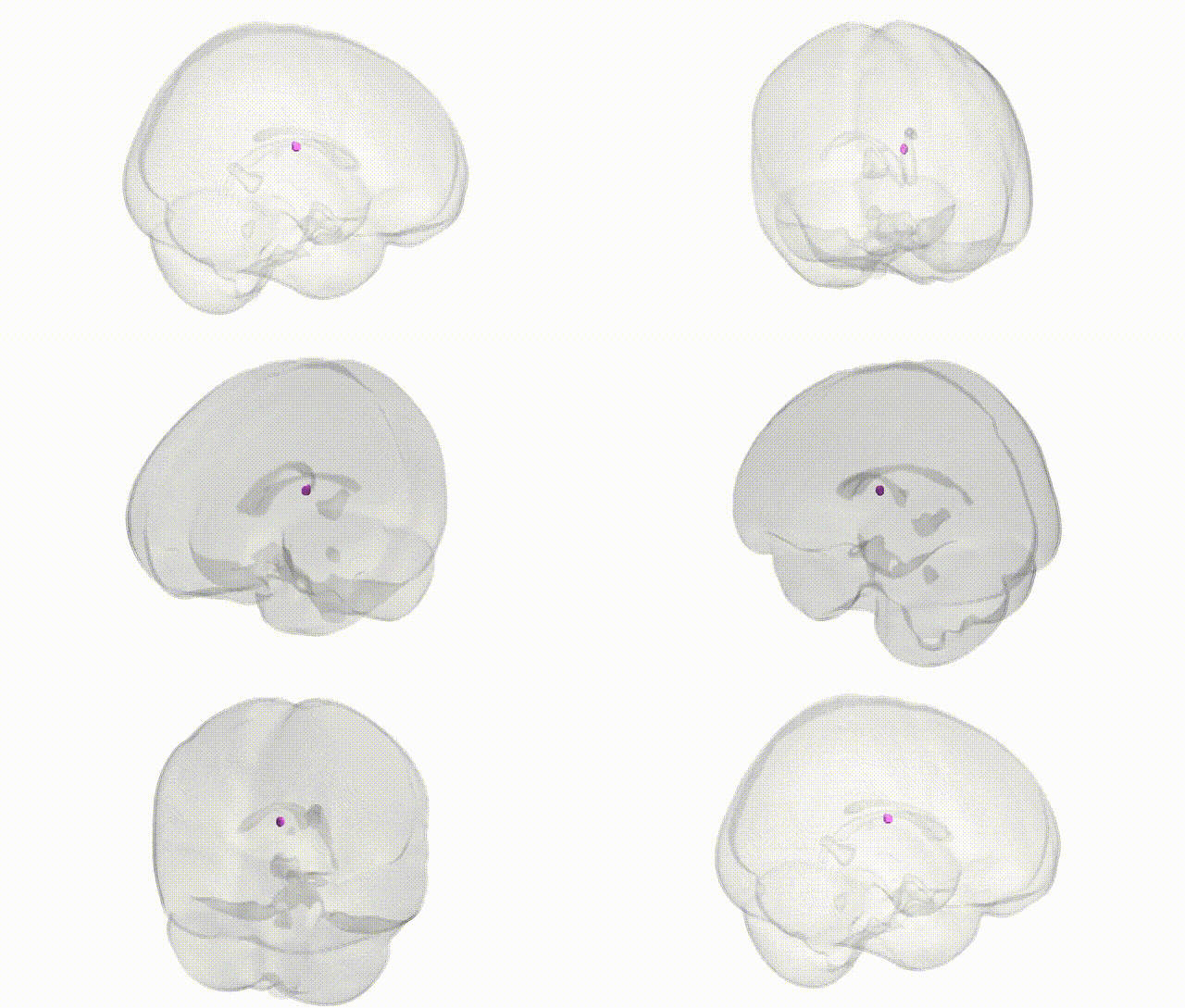
Full Quality Version: Download MP4
Wali Sidiqyar*, Gaurav Rudravaram*, Elyssa M. McMaster, Trent M. Schwartz, Adam M. Saunders, Kurt G. Schilling, Bennett A. Landman "Introducing SPINS: A Shared Public Visualization Library of Neuroanatomical Structures." Medical Imaging with Deep Learning- short paper
This resource is licensed under CC0 1.0 Universal (Public Domain).